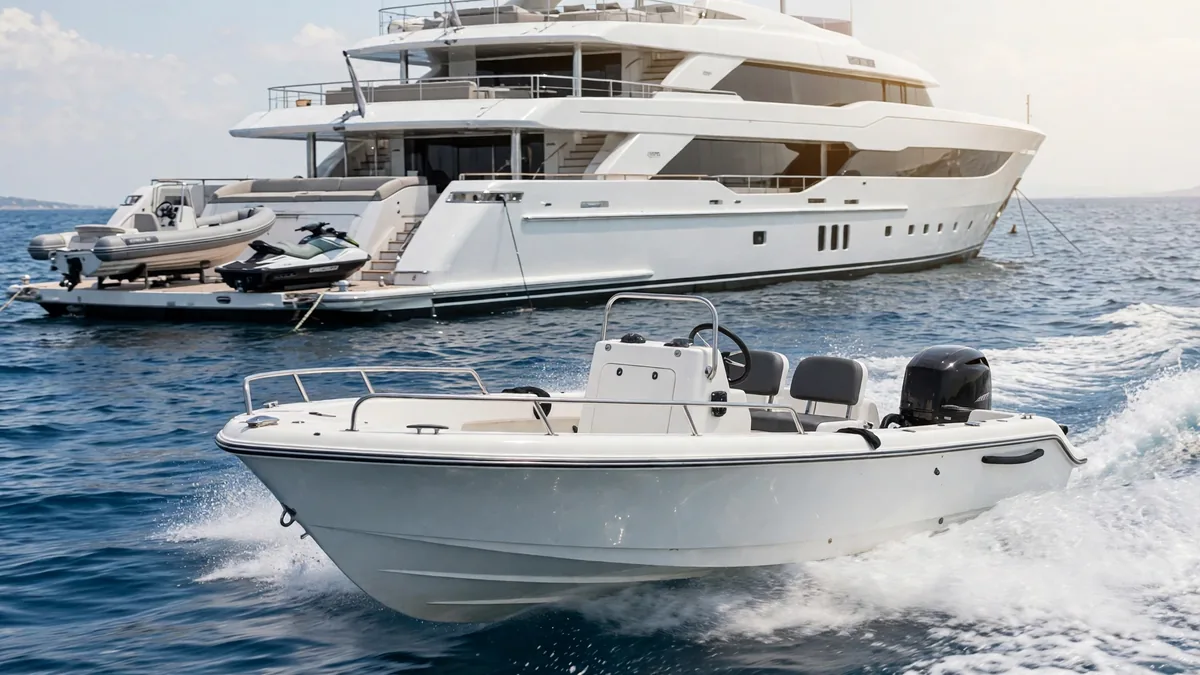
From the beach, it looks like a small speedboat in a hurry. It is not. The chase boat is the hardest-working vessel in a superyacht’s fleet, the one that runs the errands, carries the toys, and keeps the mothership supplied while she sits at anchor in a perfect bay. Watch it for an afternoon and the pattern becomes clear: out to the superyacht with provisions, back to shore with laundry, out again with a tender and a jet ski, then a fast run to the next anchorage with the crew. It never stops, and it is built for exactly that life.
A luxury chase boat is not a tender, although it carries tenders. A tender is a small boat that ferries guests a short distance, while a chase boat is a larger, faster support vessel, often 10 to 15 metres long, with its own cabin, deck space, and serious engines. It shadows the superyacht wherever she goes, sometimes for weeks, and it must be fast enough to catch up with a superyacht under way, tough enough to work in rough water, and comfortable enough for the crew who live and work aboard it. This is how it works.
How a Luxury Chase Boat Works
Step 1: A hull built for speed in rough water
The chase boat’s hull is a deep-V shape, built to cut through waves at speed rather than bounce over them. It is usually made from fibreglass or carbon fibre over a foam core, which keeps it light and stiff, and the V shape runs deep at the bow and flattens towards the stern, giving the boat lift as it accelerates onto the plane. A chase boat must be able to run at 40 knots or more in water that would slow an ordinary boat to a crawl, and the hull is the reason it can. The ride is firm, and the crew learn to stand with bent knees, but the boat stays dry and in control.
Step 2: Engines and the need for speed
Power comes from two or three large outboard engines, or sometimes from inboard diesels driving water jets, and the choice shapes the whole boat. Outboards are easy to service and can be tilted clear of the water, while water jets have no exposed propeller, which makes them safer when the boat is working close to swimmers and divers. The electric outboard motors now appearing on smaller tenders show where the technology is heading, but a chase boat still needs the range and the punch of petrol or diesel, because it cannot afford to run out of power halfway to the mothership.
Step 3: The deck, the toys, and the cargo
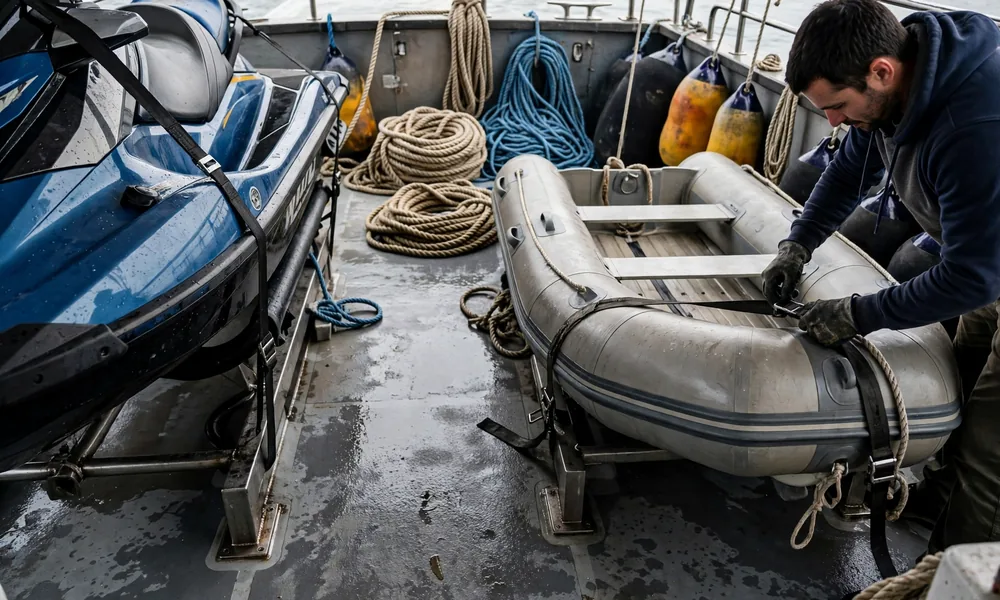
The deck of a chase boat is a working space, laid out so that everything has a place and can be reached quickly. A large aft deck carries the superyacht’s tenders, jet skis, paddleboards, and diving gear, all lashed down in custom cradles, and a small crane or davit lifts the heavier items aboard. Below the deck there are lockers for lines, fenders, and tools, and a freshwater washdown hose for cleaning salt off the toys after use. The deck is finished in a non-slip surface, and the rails are high enough to lean on safely at speed. The superyacht tenders the chase boat carries are themselves small luxury boats, and the chase boat is their garage, their workshop, and their delivery van all at once.
Step 4: The helm, navigation, and communications
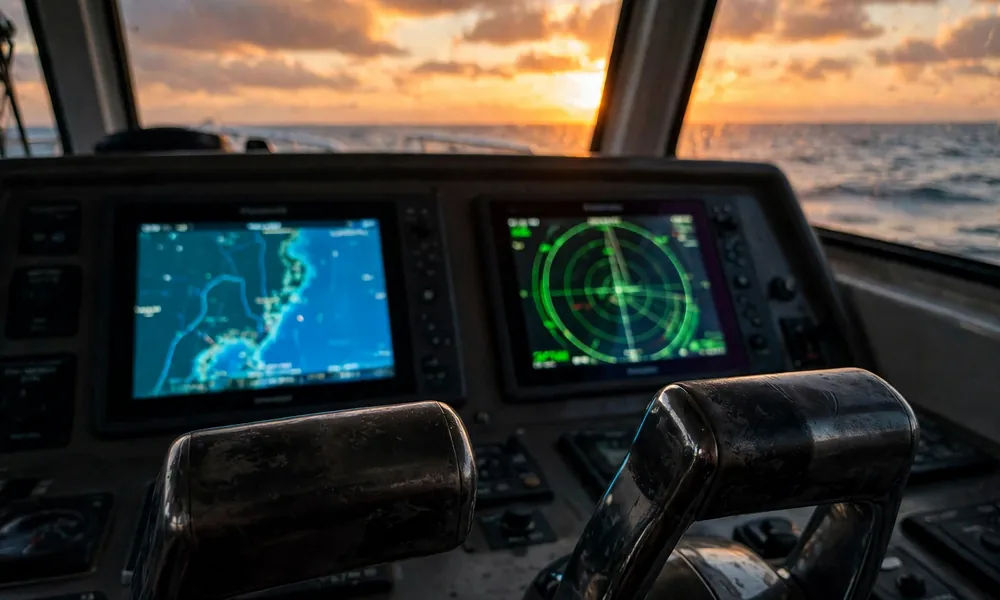
The helm of a chase boat is compact but complete. A centre console or a small wheelhouse holds the chart plotter, radar, depth sounder, and radio, and the captain can see the whole deck from the helm, which matters when the boat is manoeuvring alongside a superyacht worth many millions. A VHF radio keeps the chase boat in constant contact with the mothership, and a satellite link lets the crew receive messages and weather updates far from shore. The boat also carries a small tender of its own, a superyacht tender in miniature, for running guests and crew the last few metres to a beach.
Step 5: Shadowing the mothership, day after day
The real work of a chase boat is a routine, and it starts before the guests wake up. The crew checks the engines, the fuel, and the weather, then runs the first errands of the day: fresh provisions from shore, fuel for the tenders, and any repairs the mothership needs. During the day the chase boat stands by at anchor, ready to launch a tender or a jet ski at a moment’s notice, and in the evening it ferries guests back from dinner ashore, in the dark, with the navigation lights on and the radar sweeping.
Step 6: Safety, maintenance, and the end of the day
Because a chase boat works hard and far from help, safety is built into every part of it. Life jackets, a life raft, flares, a first aid kit, and a fire extinguisher are all within reach, and the crew practises man-overboard drills until they can be done without thinking. The engines are serviced on a strict schedule, and the hull is washed down and inspected every evening, because salt water is patient and will find any weakness. At the end of the day the boat is tied up alongside the superyacht or at anchor nearby, the toys are stowed, and the crew checks the forecast for tomorrow. A chase boat is never the star of the show, and that is the point. Its job is to make the star look effortless.
Specifications
| Feature | Typical luxury chase boat |
|---|---|
| Length | 10 to 15 metres |
| Beam | 3 to 4.5 metres |
| Engines | Two or three outboards, 600 to 1,200 horsepower total |
| Top speed | 40 to 55 knots |
| Fuel capacity | 800 to 2,000 litres |
| Crew and guests | 2 crew, plus 8 to 12 passengers |
| Hull | Deep-V fibreglass or carbon fibre, foam core |
What It Costs
A luxury chase boat is a substantial purchase, even by superyacht standards. A well-equipped chase boat of around 12 metres, with twin outboards and a full deck outfit, is estimated to cost roughly $400,000 to $900,000 new. A larger, custom-built chase boat with triple engines, a cabin, and a crane is estimated to cost roughly $1 million to $2 million. Those are estimates, and the toys it carries can cost as much again. Running costs, including fuel, servicing, insurance, and berthing, are estimated at roughly $50,000 to $120,000 a year, depending on how hard the boat is worked.
A Rare Fact
Here is a detail that catches most people by surprise: a chase boat is often faster than the superyacht it serves, and it has to be. A superyacht cruises at 12 to 16 knots, while her chase boat must sprint ahead to the next anchorage, drop a tender, and be back before the mothership arrives. On a long passage, the chase boat may cover twice the distance of the superyacht in a single day, running ahead, doubling back, and running ahead again, like a sheepdog working around a flock. The crew plan those runs like a relay, with fuel, food, and spare parts staged ashore so the boat never has to wait for anything except the weather. Speed, for a chase boat, is only useful if the planning keeps up.


