A hypercar chassis made from carbon fibre weighs less than the driver who sits inside it, yet it is stiff enough to carry a thousand horsepower without twisting. It begins life not as metal but as cloth, black woven sheets that feel more like fabric than anything that belongs on a car, stacked by hand into a mould shaped like the heart of the machine.
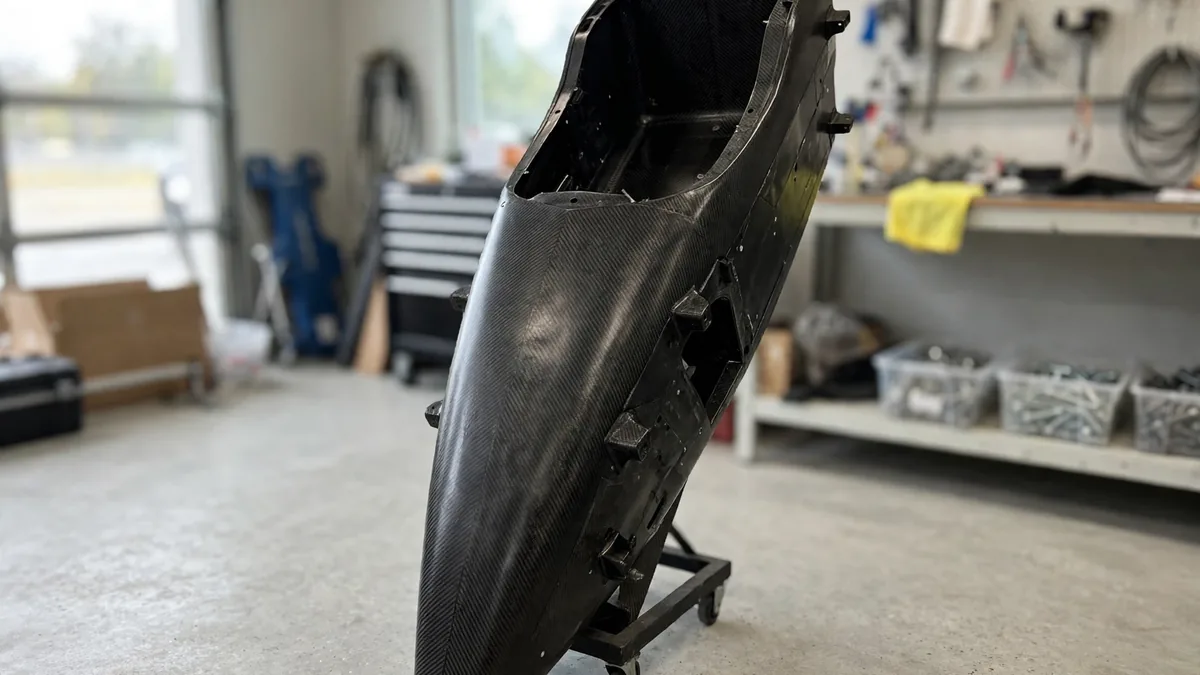
The result is a single rigid tub that holds the engine, the suspension and the driver in exactly the right places, with no flex and almost no weight to carry. This is how a luxury carbon-fibre chassis is made, from the first cut of cloth to the final test on the rig.
How It’s Made
Step 1: The carbon cloth is cut into a kit
The fibre arrives at the factory in wide rolls, already impregnated with resin and kept frozen so the resin stays soft and workable. This material is called prepreg, and it must be thawed slowly before use, because a roll that warms too fast sweats moisture into the resin and weakens the finished part. Each roll is logged, dated and tracked, since prepreg has a short working life once it leaves the freezer.
A cutting machine unrolls the cloth and slices it into hundreds of separate pieces, each one shaped for a precise spot on the chassis and numbered in the order it will be laid. The shapes are not rectangles. They are curved, tapered and notched to follow the tub, and a single chassis can need more than four hundred pieces, from broad panels for the floor to small patches that reinforce the corners where the suspension bolts on.
Step 2: The layers are laid into the mould by hand
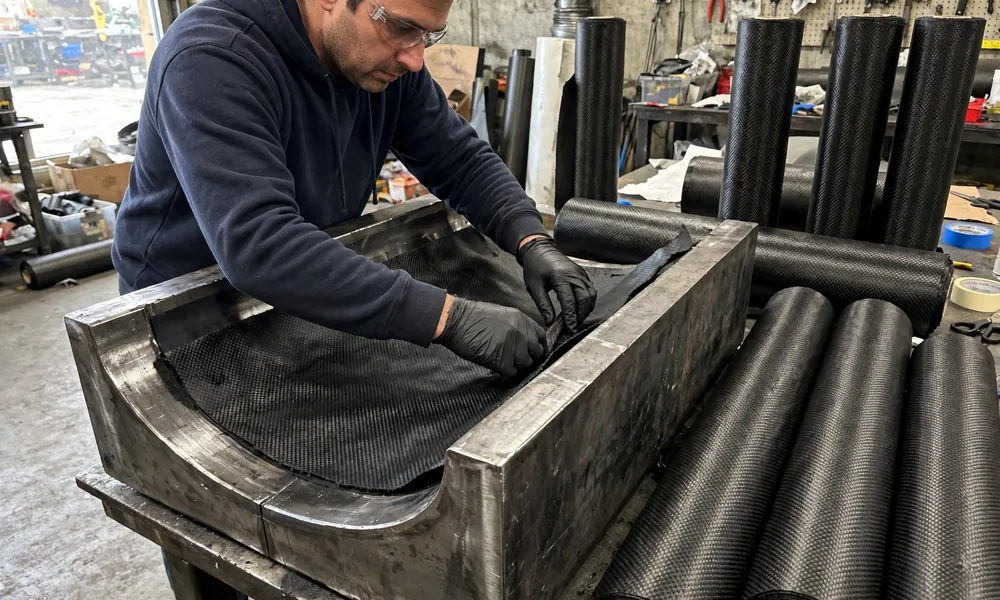
Technicians lay the pieces into a polished steel mould one at a time, pressing each ply into place and smoothing out every bubble and wrinkle. The direction of the weave matters as much as the number of layers. Some plies run straight along the tub, some run across it, and some sit at forty-five degrees, so the finished structure resists bending and twisting from every direction at once. A layer laid in the wrong direction is a weak spot, so each ply is checked against a chart before the next one goes down.
Step 3: The mould is cured in the autoclave
Once the last ply is down, the whole mould is sealed in a vacuum bag, plumbed to a pump, and wheeled into an autoclave, a giant oven that is also a pressure vessel. Inside, the temperature climbs to around 120 degrees Celsius while the pressure rises to about seven bar, pressing the layers together far harder than any hand could. The heat makes the resin flow, wetting every fibre, and then hardens it into a solid.
The cure takes several hours, and the temperature is raised and lowered on a strict schedule, because resin that heats too fast can boil and leave voids inside the laminate. Sensors inside the mould watch the temperature at a dozen points, and the engineers watch the readouts, waiting for the moment the resin passes from liquid to solid. When the cycle ends and the mould cools, the tub inside is one rigid piece.
Step 4: The tub is trimmed and bonded
The cured tub comes out of the mould rough at the edges, with flanges and excess material that must be cut away. A five-axis cutting machine trims the edges to within a fraction of a millimetre, following a digital model of the finished chassis, and the cut edges are sealed so moisture can never creep between the layers. The tub is then weighed, and the weight is compared with the design target, because a tub that is heavy has too much resin in it, and a tub that is light may be missing a ply.
Step 5: The mounting points are machined to microns
With the inserts in place, the chassis goes onto a measuring machine that checks every mounting point against the design. The suspension pick-up points must sit within a few hundredths of a millimetre of their intended position, because a chassis that is out of square makes a car that pulls to one side and wears its tyres unevenly. Any point that is out of tolerance is shimmed or re-machined until it is right.
Step 6: The chassis is tested, weighed and finished
Before it leaves the factory, the tub is tested. An ultrasonic scan looks for voids or delaminations hidden inside the laminate, and a tap test, where a technician taps the surface and listens for a dull note, catches anything the scan might miss. The tub is then loaded on a rig that twists it, measuring how much it flexes under a known force, and the stiffness is recorded as part of the car’s birth certificate.
Finally the tub is finished. The visible weave is often given a clear coat that shows off the carbon, while hidden areas get a protective paint that shields the resin from sunlight and stone chips. A small plate is bonded inside with the chassis number, and the tub is wrapped and sent to the assembly line, where the engine, the suspension and the body will be built around it.
| Spec | Detail |
|---|---|
| Material | Carbon-fibre prepreg, woven and unidirectional plies in epoxy resin |
| Layup | 400 or more hand-laid plies at 0, 45 and 90 degrees, vacuum debulked |
| Cure | Autoclave at around 120 degrees Celsius and about 7 bar, several hours |
| Weight | A finished monocoque tub typically weighs 70 to 100 kilograms |
| Stiffness | Torsional stiffness often above 30,000 newton metres per degree |
| Build time | Several days of layup plus cure, trim, bonding and testing |
The hardest part of a carbon-fibre chassis is not the material, which is well understood, but the patience it demands. Every layer must be laid by hand, every bubble pressed out, and every cure watched to the minute. A carbon tub takes a week, and the reward is a structure that weighs half as much and is several times stiffer, which is why every serious hypercar is built around one.
What One Costs
A luxury carbon-fibre chassis typically costs an estimated $150,000 to $400,000 to make, and the price is set mostly by the labour in the layup, the autoclave time and the cost of the prepreg itself. A small run of tubs shares the cost of the moulds and the tooling, while a one-off chassis carries all of it alone. For the way the finished tub behaves on the road, how a carbon-fibre chassis works explains the forces it carries, and why a carbon-fibre chassis is so expensive breaks down where the money goes.
A Rare Fact
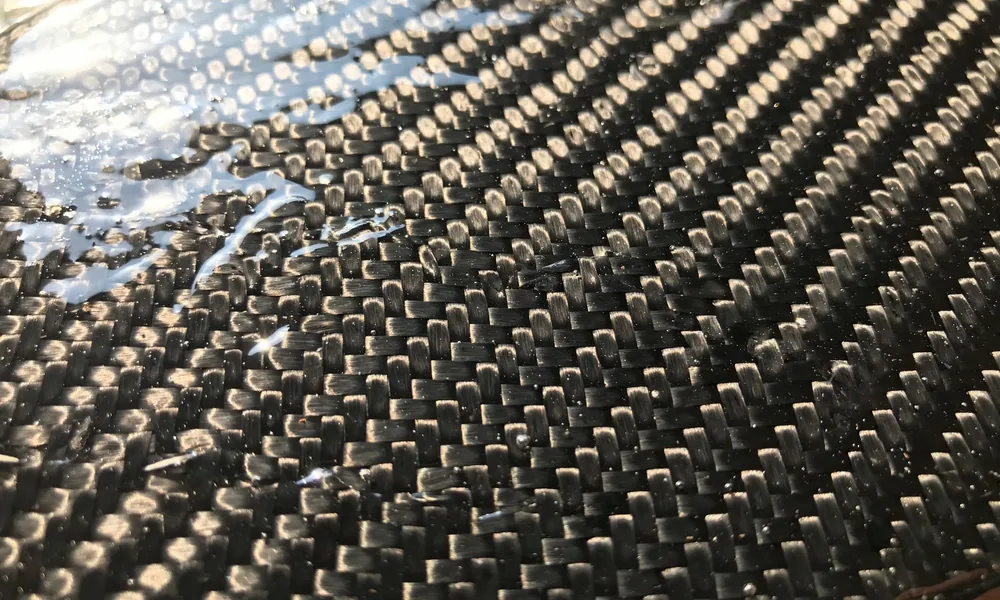
The beautiful woven pattern most people admire on a carbon-fibre car is often just one cosmetic layer. The structural plies underneath are usually unidirectional tapes, laid straight rather than woven, because straight fibres carry load better than a weave. The pretty pattern on top is there to be looked at, not to hold the car together.
A luxury carbon-fibre chassis is cloth, resin, heat and patience, turned into a single rigid tub that weighs less than its driver. It takes a week of careful handwork to make, and it is the reason a hypercar can be both feather-light and immensely strong. For the brakes that have to stop all that lightness, the carbon-ceramic brake specifications show what the chassis is paired with.