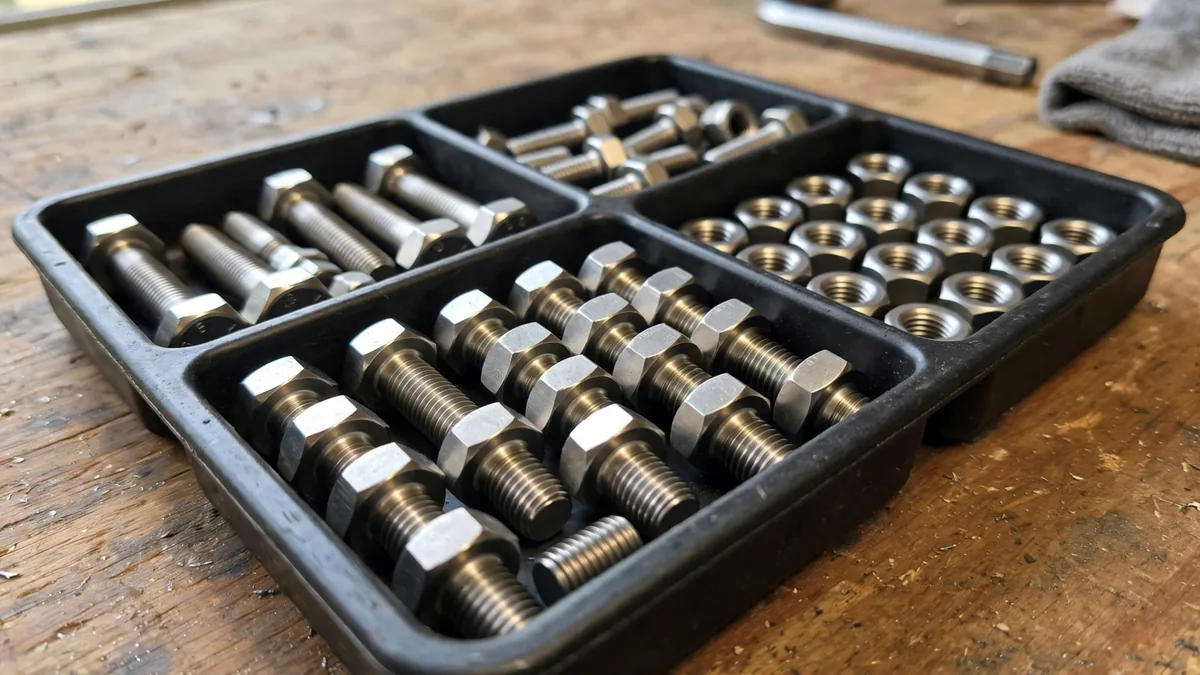
A single titanium bolt in a hypercar can cost more than a whole box of steel bolts, and it earns its price. It holds a suspension arm, a brake calliper or an engine mount together, in a place where a failure would be catastrophic, and it does it while weighing almost half as much as the steel bolt it replaces.
It starts as a plain bar of titanium alloy, and it ends as a fastener machined to tolerances a human hair would envy, with threads cut so cleanly they feel like silk. This is how a luxury titanium bolt is made, from bar stock to the small, gleaming part in the box.
How It’s Made
Step 1: The bar is chosen and checked
The bolt begins as a bar of grade five titanium, the same alloy used in jet engines, made from titanium with small amounts of aluminium and vanadium. The bar arrives with a certificate that records its exact chemistry and its heat treatment, and the batch number is logged, because a bolt that goes into a suspension arm must be traceable back to the mill that made the metal. A bar without a certificate is not used, no matter how good it looks.
Step 2: The blank is forged into shape
Many luxury bolts are not machined from a solid bar but forged first, heated until the metal glows and pressed in a die that forms the head and the shank in one blow. Forging lines the grain of the metal up along the shape of the bolt, like the grain in a piece of wood, which makes the finished fastener stronger and more resistant to fatigue than one cut entirely from bar. The head is formed with its hexagonal shape already in place, so less metal has to be cut away later.
Step 3: The shank and head are turned on a lathe
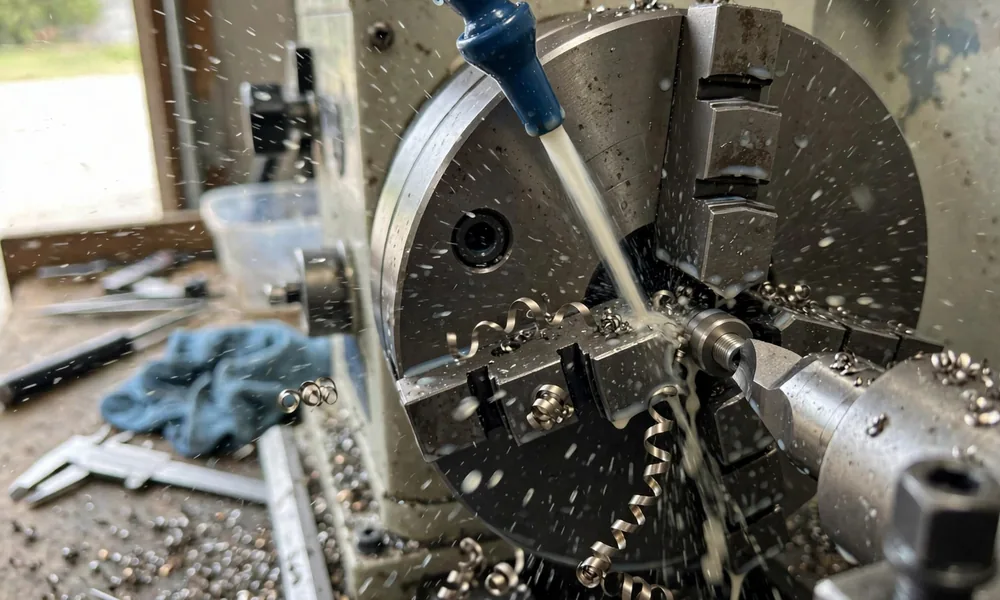
The forged blank goes onto a CNC lathe, a machine that spins the bolt while a cutting tool shapes it to the drawing. The shank is turned down to its final diameter, the head is faced flat, and the underside of the head is given a small radius where it meets the shank, because a sharp corner there is a place where a crack can start. Titanium is a difficult metal to machine. It does not carry heat away well, so the heat stays at the cutting edge, and the tool wears quickly if the speed is wrong.
Step 4: The threads are cut or rolled
The threads are the working heart of the bolt, and they are made in one of two ways. Some are cut on the lathe, with a single-point tool that traces the thread profile turn by turn, which gives a perfect thread but takes time. Others are rolled, pressed between hardened dies that squeeze the thread into the shank without cutting any metal away. A rolled thread is stronger, because the grain of the metal follows the thread instead of being cut across it, and most luxury bolts use rolled threads for that reason.
Whichever method is used, the thread is checked with a gauge, a ring that must screw onto the bolt smoothly by hand, with no tightness and no wobble. The gauge is itself checked regularly against a master, because a worn gauge would pass bad bolts. The thread is then inspected under a magnifier for torn or folded metal, and any bolt with a damaged thread is scrapped, not repaired, because a repaired thread is never trusted.
Step 5: The bolt is drilled, marked and finished
Many luxury bolts are drilled through the centre or hollowed at the head to save weight, a process called gun drilling, where a long, thin drill bores a hole down the middle of the shank without wandering off centre. A hollow bolt can weigh a third less than a solid one, and on a car with hundreds of fasteners, the saving adds up. The hole is then reamed smooth so no burr is left inside to start a crack.
Step 6: Every bolt is tested and weighed
Before a batch of bolts leaves the factory, samples are tested to destruction. A bolt is pulled in a tensile machine until it snaps, and the force it took is recorded and compared with the rating. Another is torqued and untorqued many times to prove the thread survives repeated use, and a few are sectioned and polished so the grain structure can be checked under a microscope.
Every bolt is weighed, and the weights are compared, because a bolt that is lighter than its brothers may have a hidden void, and a bolt that is heavier may have a machining error. The good ones are counted, bagged and labelled with their batch number, ready to be shipped to the car maker or the race team. The bad ones are scrapped, and the scrap is kept separate, since titanium swarf is valuable and goes back to the mill.
| Spec | Detail |
|---|---|
| Material | Grade 5 titanium, titanium with aluminium and vanadium |
| Forming | Hot forged head and shank, then heat treated to set strength |
| Threads | Rolled threads, gauge checked, stronger than cut threads |
| Weight saving | About 40 percent lighter than steel, more if gun drilled hollow |
| Tolerance | Shank diameter within a few hundredths of a millimetre |
| Testing | Batch samples pulled to destruction, threads gauged, every bolt weighed |
The hardest part of a titanium bolt is the paradox at its heart. It is a tiny, simple-looking part, but it is asked to do a critical job in a place where failure is not an option, and it is asked to do it while weighing almost nothing. That is why the making of it is so careful, and why a box of them costs what a whole car part used to cost.
What One Costs
A single luxury titanium bolt typically costs an estimated $15 to $120, and the price is set mostly by its size, whether it is gun drilled, and how many are made in the batch. A small engine bolt sits near the bottom of the range, while a large, hollow suspension bolt made in a short run costs far more, and a full set for one hypercar can run into thousands of dollars. For the numbers behind the part, the titanium bolt specifications list the sizes and strengths, and how a luxury titanium watch is made shows the same metal shaped into something worn on the wrist.
A Rare Fact
Titanium bolts have a habit called galling, where the threads cold-weld themselves to the part they are screwed into, so tightly that the bolt can seize solid. Mechanics fit them with a special anti-seize paste and torque them in slow, even stages, because a galled bolt has to be drilled out, and drilling out a titanium bolt is a job no one wants.
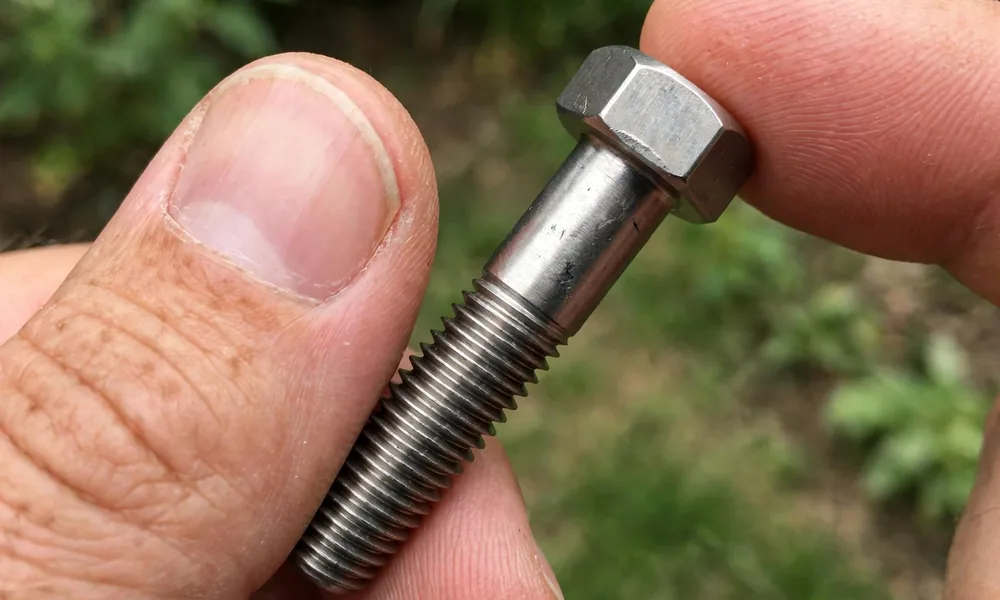
A luxury titanium bolt is a bar of alloy, a forging press, a lathe and a thread roller, turned into a fastener that weighs half as much as steel and holds twice the trust. It is the smallest expensive part on a hypercar, and one of the most important. For the tiny machine that uses the same obsession with precision, how a luxury mechanical watch is made shows what happens when that care is applied to gears instead of bolts.