A magnesium wheel is the lightest metal wheel a car can wear, and the difference is one you can feel in your hands before the wheel ever touches the road. Pick up an aluminium wheel and then a magnesium one of the same size, and the magnesium wheel feels as if someone forgot to put the metal in it.
That lightness comes from the metal itself. Magnesium is about a third lighter than aluminium, and it has been used in racing wheels for decades, because at the wheels, every gram saved is a gram the suspension does not have to control and the engine does not have to spin. This is how a luxury magnesium wheel works, from the metal in the rim to the grip at the road.

How It Works
Step 1: The wheel holds the tyre against the road
The wheel’s first job is to hold the tyre, and the tyre is what actually touches the road. The tyre is a ring of rubber filled with air, and it flattens slightly where it meets the tarmac, forming a contact patch about the size of a hand. All of the car’s acceleration, braking and cornering happens through those four small patches, and the wheel’s job is to keep the tyre in shape and pass those forces into the car.
A magnesium wheel does this job with less mass than any other metal wheel. The rim is a deep channel with raised lips that trap the tyre’s beads, and the air pressure inside the tyre presses the beads against those lips so hard that the seal holds even under violent cornering. The wheel must be stiff enough not to flex and break that seal, and magnesium, for its weight, is remarkably stiff.
Step 2: The spokes carry the torque from hub to rim
When the driver presses the accelerator, torque flows from the engine through the driveshaft to the hub, and from the hub out through the spokes to the rim and the tyre. When the driver brakes, the force runs the other way, from the road through the tyre and rim to the brake disc. The spokes are the bridge, and they carry these loads in tension and compression, reversing direction every time the driver switches from power to braking.
Step 3: The rim resists bending in corners
In a hard corner, the outside wheels carry most of the car’s weight, and the tyre pushes sideways against the rim with a force of well over a tonne. The rim has to resist that push without bending, because a rim that flexes lets the tyre roll off its bead and lose pressure. Magnesium’s stiffness-to-weight ratio is what makes this possible at such a low mass, and the rim is given a deep, strong profile to add rigidity where the loads are highest.
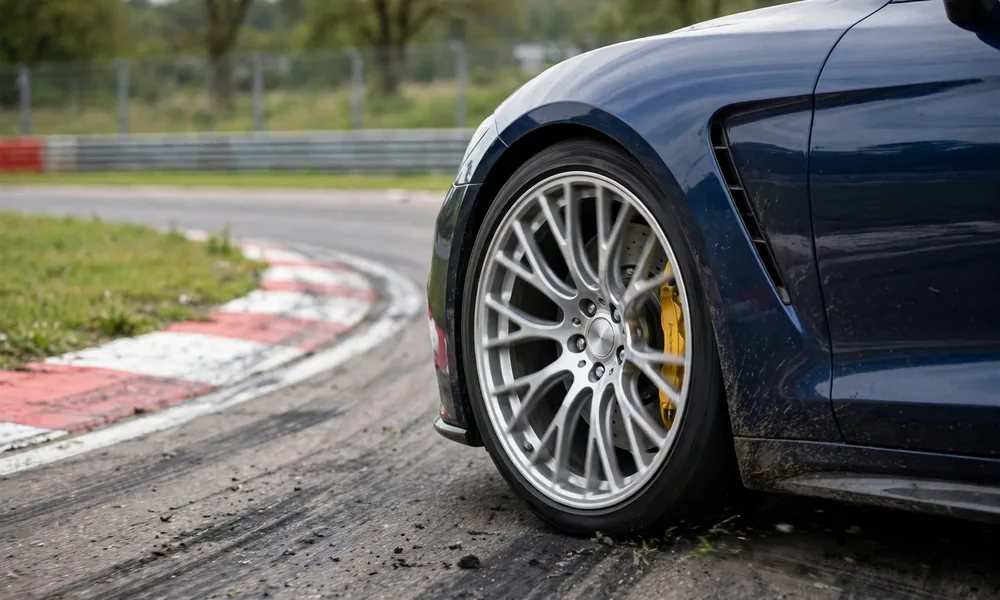
Step 4: The hub takes the clamping force of the nuts
The centre of the wheel is where everything comes together. The hub carries the wheel nuts or the centre-lock nut, the brake disc bolts to it, and the driveshaft passes through its middle. The clamping force of the nuts is enormous, and it must be spread evenly, because magnesium is softer than steel and a nut tightened onto bare magnesium would sink into the surface.
Step 5: Less unsprung weight keeps the tyre on the road
The biggest benefit of a magnesium wheel is not the weight on the scales but the weight the suspension has to manage. The wheel, tyre and brake are unsprung weight, mass that is not carried by the springs, and the suspension has to control all of it as the car moves over bumps. A lighter wheel is easier for the springs and dampers to control, so the tyre stays pressed to the road more of the time.
Over a bumpy road, a heavy wheel is thrown up by a bump and takes time to come back down, and while it is in the air it has no grip at all. A magnesium wheel comes back down faster, so the tyre spends more time in contact with the road, and the car grips better. The driver feels this as a car that is more settled over rough surfaces and more willing to change direction, because the suspension is working with the wheel instead of fighting it.
Step 6: The wheel is protected, balanced and checked
Magnesium has one weakness: it corrodes easily. Bare magnesium left in the rain will oxidise, and road salt attacks it, so every magnesium wheel is protected with a coating, usually a chromate treatment followed by paint or a clear lacquer. The coating must be kept intact, because a chip that exposes bare metal will corrode, and a corroded wheel is a weakened wheel.
Before the wheel goes on a car, it is balanced on a machine that spins it and finds the heavy spot, and small weights are clipped to the rim until it runs true. The wheel is also tested in the factory, spun on a rig that simulates years of cornering loads, and impact tested to prove it survives a pothole strike. Wheels that pass are given a serial number, and their history is tracked, so a wheel that has taken a hard hit can be pulled and inspected before it goes back on a car.
| Spec | Detail |
|---|---|
| Material | Magnesium alloy, about a third lighter than aluminium |
| Construction | Cast or forged in one piece, spokes and rim with no joints |
| Weight saving | Typically 25 to 35 percent lighter than an equivalent aluminium wheel |
| Hub fixing | Steel inserts in the bolt holes, hub-centric centre bore |
| Protection | Chromate treatment plus paint or lacquer, coating must stay intact |
| Inspection | Dye test or X-ray after any hard impact, serial numbered and tracked |
The hardest part of a magnesium wheel is the care it demands after it is made. It must be kept coated, kept away from road salt, and inspected after any impact, because the metal that makes it so light also makes it vulnerable.
What One Costs
A single luxury magnesium wheel typically costs an estimated $2,500 to $8,000, and a set of four is a serious purchase. The price is set mostly by the alloy, the forging and the machining, since magnesium is harder to work with than aluminium and the factory needs special fire precautions. For how the wheel itself is built, how a magnesium wheel is made follows the casting and the forging, and why a magnesium wheel is so expensive breaks down where the money goes.
A Rare Fact
Magnesium burns, and it burns fiercely, which is why magnesium wheels were once banned from some forms of racing. A magnesium wheel in a fire cannot be put out with water, which only makes it burn hotter, and the factories that make them keep special extinguishers and sand buckets on the floor, a reminder that the lightest metal on the car is also the liveliest.
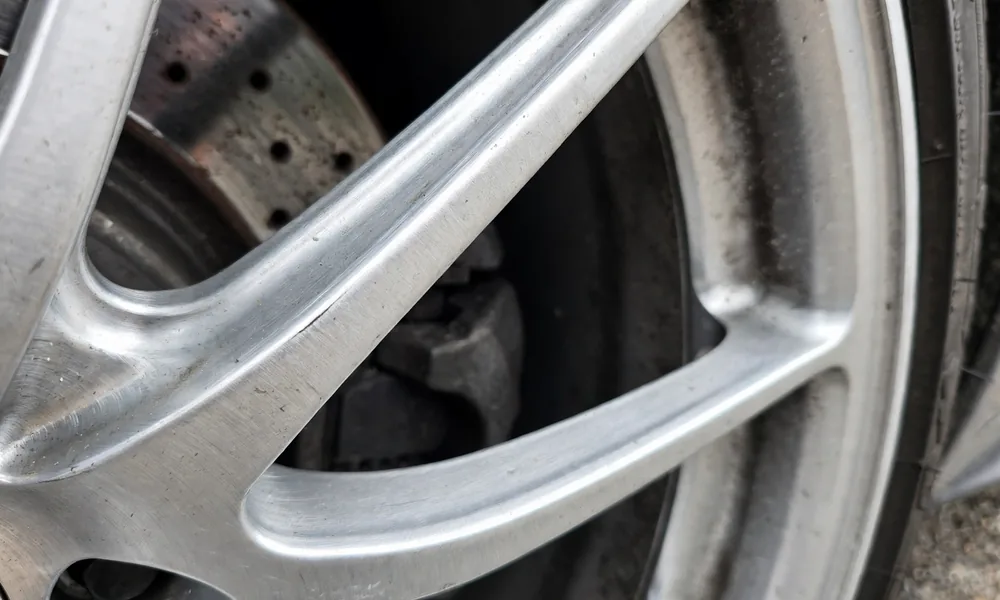
A luxury magnesium wheel is a single piece of the lightest structural metal a car can wear, shaped to carry the tyre, pass its forces and keep its grip on the road, all while asking the suspension to do less work. It is the oldest trick in racing, and it still works. For the exact numbers behind the part, the magnesium wheel specifications list the sizes, weights and ratings.


