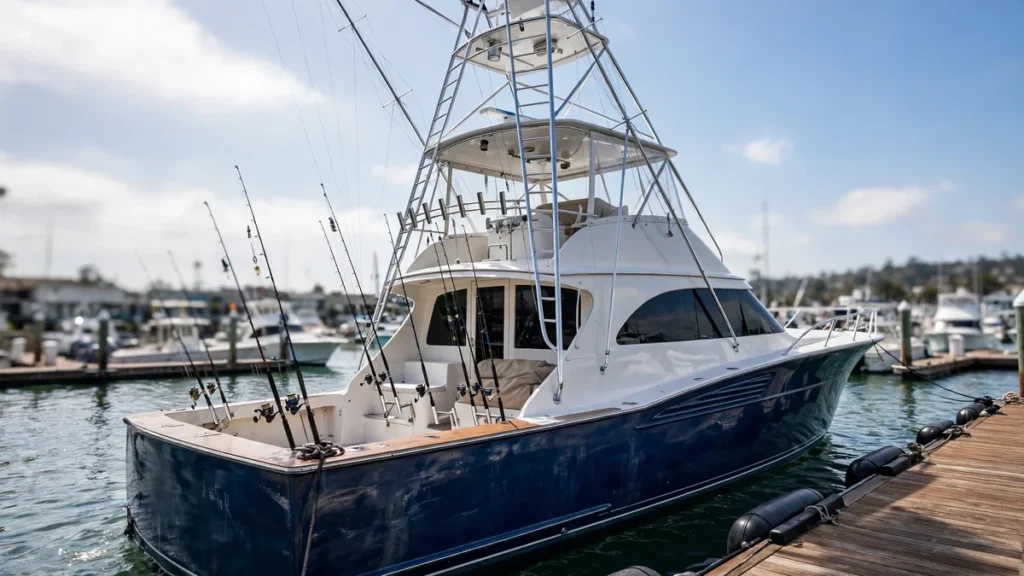
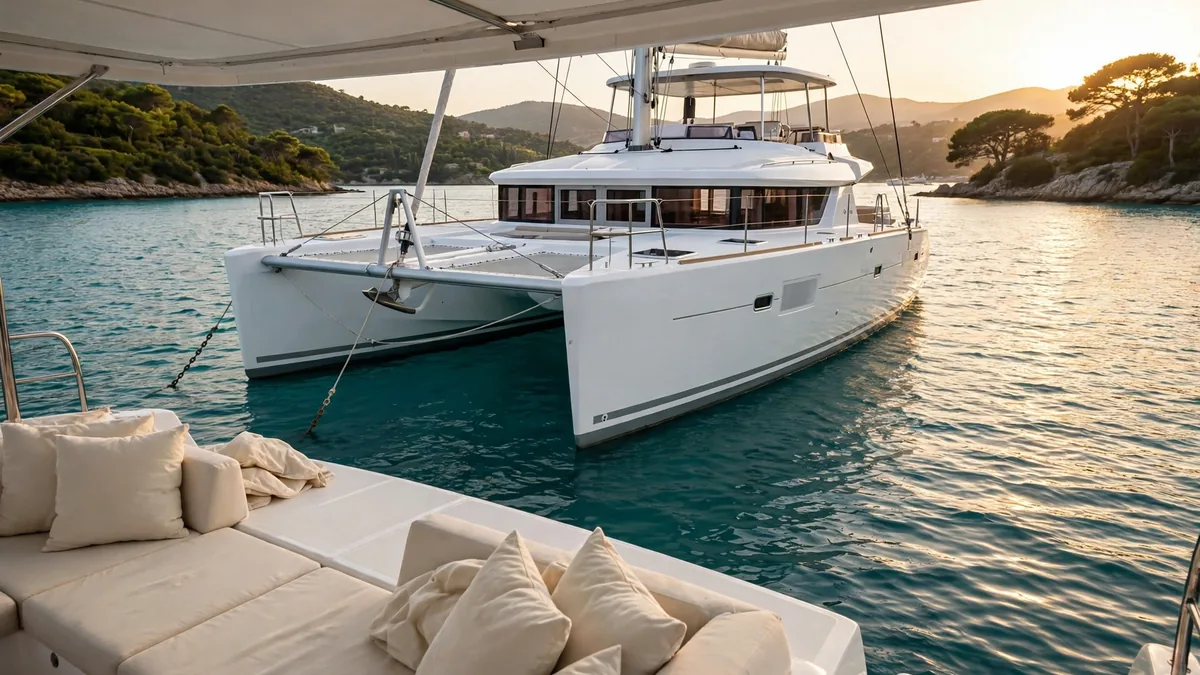
Stand on a marina pontoon at sunset and watch a luxury catamaran glide in, and the first thing you notice is how calm it looks. It does not roll with the swell the way a single-hull yacht does. It sits flat, wide and steady, like a floating terrace that happens to have sails. Guests step aboard without grabbing a handrail, a glass of something cold stays upright on the table, and the whole boat feels more like a house that can travel than a vessel that must be sailed.
That steadiness is the whole point of a catamaran, and it is also what makes one so hard to build. Two hulls must be made separately, joined into a single rigid platform, and finished to the standard of a five-star hotel, all while keeping the weight low enough for the boat to sail well. A yard that gets it wrong ends up with a boat that flexes, creaks and hobby-horses in a chop. A yard that gets it right ends up with the most liveable yacht afloat.
This is how a luxury catamaran yacht comes together, from the first sheet of fibreglass to the day the two hulls first meet the sea as one boat.
How It’s Made
Step 1: Designing two hulls that work as one
Before any material is cut, the catamaran lives inside a computer. Naval architects model both hulls, the bridge deck that spans them and the mast, then run thousands of simulated sea states through the design. Each hull is long and narrow, which keeps drag low, while the wide gap between them gives the stability that owners love. The bridge deck must sit high enough that waves passing between the hulls do not slam into it, a noisy fault called bridging that ruins a cheap design.
The team settles the hull spacing early because everything else hangs off it. Push the hulls further apart and the boat gets more stable but harder to berth and more expensive to build. Bring them closer and the saloon shrinks. Tank tests with scale models confirm the numbers, and only then does the yard order the moulds. A related build, the luxury catamaran, shows how the same twin-hull idea works at a smaller scale, and the comparison explains why the yacht version needs so much more structure.
Step 2: Moulding the hulls
Each hull is built in its own polished female mould, laid up by hand from fibreglass cloth and vinylester resin. Workers place layer after layer at precise angles, because the direction of the fibres decides where the hull is stiff and where it can flex. In the flat panels, a light foam core goes between the skins to keep them rigid without adding weight, the same sandwich technique used in aircraft floors.
Step 3: Building the bridge deck and crossbeams
While the hulls cure, a second crew builds the bridge deck, the wide platform that joins them and carries the saloon. It is a sandwich panel in its own right, stiffened with bulkheads and bonded beams, and it must be enormously strong: in a heavy sea, the two hulls try to twist in opposite directions, and the bridge deck is the only thing holding them together.
Step 4: Joining the hulls
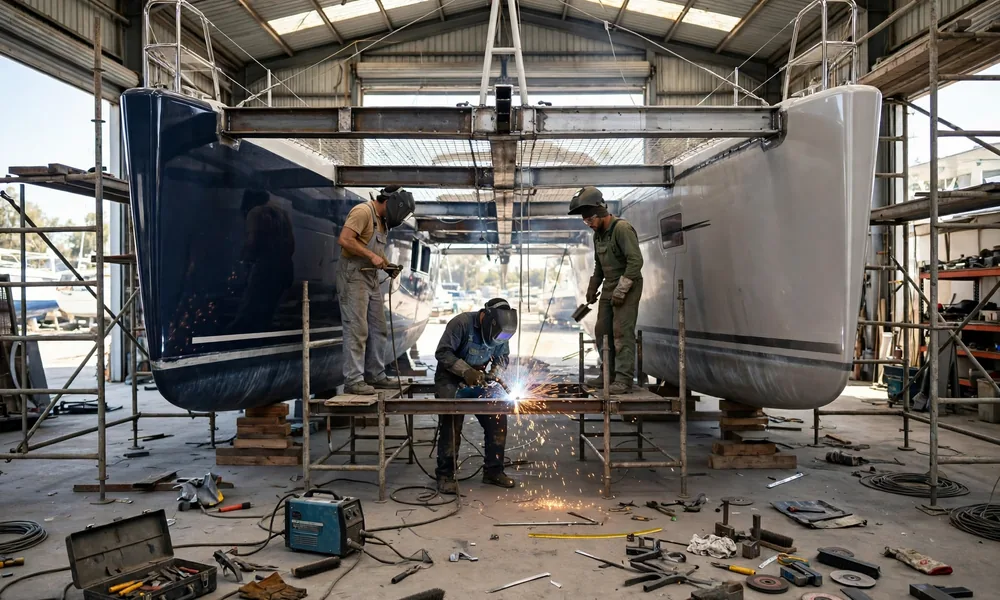
Joining day is the most dramatic moment of the build. Cranes lift the two hulls into a cradle, the bridge deck is lowered between them, and the three pieces are bonded into one structure. The joints are wrapped in extra layers of glass and cured again, turning separate parts into a single rigid platform.
The finished structure is then tested by loading it with water bags and measuring how much it bends. The numbers have to match the design model before the build is allowed to continue. The catamaran yacht specs explain what those stiffness figures mean in practice, from beam to displacement and why the numbers matter more on a catamaran than on any single-hull yacht.
Step 5: Installing engines, systems and the rig
With the platform complete, the boat gets its machinery. Most luxury catamarans carry an engine in each hull, which gives redundancy and makes manoeuvring in a marina almost easy: push one engine forward and the other astern and the boat turns in its own length. Fuel tanks, water tanks, generators and air conditioning are spread between the hulls to keep the weight balanced.
Step 6: The luxury interior
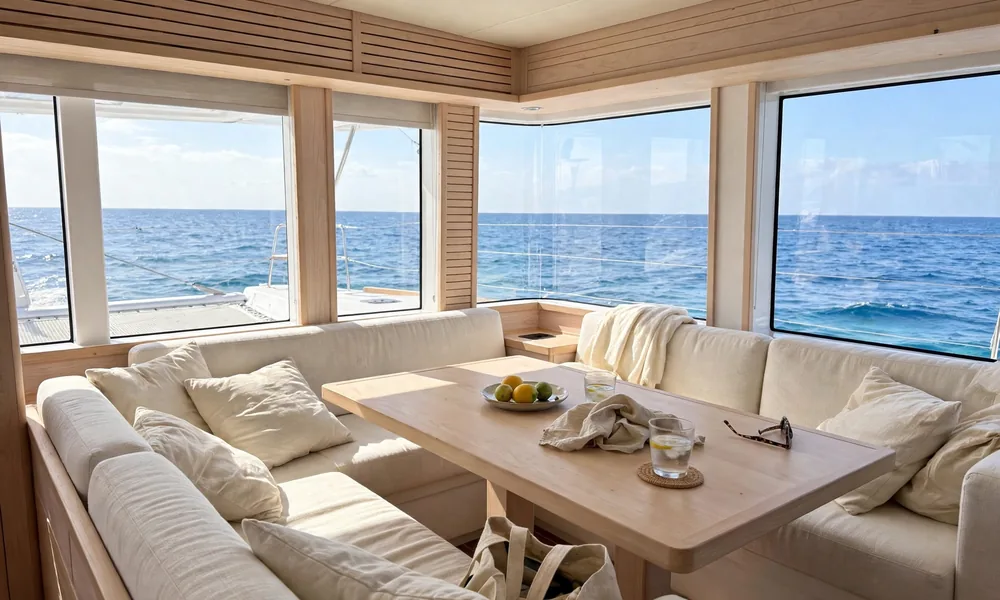
A luxury catamaran is a floating apartment, and the interior is where the money shows. The saloon sits on the bridge deck, with panoramic windows, pale wood, cream upholstery and a galley that would suit a small flat. Below, each hull holds cabins: a master suite in one, guest cabins in the other, each with its own bathroom and standing headroom.
Step 7: Launch, tuning and sea trials
Launch day is only the start of the testing. The boat is first motored in flat water, checking the engines, the steering and the systems. Then the crew raises the sails and builds speed in small steps, watching how the hulls behave in a chop and whether the bridge deck stays clear of the waves.
Sea trials run for weeks. The boat is sailed upwind and down, in light air and in a blow, with the yard’s test crew aboard and the owner’s captain learning the systems. Only when the boat sails flat, tracks straight and comes about cleanly is it handed over. The reasons a catamaran yacht costs so much become obvious at this point, because the trials alone can take a month of skilled labour and a small fortune in fuel, sails and yard time.
| Specification | Typical figure |
|---|---|
| Length overall | 15 to 24 metres |
| Beam | 8 to 12 metres |
| Hull material | Fibreglass and vinylester resin, foam core |
| Engines | Twin diesels, 75 to 150 hp each |
| Cruising speed | 8 to 12 knots |
| Guests and crew | 8 to 10 guests, 2 to 3 crew |
| Build time | 12 to 20 months |
How much does one cost?
A luxury catamaran yacht is priced like a small superyacht, and the double hull is a large part of why: the yard is effectively building two boats and a bridge between them. As an estimate, a new 18-metre example costs roughly 3 to 6 million dollars, with the composite structure, twin engines and bespoke interior accounting for much of that figure. A fully custom 24-metre boat with a bespoke interior can be estimated well past 10 million dollars.
A rare fact
Here is something few people know: a catamaran can sail without heeling at all, yet it can still capsize, and the danger comes from the very stability that makes it comfortable. A monohull heels over and spills wind from its sails when a gust hits, which acts as a safety valve. A catamaran stays flat and keeps every bit of the gust, so the load climbs until something has to give, which is why racing catamarans carry load sensors that warn the crew to ease the sails.
Yards build that lesson into every luxury catamaran, from the strength of the bridge deck to the size of the rig. The result is a boat that feels like a house, sails like a racer and asks its crew to respect the wind in a different way.