Every day, millions of people cross water on a ferry. They drive their cars aboard, find a seat by the window, buy a coffee and watch the coast slide past. A ferry is the most ordinary ship in the world, and also one of the most important, because for island communities and coastal cities it is the road itself, the bus and the bridge all in one.
At the luxury end, a modern passenger ferry is a different creature from the tired old boats many people remember. It has quiet electric or hybrid engines, a bright lounge with proper food, open decks, fast boarding and a bridge full of technology. Here is how a luxury passenger ferry works, from the car deck below to the bridge above.
How It Works
Step 1: Boarding cars and passengers
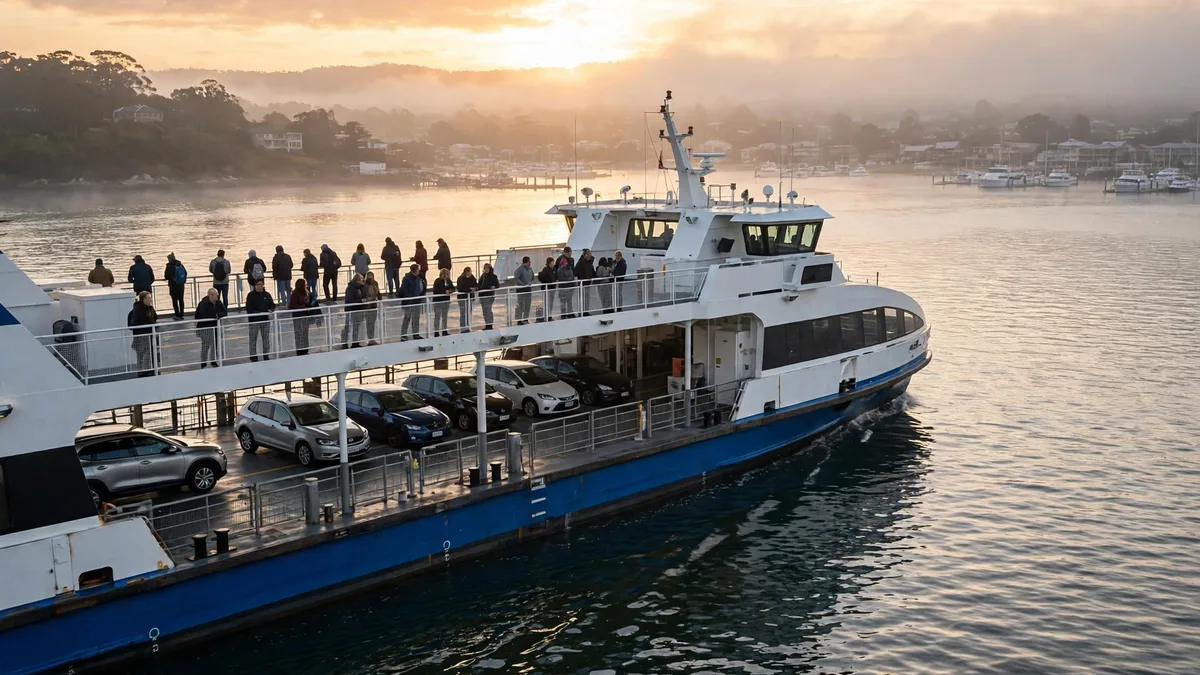
A ferry’s working day starts at the linkspan, the ramp that connects the quay to the ship. Cars drive aboard in lanes, guided by crew with hand signals, and are parked in tight rows on the vehicle deck. Lorries and buses take the centre lanes, cars the outer ones, and the crew checks that every vehicle is parked, braked and clear of the ramps. Passengers on foot board through a separate gangway and climb to the lounges above. The crew also checks that hazardous loads, like fuel tankers, are parked in the right place and kept apart from other vehicles. The whole loading takes twenty to forty minutes, and the ship cannot sail until the vehicle deck is checked, the doors are closed and the ramp is lifted clear.
Step 2: The car deck and stability
Below the lounges, the car deck is a vast open space with a steel floor, lanes painted in bright colours and a ceiling low enough that drivers have to mind their heads. The deck is divided by fire doors and fitted with sprinklers, and the crew keeps it clear of loose objects that could move in a swell. Stability matters more on a ferry than on almost any other ship, because the weight of hundreds of cars sits high in the hull. Computers watch the ship’s balance constantly, and ballast water is pumped between tanks to keep the ferry level. The best electric ferry interiors ranked guide shows how the newest ferries design these spaces, with wide lanes, clear signs and easy access for every passenger.
Step 3: Engines and quiet power
The newest luxury ferries run on hybrid or fully electric power. Batteries charged at the terminal drive electric motors, and a diesel generator only starts when the batteries run low or the ferry needs extra power in bad weather. Electric ferries are quiet, with no engine roar in the lounge and no exhaust smell on deck, and they charge in the minutes between sailings while cars are loading. Older ferries still use diesel engines and propellers, but the direction of travel is clear: the ferry of the future plugs in. The best electric ferry brands ranked guide explains which builders are leading this change, and how their boats are already carrying passengers every day.
Step 4: The passenger lounges
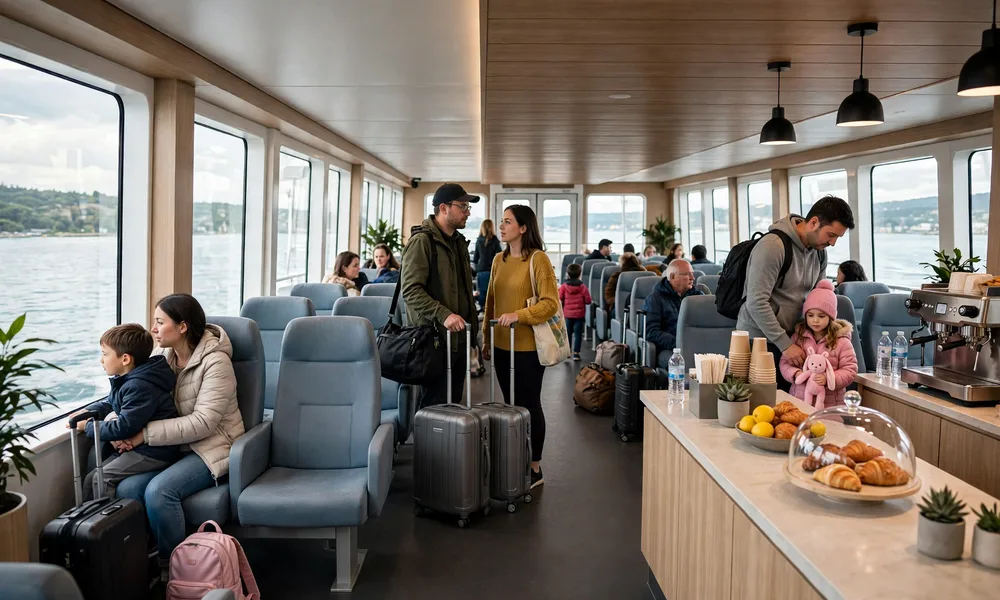
Upstairs, the ferry becomes a floating lounge. Rows of comfortable seats face large windows, a cafe serves coffee and hot food, and there are play areas for children, quiet zones for working and open decks for fresh air. The newest ferries use warm wood, soft lighting and clear signage, so the space feels more like an airport lounge than a ship. Everything is built to be cleaned quickly between sailings, because a ferry may make a dozen crossings a day, and the lounge has to look fresh for every one of them. The best electric ferry seats ranked guide covers the seats themselves, from reclining chairs to family booths and the panoramic seats at the front.
Step 5: The bridge and the crossing
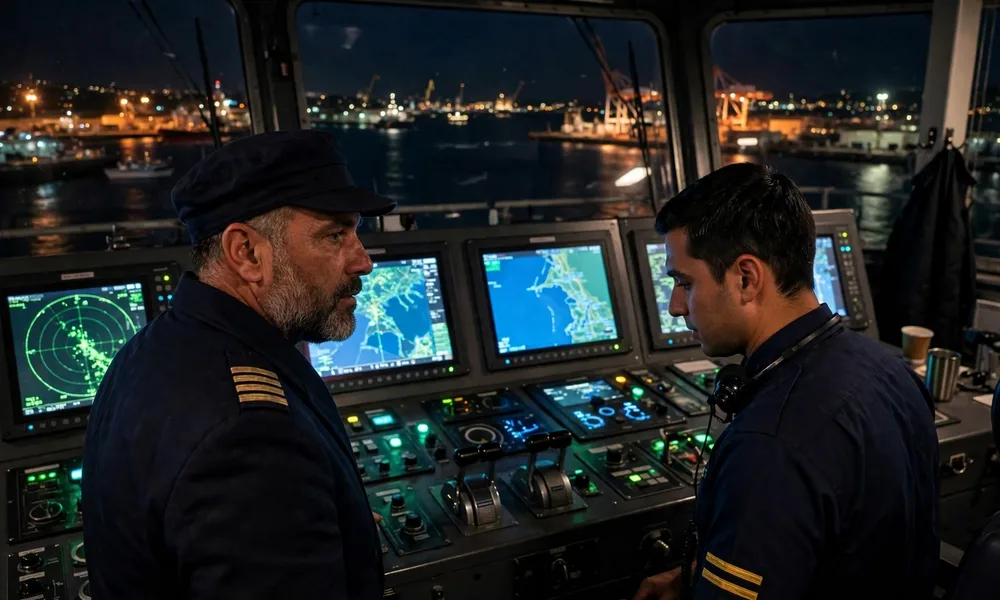
On the bridge, the captain and officers guide the ferry across busy water. They watch radar and cameras, talk to port control on the radio and keep a lookout for small boats, fishing vessels and other ferries. Many routes are sailed several times a day, so the crew knows every buoy, every current and every shallow patch by heart, but they still follow the same checks on every crossing. On the shortest routes the crossing takes less than half an hour, and regular passengers know the timetable by heart. Modern ferries use electronic charts and automatic docking systems that can bring the ship alongside with great precision, and some routes are already testing systems that let the ferry dock itself.
Step 6: Arrival, unloading and the next sailing
Arrival is loading in reverse, and just as carefully. The ferry docks, the ramp drops, the bow or stern doors open and the vehicles drive off in lanes while foot passengers leave by the gangway. The crew inspects the car deck for damage, lost items and anything left behind, and the ship is refuelled or recharged while the next load of cars waits on the quay. Turnaround can be as short as ten minutes on a busy route, and the whole day is a rhythm of loading, crossing and unloading, repeated until the last sailing at night.
Passenger Ferry Specifications
| Specification | Typical Large Luxury Passenger Ferry |
|---|---|
| Length | 100 to 200 metres |
| Passengers | 600 to 2,000 |
| Vehicles | 150 to 400 cars |
| Propulsion | Hybrid or battery-electric, diesel backup |
| Cruising speed | 18 to 25 knots |
| Crew | 20 to 60 |
| Crossings per day | 6 to 12 |
The Price
A large luxury passenger ferry costs an estimated $50 million to $150 million to build, with battery-electric ferries costing more up front but less to run, since electricity is cheaper than diesel and electric motors need less maintenance. A ticket costs only a few dollars to a few tens of dollars, so a ferry earns its money on volume, carrying thousands of people and hundreds of cars every day. Many ferries are run as public services, with fares kept low so that islanders can afford to travel every day. For the towns and islands it serves, the ferry is worth far more than its ticket sales, because without it there is no road, no commute and no connection to the mainland.
A Rare Fact
The world’s first fully electric car ferry started carrying passengers in Norway in 2015, and it charges its batteries in about ten minutes while cars are loading. The batteries are so large that the ferry can cross the fjord and back several times on a single charge, and the charging station on shore holds its own battery bank, charged slowly from the grid so the local power supply is never strained. It was the first sign that the ferry of the future would plug in rather than fill up.
A passenger ferry is the most useful ship there is. It does not cross oceans or carry gold, but it carries people to work, to school, to hospital and home again, every day, in all weathers. The newest ferries do it quietly, cleanly and in comfort, and they are becoming the greenest ships on the water. For the millions who depend on them, the ferry is not a luxury. It is the way home.