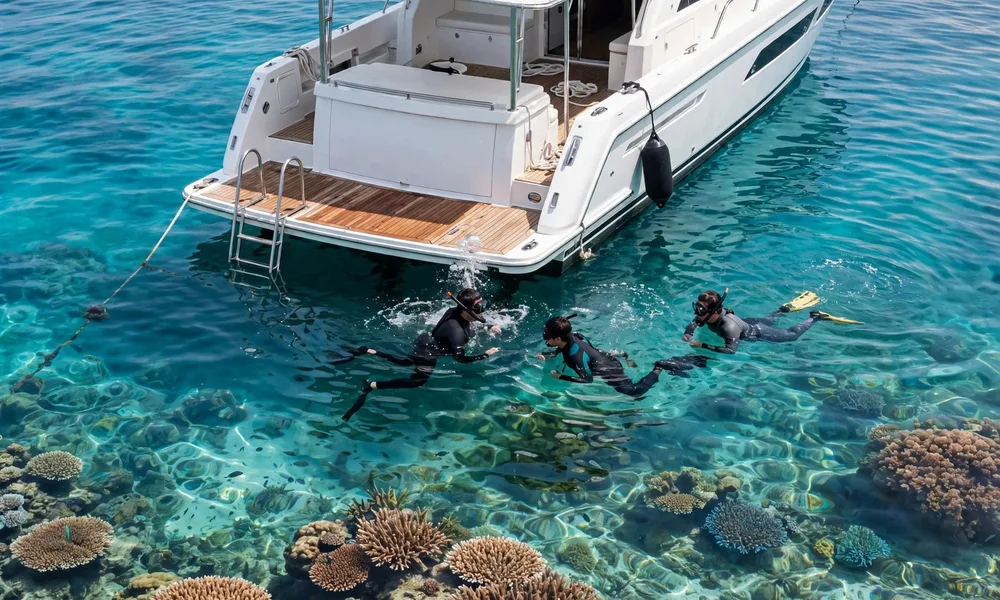
The harbour is busy at dawn, but one boat stands out. It is not the biggest yacht in the marina, and it is not the fastest, but its deck is laid out like a workshop: tanks in neat rows, a compressor humming, a dive platform at the stern that lowers into the water. A luxury dive boat is a working boat dressed in yacht clothes, built to carry divers and their gear to reefs and wrecks in comfort, and then bring them home tired, happy and dry.
It is made by people who understand both boats and diving, and every detail, from the tank racks to the freshwater showers, exists because a diver asked for it. This is how a luxury dive boat is made, from the first hull mould to the first splash of a diver rolling off the stern.

Step 1: The hull is moulded for a steady diving platform
A dive boat starts with its hull, and the hull is shaped for steadiness rather than speed. Fibreglass is laid into a mould in layers, with resin rolled in by hand, until the hull is thick and strong, then it is stiffened with a grid of frames and stringers that keep it rigid in a chop. The bow is given a gentle flare to throw spray aside, and the stern is left wide and flat, because that is where the diving happens.
Step 2: The deck is laid out for diving, not sunbathing
The deck of a dive boat is a workshop, and it is laid out with divers in mind. Tank racks line the sides, each one padded and strapped so a cylinder cannot fall, and benches are fitted at the right height for sitting down to put on fins. A rinse tank for cameras sits near the stern, and a freshwater shower is fitted so divers can wash the salt off before they come inside.
The stern platform is the heart of the boat. It is wide, low to the water and covered in non-slip decking, with a ladder that reaches well below the surface and handrails placed exactly where a diver in full gear needs them. A small crane is fitted on some boats to lift heavy equipment, and a compressor room is built below deck to fill tanks between dives. The whole layout is explained in the guide to what a luxury dive boat is, and the build follows that layout down to the last handrail.
Step 3: Engines and fuel systems are installed
A luxury dive boat needs reliable power, because it works far from shore and often runs its engines all day. Twin diesel engines are lowered into the engine room and bolted to the hull, driving propellers through shafts or stern drives, with a generator fitted alongside to power the compressors, the air conditioning and the galley. Fuel tanks are placed low and central, and every fuel line is double-clipped and labelled.
Step 4: Compressors, tanks and air systems go in
The air system is what makes a dive boat different from any other yacht. A high-pressure compressor is installed in a ventilated compartment, with filters that strip oil and moisture from the air before it reaches a tank. The compressor fills banks of storage cylinders, and those banks fill the divers’ tanks through a filling panel with gauges for every line.
Step 5: Cabins, galley and dive briefing spaces are fitted
Below deck, the dive boat becomes a small hotel. Cabins are fitted with comfortable bunks, storage for personal gear and good ventilation, because divers sleep hard after a day in the water. The galley is fitted out like a small restaurant kitchen, with a proper stove, a fridge big enough for a week of food, and a table where the whole group can eat together.
A briefing area is set up on deck or in the saloon, with a whiteboard or screen where the dive guide can sketch the reef, explain the currents and set the plan for the next dive. Cameras and dive computers are given a dry, padded charging station, because on a modern dive boat the photography is almost as important as the diving. Quiet, careful engineering below the waterline is what makes all of this possible, and a submarine built for the same waters shows how far that discipline goes, as the guide to how a luxury submarine works explains, with every system doubled and every failure planned for.

Step 6: Sea trials and the first dive trip
Testing a dive boat means using it as a dive boat. The yard runs sea trials first, checking speed, fuel use and handling in a chop, and making sure the boat holds its course with a full load of tanks and people. Then the dive systems are tested: the compressor is run for hours, tanks are filled and checked, and the stern platform is tried with divers in full gear rolling in and climbing out.
Only when everything works does the boat take its first paying guests, usually on a short trip to a nearby reef, with the builders aboard to watch and listen. Fishing boats built for the same seas face the same test of a working deck in rough water, and the guide to how a luxury fishing boat works shows how a deck built for work, rather than show, is laid out and tested, and the dive boat follows the same honest standard.
Specifications at a glance
| Feature | Typical luxury figure |
|---|---|
| Length | About 20 to 40 metres |
| Hull | Fibreglass, wide beam, deep V forward |
| Engines | Twin diesels, about 800 to 2,000 hp total |
| Divers | About 12 to 30 guests, plus crew |
| Air system | High-pressure compressor with filter banks |
| Top speed | About 12 to 22 knots |
| Range | About 500 to 1,500 nautical miles |
What it costs
A luxury dive boat typically costs between about $2 million and $15 million, and these are estimates, not fixed prices. The price rises with size, the number of divers it carries and the quality of the air and compressor systems, and many owners add camera rooms, nitrox systems and extra tenders that push it higher. Running costs are significant too: fuel, compressor maintenance, crew and diving certification add up across a season, but the boat earns its keep by taking divers to places they cannot reach from shore.
A rare fact
Some luxury dive boats carry a recompression chamber on board, a steel tube in which a diver with decompression sickness can be put back under pressure while the boat races for shore. It is a piece of hospital equipment on a pleasure boat, and it is rarely used, but on a remote reef, days from the nearest hospital, it can save a life. The chamber is checked and certified like the rest of the air system, and the crew trains on it before every season.
From tank racks to recompression chambers, a luxury dive boat is made by people who know that the best diving happens when the boat simply works. The result is a vessel that feels like a hotel on the way out and a workshop on the way back, with salt on the decks and happy divers drying off in the sun.