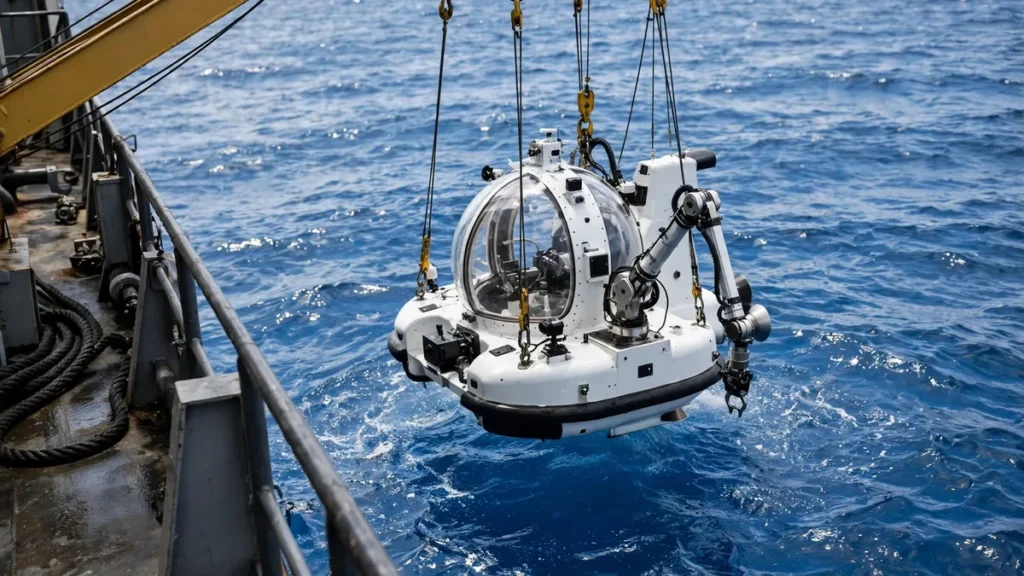
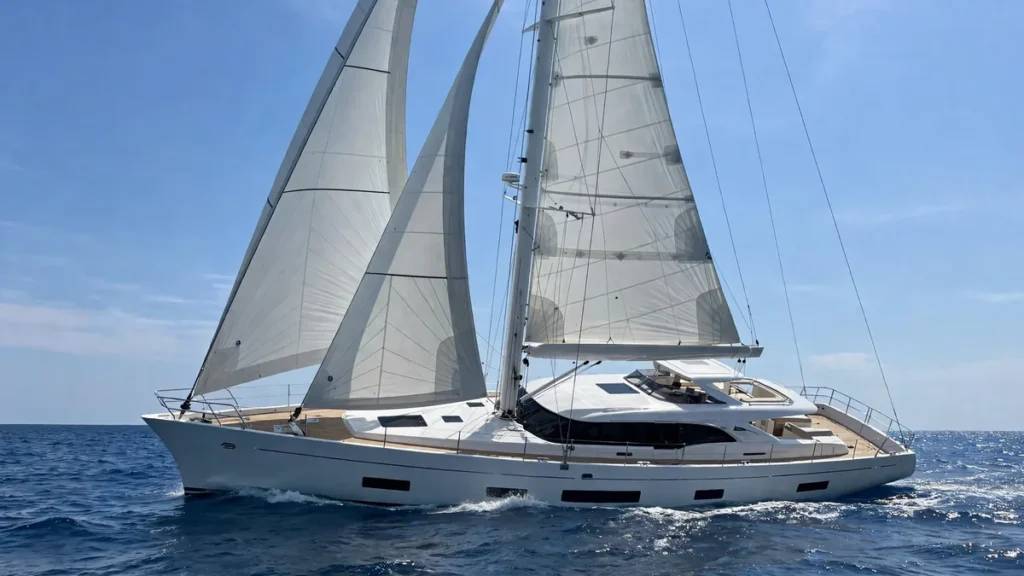
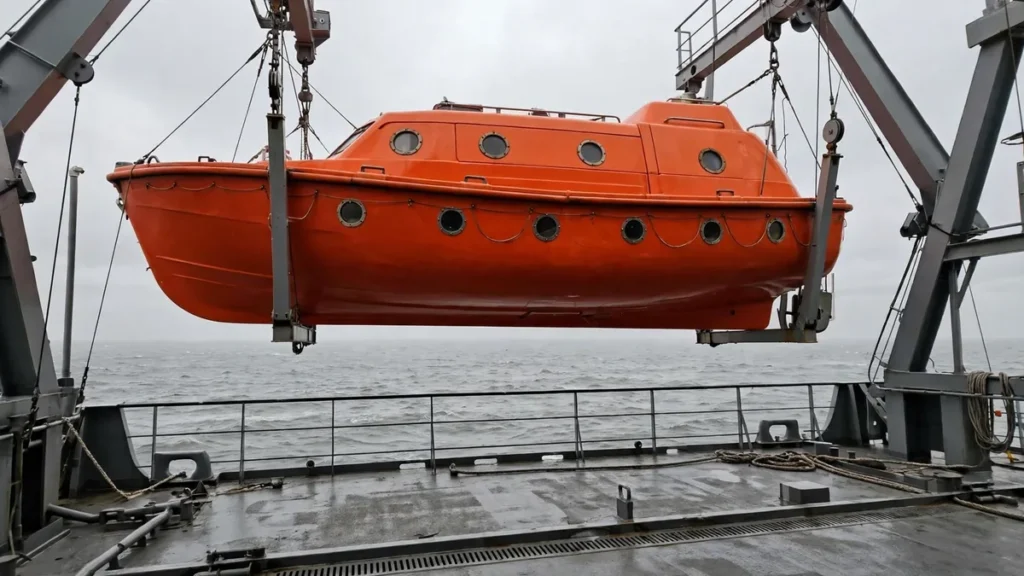
The yacht is anchored over a reef in water so clear you can see the sand thirty metres down, and the guests have stopped looking at the horizon. Their attention is on the swim platform, where the crew is lowering a small white craft into the sea. It is barely longer than a family car, it has room for two people, and its front half is a single clear dome. A minute later it slips under the surface, and the two people inside are looking out at a reef the way astronauts look out at the Earth: through glass, in silence, with the whole world bent into a curve around them.
That little craft is a luxury personal submarine, and it is a very different machine from the big private submarines that carry a dozen guests to three hundred metres. A personal sub is a toy with a serious job. It must keep two untrained people safe underwater, it must be light enough to lift on and off a yacht, and it must be simple enough that a guest can drive it after a short briefing. This is how one is made, from the first sketch of the dome to the first dive off the back of a yacht.

Step 1: The pressure hull is built around a clear dome
Every personal submarine starts with the same question: how do two people see out? The answer is a dome of thick acrylic, cast as a single piece and polished until it is as clear as glass. Acrylic is chosen because it is far lighter than glass at the same strength, and because it bends slightly under pressure instead of cracking. The dome is the most expensive single part of the boat, and it is tested in a pressure chamber long before it is fitted, because it is the part the guests will press their faces against at depth.
Behind the dome sits the pressure hull, a short cylinder of steel or titanium that holds the seats, the controls and the air. It is built round for the same reason a full-size submarine is round: a curve spreads the pressure of the water evenly, with no corners for the sea to push against. The hull is welded, X-rayed and pressure-tested, and every hatch and seal is checked twice. The big luxury submarines follow the same discipline on a grander scale, as the guide to how a luxury submarine is made explains, and the little personal craft borrows its safety thinking directly from them.
Step 2: Ballast and trim tanks are fitted around the hull
A personal submarine does not dive by pushing itself down. It dives by changing its weight, and that job belongs to the ballast tanks that wrap around the pressure hull. On the surface the tanks are full of air, so the craft floats like a small boat. To dive, the pilot opens valves and lets seawater flood in, and the craft grows heavier until it slips beneath the surface. To rise again, compressed air from a scuba-style bottle blows the water back out.
Step 3: Batteries and quiet electric thrusters go in
There is no diesel engine in a personal submarine. The power comes from a bank of lithium batteries, sealed in a watertight case low in the hull, where their weight also helps keep the craft stable. The batteries feed small electric thrusters, usually two at the back and sometimes one or two more for turning, and the motors are chosen for silence as much as for thrust. Underwater, sound carries, and a noisy motor would scare away the very reef life the guests came to see.
Step 4: Life support is installed and tested to the limit
Two people breathing in a sealed tube use up the oxygen and fill the air with carbon dioxide, so the life support system is the heart of the craft. A bottle of compressed oxygen feeds fresh air in, and a canister of soda lime scrubs the carbon dioxide out, the same chemistry that keeps divers alive in rebreathers. Sensors watch the oxygen and carbon dioxide levels constantly, and alarms sound long before either one reaches a dangerous level.
Step 5: The interior is fitted like a small lounge
Once the engineering is done, the inside of the hull is fitted out, and here the luxury part of the job begins. The two seats are trimmed in leather or marine vinyl, set side by side so both guests share the same view through the dome. The controls are a single joystick and a small screen showing depth, battery and air, because the guests are not trained pilots and must never face a wall of dials. A full-size submarine hides its guests in a steel tube with small windows, as the guide to how a luxury submarine works describes, but the personal sub is the opposite: almost everything the guests see is the sea itself.
Step 6: The submarine is launched, dived and certified
Then comes certification. A classification society inspects the submarine, reviews the test records and issues a certificate that allows it to carry passengers, and without that certificate no yacht owner will buy it. The final step is a handover dive with the owner aboard, usually over a reef in clear water, and it is the moment the whole build is judged. The craft must dive smoothly, hover steadily, and come back up dry, and the guests must climb out smiling. A dive boat built for the same clear-water afternoons follows the same logic of keeping people safe and comfortable on the water, as the guide to how a luxury dive boat is made shows, and the submarine simply takes that comfort thirty metres down.

Specifications
| Detail | Specification |
|---|---|
| Length | Around 3 to 5 metres |
| Passengers | Two people, pilot and guest |
| Maximum depth | Around 100 to 300 metres |
| Dive time | Around 4 to 8 hours |
| Power | Lithium batteries, electric thrusters |
| Viewing | Single clear acrylic dome |
| Weight | Around 2 to 4 tonnes |
| Launch | Yacht crane or swim platform |
What it costs
The estimated price of a new luxury personal submarine is around 1 to 3 million dollars, and that figure is an estimate only, because the cost depends on the depth rating, the size of the dome and the standard of the interior. The acrylic dome and the pressure hull account for a large share, followed by the batteries, the life support and the certification. A buyer is paying for a craft that two people with no training can dive in safely, from the back of their own yacht, over a reef no diver in scuba gear could reach in such comfort.
A rare fact
Few people know that a personal submarine is quieter inside than the yacht it launched from. With no engine running and the thrusters barely turning, the only sounds are the soft hiss of the air system and the faint clicks of shrimp on the reef outside, picked up through the hull. Guests often say the silence is the most surprising part of the dive, more memorable than the fish, and it is the reason many owners dive again the next morning before breakfast.