She had not ridden a bicycle in twenty years. The hill at the end of her street had seen to that, rising steeply past the park gates and defeating every good intention she had ever had about cycling. Then a friend lent her an electric bike for a weekend. She pressed the small button on the handlebar, pushed off, and the hill simply disappeared beneath her. She arrived at the top barely out of breath, laughing, and she did not give the bike back for a month.
A luxury electric bike does not ride itself. It watches how hard you pedal and adds exactly the right amount of help, so a steep hill feels flat and a long ride feels short. This guide explains how it works, from the battery in the frame to the motor in the wheel.

Step 1: The Frame Hides the Power
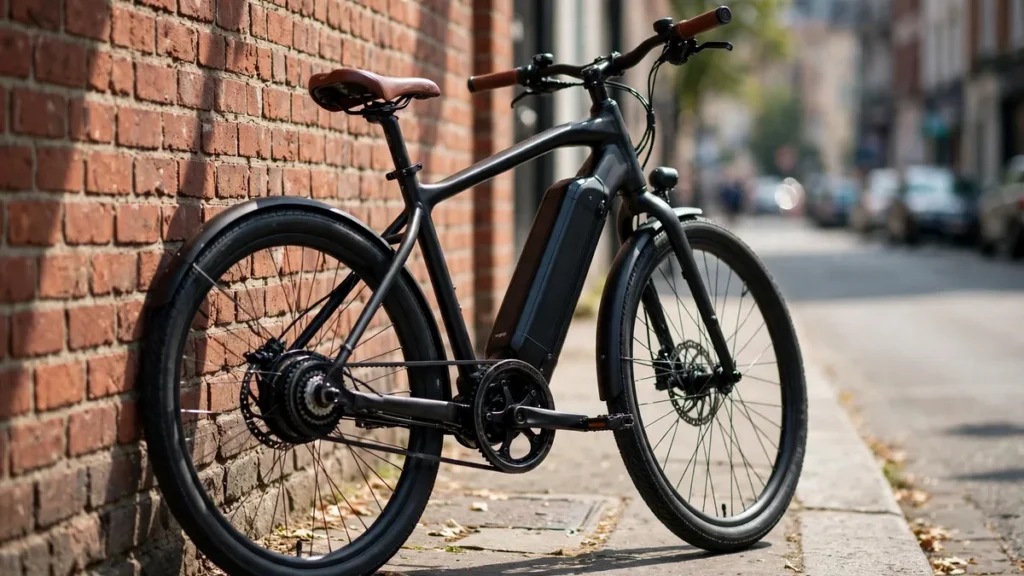
A luxury electric bike starts with a frame that looks like an ordinary bicycle, and that is the point. The battery is built into the down tube, the thick tube that runs from the handlebars down to the pedals, so there is no bulky box bolted to the outside. The frame is usually carbon fibre or high-grade aluminium, light enough to carry upstairs and stiff enough to handle the extra push of the motor. The wheels are stronger than a normal bike’s, because they carry more weight and more torque, and the brakes are hydraulic discs that can stop the bike quickly even at speed. Pick it up and it feels like a bicycle. Ride it, and it feels like something else entirely.
Step 2: The Battery Stores the Energy
The battery is a pack of lithium cells, the same kind of chemistry that powers a phone or a laptop, scaled up to move a person. It sits inside the down tube and slides out with a key for charging, so the owner can charge it in the kitchen rather than wheeling the whole bike indoors. A full charge takes a few hours from a normal wall socket, and it gives the bike a range of roughly 60 to 120 kilometres, depending on how much help the rider asks for. The battery has its own management system, a small circuit that watches each cell and balances the charge so no cell is overworked. The price of all this technology is a story in itself, and why a luxury electric bike is so expensive explains where the money goes.
Step 3: The Motor Adds Your Effort
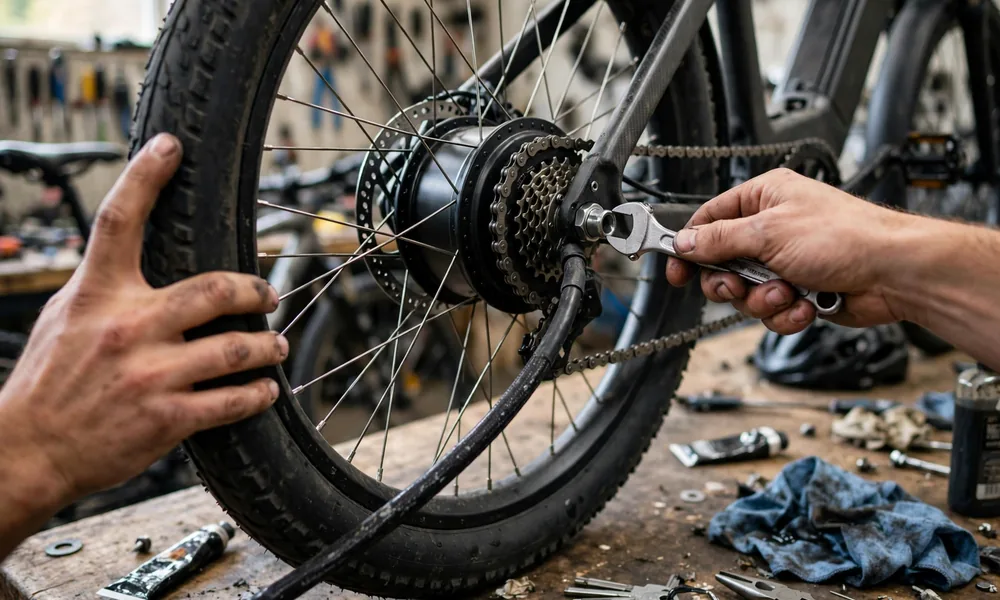
The motor is the part that does the helping, and on a luxury bike it is usually built into the crank, the axle the pedals turn on. A mid-drive motor like this pushes through the bike’s own gears, so it works efficiently whether the rider is climbing slowly or cruising fast. Inside the motor, a compact electric motor turns a set of gears, and the whole unit is sealed against rain and dust. It produces its power smoothly, with no jerk when it starts, and it is quiet enough that the rider hears the tyres and the wind more than the motor. The mid-drive is the luxury choice because it keeps the weight low and central, so the bike still handles like a bicycle. The same idea powers bigger machines too, and how a luxury electric motorcycle works shows it scaled up to road speeds.
Step 4: The Sensors Read Your Pedalling
The clever part of an electric bike is not the motor, but the way it knows when to help. A torque sensor in the crank measures how hard the rider is pressing on the pedals, many times a second. Push gently on flat ground and the motor adds a gentle push. Stand up to climb a hill and the motor adds far more, instantly. A speed sensor on the wheel tells the system how fast the bike is going, and a cadence sensor counts how quickly the pedals are turning. The controller blends all three readings and decides how much power to send to the motor. The result feels natural, like a strong tailwind that appears exactly when it is needed.
Step 5: The Controller and the Display
Between the battery, the sensors, and the motor sits the controller, a small computer that runs the whole system. It takes the sensor readings, checks the battery level, and sends precisely the right amount of power to the motor, hundreds of times a second. The rider talks to the controller through a small display on the handlebar, which shows speed, battery level, distance, and the level of assistance. Most bikes offer three or four levels, from a light eco mode that barely sips the battery to a full-power mode that flattens any hill. The display also limits the help to the legal speed for the country the bike is sold in, usually 25 kilometres per hour, after which the motor fades out and the rider pedals alone.
Step 6: Brakes, Gears, and the Ride
The rest of the bike is built to handle the extra speed and weight. Hydraulic disc brakes stop the bike firmly with two fingers, even in the rain, and the pads last far longer than rim brakes. The gears are wider-ranging than a normal bike’s, so the rider can spin easily up a hill and still pedal comfortably at speed. The tyres are puncture-resistant and slightly wider, giving grip and comfort on rough city streets. Everything is chosen for a rider who will cover real distances every day, not just ride around the block. Small electric machines share much of this thinking, and how a luxury electric scooter works shows the same ideas in a very different shape.
| Specification | Typical figure |
|---|---|
| Frame | Carbon fibre or aluminium |
| Motor | Mid-drive, 250 W |
| Battery | 500 to 750 Wh lithium |
| Range | 60 to 120 km per charge |
| Assisted top speed | 25 km/h |
| Charge time | 3 to 5 hours |
| Brakes | Hydraulic disc brakes |
| Weight | 18 to 24 kg |
What One Costs
A luxury electric bike is priced like the precision machine it is. As an estimate, a new one typically costs between four and twelve thousand dollars, depending on the frame, the motor, and the quality of the components. The battery and the motor are the biggest costs, followed by the carbon frame and the hydraulic brakes. Running costs are tiny: charging the battery costs only a few cents, and the main expenses are tyres, brake pads, and an occasional service. Compared with a car, a bus pass, or even a gym membership, the bike often pays for itself within a couple of years of daily use.
A Rare Fact
Here is something few people know: the first electric bikes were built in the 1890s, more than a century ago, with heavy lead batteries and crude motors. They were too heavy and too weak to catch on, and the idea slept for decades until lithium batteries made it practical. The modern luxury electric bike is really an old idea, finally given the battery it was waiting for.
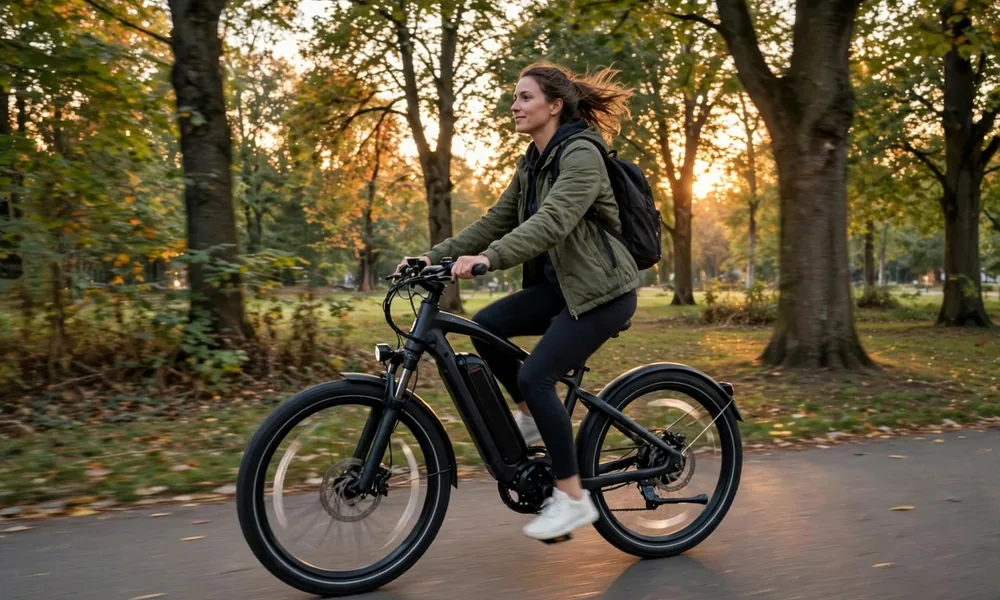
A luxury electric bike works because it never takes over. The sensors read your effort, the controller adds just enough help, and the motor fades away the moment you stop needing it. The hill is still there. It just stops mattering.