The hill does not care how expensive your bicycle is. It rises the same way for everyone, and halfway up it, most riders are thinking about their legs rather than their machine. Then you press the assist button on a luxury electric bike, and the hill quietly gives up. The pedals go light, the wind comes back, and you arrive at the top breathing normally, wondering whether you cheated. You did not cheat. You just bought a machine whose specification sheet is worth reading properly.
An electric bike’s numbers look modest next to a car’s. The motor is measured in hundreds of watts, not hundreds of kilowatts. The battery would fit in a water bottle. But the numbers matter more, not less, because on a bicycle every watt and every gram is something you feel directly in your legs.
Motor Power and Torque: The Push You Feel
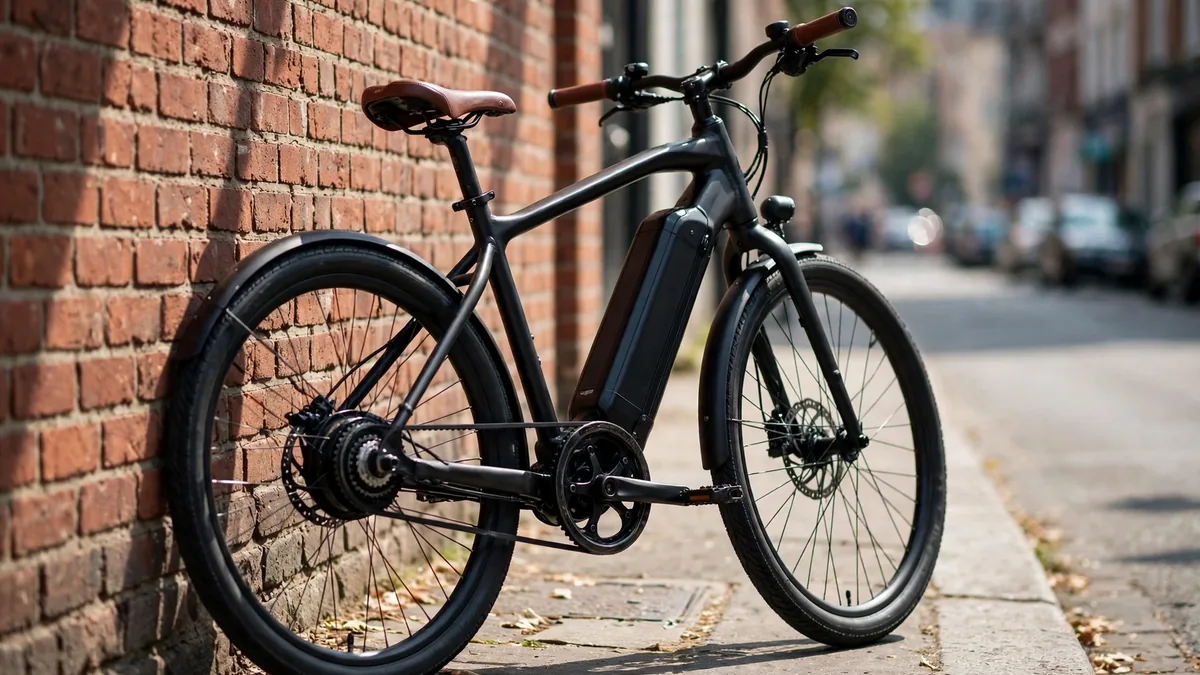
The motor is the heart of the bike, and its power is quoted in watts. In most of Europe, road-legal electric bikes are limited to 250 watts of continuous power, and luxury bikes work inside that limit with great care. But the wattage figure is only half the story. The number that decides how the bike feels on a hill is torque, quoted in newton-metres. A luxury electric bike typically offers 65 to 90 newton-metres of torque, and the difference between 65 and 85 is the difference between a gentle push and a firm hand on your back.
Where the motor sits matters as much as how strong it is. A mid-drive motor sits at the cranks, where your pedals are, and drives through the bike’s gears. That means it can use the gears to climb steep hills efficiently, and it keeps the weight low and central, so the bike handles like a normal bicycle. A hub motor sits in the centre of a wheel and is simpler and quieter, but it cannot use the gears, so it works harder on steep climbs.
Battery, Range, and the Art of Not Running Out
The battery is quoted in watt-hours, written as Wh, and a luxury electric bike usually carries between 500 and 750 watt-hours. That is the size of the fuel tank. But range, the distance the battery will carry you, depends on how you ride. On the lowest assist level, on flat ground, a 700-watt-hour battery can carry a rider 120 kilometres or more. On full assist, up a mountain, the same battery might last 50 kilometres. The honest way to read the range figure is to look for the range quoted at a middle assist level, and then knock a fifth off for hills, wind, and cold weather.
Charging time is the number that decides your routine. Most luxury bike batteries charge from empty to full in three to five hours on a standard charger, and many reach 80 percent in under two hours. The battery is usually removable, which matters more than it sounds: you can take it inside to charge at your desk, and you can take it off the bike at night so the bike itself is lighter and less tempting to thieves. A spare battery, carried in a pannier, doubles the range of a long day ride, and on touring bikes it is the difference between a day out and a week away.
Weight, Gears, and the Parts That Last
Weight is the specification that luxury bike makers fight over most. A luxury electric bike typically weighs between 18 and 25 kilograms, and every kilogram saved is a kilogram you do not have to lift onto a car rack or carry up a flight of stairs. The frame is usually carbon fibre or high-grade aluminium, the battery is integrated into the down tube so the bike looks like an ordinary bicycle, and the motor is hidden so neatly that a passer-by would not know the bike is electric at all. That discretion is part of the luxury: the bike does not announce its price.
The gears and brakes deserve the same attention as the motor. Luxury electric bikes usually use a belt drive instead of a chain, because a belt lasts longer, runs silently, and never needs oiling. The gears are often an internal hub, sealed away from rain and mud, with eight to fourteen speeds. Brakes are hydraulic discs, which stop the bike smoothly and reliably even in the wet, and the specification sheet will quote the rotor size, usually 180 millimetres or more. Tyres matter too: wider tyres, around 40 to 50 millimetres, roll comfortably over rough roads and grip in the wet, and many luxury bikes fit puncture-resistant tyres as standard.
The Display and the Ride Feel
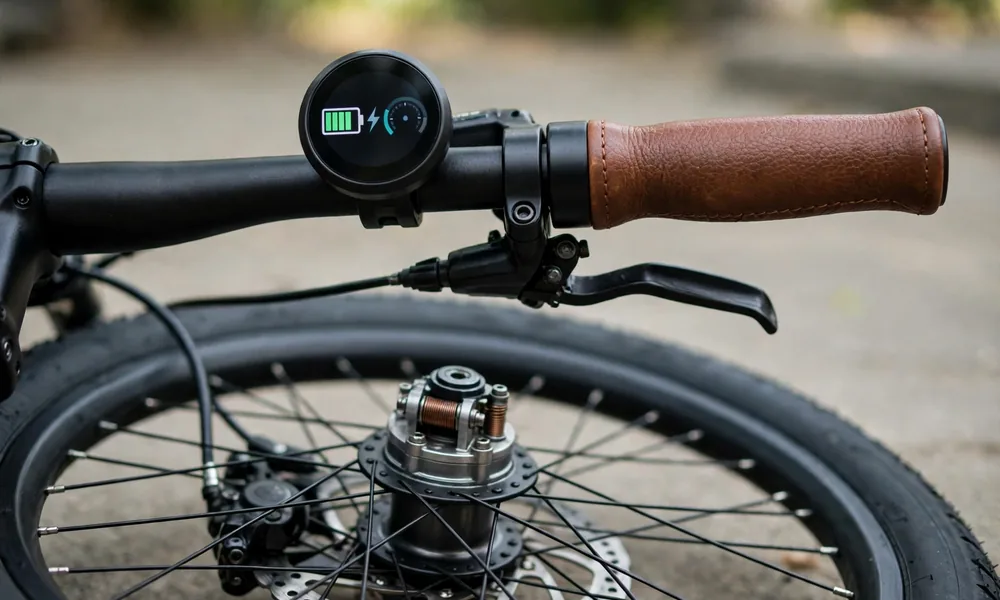
The display is the bike’s dashboard, and on a luxury machine it is usually a small colour screen on the handlebar that shows speed, battery level, assist mode, and distance. The best ones connect to a phone app that records rides, plans routes, and lets you tune how much assist each mode gives. That tuning matters.
The Specification Sheet, Decoded
| Specification | What to look for | What it means on the ride |
|---|---|---|
| Motor power | 250 W continuous, mid-drive | Legal everywhere, and efficient through the gears |
| Torque | 65–90 Nm | Higher means an easier climb on steep hills |
| Battery capacity | 500–750 Wh, removable | Bigger battery, longer rides, easy indoor charging |
| Range | 80–140 km at middle assist | The realistic distance of a day’s riding |
| Weight | 18–25 kg | Lighter is easier to carry, lift, and handle |
| Drivetrain | Belt drive with internal hub gears | Silent, clean, and almost no maintenance |
| Brakes | Hydraulic discs, 180 mm rotors | Strong, smooth stopping in wet and dry |
| Charging time | 3–5 hours to full, under 2 to 80% | An overnight charge, or a quick top-up at lunch |
What a Luxury Electric Bike Costs
A luxury electric bike typically costs an estimated $5,000 to $9,000, with the most exclusive hand-built models reaching an estimated $12,000 to $15,000. The motor and battery account for much of the price, but so do the frame, the belt drive, and the finishing: leather grips, hand-stitched saddles, and paint applied in layers. The battery will need replacing after several years, at an estimated $600 to $1,000, which is worth remembering when you compare prices. Against that, the running costs are tiny, a few cents of electricity per charge, and the bike replaces car journeys that would cost far more.
To see the machine in motion, our guide to how a luxury electric bike works explains the motor, sensor, and battery as a system. If the price still surprises you, why a luxury electric bike is so expensive breaks down where the money goes. And for the two-wheeled family at large, how a luxury electric motorcycle works shows what happens when the same ideas are built bigger and faster.
A Rare Fact Worth Knowing
Here is a detail the specification sheet never mentions. The torque sensor in a luxury electric bike measures how hard you are pressing on the pedals a thousand times a second, and it adjusts the motor’s help to match. Press gently and the motor whispers. Stand up and stamp on the pedals and it surges. The result is that the bike feels less like a machine and more like your own legs, only stronger. Riders often say the strangest thing about a good electric bike is how quickly you forget the motor is there at all.