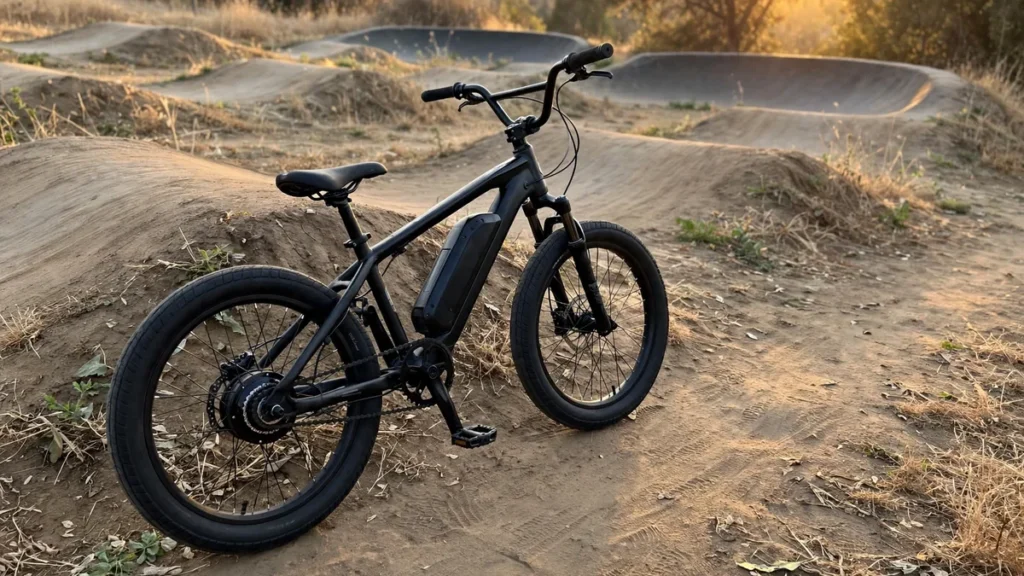
An electric fat bike looks like a joke the first time you see one. The tyres are wider than a person’s hand, the frame is built like a tractor, and the whole bike seems far too heavy to ride anywhere quickly. Then the rider presses a button, the motor hums, and the bike rolls straight across sand, snow and mud that would stop any normal bicycle dead.
A fat bike works by spreading its weight across tyres so wide they float on soft ground instead of sinking into it, and the electric motor turns that float into real speed. Here is how it all works, from the first pedal stroke to the last dune.
How It Works
Step 1: The huge tyres spread the bike’s weight over soft ground
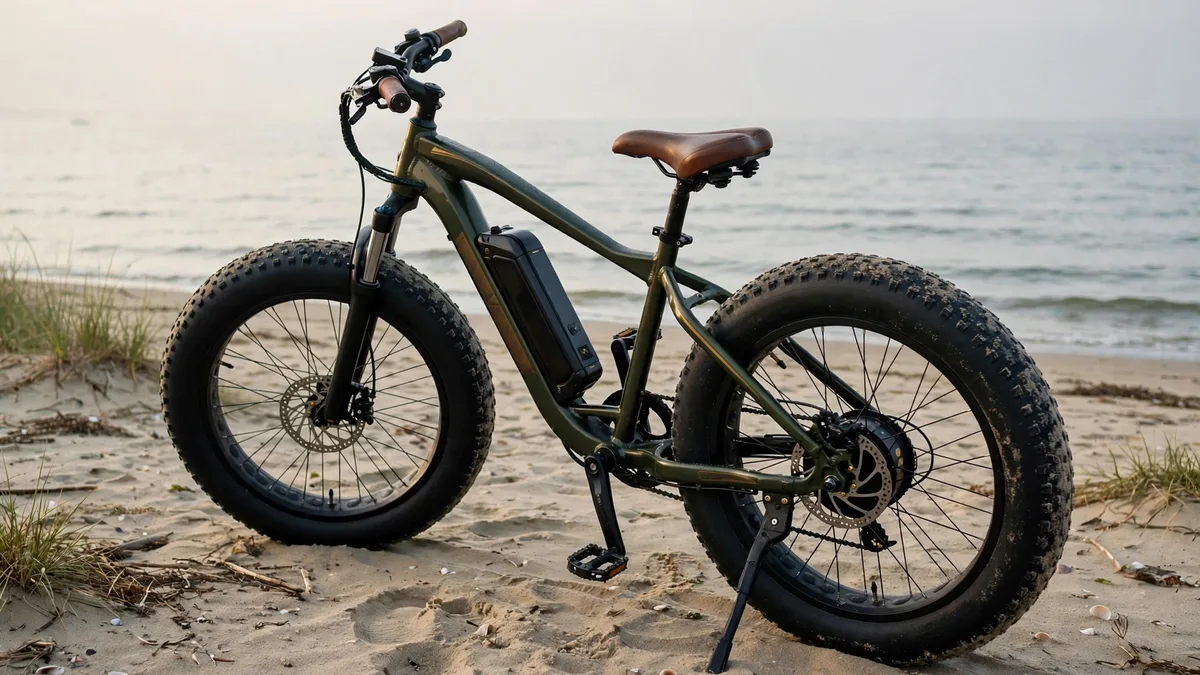
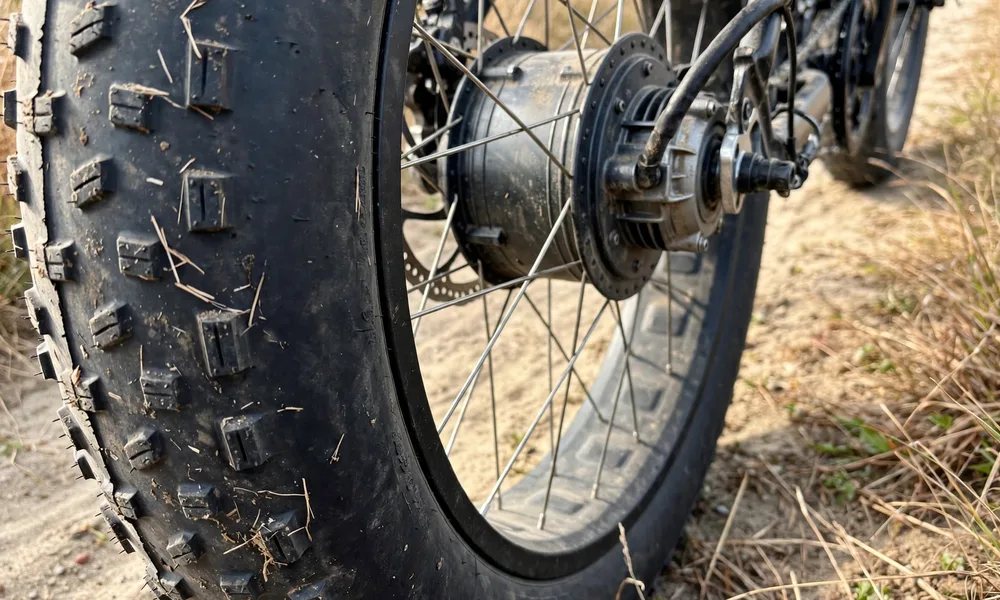
The whole idea of a fat bike is in the tyres. A normal bike tyre is about two inches wide, but a fat bike tyre is four or five inches wide, and it runs at very low pressure, sometimes as low as five pounds per square inch, which is barely more than a soft balloon. At that pressure the tyre flattens out where it meets the ground, spreading the weight of the bike and rider across a wide patch of sand or snow instead of a narrow line. The wide patch grips the surface instead of cutting into it, so the bike floats across a beach or a snowfield that would swallow a normal wheel.
Step 2: The motor adds power exactly when the rider needs it
Wide tyres grip well, but they also drag, and that is where the motor earns its place. Most luxury electric fat bikes use a mid-drive motor at the pedals or a hub motor in the rear wheel, and both work the same way: a torque sensor measures how hard the rider is pushing, and the motor adds power in proportion, smoothly and silently. On soft sand the motor does the heavy work, keeping the bike moving where legs alone would spin out, and on a steep snowy climb it adds a steady push that keeps the wheels turning instead of digging in. The rider chooses the assistance level from the handlebars, from a gentle nudge to a strong push, and the motor cuts out at the legal speed limit, so the bike still feels like a bicycle rather than a motorbike.
Step 3: The battery sits low and feeds the motor for hours
The battery is the fat bike’s fuel tank, and it is usually hidden inside the down tube or mounted low on the frame, where its weight helps rather than hurts. A low battery keeps the centre of gravity down, which matters on a bike with tall, wide tyres that already raise the rider up, and it keeps the bike balanced when the wheels slip and slide on loose ground. The battery is bigger than the one on a road e-bike, because pushing wide tyres through sand takes more energy than rolling thin tyres on tarmac, and a typical pack gives the rider several hours of assisted riding.
Step 4: The wide frame, fork and wheels hold it all together
A fat bike needs a special frame, because normal bike parts simply do not fit around tyres that wide. The fork is wider, the rear stays are wider, and the bottom bracket is wider still, so the chain can clear a tyre that is twice the normal width. The wheels use wide rims, sometimes four inches across, which hold the tyre’s shape and stop it rolling off the rim at low pressure, and the hubs are wider too, to keep the spokes at a strong angle. The frame is usually aluminium or carbon, built to take the extra loads of a heavy bike ridden hard on rough ground, and the whole bike is heavier than a normal e-bike, often more than twenty-five kilograms. That weight is the price of the float, and the motor is what makes the price worth paying.
Step 5: The gears and brakes tame the weight on every surface
With wide tyres and a motor, a fat bike needs gears that can climb anything and brakes that can stop a heavy bike on loose ground. The gears are low and wide-ranging, with a smallest gear that lets the rider crawl up a snowy slope at walking pace without stalling, and the chain is built to cope with the wide frame and the extra torque from the motor. The brakes are hydraulic discs with large rotors, because a heavy bike on sand needs strong, smooth stopping power, and the fat tyres help here too: their huge contact patch grips the ground, so the bike stops in a shorter distance than its weight suggests. The rider can feather the brakes to slide the back wheel gently on sand, or clamp down hard on a firm trail, and the bike stays upright either way.
Step 6: The ride changes with the ground beneath the tyres
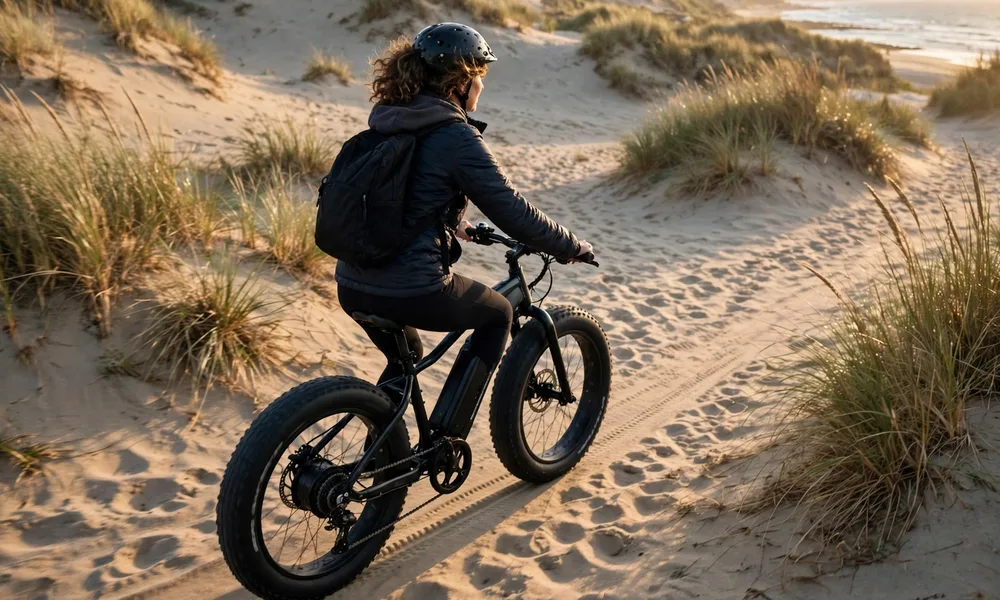
The strangest thing about an electric fat bike is how different it feels on different ground, because the tyres are doing a job no suspension can do. On sand, the tyres flatten and grip, and the bike rolls along with a soft, floating feel, the motor humming quietly as the rider steers with small movements of the bars. On snow, the tyres pack the surface down beneath them and the bike tracks straight, the wide tread finding grip where a narrow tyre would spin. On a hard trail, the rider pumps the tyres up firmer and the bike rolls faster, the motor adding speed on the climbs. The bike is happiest where other bikes give up, and that is the point: a fat bike is not built for the road, it is built for everywhere the road ends.
Luxury Electric Fat Bike Specifications
The figures below describe a typical luxury electric fat bike. Lighter and heavier models exist, but the way they work is the same.
| Specification | Typical value |
|---|---|
| Frame material | Aluminium or carbon fibre |
| Tyre width | About 4 to 5 inches |
| Total weight | About 25 to 30 kg |
| Motor | Mid-drive or hub, about 250 watts |
| Battery | About 500 to 750 watt-hours |
| Assisted range | About 60 to 100 km |
What It Costs
A luxury electric fat bike costs an estimated $4,000 to $9,000, depending on the frame, the motor and the battery, with the lightest carbon models costing more. Those are estimates, not quotes, and they reflect the wide frame and wheels, the large battery and the motor that make the bike work on sand and snow. The motor itself follows the same idea as any good e-bike, as how a luxury electric bike works explains.
A Rare Fact
Here is a detail most people never guess. Fat bikes were invented for snow, not sand: the first ones were built in Alaska so riders could cross frozen ground in winter, and the wide tyres were designed to float on snow long before anyone rode them on a beach. The electric motor came later, and it turned a niche winter bike into a bike for every season. A smaller folding e-bike uses the same motor idea in a very different package, as how a luxury electric folding bike works shows, and the off-road side of the family is covered in how a luxury electric dirt bike works.