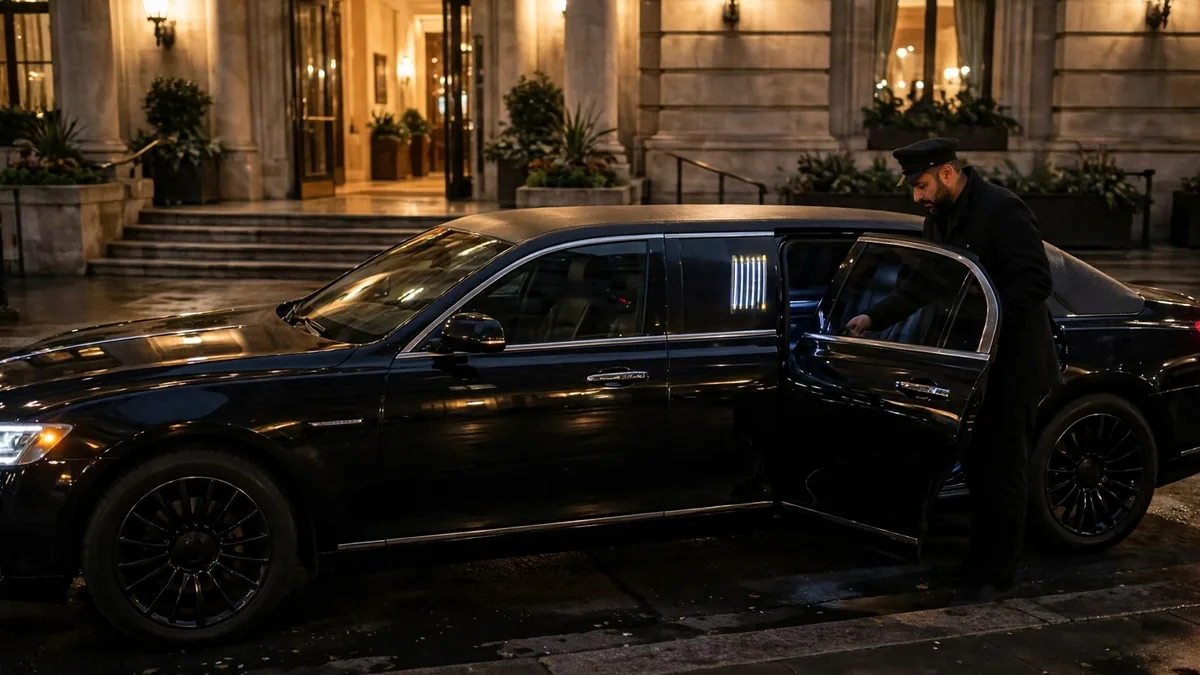
The hotel doors open and a long black shape glides to the kerb without a sound. A chauffeur steps out, opens the rear door, and a guest settles into a seat softer than most sofas, with legroom enough to stretch out fully. This is the luxury electric limousine: a car that treats the journey as the destination. It is not built to be driven fast around corners. It is built to carry important people in total calm, and that calm is engineered into every panel, every wire and every stitch. Making one is less like building a car and more like building a small, silent room that happens to travel at motorway speed.
How It Is Made
Step 1: Stretching the Platform
A limousine starts life as a large electric saloon platform, and then it is stretched. Engineers add length between the axles, not behind the rear wheels, so the extra space goes exactly where passengers sit. The longer floor must stay perfectly rigid, so the chassis is reinforced with extra cross-members and a thicker battery case, which doubles as a structural spine. The wheelbase grows by as much as half a metre, and every system that runs the length of the car, from wiring looms to cooling pipes to the driveshaft-free floor, has to be redesigned for the new distance. A stretched car that flexes would creak over every bump, and silence is the whole point.
Step 2: The Battery and the Silent Drivetrain
Under the floor sits a large battery pack, usually over 100 kWh, assembled in a clean room and sealed against water and dust. Two electric motors, one on each axle, give the limousine smooth all-wheel drive and the effortless pull that passengers feel as a gentle push rather than a surge. Engineers spend months tuning the motors so that acceleration is strong but never jerky, because a passenger reading or drinking should never be jolted. The drivetrain is mounted on soft bushings and wrapped in acoustic insulation, so the cabin hears almost nothing from the road. Even the tyres are special: foam-filled inside to hush the hum that ordinary tyres make on rough tarmac.
Step 3: The Body Is Built for Quiet
The long body is formed from steel and aluminium panels, welded by robots and finished by hand. Then comes the part that makes a limousine different from any other car: soundproofing. Workers layer acoustic glass, thicker than normal and laminated in two sheets, into every window. They pack the doors, the roof and the floor with dense insulation mats, and seal every gap with double rubber gaskets. The car is tested in a sound chamber, where microphones measure the cabin at motorway speed. The target is a whisper, around the level of a quiet library, so that a conversation at the back can be held in a normal voice while the world rushes past outside.
Step 4: The Rear Cabin Becomes a Lounge
The rear cabin is where the limousine earns its name. Craftspeople fit reclining seats with heating, cooling and massage, fold-out tables, a drinks cabinet and reading lights that can be dimmed to a warm glow. A glass partition can separate the chauffeur from the passengers, and it rises and falls at the touch of a button. Screens are fitted into the seatbacks, and the whole cabin is wired for charging, entertainment and climate control that can be set differently on each side. The materials are chosen to feel rich to the touch: soft leather, real wood veneer, brushed metal and thick carpet. Nothing is allowed to look or feel like plastic.
Step 5: Painting, Polishing and Fitting Out
The body is painted in deep black or dark blue, colours that show every flaw, so the paint shop takes its time. Coats are applied, baked, flatted and polished until the surface is like a mirror. Chrome and bright trim are fitted by hand, and the long side of the car is checked from every angle for ripples. Inside, the final trim is installed: the headlining, the curtains or blinds, the carpet and the small details such as the coat hooks and the umbrella holder in the door. Each limousine is then given a full inspection in bright light, inside and out, and any panel that does not sit perfectly is adjusted until it does.
Step 6: Testing the Whole Experience
Testing a limousine is not only about speed and brakes. Test drivers take it over city streets and motorways, checking that the ride stays smooth over potholes and that the cabin stays quiet at every speed. The rear seats are cycled through every position, the partition is raised and lowered hundreds of times, and the climate system is run in freezing and baking conditions. The battery is fast-charged, the range is verified, and the car is driven through a water tunnel to prove that no rain can reach the cabin. Finally, a senior inspector rides in the back as a passenger, judging the car exactly as a customer would: is it silent, is it smooth, does it feel special? Only a yes on all three lets the car leave the factory.
The chauffeur gets attention too. Up front, the driver has a second set of controls for the rear cabin, so the temperature, the blinds and the partition can be adjusted without turning around. A small intercom lets the chauffeur speak to the rear without raising a voice, and the navigation system can be set to avoid rough roads when a passenger is working or resting. Many limousines also carry a small refrigerator, a safe for valuables and a first-aid kit hidden behind a panel, because the car is expected to handle anything a long day might bring.

Specifications
| Feature | Typical Figure |
|---|---|
| Battery capacity | 100 to 120 kWh |
| Power output | 400 to 600 horsepower |
| 0 to 60 mph | 4.0 to 5.0 seconds |
| Range | 330 to 400 miles |
| Length | 5.5 to 6.0 metres |
| Cabin | Four to five seats, rear lounge, glass partition |
What It Costs
A luxury electric limousine typically costs an estimated $120,000 to $220,000, depending on the maker and the level of rear-cabin luxury, and fully bespoke versions can cost considerably more. That figure is an estimate drawn from current market listings. Chauffeur services often charge by the hour, and many owners buy for hotels, embassies and executive fleets rather than for themselves. To understand the ride itself, see how a luxury electric limousine works, and how a luxury limousine works covers the classic petrol tradition it descends from. For the price in detail, why a luxury limousine is so expensive explains the craft behind the cost.
A Rare Fact
The glass partition in some luxury limousines can turn opaque at the touch of a button, using a layer of liquid crystal that scatters light on demand. The same trick is used in the windows of some high-end buildings, and in a limousine it lets passengers turn their cabin into a private room in less than a second, without a curtain in sight.


