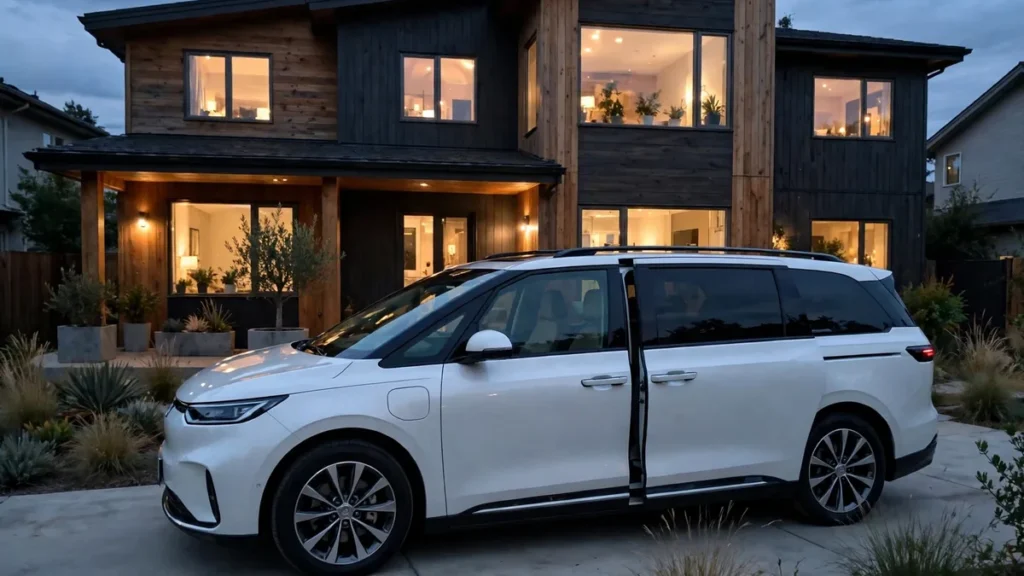
It is a school morning, and the driveway is full of bags, lunchboxes, a football and a dog that refuses to get in. The sliding door hums open, the children climb into seats that feel like armchairs, and within a minute everyone is settled, plugged in and quiet. The luxury electric minivan is the most underrated machine on the road: a family bus dressed as a first-class lounge. It carries seven people and their luggage, it never needs petrol, and it does it all in near silence. But how does a vehicle this big move so smoothly, and how does it keep everyone comfortable for hours? The answers sit under the floor, in the motors and in a dozen small systems working together.

How It Works
Step 1: The Flat Battery Under the Floor
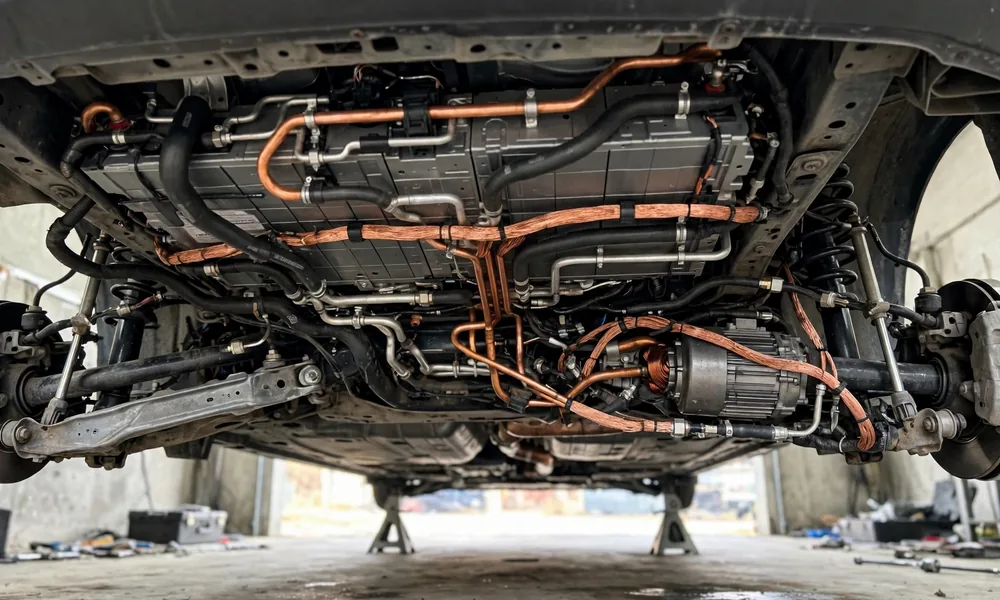
Everything starts with the battery, a flat slab that forms the floor of the whole vehicle. It holds roughly 90 to 110 kWh of energy, enough for a long family day out, and because it is low and spread out, it keeps the minivan stable even when it is fully loaded. The pack is divided into modules, each with its own cooling channels, and a management system watches every cell, balancing charge and temperature so no cell is ever overworked. In a crash, the strong case around the pack protects the cells, and the battery is mounted so that it slides rather than crushes. This skateboard layout is also why the cabin floor is completely flat, with no tunnel running down the middle.
Step 2: Motors That Pull Without Fuss
Most luxury electric minivans use one motor on the rear axle, and many offer a second motor at the front for all-wheel drive. An electric motor makes its full pulling power from the moment it starts turning, which is why a heavy minivan can pull away from a junction so easily, even with seven people aboard. There is no gearbox to shift through, just a single reduction gear, so acceleration is one smooth push. When the driver lifts off the accelerator, the motor reverses its role and becomes a generator, turning the van’s motion back into electricity and feeding it into the battery. That regenerative braking also saves the brake pads, which can last far longer than on a petrol car.
Step 3: The Cabin Systems Keep Everyone Happy
A minivan is really three climate zones in one box. The driver, the middle row and the rear row each get their own temperature controls, and heated and ventilated seats keep passengers comfortable whatever the weather. The air is filtered and can be kept fresh even in traffic, and the rear windows often have blinds or tinted glass so children can sleep in the sun. Power sliding doors open at the touch of a button or a wave of a foot under the sill, and they stop automatically if they sense a hand or a bag in the way. Every seat has its own USB charging port, and the middle row can slide, tilt and fold, turning the cabin from seven seats into a luggage van in under a minute.
Step 4: Suspension That Iron Out the Road
A family car must ride well when it is empty and when it is carrying a full load, and that is a hard trick. Luxury electric minivans use air suspension, where each corner sits on a cushion of air that can be pumped up or let down in seconds. Sensors read the road a hundred times a second and adjust the damping, so potholes are swallowed rather than thumped through. The heavy battery low down also helps: it lowers the centre of gravity, so the tall van leans less in corners than its shape suggests. The steering is light at parking speed and firms up on the motorway, and the whole setup is tuned for calm rather than sport, because nobody wants a van that throws the shopping around.
Step 5: Safety That Watches Every Direction
The minivan carries cameras and sensors that watch the road in every direction. Automatic emergency braking can stop the van if a child runs out in front of it, blind-spot warnings guard the long sides, and a 360-degree camera shows the driver the whole vehicle from above when parking. Lane keeping gently steers the van back if it drifts, and adaptive cruise control holds a safe gap to the car ahead on long motorway drives, even in stop-start traffic. Because the van is tall, the cameras also watch for cross traffic when reversing out of a driveway. The structure itself is built with a strong passenger cell and crumple zones front and rear, and every row gets its own airbags, including curtains that run the full length of the cabin.
Step 6: Charging and the Long Trip
On a long trip, the minivan charges at fast public chargers, typically going from 10 to 80 percent in about half an hour, which is roughly a lunch stop. The navigation system plans charging stops automatically, warming the battery on the approach so it accepts power faster. At home, the van charges overnight from a wall box, and many owners schedule it for the cheapest electricity hours. Some models can even power a house or a campsite from their battery, a trick called vehicle-to-load, which turns the van into a giant power bank. A full charge usually gives 300 miles or more of range, and because the van is so quiet, long drives leave the family far less tired than a noisy petrol bus would.
Entertainment is part of the machine too. Many luxury minivans fit screens into the seatbacks or a screen that folds down from the ceiling, so the middle and rear rows can watch films or play games on a long journey. The sound system is tuned for the whole cabin, with speakers in every row, and wireless headphones let one child listen to a film while another listens to music. Parents can control it all from the front screen, including pausing a film from the driver’s seat.
Specifications
| Feature | Typical Figure |
|---|---|
| Battery capacity | 90 to 110 kWh |
| Power output | 300 to 450 horsepower |
| 0 to 60 mph | 5.0 to 6.5 seconds |
| Range | 300 to 360 miles |
| Charging | 10 to 80 percent in about 30 minutes |
| Seating | Six to seven seats, three rows |
What It Costs
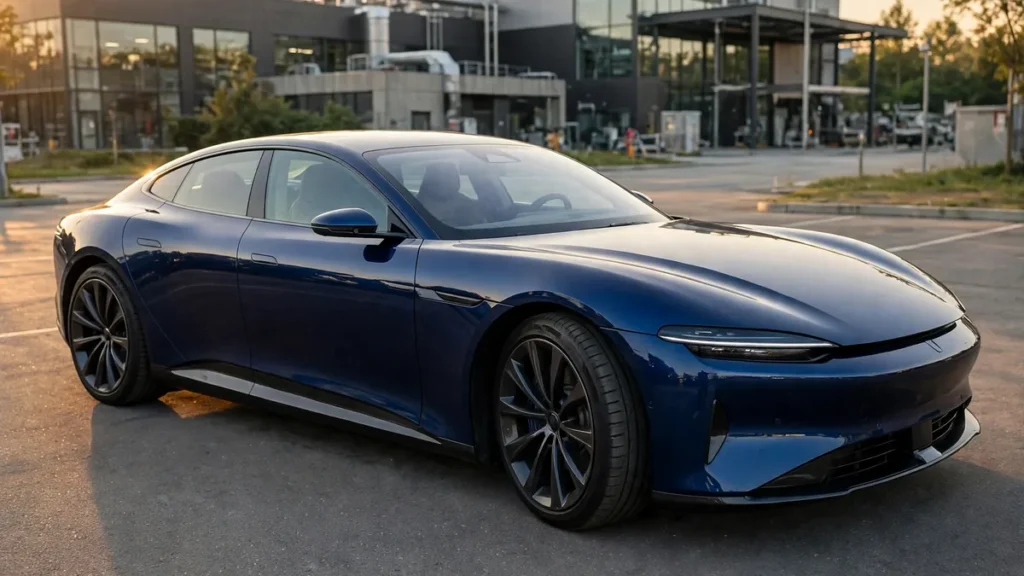
A luxury electric minivan typically costs an estimated $70,000 to $120,000, depending on the maker, the battery size and the cabin specification. That figure is an estimate based on current market listings. Running costs are modest for a vehicle this size, with home charging far cheaper than petrol and very little routine maintenance. For the story of how these vans are built, see how a luxury minivan works, and how a luxury electric car works explains the shared electric platform underneath. If the price seems high for a family van, why a luxury electric minivan is so expensive sets out what the extra money buys.
A Rare Fact
Some luxury electric minivans can park themselves in a tight space while the driver stands outside and watches, using the key fob as a remote control. The van steers, brakes and checks for obstacles on its own, which is handy when the parking bay is too narrow to open the doors once you are in.