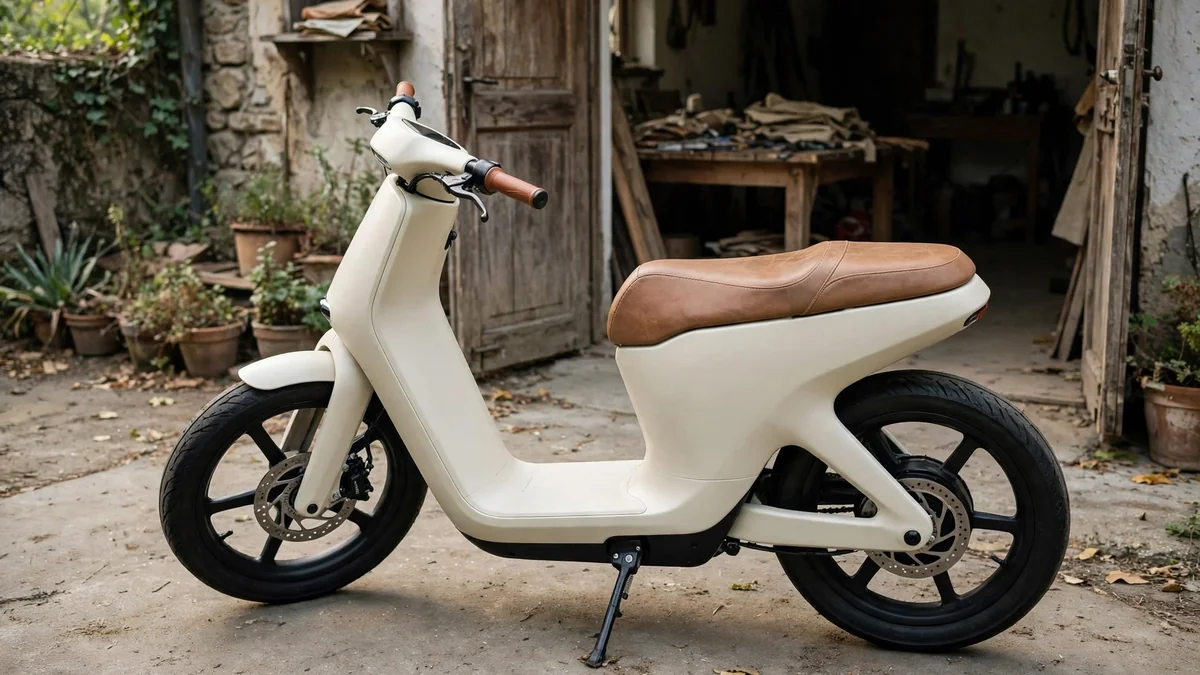
There is a particular kind of quiet that only an electric moped can make. It rolls out of a workshop with no engine cough, no exhaust smell and no vibration shaking the mirrors, just a soft hum and a leather seat that smells faintly of a new saddle. A luxury electric moped is not a cheap scooter with a nicer badge.
Most mopeds are assembled quickly from parts that arrive in boxes, and the result feels like it. A luxury one takes a different path. The frame is made from steel or aluminium tubing, cut and welded in a small run rather than stamped out by the thousand. The motor sits in the rear wheel hub or beside the swingarm, the battery hides inside the frame, and the bodywork is painted in several thin coats and polished until the colour looks deep enough to fall into. Here is how a luxury electric moped is made, from the first tube to the first ride.
How It’s Made
Step 1: The frame is cut and welded by hand
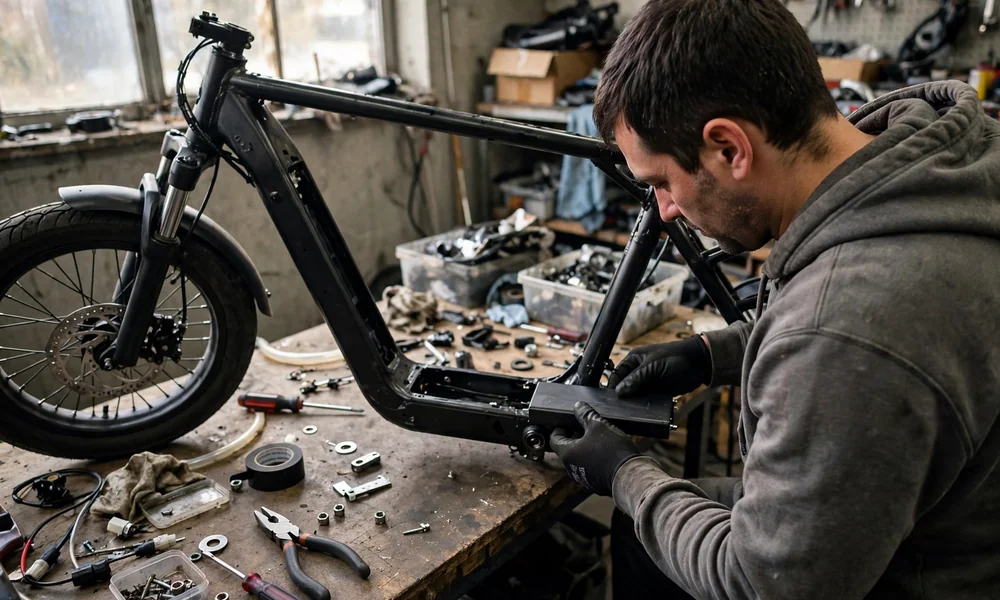
Everything starts with the frame, a skeleton of steel or aluminium tubing that has to be light enough to carry easily and strong enough to survive potholes, kerbs and years of daily use. Workers cut the tubes to length on a jig, a steel table with fixed stops that holds every piece in exactly the right place. Then a welder joins them with a torch, working around the frame in a set order so the heat does not pull it out of shape. Each weld is checked by eye and by hand, and any frame that measures even a few millimetres out of true goes back for correction, because a crooked frame would make the moped pull to one side for its whole life.
Step 2: The frame is painted in thin, deep coats
Once the frame is straight, it is cleaned, primed and painted. Luxury makers use several thin coats rather than one thick one, with a light sanding between each coat so the surface stays glass smooth. The colour is often a muted cream, sage green or deep navy, chosen to look calm rather than loud. A clear lacquer goes on last, and the frame is left to cure slowly in a warm room instead of being rushed through a hot oven. The result is a finish that resists stone chips and still looks new after years of city riding, and it is one of the first things a buyer notices when the moped is parked in sunlight.
Step 3: The battery is built and fitted inside the frame
The battery is the heart of the machine, and on a luxury moped it is treated like one. Dozens of lithium cells are tested individually, matched for capacity, and packed into a slim metal case with its own cooling channels and a management board that watches every cell. The case slides into the centre of the frame, low down where it keeps the centre of gravity close to the ground, and it is bolted in with rubber mounts that absorb vibration. The way a luxury electric scooter is made follows the same idea, hiding the battery inside the body so the machine looks clean and simple from the outside while the heavy work happens out of sight.
Step 4: The hub motor and wheels are assembled
With the frame and battery in place, the wheels go on. Many luxury mopeds use a hub motor, a ring of copper coils and magnets built directly into the rear wheel, so there is no chain or belt to oil, adjust or replace. The wheel is laced with stainless spokes or cast as a single alloy piece, then fitted with a wide, low-profile tyre that grips wet cobbles without feeling nervous at speed.
Step 5: The bodywork, seat and controls are fitted
Now the moped starts to look like itself. Painted steel or aluminium panels are bolted to the frame, their edges lined up so the gaps are even all the way around. The seat is cut from dense foam, covered in stitched leather or a tough marine-grade vinyl, and mounted on a hinge so the storage space underneath stays easy to reach. The handlebars carry the throttle, the brake levers, a small round display and a headlamp switch, all wired through the frame so no cables dangle in the wind. The way a luxury electric scooter works shows the same care with its controls, putting everything a rider needs within a thumb’s reach and nothing else in the way.
Step 6: The moped is tested, tuned and ridden
Before any moped leaves the workshop it is ridden, not just switched on. A tester takes it through a short route of smooth roads, rough streets and a hill, listening for rattles, checking that the brakes bite evenly and that the throttle responds smoothly from a standstill. The motor controller is tuned so the power arrives gently rather than in a sudden surge, and the range is checked against the maker’s claim on a real road rather than a test bench. The way a luxury e-bike is made ends with the same kind of road test, because a machine that has never been ridden by its maker is not finished. Only when the tester is happy does the moped get its final polish, its mirrors and its number plate, ready for its first owner.
Electric Moped Specifications
| Specification | Typical Luxury Electric Moped |
|---|---|
| Motor | Rear hub motor, 2 to 4 kilowatts |
| Battery | Lithium-ion, 2 to 3 kilowatt-hours |
| Range | 60 to 100 kilometres per charge |
| Top speed | 45 to 80 kilometres per hour |
| Frame | Hand-welded steel or aluminium |
| Charging time | 3 to 5 hours from a home socket |
| Weight | 80 to 110 kilograms |
The Price
A luxury electric moped costs an estimated $5,000 to $9,000, depending on the battery size, the finish and the maker. The hand-welded frame, the multi-coat paint and the leather seat account for much of that price, and the battery is the single most expensive part. Running costs stay low: charging at home costs an estimated $1 to $2 per full charge, servicing is mostly tyres, brakes and a software check, and there is no oil, no exhaust and no chain to replace.
A Rare Fact
Some luxury electric mopeds are built so quietly that the maker adds a small, artificial sound at low speed, not for the rider but for pedestrians. The sound is tuned to be pleasant rather than alarming, a soft hum that rises gently with speed, and it switches off once the moped is moving fast enough for its tyres to be heard on their own.
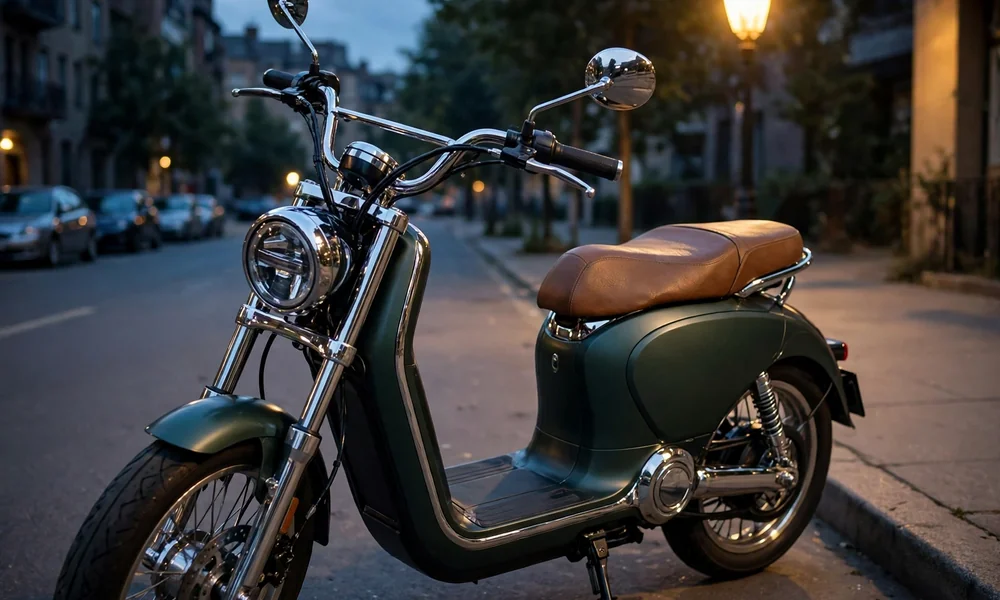
Owning a luxury electric moped is a small daily pleasure. The morning ride to work is silent, the parking is easy, and the machine itself looks good enough to leave outside a cafe without feeling embarrassed. It asks for almost nothing in return: a plug at night, a wash now and then, and a new set of tyres once a year or so.
A luxury electric moped proves that a small machine can be made with the same care as a large one. Its frame is welded by hand, its paint is laid on in thin coats, its battery is hidden low in the frame, and its motor is tuned to be gentle rather than showy. It is a machine built for city streets, made slowly, and ridden quietly, which is exactly the point.