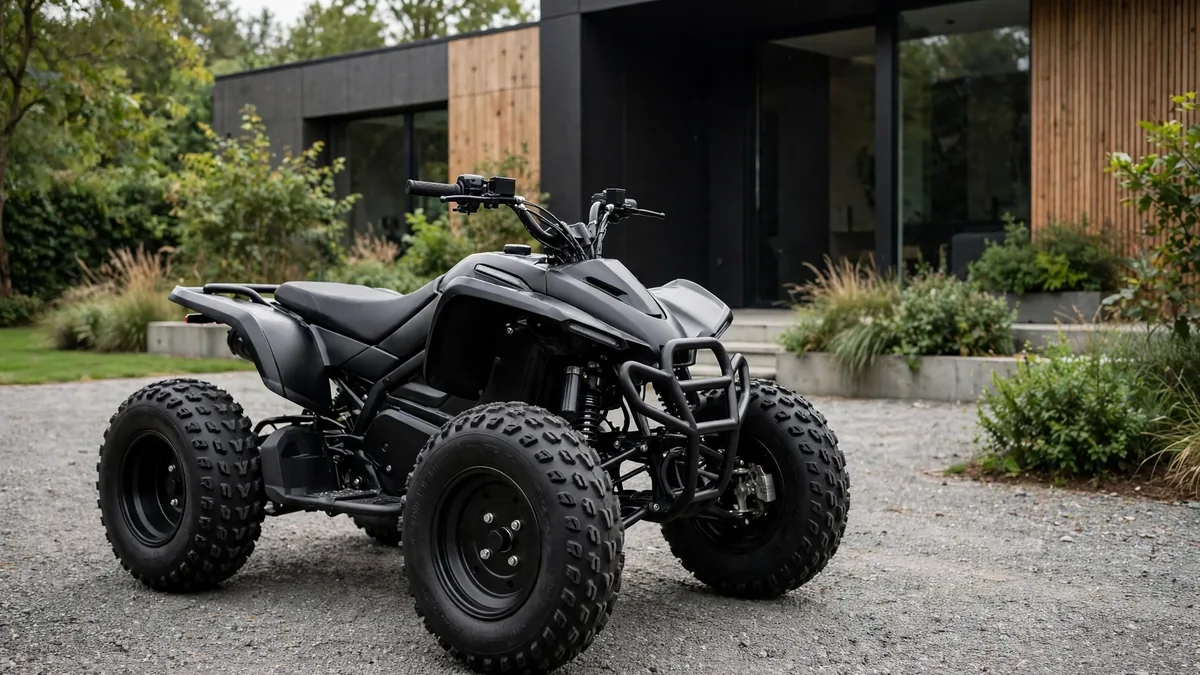
A luxury electric quad looks like a toy until you stand beside one, four wide tyres planted on the ground, a low seat, and no engine noise at all. It is built to cross fields, climb tracks and carry its rider in comfort, without the smell of petrol or the rattle of a small engine.
Under the plastic bodywork it is a serious machine, with a welded frame, a sealed battery, a powerful motor and suspension tuned for rough ground. This is how a luxury electric quad is made, from the first steel tube to the final test ride across the yard.
How It’s Made
Step 1: The frame is welded and checked
Every quad starts as steel tube, cut to length and bent into the shape of a frame that will carry the battery, the motor, the rider and the load. The tubes are held in a jig, a steel cradle that keeps every angle exact, and welded by hand, joint by joint, until the frame is one rigid piece.
Once the welds cool, the frame is measured against its drawing and checked for twist, because a frame that is even slightly out of true will pull to one side on rough ground. It is then coated against rust and fitted with the mounting points for the suspension, the steering and the battery cradle, ready for the parts that follow.
Step 2: The battery pack is built and sealed
The battery is the heart of the quad, a pack of cells grouped into modules and wired together inside a strong metal case. Each cell is tested before it goes in, and the modules are separated by insulation so that heat cannot pass from one to the next. The case is sealed against water and dust, because a quad will be ridden through mud and rain.
A battery management system sits on top of the pack, watching the voltage and temperature of every module and cutting the power if anything runs hot. The finished pack is heavy, often a third of the weight of the whole machine, so it is bolted low in the frame, where it keeps the centre of gravity down and the quad stable on slopes.
Step 3: The motor and drivetrain are fitted
The motor is a compact electric unit, usually mounted low and driving the wheels through a shaft or a belt, with no gearbox to shift and no clutch to wear. It bolts to the frame on rubber mounts that absorb vibration, and its cables run to the battery through sealed connectors that keep water out.
Because an electric motor gives its full pull from a standstill, the drivetrain is built to handle sudden torque, with strong shafts and a differential that lets the wheels turn at different speeds in a corner. The controller beside the motor decides how much power to send, smoothing the throttle so the quad does not lurch when the rider twists the grip.
Step 4: The suspension and steering are fitted
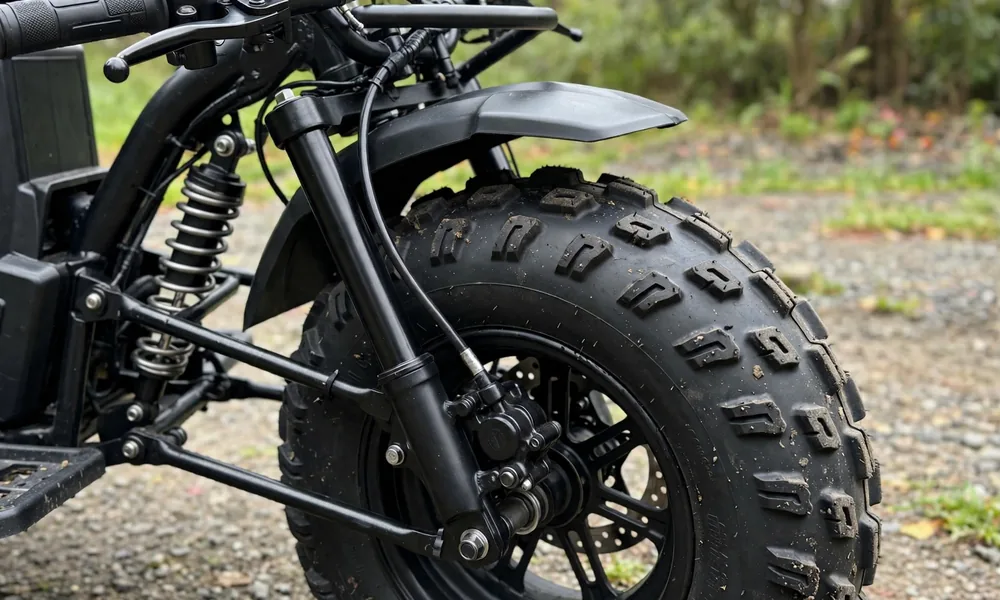
Next come the four wheels, each on its own suspension arm with a coil spring and a shock absorber that can be adjusted for soft ground or hard tracks. The arms are bolted to the frame with strong pins, and the wheels are wide, with deep tread that grips mud, sand and wet grass without digging in.
The steering is a simple bar linked to the front wheels, with a damper that stops the bars from being kicked out of the rider’s hands by a rut. Each corner is checked for free movement and the alignment is set so the quad runs straight, because a machine that wanders on a slope is tiring and unsafe to ride for long.
Step 5: The bodywork and seat are trimmed
With the running gear in place, the bodywork goes on, moulded plastic panels in matte black that cover the frame, the battery and the motor while leaving the wheels free to move. The panels are clipped and bolted in place, with flexible mounts that let them bend rather than crack when a branch brushes past.
The seat is wide and padded, covered in weatherproof vinyl that is stitched to resist tearing, and the handlebars carry the throttle, the brakes and a small display. Footboards with a raised grip pattern give the rider a secure place to stand, and the whole machine is washed down so that dust from the factory does not hide a scratch or a loose bolt.
Step 6: The quad is tested and finished
The finished quad is ridden, not just switched on. A tester takes it across gravel, grass and a slope, listening for rattles, checking the brakes, and making sure the motor pulls smoothly from a standstill to full speed. The battery is charged and discharged once, to confirm the range the maker claims.
Any fault found on the test ride is fixed and the machine is ridden again, because a quad that leaves the factory with a loose bolt or a weak brake will be noticed on its first day out. Only when it rides straight, stops cleanly and runs quietly does it get its final polish, its lights checked, and its paperwork signed off.
| Spec | Detail |
|---|---|
| Frame | Welded steel tube in a jig, rust coated, battery mounted low |
| Battery | Sealed cell modules with management system, about a third of total weight |
| Motor | Compact electric motor, full torque from standstill, shaft or belt drive |
| Suspension | Four independent arms, coil springs, adjustable shock absorbers |
| Wheels | Four wide tyres with deep tread for mud, sand and wet grass |
| Bodywork | Moulded matte black panels on flexible mounts, padded vinyl seat |
The hardest part of a luxury electric quad is the balance. A heavy battery must sit low enough to keep the machine stable on slopes, while the motor must be strong enough to pull through mud, and the whole quad must still be quiet enough to ride without ear protection.
What One Costs
A luxury electric quad typically costs an estimated $15,000 to $45,000, set mostly by the size of the battery, the power of the motor and the quality of the suspension. A smaller machine with a modest range sits near the bottom, while a long-range quad with adjustable suspension and a winch costs far more. A smaller electric off-roader is built on the same ideas, and how a luxury electric BMX is made shows how the same torque is packed into two wheels, while how a luxury electric fat bike is made covers wide tyres and soft ground in a lighter machine.
A Rare Fact
Some luxury electric quads are fitted with a silent reverse gear that lets the rider back out of a tight spot at walking pace, with a small warning light instead of a beeper, so the machine stays as quiet in reverse as it is going forwards.
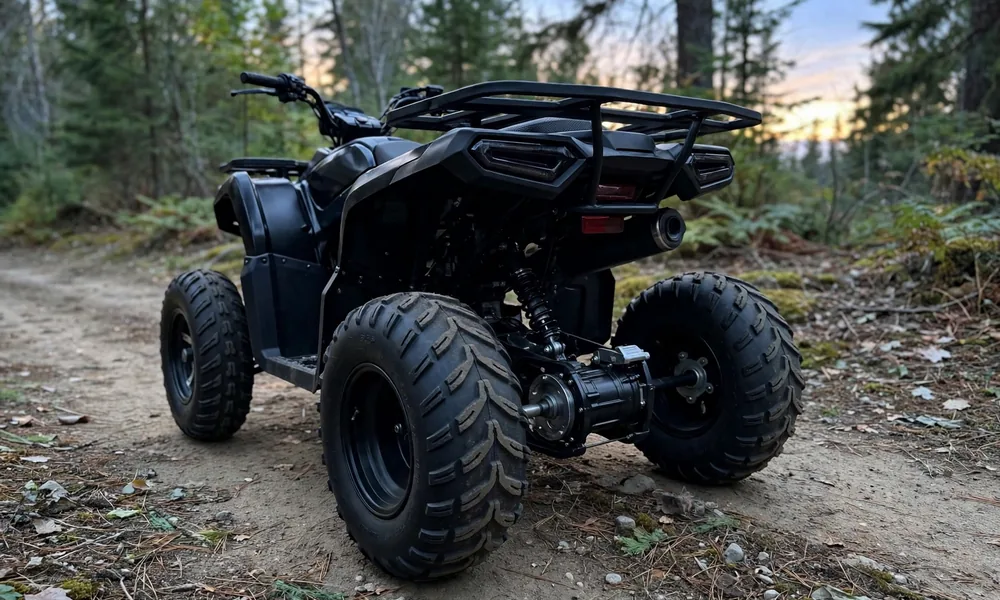
A luxury electric quad is a quiet workhorse dressed as a toy: a welded frame carries a sealed battery low down, a compact motor pulls from a standstill, four wide tyres grip whatever is under them, and matte black bodywork hides it all. It crosses ground a car cannot reach, and it does so without a sound. The price of that silence is set by the same parts that make it capable, and why a luxury electric dune buggy costs so much explains what a bigger battery and stronger suspension do to a price tag.