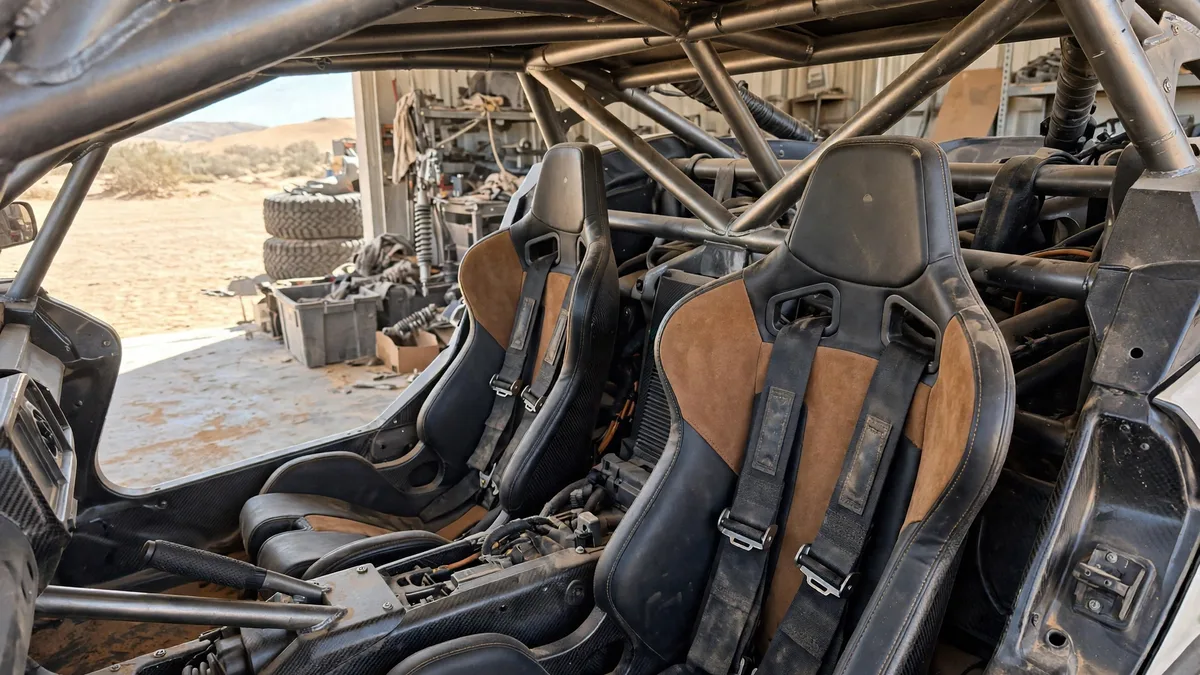
Climb into a luxury electric dune buggy and the first thing you notice is that there is almost nothing around you. There are no doors, no roof, and no windows, just a steel roll cage, two racing seats with harnesses, and a steering wheel. The sand stretches in every direction, the sky is enormous, and the machine under you feels less like a car and more like a toy built for a giant. Then you press the pedal, and the buggy leaps forward with a silence that makes the desert feel even bigger.
The price is the second surprise, and it is usually the bigger one. A luxury electric dune buggy can cost as much as a fine sports car, even though it has no roof, no boot, and no back seats. The reasons are hidden in the frame, in the suspension, in the battery, and in the fact that almost every one is built by hand for a buyer who wants to drive where no road exists.
The Frame Is the Whole Machine
A dune buggy has no body to protect it, so the frame is everything. It is a cage of steel tubes, bent and welded by hand into a shape that can roll over in the sand and still hold its shape, and every joint is checked by eye and by hand before the buggy is allowed out. The tubes must be strong enough to survive a crash, light enough to keep the buggy fast, and shaped so that the driver can see the dunes ahead without a pillar in the way.
The frame also carries the battery, and that is a problem no road car has to solve. The pack sits low in the chassis, sealed against sand and water, and armoured against rocks thrown up by the front wheels. Sand gets into everything in the desert, so every seal, every connector and every vent is designed to keep it out, and the cooling system must work in air that is already hotter than a summer day. The luxury dune buggy specs show how small these machines are, and why fitting a battery into one is like fitting a suitcase into a rucksack.
Weight is the enemy of a dune buggy, and the battery is its heaviest part. A pack that gives a useful range in the desert weighs hundreds of kilograms, so the frame, the seats and the wheels must all be as light as possible to make up for it. Carbon fibre, aluminium and titanium appear in places a normal car would use steel, and each one costs many times more than the metal it replaces.
Suspension Built for the Sand
The suspension is where a dune buggy spends its second fortune. The wheels must travel far up and down, sometimes half a metre, to soak up dunes and drops without throwing the buggy into the air, and the shock absorbers must do it again and again without overheating. A single set of racing dampers can cost more than a family car’s whole suspension, and they are tuned by hand for the sand the buggy will actually drive on.
The tyres are just as specialised. They are wide, soft and run at low pressure, so they float on the sand instead of digging in, and they wear out fast on hard ground. The wheels are light and strong, built to survive a landing that would bend a normal wheel, and the brakes must work in sand and dust that would choke a road car’s discs. The how the luxury SUV is made story shows the same obsession with off-road strength in a much bigger machine, where the suspension is the thing that keeps a family comfortable, and the buggy is that idea stripped down to speed.
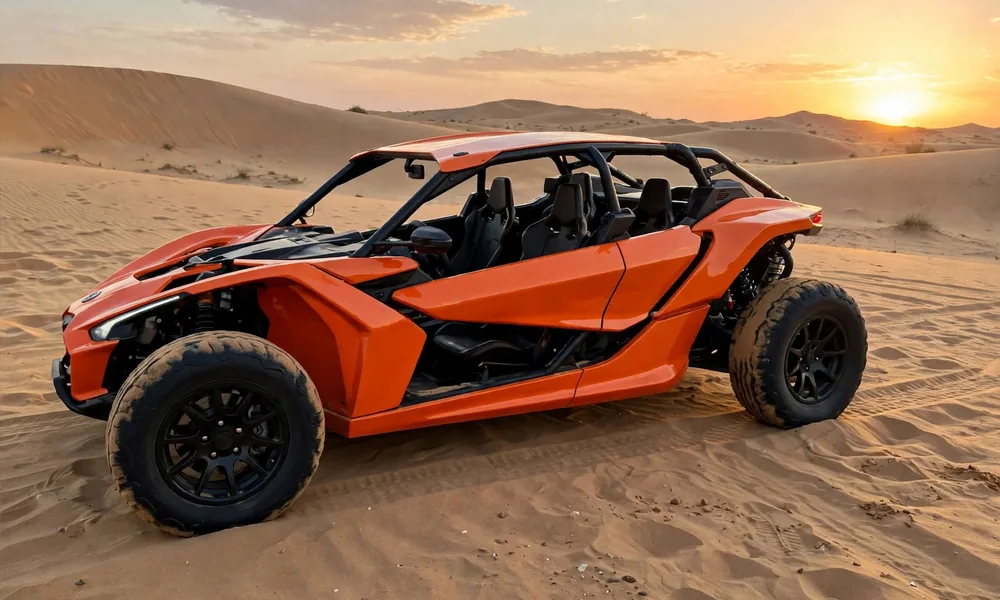
Electric power makes the suspension’s job harder and easier at once. The motors give instant torque, so the buggy can climb a dune from a standstill without spinning its wheels, but the battery’s weight makes every landing heavier, and the suspension must be strong enough to catch it. The best buggies balance the two, and the worst simply add power until something breaks.
Hand-Built, Tested and Rare
Almost no dune buggy is mass-produced. Each one is assembled by a small team, often in a workshop rather than a factory, with parts ordered in dozens rather than thousands. The seats are stitched to the buyer’s size, the steering wheel is set to their reach, and the paint is chosen from a list that changes every year. A production line that builds a few buggies a month can never match the price of one that builds a thousand cars a day, and the buyer pays for that craft.
Testing is brutal and expensive. A prototype is driven over dunes, through rivers and down rocky slopes until something breaks, and then it is fixed and driven again, because a failure in the desert is not a tow truck away. It is a long walk in the heat. The makers test until they trust the machine, and then they test it again, because the desert does not forgive a weak part. The luxury electric motorcycle specs show the same electric technology in a machine with even less protection, where the rider is out in the open, and the buggy is that freedom with a cage around it.
As an estimate, a luxury electric dune buggy costs about $80,000 to $200,000, the hand-built frame and suspension about $30,000 to $60,000 of that, the battery pack about $15,000 to $30,000 more, and a set of desert tyres about $2,000 to $4,000. These are estimated ranges, not quotes, and the final figure depends on the builder, the options and the desert it is built for. What never changes is that the price buys a machine built by hand for a place no road reaches, and that is a kind of luxury no mass-market car can offer.
A Rare Fact From the World of Dune Buggies
Here is a detail few drivers ever learn: a dune buggy can be quieter than the wind in the desert. With no engine roaring behind the seats, the loudest sound at speed is often the sand hissing under the tyres, and drivers say they can hear the desert itself for the first time. Some builders add a speaker that plays a soft hum, not for the driver but for the animals, so that wildlife hears the buggy coming and moves away. The silence is not an accident. It is the reason electric buggies are allowed into places where petrol machines are banned, and it opens up dunes that no engine has ever crossed.
What the Price Means for You
If you are wondering why a luxury electric dune buggy costs so much, look at four things: the frame, the suspension, the battery and the rarity. A cage built by hand to survive a roll, suspension tuned for sand, a battery sealed against the desert, and a production run too small to spread the cost thin are the marks of a buggy worth its price. The speed matters less than the brochures suggest, and the silence matters more than anyone admits, because a buggy this quiet is the one that lets you hear the desert. The best dune buggy is the one that brings you home from the dunes, every time, with a grin you cannot explain.