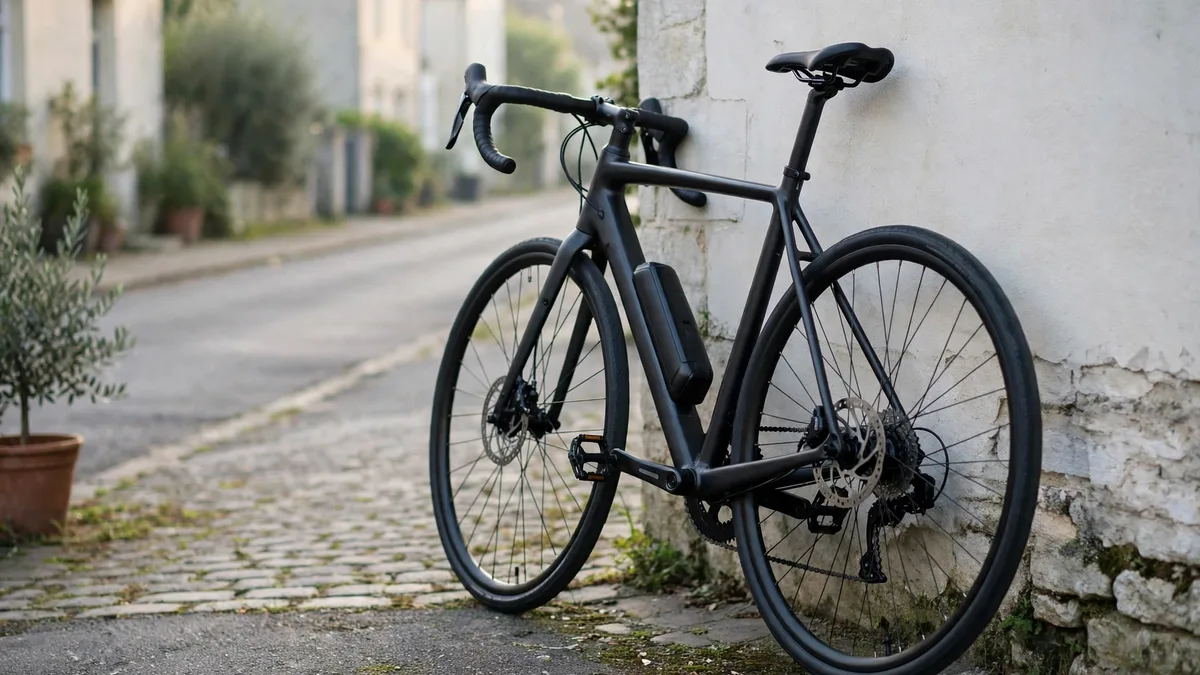
From ten paces away, a luxury electric road bike looks like any other fast road bike. The frame is slim, the tyres are narrow, the drop handlebars curve down in the same familiar shape, and nothing about it shouts that a motor is hiding inside. Pick it up, though, and the secret gives itself away: it is a little heavier than it looks, and somewhere inside the frame there is a battery and a motor waiting for a hill.
Building one is a balancing act. A road bike lives or dies by its weight, so every gram of motor and battery has to be earned back by hiding it well and shaping the frame around it. This is how a luxury electric road bike is made.
How It’s Made
Step 1: The frame is designed around the motor and battery
A luxury electric road bike begins on a computer, not on a workbench, because the motor and battery have to fit inside a frame that still looks like a road bike. The designer chooses a small mid-drive motor that sits at the bottom bracket, where the pedals turn, and a slim battery that slides into the down tube, the thick tube that runs from the handlebars to the pedals. The frame is drawn around those two parts, with the tubes shaped to hide the battery completely and the wiring routed inside the frame so nothing dangles in the wind.
Step 2: The carbon frame is laid up and cured
Most luxury electric road bikes use a carbon-fibre frame, and it is built by hand, layer by layer. Sheets of carbon cloth are cut into shapes and laid into a mould, with the fibres pointed in different directions so the frame is stiff where it needs to be and forgiving where it should flex. Extra layers go around the bottom bracket and the head tube, where the motor and the steering loads meet, and channels are left open inside the down tube for the battery and the cables. The mould is closed and the frame is cured in an oven under pressure, which hardens the resin and turns soft cloth into a rigid shape. When the mould opens, the frame is trimmed, sanded and checked for voids with a tap test, and any frame that sounds wrong is cut up rather than repaired.
Step 3: The motor, battery and electronics are fitted
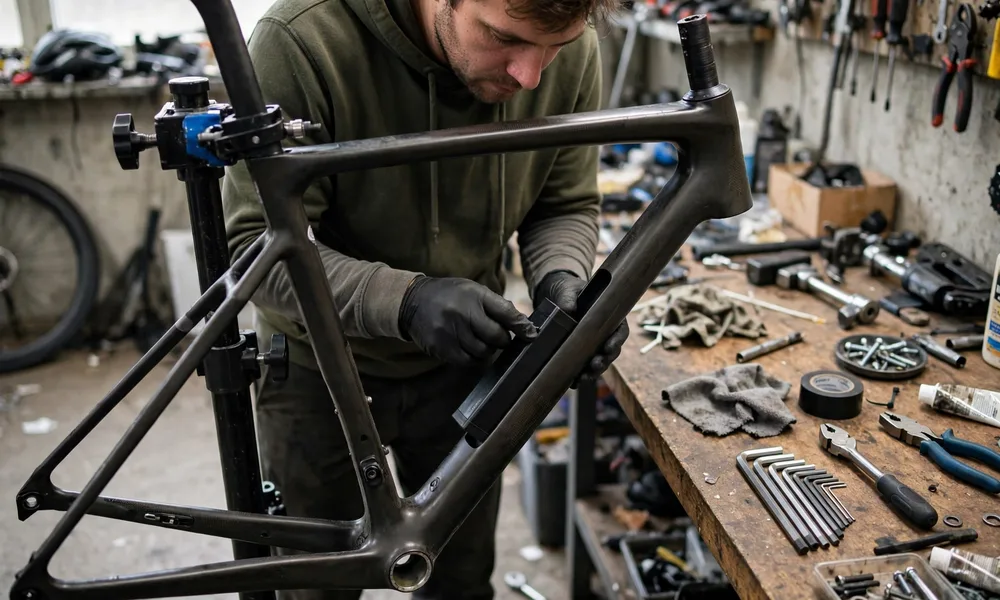
The motor is bolted into the bottom bracket shell, and this is the most precise job in the whole build. The motor must sit perfectly square, because a motor that is a fraction of a millimetre out of line will wear the chain and creak on every pedal stroke. The battery slides into the down tube and locks into place with a click, its contacts meeting the motor wiring hidden inside the frame. A torque sensor is fitted at the cranks, a small device that measures how hard the rider is pushing, and a controller the size of a matchbox is tucked into the frame near the motor. The display on the handlebars is wired in last, a small screen that shows speed, battery and assistance level. Every connection is sealed against rain, because a road bike that cannot get wet is no road bike at all.
Step 4: The wheels, gears and brakes are built up
The wheels are built by hand, each spoke tensioned and trued until the wheel spins without a wobble. The rims are light carbon or alloy, and the tyres are narrow, fast road tyres that roll easily on smooth tarmac. The gears are an electronic groupset, which shifts with a tap of a button instead of a tug on a cable, and the derailleur is adjusted so the chain moves cleanly across the cassette even when the motor is pushing hard. The brakes are hydraulic discs, small rotors that stop the bike in the wet as well as the dry, and they are bled carefully so the levers feel firm and even. The saddle, bars and pedals are fitted to the buyer’s measurements, because a luxury bike is built for one rider, not for a showroom average.
Step 5: The bike is painted, finished and assembled
Before the parts go on, the frame is painted, and a luxury finish takes days rather than hours. The frame is primed, sanded, painted in thin coats and lacquered, with the maker’s graphics laid on by hand or under the clear coat so they can never peel. Some frames are left with the carbon weave showing through a tinted lacquer, a look that owners either love or hide under solid paint. The finished frame is inspected under bright light for dust, runs and thin spots, and any flaw means sanding back and starting the paint again. Then the parts are fitted, the cables are routed and the bike is assembled in full for the first time, ready for its first test ride around the block.
Step 6: The bike is ridden, tuned and signed off
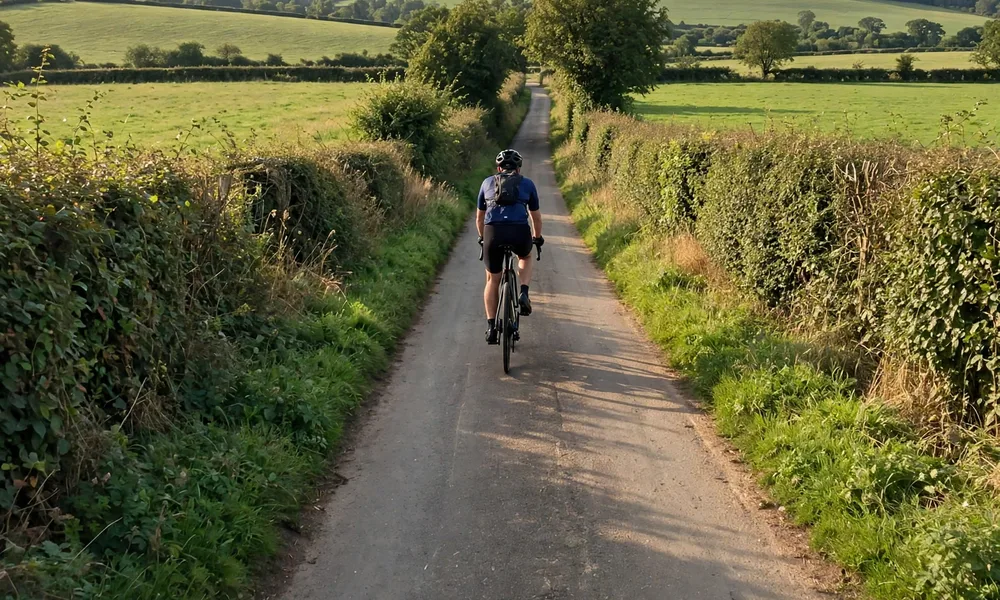
No luxury electric road bike leaves the workshop without being ridden. A test rider takes it out on real roads, checking that the motor cuts in smoothly when the pedals turn, that it fades out at the legal speed limit, and that the bike still handles like a road bike when the assistance is off. The gears are tuned under load, the brakes are bedded in with a series of hard stops, and the battery is charged and drained once to check its true range. The rider notes every rattle, every creak and every hesitation, and the bike goes back to the bench until it is silent. Only when the bike rides as quietly as it looks is it cleaned, packed and given its papers, ready for a rider who will probably never know how much work went into hiding the motor.
Luxury Electric Road Bike Specifications
The figures below describe a typical luxury electric road bike. Lighter and heavier models exist, but the way they are built is the same.
| Specification | Typical value |
|---|---|
| Frame material | Carbon fibre |
| Total weight | About 11 to 13 kg |
| Motor | Mid-drive, about 250 watts |
| Battery | About 250 to 360 watt-hours |
| Assisted range | About 80 to 120 km |
| Brakes | Hydraulic disc brakes |
What It Costs
A luxury electric road bike costs an estimated $6,000 to $14,000, depending on the frame, the motor and the groupset, with the lightest and most exclusive models costing more. Those are estimates, not quotes, and they reflect the hand-built carbon frame, the hidden motor and battery, and the test ride every bike gets before it leaves. The motor at its heart is a close cousin of the one in a city e-bike, as how a luxury electric bike works explains.
A Rare Fact
Here is a detail most people never guess. The motor in a luxury electric road bike is often smaller and weaker than the one in a cheap city e-bike, and that is deliberate: a road bike motor is there to flatten hills, not to do the riding for you, so it adds just enough power to keep a rider fresh without changing how the bike feels. The battery is small for the same reason, and the whole bike can still be ridden with the power off, like a normal road bike. The wider family is built the same way, as how a luxury electric bicycle is made shows, and the standard e-bike version of the same idea is covered in how a luxury electric bike is made.


