A touring bike is a motorcycle built to eat miles, with a fairing to push the wind aside, luggage to carry a week away, and a seat that stays comfortable long after the first hundred miles. As a luxury electric machine it adds silence to that list, and a range that must be planned like a journey, not assumed.
What makes it work is the balance between weight and distance: a big battery for range, a fairing for the wind, and a motor that can hold motorway speed for hours without overheating. This is how a luxury electric touring bike works, from the charging socket to the panniers at the back.

How It Works
Step 1: The big battery sets the range
The touring bike carries the largest battery of any electric motorcycle, a pack of modules bolted low in the frame and wired to a management system that watches every cell. The pack is sized not for a quick sprint but for hours at motorway speed, and its range is the number every rider asks about first.
Charging is part of the design too. The bike takes a fast charge at a roadside charger, filling most of its battery in the time it takes to drink a coffee, and a slower charge overnight at home. The charging socket sits behind a small flap on the side, sealed against rain, and the display tells the rider how long a charge will take before they even plug in.
Step 2: The motor holds its speed for hours
The motor is a liquid-cooled electric unit, built to hold a steady speed for hours rather than to sprint. Cooling matters here, because a motor that overheats on a long climb will cut its power to protect itself, and a touring bike cannot afford to fade on a mountain pass.
There is no gearbox, so the rider twists the throttle and the bike accelerates smoothly, with the controller feeding power in a steady stream. Cruise control holds the speed on a long road, regenerative braking feeds power back on a downhill, and the belt drive runs quietly for thousands of miles with only a tension check now and then.
Step 3: The fairing and screen cut the wind
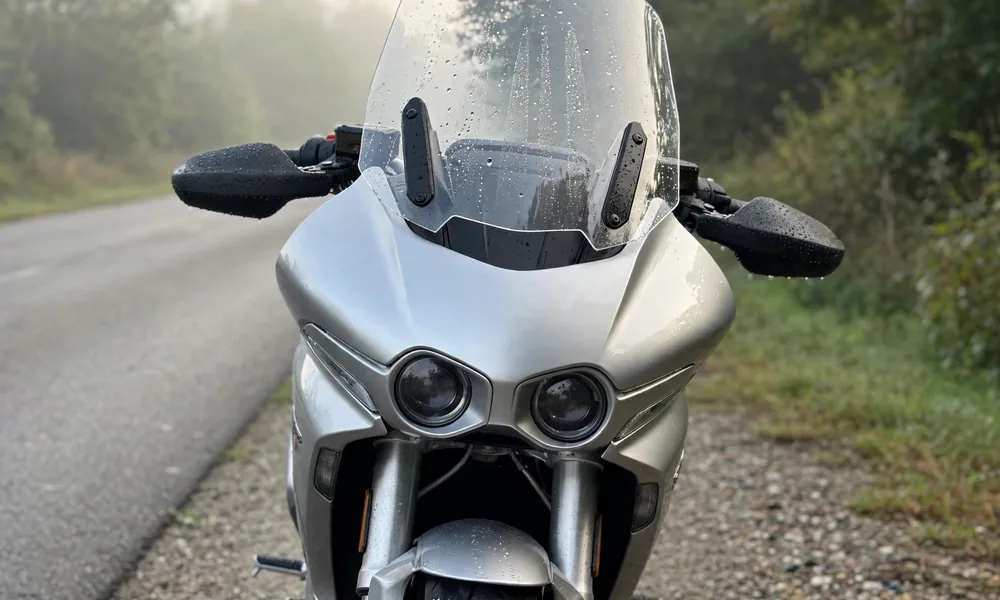
The fairing is the touring bike’s most visible part, a shaped shell around the front that pushes the wind up and over the rider instead of into their chest. It is moulded from strong plastic, painted to match the bike, and fitted with a tall windscreen that can be raised or lowered from the handlebars.
Behind the fairing sit the headlamps, the mirrors and a small storage pocket for gloves and a phone, all within reach of the rider. The fairing is tested in a wind tunnel, because a screen that is too tall will buffet the rider’s helmet, and one that is too short will leave them fighting the wind for hours.
Step 4: The luggage carries a week away
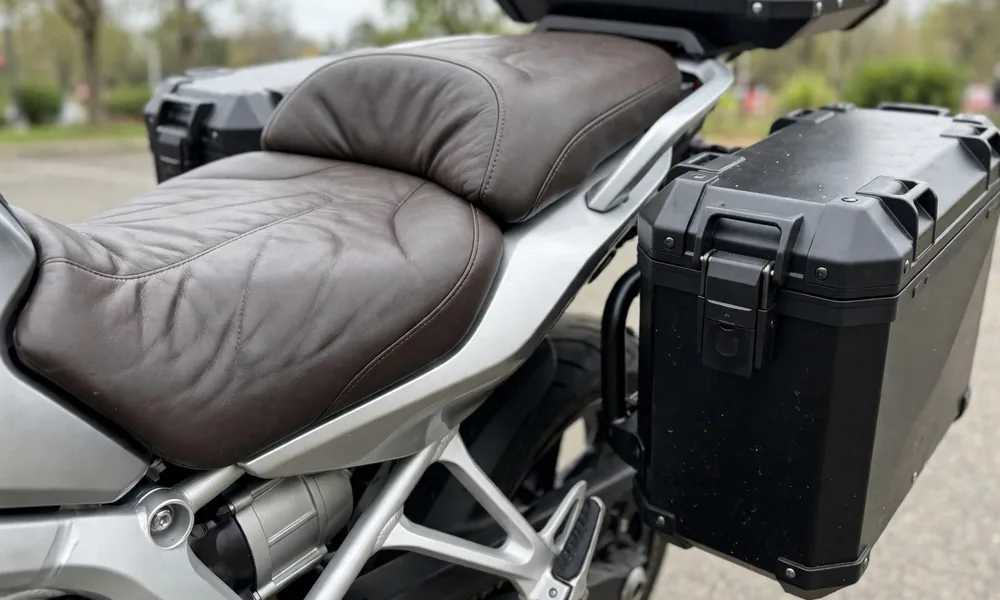
At the back, hard panniers lock onto the frame on either side of the rear wheel, with a top box behind the passenger seat for a helmet or a bag. Each pannier is waterproof, lined, and locked with the bike’s key, and together they carry enough for a week on the road without a rucksack on the rider’s back.
The panniers are mounted low and close to the bike, so they do not upset the balance, and they are designed to come off with one hand when the rider reaches a hotel. The passenger seat sits between them, wide and heated, with footboards and a backrest, because a touring bike is often ridden two-up for days at a time.
Step 5: The seat and suspension stay comfortable
The seat is the widest on any electric motorcycle, thickly padded and covered in leather, with a heated element for cold mornings and a shape that supports the rider’s back. The suspension is electronically adjustable, firming up for a loaded bike and softening for a solo rider, all from a switch on the bars.
That adjustability is what lets one bike feel right with a passenger and full luggage on a motorway, and still feel right alone on a mountain road. The tyres are chosen for long life and wet grip, and the rider can check their pressure on the display, since a touring tyre that is soft will wear out long before the journey ends.
Step 6: The display plans the journey
The display is the touring bike’s map and diary in one, a large screen that shows speed, charge, range and the nearest chargers on the route ahead. It plans charging stops into the journey, warning the rider when the next charger is further than the remaining range, and it can reroute around a charger that is out of service.
Music, calls and navigation run through the same screen, with controls on the handlebars so the rider never takes a hand off the bars. The screen is bright enough to read in sunlight and dim enough not to dazzle at night, and it is the part of the bike the rider looks at most, after the road itself.
| Spec | Detail |
|---|---|
| Battery | Largest pack in the range, fast charging, range shown live on screen |
| Motor | Liquid-cooled electric motor, cruise control, belt drive, no gearbox |
| Fairing | Moulded shell with adjustable windscreen, tested in a wind tunnel |
| Luggage | Hard waterproof panniers and top box, locked with the bike key |
| Comfort | Wide heated seat, electronically adjustable suspension, heated grips |
| Display | Large screen with navigation, charger planning, music and calls |
The hardest part of a luxury electric touring bike is the range. A big battery gives distance, but it also adds weight, and the fairing, the luggage and the passenger all take their share of that range, so every part must be as light and as slippery through the air as it can be.
What One Costs
A luxury electric touring bike typically costs an estimated $35,000 to $85,000, set mostly by the size of the battery, the fairing and electronics, and the luggage system. A shorter-range machine with plain luggage sits near the bottom, while a long-range bike with a full electronics package and heated everything costs far more. Sharing a ride is a different kind of touring, and how a luxury electric tandem works explains two riders on one motor, while how a luxury electric commuter bike is made covers the short-trip electric bike at the other end of the scale.
A Rare Fact
Some luxury electric touring bikes are fitted with a small air compressor hidden under the seat, so the rider can top up a soft tyre at the roadside without finding a garage, and the hose reaches both wheels from where the rider stands.
A luxury electric touring bike works as a travelling machine: a big battery sets the range, a cooled motor holds its speed for hours, a fairing cuts the wind, hard panniers carry a week away, and a screen plans the charging stops before the rider needs them. It is a motorcycle built around the journey, not the destination. The price follows the battery and the electronics, and reading luxury electric mountain bike specs shows how the same battery numbers are read on a machine built for trails instead of motorways.


