Stand on a platform as a modern luxury tram arrives and the first thing you notice is how little drama there is. There is no engine note rising, no puff of exhaust, no judder as it stops. The tram simply appears, gliding to a halt with a soft sigh of brakes, its doors opening level with the platform so that a wheelchair, a pram or a suitcase rolls straight aboard. Inside, the floor is flat end to end, the seats are wide, and the ride is so smooth a coffee stays put. It feels less like boarding a vehicle and more like stepping into a moving room.
A tram is the oldest form of electric city transport, and the newest luxury trams are also the most refined. They run on electricity from a wire above the street, stop and start dozens of times an hour, and carry more people in a day than a fleet of buses. Making one work well is an exercise in quiet engineering: motors that never shout, brakes that give energy back, and a body that floats over rails laid in the middle of a city. This is how a luxury electric tram works, from the wire above to the wheels below.

How It Works
Step 1: The pantograph draws power from above
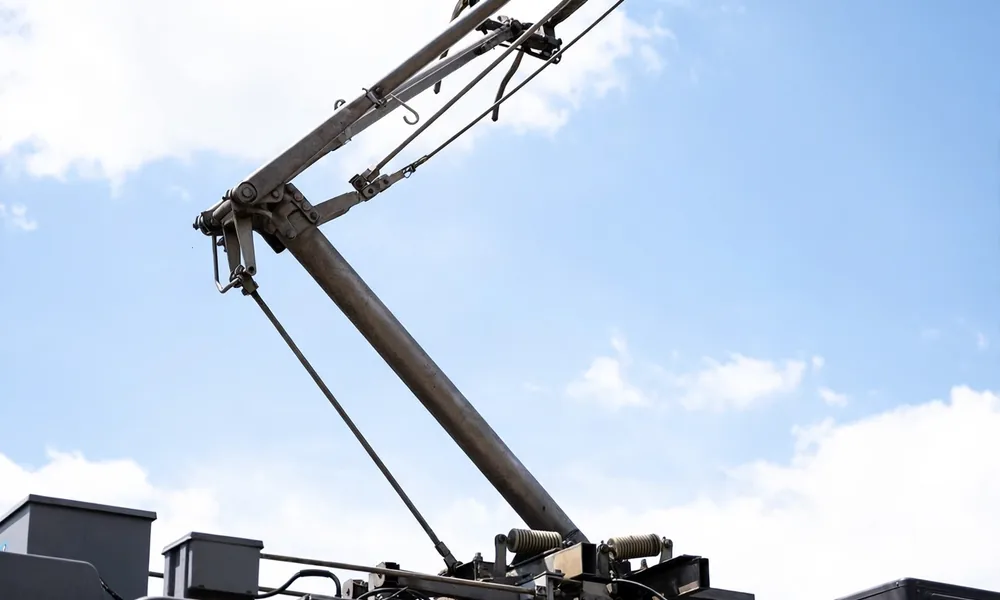
On the roof of the tram sits the pantograph, a folding frame that reaches up to the overhead wire and presses a carbon strip against it with a spring. The wire carries direct current, usually at 600 or 750 volts, and the pantograph is the tram’s only connection to its fuel. As the tram moves, the pantograph slides along the wire through curves and junctions, a small spark normal where strip meets wire. On newer trams the pantograph lowers at a station and the tram runs on batteries, crossing a historic square without a wire in sight.
Step 2: The motors turn electricity into motion
The power from the roof flows down to inverters, which turn the direct current into the alternating current the traction motors need. Each powered bogie, the wheeled frame under the tram, carries motors that drive the axles through a gearbox, and the driver controls them with a single lever: push forward to go, pull back to brake. Motors make full pulling force from a standstill, so a tram accelerates smoothly and climbs steep hills fully loaded. The motors are water-cooled, sealed, and built to run for decades.
Step 3: The brakes give energy back
When the driver pulls back on the lever, the motors become generators. Instead of using electricity, they make it, turning the tram’s motion back into power that flows into the overhead wire, where another tram nearby can use it, or into the tram’s own batteries. This regenerative braking does most of the stopping on a normal run, and the friction brakes, discs on each axle, only take over for the final stop or in an emergency. A tram can recover a large share of the energy it used to accelerate, which is why trams are among the most efficient vehicles on the road.
Step 4: The computer watches everything
A modern tram is run by a computer that watches the motors, the brakes, the doors, the air conditioning and the batteries, hundreds of times a second. It keeps the speed within the limit for each stretch of track, it talks to the traffic lights so the tram gets a green as it approaches, and it records every fault for the depot to read later. The driver still drives, but the computer is the tram’s memory and its early-warning system, and it is why a luxury tram rarely breaks down in service.
Step 5: The cabin is built for a quiet ride
The body of a luxury tram is a long, low shell of steel and aluminium, with a flat floor that runs its full length so that nobody has to climb a step. The wheels sit on bogies that are sprung and damped to soak up the bumps in the track, and the body is insulated so well that the loudest sound inside is usually the conversation of the passengers. Wide windows, soft lighting and information screens make the cabin feel more like a lounge than a bus. Comfort is not a decoration on a tram: it is what persuades people to leave their cars at home.
Step 6: The tram rests, charges and is checked
At the end of the day the tram returns to the depot, where it is washed, inspected and charged if it carries batteries. Technicians check the wheels for wear, measure the carbon strip on the pantograph, and look at the computer’s fault log. A tram is built to run for thirty years, and the depot is where that life is earned, one inspection at a time. In the morning the tram rolls out again, charged, clean and ready, and the wire above the street is waiting for it.
| Specification | Typical figure |
|---|---|
| Power supply | 600 to 750 volts direct current from an overhead wire, plus batteries on wire-free sections |
| Motors | Several traction motors, one or two per powered bogie, water-cooled and sealed |
| Capacity | An estimated 200 passengers, with around 60 to 80 seats and standing room for the rest |
| Length | Around 30 metres for a standard luxury tram, with longer versions carrying more people |
| Top speed | An estimated 45 to 50 mph in service, lower in city streets |
| Energy recovery | An estimated 20 to 30 percent of braking energy returned to the wire or the batteries |
| Floor | A flat, low floor from end to end, level with the platform for step-free boarding |
| Service life | An estimated 30 years or more, with regular depot maintenance |
What One Costs
A single luxury electric tram typically costs an estimated $3 million to $5 million, and the price is set by the size of the vehicle, the motors, the batteries and the level of the interior. The track, wires and depot cost far more than the tram, which is why cities buy fleets and run them for decades. The closest cousin on the road is the luxury electric bus, which carries fewer people and runs on batteries alone, while how a luxury electric bus is made shows the factory side of a similar electric vehicle.
A Rare Fact
The wheels of a modern tram are not solid steel. Each wheel has a rubber ring sandwiched between the steel tyre and the steel hub, which absorbs vibration and noise before it can reach the cabin. It is what makes a luxury tram so quiet: the rubber takes the sting out of every rail joint. A tram wheel is, in effect, a shock absorber shaped like a wheel.

A luxury electric tram is a machine that disappears into its job. It does not roar or smoke, and it never asks passengers to climb, hurry or hold on tight. It simply arrives, opens its doors, and carries a small crowd across a city on a wire and a set of quiet motors. The best city transport is the kind you barely notice, and the tram has been doing it on electricity for more than a century. The braking that makes it so efficient is the same idea explained in how a regenerative braking system works, where the motor becomes a generator every time the vehicle slows.