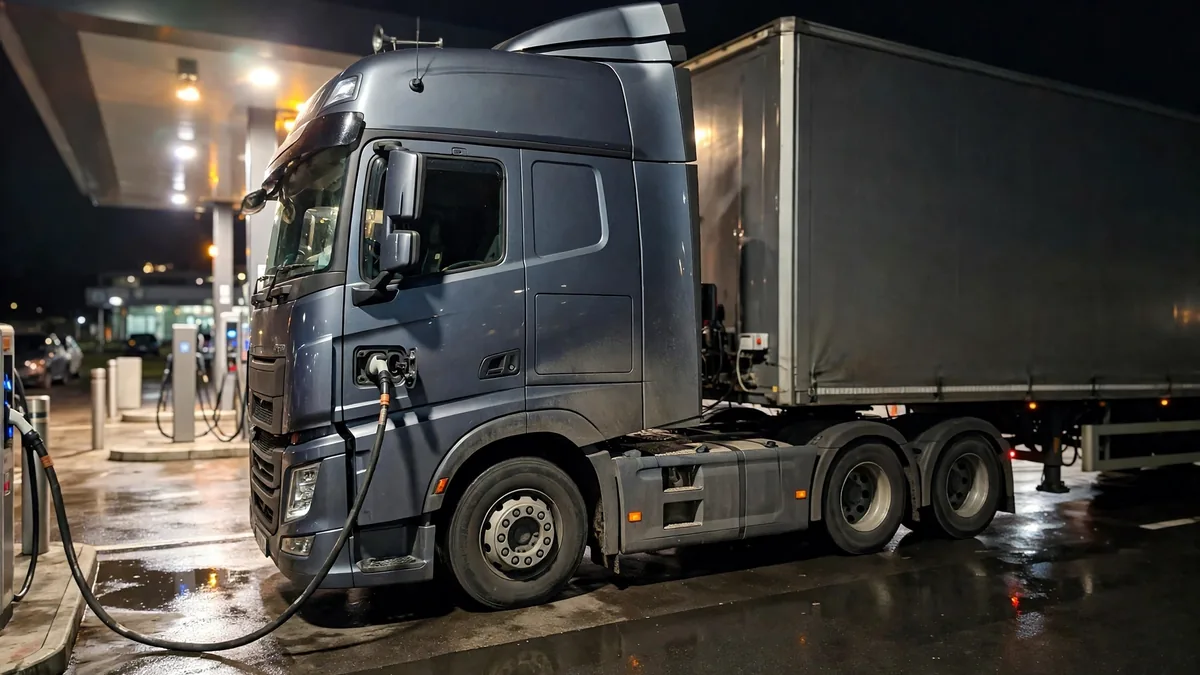
The service station on the motorway was quiet after midnight, the lorries parked in rows with their lights off, when a truck pulled in that did not sound like any of the others. There was no diesel rumble, no shake through the tarmac, only the soft whine of the tyres and the click of the charging cable as the driver plugged in, and then the cab glowed softly, with a bed, a small kitchen and a screen showing the route for the morning. The driver made coffee, stretched out, and slept while the truck filled itself, and nobody in the station woke up.
That truck is a luxury electric truck, and it is expensive for reasons that are easy to miss, because most of the cost is hidden in the battery, the chassis and the cab that a driver lives in for weeks at a time. This guide explains why each cost exists, one driver at a time, so the price reads like a list of reasons instead of a mystery.
The battery: the heaviest and most expensive part
The first cost is the battery, and it is the largest single expense on the whole truck. A luxury electric truck carries a battery of several hundred kilowatt-hours, sometimes more than five hundred, because it must pull forty tonnes of load for hundreds of kilometres without stopping. Thousands of cells are packed into armoured cases along the chassis, cooled and monitored cell by cell, and the battery alone can cost more than a luxury car. The guide to why a luxury electric pickup is so expensive follows why a smaller electric work vehicle costs so much, and the truck takes the same lesson to a far larger scale: the bigger the load, the bigger the battery, and the bigger the price.
The motors and the chassis: pulling forty tonnes in silence
The second cost is the motors and the chassis, usually two or three electric motors driving the rear axles, built to pull a fully loaded truck up a motorway hill without a sound. The motors are far stronger than car motors, and they are bolted to a chassis that must carry both the load and the battery, which together weigh more than most houses.
The cab: a bedroom, an office and a kitchen on wheels
The third cost is the cab, and it is where the luxury shows. The driver lives in the cab for days at a time, so it has a wide bed, a small kitchen, a fridge, a desk and a screen for films and calls, all trimmed in leather and soft materials, with air suspension under the seat and double-glazed windows to keep the motorway noise out. The cab is heated and cooled while the truck charges, so the driver wakes to a warm room in winter, and the air conditioning runs from the battery, not from an idling engine, which is why the cab feels more like a small hotel room than a workplace.
Charging and the depot: the price beyond the truck
The fourth cost is the charging and the depot, and it is the one buyers forget until the truck arrives. A luxury electric truck needs a powerful depot charger, often more than three hundred kilowatts, plus new cabling, a transformer and a bay wired for overnight charging, and the driver needs fast chargers along the route for long journeys. The guide to what makes a luxury pickup truck so expensive explains why a different kind of luxury work vehicle costs so much, and the truck shares the same pattern: the vehicle is only half the purchase, and the charging that feeds it is the other half, built once and paid for up front.
Safety, software and the long warranty: the quiet costs
The fifth cost is the safety, the software and the long warranty, and it is the one that protects the driver and the load. The truck carries automatic emergency braking, blind-spot warnings, a 360-degree camera system and a battery that is armoured along the chassis, plus software that watches every cell, every motor and every brake, and updates itself overnight. The guide to luxury off-roader specs, explained sets out how a heavy off-road machine lists its strength figures, and the truck uses the same ideas on the motorway: redundant systems, a long battery warranty, and a build that is checked and rechecked before the truck ever carries a load.
The hand build and the low numbers: why each truck costs more
The last cost is the hand build and the low numbers, and it is the hardest to see and the easiest to understand. A luxury electric truck is not made in the millions like a family car, but in the hundreds or thousands, in a workshop where a small team fits the cab, the battery cases and the trim one truck at a time, checking every seam and every switch.
The costs at a glance

| Feature | Typical luxury figure | What it tells you |
|---|---|---|
| Battery | Several hundred kilowatt-hours, sometimes over 500 | The largest single cost on the truck |
| Motors | Two or three electric motors, rear axles | Silent power for a 40-tonne load |
| Range | Around 300 to 500 kilometres loaded | A full day of motorway driving on one charge |
| Charging | Over 300 kilowatts at the depot | Overnight refuelling while the driver sleeps |
| Cab | Wide bed, kitchen, fridge, desk, leather trim | A bedroom and office the driver lives in |
| Chassis | High-strength steel, armoured battery cases | Built to carry load and battery for a million kilometres |
| Safety | Emergency braking, 360-degree cameras, armoured battery | Protection for the driver and the load |
| Service life | Around a million kilometres | Long enough to earn the price back |
What it costs
A luxury electric truck typically costs an estimated $250,000 to $450,000, depending on the battery size, the cab and the axles. The estimate covers the truck alone, not the depot charger, the insurance or the servicing, which are a real part of owning an electric truck, and which the owner pays over the million kilometres the truck stays in service.
A rare fact
One detail few people ever learn is that a luxury electric truck can power a whole building site from its battery, running tools, lights and even a small crane through an outlet on the chassis, so the truck that delivered the materials can also power the work. The battery that pulls forty tonnes down the motorway can also run a saw or light a warehouse, and the truck becomes a mobile power station the moment it parks.
Read the price in that order, battery first, then motors, cab, charging, safety and hand build, and the number stops looking like a mystery and starts looking like a list of reasons. The best electric trucks are not the cheapest ones, but the ones whose costs agree with each other, a battery the depot can fill, a chassis the load can trust, and a cab the driver can live in for weeks without tiring.