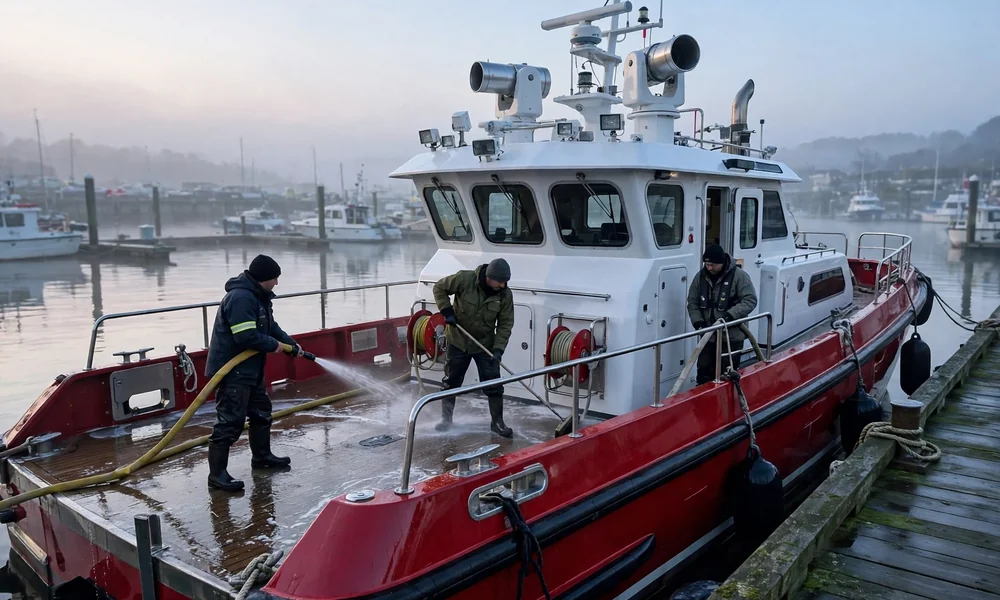
The call comes at two in the morning, and by the time the crew is on deck the fire is already visible from the harbour mouth: a warehouse ablaze on the waterfront, flames reaching over the roof, and the land-based fire engines unable to get close enough because the fire is on the water side of the building. The fireboat answers, and it answers in a way no land engine can. A luxury fireboat is a floating fire station, a rescue vessel, and a tug all at once, and its luxury is not in its cabins.
Fireboats have protected harbours for more than a century, but the modern luxury fireboat is a very different machine from the steam-powered boats of the past. It carries high-capacity pumps driven by its own engines, water monitors that can throw a jet over a hundred metres, foam systems for fuel fires, and a hull strong enough to push against a burning ship without catching fire itself.
The secret of a fireboat is that it is two machines sharing one hull: a fast, manoeuvrable workboat, and a pumping station that can move more water in a minute than a street of fire hydrants. This is how a luxury fireboat works, from the moment the alarm sounds to the moment the last ember is out.

How a luxury fireboat works
Step 1: The alarm and the fast response
A fireboat’s work starts long before it reaches the fire. The crew lives aboard or nearby, on call around the clock, and the boat is kept fuelled, crewed, and ready to leave its berth within minutes of an alarm. The boat leaves at speed, its engines already warm, and the crew prepares the monitors and the foam system while under way, so that the first jet of water is in the air within seconds of arrival. Speed matters because a fire doubles in size quickly, and the first minutes decide whether a warehouse fire stays a warehouse fire or becomes a harbour fire.
Step 2: The hull and the engines
The hull is the foundation of everything, and a fireboat hull is built to be strong, stable, and manoeuvrable. It is usually a deep steel or aluminium hull with a wide beam, which gives it the stability to fire its monitors at full power without rolling, and a shallow enough draft to work close inshore. Propulsion comes from powerful diesel engines driving propellers or water jets, giving the boat both speed on the way to a fire and the fine control needed to hold position against wind and current while pumping. The same blend of power and fine control defines how a luxury pilot boat works, where holding station in rough water is also the whole job.
Step 3: The pumps and the water supply
The heart of a fireboat is its pumping system, and it is sized on a scale that land fire engines cannot match. Large fireboats carry pumps that can move 10,000 litres a minute or more, driven directly by the main engines or by dedicated pump engines, drawing water from beneath the hull through large sea chests and strainers that keep debris out. Because the boat draws its water from the harbour itself, it never runs out, which is the fireboat’s greatest advantage: a land engine is limited by its hydrants, but a fireboat floats on an unlimited supply.
Step 4: The monitors and the foam system
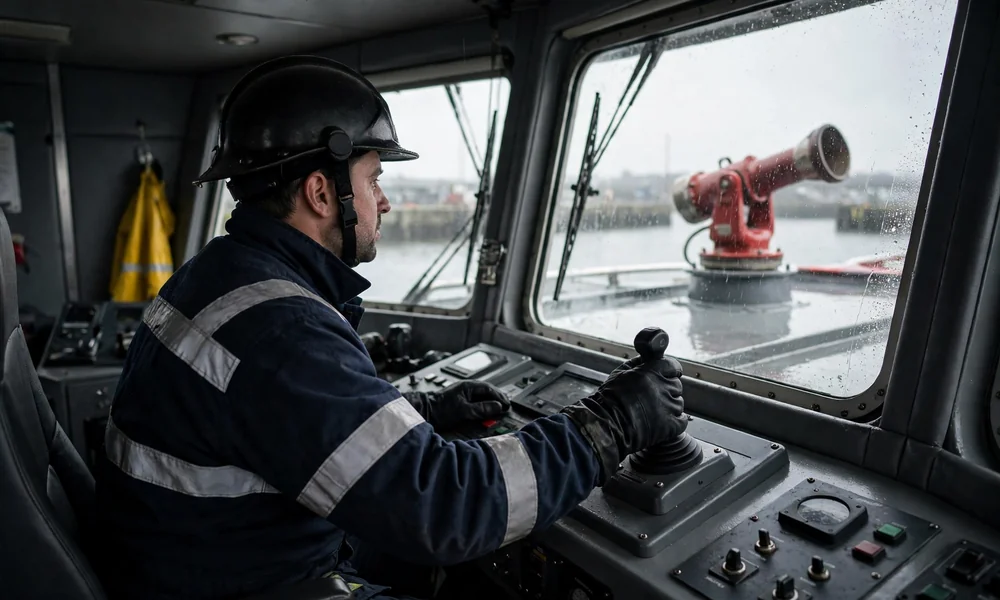
The water leaves the boat through monitors, the large, remotely controlled nozzles mounted on the deck and the wheelhouse roof. A monitor can be aimed by joystick from inside the wheelhouse, and it can throw a jet over a hundred metres, or switch to a wide spray that lays a curtain of water over a ship’s deck. For fuel and chemical fires, the foam system mixes a foam concentrate into the water, creating a blanket that smothers the fire and stops it reigniting. The figures behind this firepower are set out in the luxury fireboat specs explained guide, which breaks down the pumps, the monitors, and the reach.
Step 5: Working the fire and protecting the crew
Once the monitors are running, the captain’s job becomes a careful balance: getting close enough for the water to hit the fire hard, while staying far enough away that the heat does not damage the boat or endanger the crew. The wheelhouse and decks are protected by a water curtain system, nozzles that spray water over the boat itself to keep it cool, and the crew wears protective gear and breathing apparatus for any work on deck. The boat may also use its hull to push a burning vessel away from other ships, or to hold a stricken ship steady while its crew is rescued.
Step 6: After the fire and the return to readiness
When the fire is out, the work is not over. The fireboat stays on scene, damping down hot spots and watching for reignition, sometimes for hours, because a warehouse full of smouldering cargo can flare up again long after the flames are gone. Back at the berth, the crew flushes the pumps and pipes with fresh water to wash out salt, checks the foam levels, inspects the monitors, and refuels, so the boat is ready to go again. The discipline of staying ready between jobs is shared by every working boat in the harbour, including the one described in how a luxury barge works, where a quiet day is still a working day.
Specifications
| Specification | Typical figure |
|---|---|
| Length | 20 to 35 metres |
| Pump capacity | Up to 10,000 litres per minute or more |
| Monitor range | Over 100 metres |
| Top speed | 25 to 30 knots |
| Crew | 4 to 8 firefighters |
| Foam capacity | Several thousand litres |
| Estimated price | From around $5,000,000, an estimate |
The price of a luxury fireboat is an estimate, because each boat is built to the harbour it will serve. A well-equipped luxury fireboat typically starts from around $5,000,000, and a large harbour fireboat with the biggest pumps, a full foam system, and rescue facilities can cost $10,000,000 or more. One fire stopped early can repay the whole boat.
A rare fact
Here is a detail that surprises visitors to a fireboat: the boat can pump water ashore to land-based fire engines, acting as a floating hydrant for a whole street of fire trucks. A fireboat that cannot reach a fire with its own monitors can still feed its pumps through hoses to engines on the quay, giving them an unlimited water supply that no street hydrant could match. The boat is not just a firefighter. It is a water main that can move.
A finished fireboat is a machine built for the worst day in a harbour’s life, and it spends most of its life waiting for that day, training, testing its pumps, and patrolling the water it protects. Its luxury is not visible in the way a yacht’s is, but it is real: a warm, protected wheelhouse, powerful engines, and the knowledge that when the alarm sounds, the boat and its crew can do something no one else in the harbour can do.