It is three in the morning, the rain is coming sideways, and a container ship the size of a city block is waiting outside the harbour. Somewhere out there, in the dark, a small boat is running toward it at thirty knots, its bow smashing through waves that would swamp a yacht twice its size. That small boat is a pilot boat, and the person it carries is the harbour pilot, the local expert who will take the big ship safely into port. The boat itself is one of the toughest working craft on the water, and the luxury versions are built to do the same dangerous job in comfort.
A luxury pilot boat looks like a workboat, and in many ways it is, but step aboard and the difference is clear. The wheelhouse is heated and quiet, the seats are sprung and leather-trimmed, and the deck is laid out so a pilot can board a moving ship without ever feeling rushed. This is how one works, from the first call to the last berth.

How a luxury pilot boat works
Step 1: The call and the launch
The job starts with a radio call. A ship approaching the port requests a pilot, and the pilot station checks the tide, the weather, and the ship’s draft before assigning a boat. The crew of two or three, a coxswain and a deckhand, and sometimes a second pilot, board the boat at the station, run through a pre-departure check of the engines, the steering, and the radios, and cast off. A luxury pilot boat is kept on standby around the clock, its fuel tanks full and its engines warm, so it can be under way within minutes of the call.
Step 2: The run out to the ship
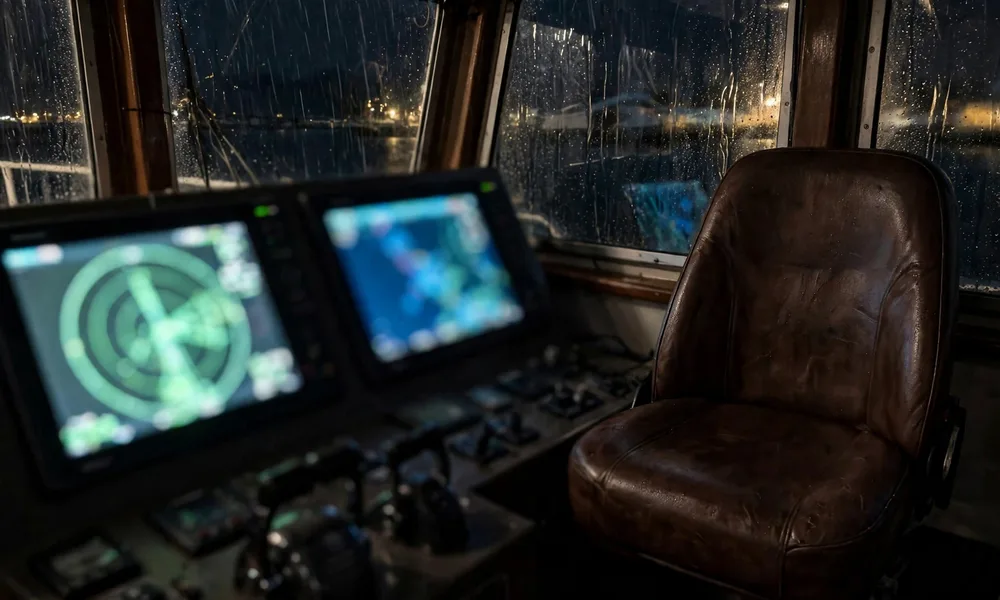
The run out is the fast part. Twin diesel engines, typically 500 to 800 horsepower each, drive the boat through the water at 25 to 30 knots, and the deep-V hull is designed to cut through waves rather than slam over them. The wheelhouse sits high and forward, with windows all round and wipers that keep clearing the spray, and the coxswain steers by hand, reading the sea and adjusting the throttles constantly. On a luxury boat the wheelhouse is insulated against engine noise, the seats are sprung to absorb the shock of the waves, and the dashboard carries radar, GPS, AIS, and a display that shows the ship’s speed and course. For a closer look at the numbers behind a boat like this, see the luxury pilot boat specs explained guide.
Step 3: Coming alongside a moving ship
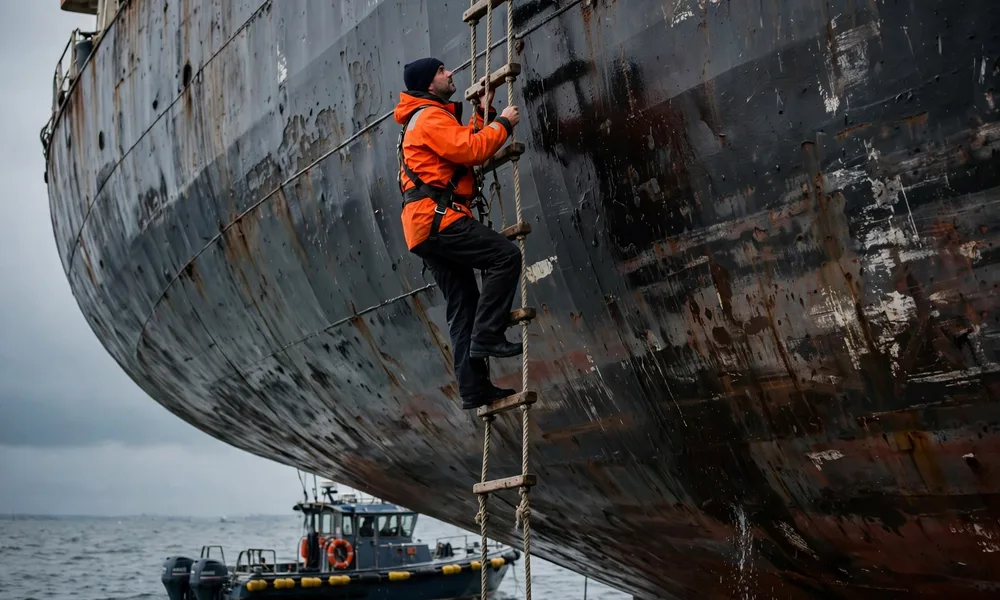
This is the most dangerous part of the job, and the part the boat is built for. The pilot boat approaches the big ship from the lee side, the side sheltered from the wind and waves, and matches its speed, running alongside at ten or twelve knots with only a metre or two between the two hulls. The ship’s crew lowers a pilot ladder, a rope ladder with wooden steps, down the side of the ship, and the pilot boat’s deckhand stands ready on the foredeck. The hull of a pilot boat is fitted with a thick rubber fendering system, usually a heavy D-shaped rubber strip, that lets it press against the steel side of a ship without damage and without bouncing away.
Step 4: The pilot transfer
The transfer itself takes seconds, but it is rehearsed hundreds of times. The pilot waits for the moment the two vessels are steady, steps from the deck of the pilot boat onto the ladder, and climbs up the side of the ship while the deckhand watches and the coxswain holds the boat steady against the ship’s side. Once the pilot is aboard, the pilot boat peels away from the ship, turns, and either returns to the station or waits to collect the pilot from the next ship leaving port. The whole manoeuvre depends on trust between the coxswain and the pilot, and on a boat that does exactly what it is told in rough water.
Step 5: The hull, engines, and self-righting design
A pilot boat is built to survive the worst day on the water. The hull is usually aluminium or fibreglass, with watertight compartments so a hole in one section cannot sink the boat, and many luxury models are designed to be self-righting, which means the boat will roll back upright if a wave knocks it over. The wheelhouse windows are toughened glass, the doors are watertight, and the whole boat is built to a standard that is inspected every year. A similar focus on keeping working boats moving in all weather drives the big cargo fleet, as described in our guide to how a luxury car carrier works.
Step 6: Guiding the ship into port
Once aboard, the pilot takes the conn, the control of the ship, and guides it through the harbour entrance, past the breakwaters, and into its berth, using local knowledge of the tides, the currents, and the shoals that no chart can fully capture. The pilot boat’s job is not over, though. It often escorts the ship in, staying close in case the pilot needs to be taken off quickly, and it may stand by while tugs push the big ship against the quay.
Step 7: Recovery, refuel, and readiness
Back at the station, the boat is washed down, the salt is hosed off the deck, and the engines are checked. The fuel tanks are topped up, the fenders are inspected for wear, and the radios and navigation equipment are tested. The boat is moored ready to go, with the keys in the ignition and the crew on call, and the cycle starts again. The working rhythm is not so different from the sportfishing fleet’s day at sea, which our guide to how a luxury sportfishing yacht works follows from dawn to dusk.
Specifications
| Specification | Typical luxury pilot boat |
|---|---|
| Length | 13–18 metres |
| Beam | 4–5 metres |
| Engines | Twin diesel, 500–800 hp each |
| Top speed | 25–30 knots |
| Crew | 2–3, plus pilot |
| Hull | Aluminium or fibreglass, deep-V |
| Self-righting | Yes, on most luxury models |
| Range | 200–300 nautical miles |
| Fendering | Heavy rubber D-fender, bow fender |
| Electronics | Radar, GPS, AIS, VHF radio |
Price
A new luxury pilot boat typically costs an estimated $800,000 to $2,000,000, depending on size, engine power, and the level of wheelhouse finish, with the largest self-righting models reaching beyond $2,500,000. That estimate covers the boat and its equipment; crew wages, fuel, and annual survey costs are ongoing expenses for the operator.
A rare fact
Some pilot boats are built with a hidden trick: a small bow thruster that can push the bow sideways, letting the coxswain hold the boat against the side of a moving ship without using the rudder at all. A few of the most advanced boats carry a dynamic positioning system, borrowed from offshore supply vessels, that uses GPS and thrusters to hold the boat in one exact spot in the water, even in wind and current, while the pilot climbs aboard.


