The lights go down, the curtains do not move, and the room changes. Nobody in the room is in a cinema, and yet everybody feels like they are.
A luxury home theatre is not a big television with loud speakers. It is a system built like a concert hall in miniature, where the screen, the speakers, the projector, and the room itself are designed together. Each part is made to disappear into the room, and the room is made to disappear into the film.
Here is how a luxury home theatre is made, from a bare wall to the finished room where the lights go down.
1. Designing the room before the equipment
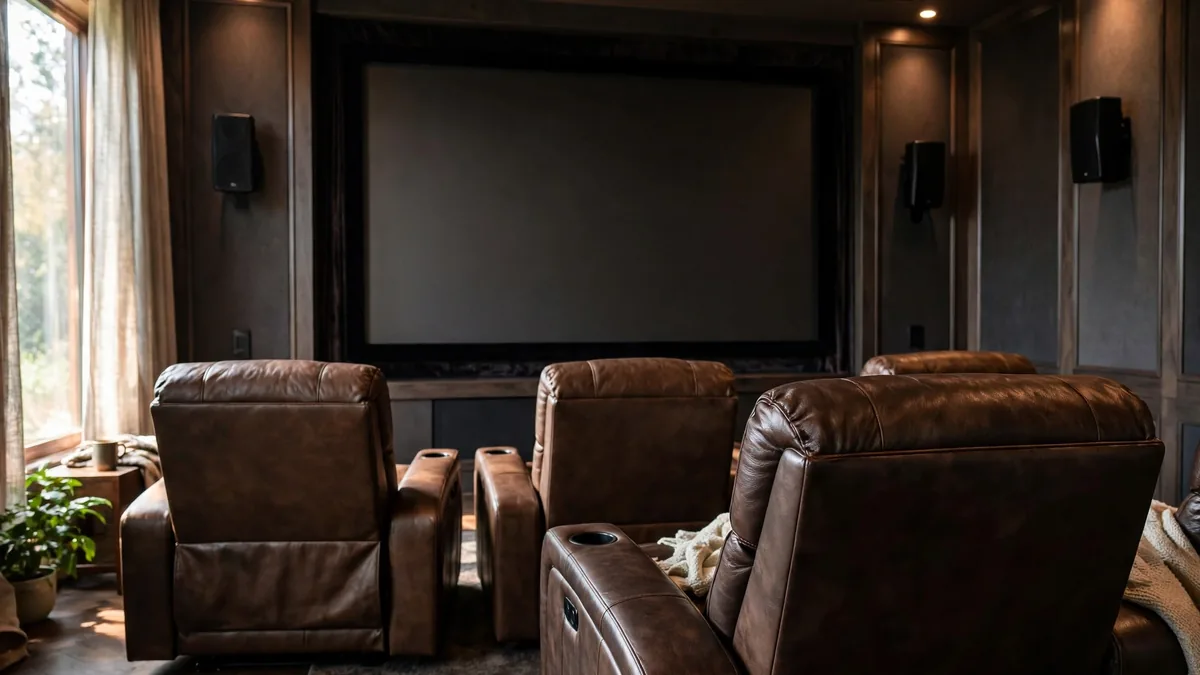
Every luxury home theatre starts with the room, not the shopping list. An acoustician measures the space, claps once, and listens to how long the echo lasts. A room that echoes too long makes dialogue muddy, and a room that is too dead makes music feel flat, so the walls, floor, and ceiling are planned before a single speaker is bought.
The walls are lined with acoustic panels hidden behind fabric, the floor is covered with thick carpet, and the ceiling is treated to stop sound bouncing straight back down. The seats are placed where the sound is most even, usually about two thirds of the way back from the screen, and the walls are painted dark so no stray light washes out the picture. The screen that anchors the room is a display in its own right, and the technology behind it is explained in how a luxury gaming monitor works, where refresh rates and colour accuracy are measured the same way.
2. Building the screen and the projector
The picture comes from a projector or a large flat panel, and in a true luxury theatre it is usually a projector. A projector is a small box that throws a huge image, and building one means fitting a lamp or laser light source, a lens, and a imaging chip into a case that must stay cool and silent while it runs for hours.
The screen is a sheet of specially coated material stretched tight on a frame, designed to reflect light evenly so the corners are as bright as the centre. Some screens are acoustically transparent, with thousands of tiny holes that let sound pass through from speakers hidden behind them, so a voice seems to come from the actor’s mouth rather than from a box at the side of the room.
3. Making the speakers and placing them
The sound is where a home theatre earns its name. A luxury system uses seven or more speakers plus subwoofers: three across the front, two or four at the sides and rear, and four in the ceiling for sound that comes from above. Each speaker is built like a small piece of furniture, with a wooden cabinet, a woofer, a midrange driver, and a tweeter, all tuned to work together.
Placing them is a science. The front speakers sit at ear height, the surround speakers are angled toward the seats, and the ceiling speakers are aimed down at the listening position. The subwoofers, which produce the deep bass you feel in your chest, are placed where the room reinforces them best, a spot found by moving them around and measuring the result. The drivers inside these speakers share their craft with smaller audio gear, and the same tuning discipline shapes how a luxury smart speaker is made, where a single driver must fill a whole room.
4. Wiring, calibration, and the processor
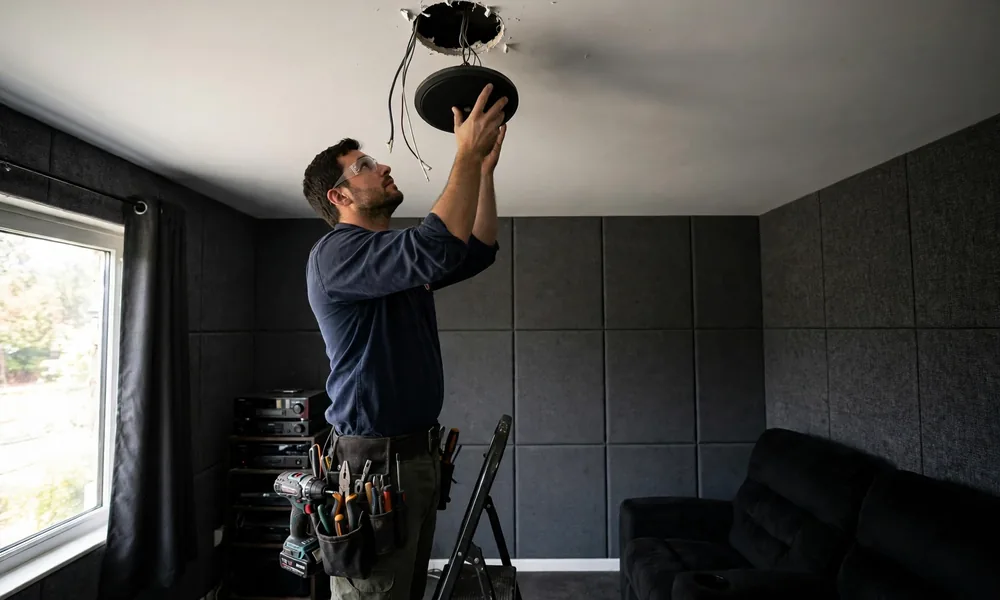
Behind the walls runs a network of cables: speaker wires, power lines, and data cables, all run through conduits so the room looks clean. At the centre of it all sits the processor, a box that takes the sound from a film and sends each part of it to the right speaker at exactly the right moment.
Calibration is where the system comes alive. A microphone is placed in each seat in turn, test tones are played, and the processor measures how the room changes the sound. It then adjusts the timing and volume of every speaker so that a whisper reaches the front row and the back row at the same level. This process can take a whole day, and it is repeated whenever a piece of furniture moves. The care taken over a wearable that must fit the body has a parallel here, and the fitting work behind luxury smart glasses shows the same obsession with measurements taken from real people.
5. Seating, lighting, and the first film
The final stage is the part the audience touches. The seats are built like small sofas, with reclining backs, cup holders, and motors that move them silently. They are upholstered in leather or fabric chosen to absorb sound rather than reflect it, and they are spaced so nobody’s head blocks the speaker behind them.
The lighting is programmed to fade as the film starts, the curtains close on their own, and the projector warms up. Then the room is tested with a film the installers know by heart, played at full volume, while they walk the room listening for rattles, buzzes, or dead spots. Only when the room sounds right from every seat is the theatre handed over to its owner, ready for the first night in.
The Luxury Home Theatre: Specs
| Specification | Typical range |
|---|---|
| Screen size | About 100 to 150 inches diagonal |
| Projector brightness | About 2,500 to 4,000 lumens |
| Resolution | 4K, with HDR and wide colour |
| Speaker layout | 7.1.4 or 9.1.6, with ceiling speakers |
| Subwoofers | Two or more, 12 to 18 inches |
| Seating | Two to four rows, reclining, 4 to 12 seats |
| Room treatment | Acoustic panels, bass traps, dark finish |
| Build time | About 4 to 12 weeks per room |
What Does a Luxury Home Theatre Cost?
A luxury home theatre is estimated to cost roughly $30,000 to $250,000, depending on the size of the room and the quality of the equipment. A single-room system with a good projector and a seven-speaker layout is estimated at roughly $30,000 to $80,000, while a dedicated cinema room with a laser projector, eleven or more speakers, custom seating, and full acoustic treatment can be estimated at $150,000 to $250,000. A single high-end projector is estimated at roughly $10,000 to $40,000 on its own.
A Rare Fact
The first home theatres were built by film stars in the 1920s, who installed projectors in their houses so they could watch their own films in private. The rooms were built by cinema engineers, and the idea of a dedicated screening room at home spread from Hollywood mansions to ordinary houses over a century, until the cinema in the living room became a luxury that anyone with a spare room could plan.

A luxury home theatre is not really about the equipment, impressive as it is. It is about a room that agrees to disappear, so that for two hours the people in it are somewhere else entirely. That disappearing act takes weeks of measuring, wiring, and tuning, and the reward is a room that nobody notices until the lights go down.