Walk into a large house and your phone should simply work, in the kitchen, in the bedroom at the far end, out by the pool. No dead spots, no frozen video calls, no standing in a doorway holding your phone up like an antenna. When it all works, nobody notices. When it does not, everyone in the house knows exactly which corner of which room is to blame.
A luxury mesh router is the machine that makes the invisible work. Instead of one box shouting from a corner, a mesh system spreads several small nodes around a home, and they talk to each other constantly, passing your devices from one to the next as you move. The luxury versions are faster, quieter, better looking and far more carefully built than the plastic box your internet provider hands out, and they are made to disappear into a beautiful home while carrying a workload that would have filled a server room twenty years ago.
How It’s Made
Step 1: Building the circuit board
Every mesh router starts as a circuit board, a flat panel of fibreglass layered with copper traces thinner than a human hair. The board is printed in a clean room, where machines place hundreds of tiny components onto it with robotic arms that work to tolerances a person could never match by hand. Resistors, capacitors and connectors land in exact positions.
The heart of the board is the radio section, where the Wi-Fi chips live. Luxury routers carry separate radios for different frequency bands, so one band can serve your laptop while another talks to the other nodes, and a third keeps the backhaul, the private link between nodes, clear of traffic. The board is inspected under a microscope and tested electrically before it moves on, because a single cold solder joint can mean a node that drops out once a week, and nobody forgives a router that needs rebooting.
Step 2: Fitting the antennas
Next come the antennas, and this is where luxury routers quietly differ from cheap ones. Instead of a pair of plastic sticks on the outside, a luxury node hides several antennas inside its casing, arranged in a careful pattern so their signals combine into a strong, even bubble of coverage rather than a lopsided blob.
The antennas are tested in a special chamber lined with foam spikes that absorb radio waves, so engineers can measure exactly what the node sends out without reflections from the walls confusing the result. The discipline is the same as in any machine that has to perform in a harsh environment, and the way a luxury ship bridge is specified shows how engineers plan a control room around clear signals, redundancy and no single point of failure.
Step 3: Adding the processor and memory
With the radios in place, the builders fit the processor, a chip that is closer to a small computer than to the simple controller in a cheap router. It has to route traffic for dozens of devices at once, run security checks, manage the mesh, and still answer the app on your phone in a fraction of a second. Luxury nodes pair it with generous memory, so the router does not slow down when the house fills up with phones, laptops, televisions and smart speakers.
Every connection is checked, because a router that overheats under load is a router that quietly reboots itself at the worst possible moment.

Step 4: Designing the casing and the cooling
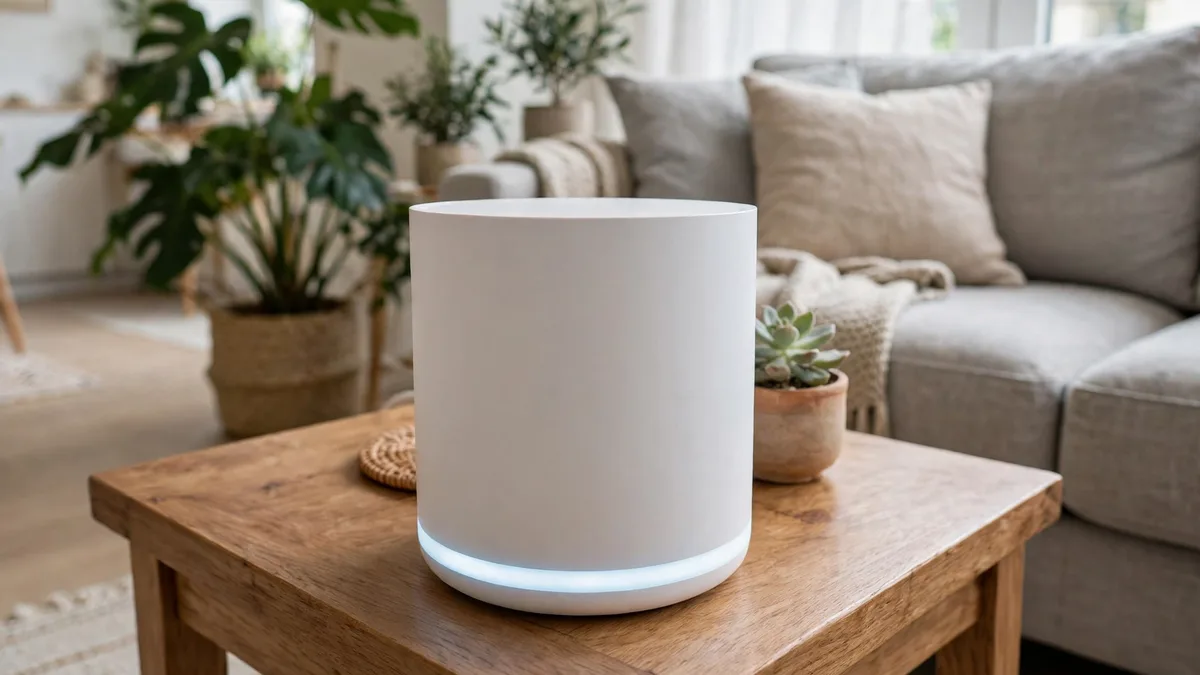
A luxury mesh router has to look good in a living room, so the casing is designed as furniture, not as a gadget. Designers sculpt smooth shapes in matte plastic, ceramic or even metal, with no visible screws and no blinking lights screaming for attention. A single soft glow tells you the node is healthy, and nothing else distracts from the room.
Cooling is the hard part of a beautiful sealed box. Engineers test the design by running the node at full load in a warm room for days, checking that the processor stays cool enough to last for years.
Step 5: Writing the mesh software
Hardware is only half the machine. The software is what makes a mesh a mesh. Engineers write firmware that lets each node measure the strength of its links to its neighbours, choose the best path for every packet of data, and rebuild the whole network in seconds if a node is unplugged or a wall suddenly blocks a signal. The software also steers your phone to the nearest node as you walk through the house, so a video call survives the trip from the study to the garden.
Security is built into the same software, with automatic updates, encrypted links between nodes and a firewall that watches for strange traffic. The idea of a system that keeps working when one part fails is familiar across engineering, and the way a luxury ship engine room is specified shows the same thinking on a grander scale, with backup systems and clear separation between the parts that must never fail together.
Step 6: Testing the whole home, then shipping
The finished nodes are tested as a system, not one by one. Engineers set up a test house, or a maze of rooms built to mimic one, place three or four nodes around it, then flood the network with traffic, stream video in every room, and walk a phone from one end to the other while measuring the handover. If a node drops a call or a video stutters, the software is tuned and the test runs again.
Only then are the nodes packed, usually as a set of two or three in a single box, with power cables and a simple quick-start guide. A mesh system is a small network that has to behave like one machine, and the same care with specifications and redundancy turns up in other luxury machines, as the way a luxury yacht helicopter pad is specified shows, where every measurement exists because something expensive depends on it working first time.
| Specification | Typical luxury model |
|---|---|
| Wi-Fi standard | Wi-Fi 6E or Wi-Fi 7, tri-band |
| Top speed | Up to about 10 to 20 Gbps combined across bands |
| Coverage per node | Roughly 250 to 300 square metres |
| Antennas | 6 to 12 internal antennas per node |
| Ports | Two or more multi-gig Ethernet ports per node |
| Processor | Multi-core chip with 1 GB or more of memory |
| Cooling | Fanless, passive airflow through the casing |
| Control | Phone app, automatic updates and parental controls |
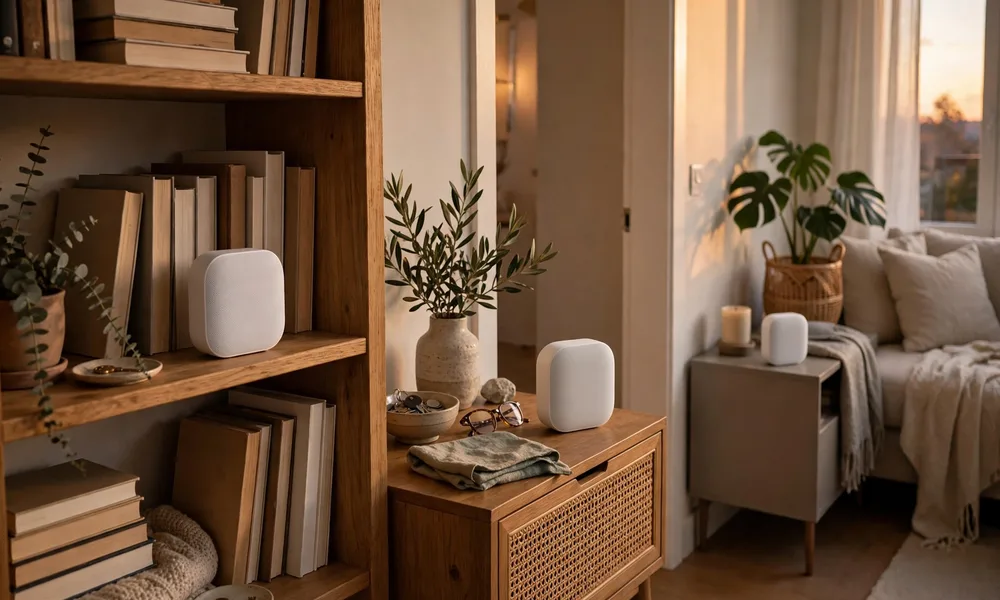
A luxury mesh router system is an estimate of $800 to $2,500 for a set of two or three nodes, with larger homes needing extra nodes at a few hundred dollars each. That is far more than a single budget router, but it buys coverage that actually reaches every room, a network that heals itself when a node fails, and hardware that is still fast years later.
Here is a rare fact worth knowing. The word mesh comes from the way the nodes link together like the threads of a net, and the idea is older than home Wi-Fi. Early mesh networks were built for soldiers and emergency workers, so a radio network would survive even if several radios were destroyed. Your living room router uses the same idea to survive a much smaller disaster, someone unplugging the wrong box to charge a phone, and the network simply routes around the gap as if nothing happened.


