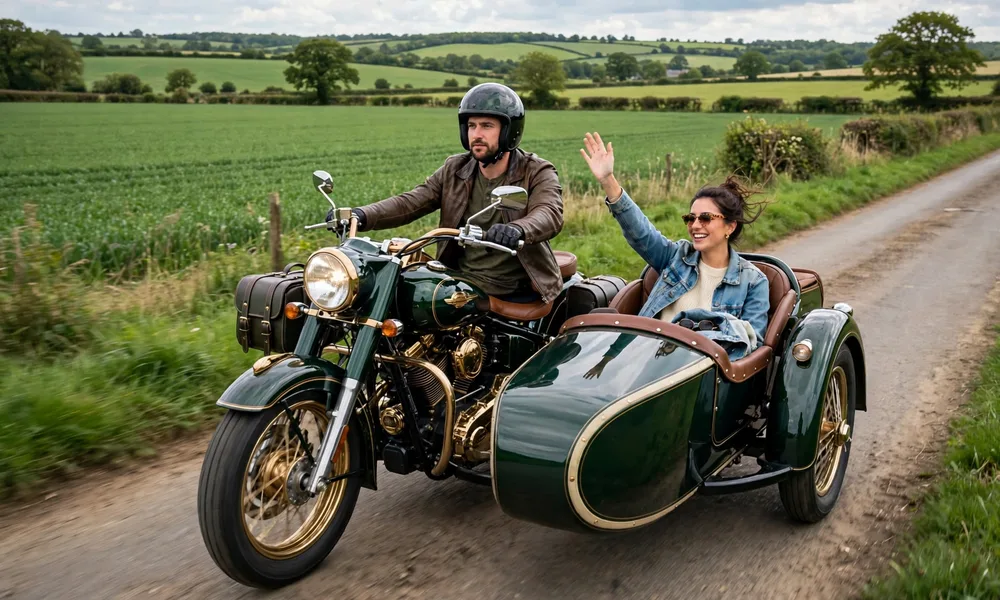
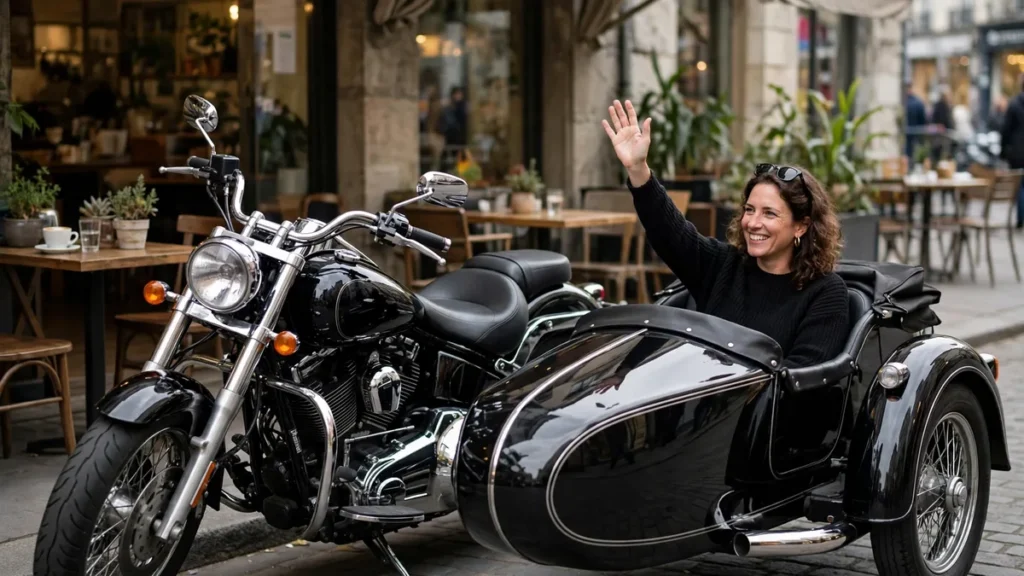
The motorcycle pulls up outside the cafe with something attached to its right side, and for a moment nobody is quite sure what they are looking at. It is a third wheel, a small car on its own wheel, bolted to the bike by a frame of steel tubes, with a passenger sitting inside it, waving, perfectly comfortable, while the rider parks without ever putting a foot down. That is the charm of a luxury sidecar motorcycle. Building one is not a matter of bolting a box to a bike. The whole outfit has to be designed as one machine, with three wheels that never agree about which way to go.

Step 1: The motorcycle is chosen and strengthened
A sidecar outfit starts with the motorcycle, and not every bike will do. Builders choose a machine with a strong frame, plenty of low-down torque and a shaft or belt drive, because a sidecar adds a great deal of weight and drag to one side of the bike. The frame is checked for mounting points, and where they do not exist, lugs are welded on, because the sidecar must be attached at four points at least, and every one of them has to take the full force of braking, cornering and bumps without flexing.
The motorcycle’s own suspension and steering are changed before anything else is fitted. The front fork is often replaced with a leading-link fork, which keeps the steering light even with the extra weight pulling to one side, and the rear suspension is stiffened to carry the load. The final drive, the brakes and the clutch are all checked, because an outfit that weighs half as much again as the solo bike will wear them out fast if they are left as they were. The base machine is built the way the guide to how a luxury motorcycle is made describes, and then it is rebuilt again, stronger, to carry a passenger who is not sitting on it at all.
Step 2: The sidecar chassis is built and aligned
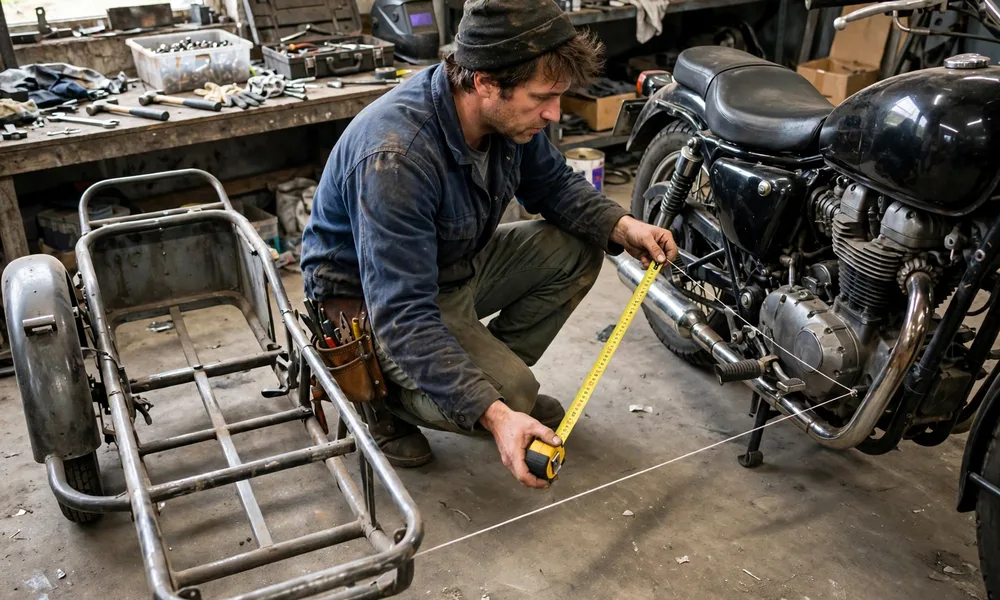
Alignment is the most careful job in the whole build, and it is done with string, tape measures and a flat floor. The sidecar wheel is set slightly ahead of the bike’s rear wheel, a distance called the lead, and the sidecar is angled very slightly towards the bike, a setting called toe-in, so the outfit runs straight instead of drifting. The bike itself is leaned very slightly away from the sidecar, a setting called lean-out, to balance the pull. Get them right and it will cruise down a motorway with one hand on the bars, which is exactly what a luxury outfit is supposed to do.
Step 3: The sidecar body is shaped and trimmed
Once the chassis is aligned, the body is built on top of it, and this is where a luxury sidecar shows its quality. The body is usually formed from steel or aluminium, shaped by hand over a wooden buck, or moulded from fibreglass and finished to the same standard as the motorcycle’s tank.
Step 4: The steering and controls are adapted
A sidecar outfit does not steer like a solo motorcycle, and the controls have to be adapted to match. On a solo bike the rider leans to turn, but an outfit cannot lean, so the rider turns the handlebars instead, steering it more like a car. That takes far more effort at low speed, which is why luxury outfits are often fitted with a steering damper, a small hydraulic unit that stops the bars from being snatched out of the rider’s hands by a bump, and sometimes with a wider handlebar for more leverage.
The gear change and the rear brake stay on the bike, but the sidecar brake is linked in, and the clutch is often given a lighter action or a hydraulic conversion, because pulling away with a loaded sidecar needs a smooth, slipping clutch. The instruments are sometimes moved or duplicated, so the rider can see the speed and the fuel level without looking away from the road ahead, and a small mirror is fitted so the rider can check on the passenger without turning around. The figures behind all of this are set out in the guide to luxury motorcycle specs explained, and the sidecar outfit answers them with a third wheel in the equation.
Step 5: Electrics, lights and weather gear are fitted
The sidecar needs its own lights, and wiring them in is a job that takes patience. The sidecar gets an indicator, a brake light and a tail light of its own, The charging system of the motorcycle is often upgraded, because the extra lights, the heated seat and the passenger’s charger all draw power the bike was never designed to supply.
Step 6: The outfit is tested as one machine
Then the outfit is loaded as it will be used, with a passenger in the sidecar and luggage in the boot, and tested again, because the alignment that works empty is not always the alignment that works loaded. The tyre pressures, the suspension settings and the steering damper are all adjusted for the load, and the builder rides it for a full day before handing it over. The finished machine is a different kind of touring motorcycle, as the guide to how a luxury touring motorcycle is made shows in its own way, and the sidecar version trades speed and lean for room, stability and the simple pleasure of taking someone along for the ride.
Specifications
| Detail | Specification |
|---|---|
| Engine | Around 1,200 to 1,800 cc, twin or flat twin |
| Power | Around 90 to 125 horsepower |
| Weight | Around 450 to 550 kilograms, outfit complete |
| Sidecar wheel lead | Around 200 to 300 millimetres ahead of rear axle |
| Toe-in | Around 10 to 25 millimetres |
| Passenger capacity | One adult in the sidecar, plus rider and pillion |
| Luggage | Around 60 to 90 litres in the sidecar boot |
| Top speed | Around 130 to 160 kilometres per hour |
What it costs
The estimated price of a new luxury sidecar outfit is around 35,000 to 60,000 dollars, and that figure is an estimate only, because the cost depends on the base motorcycle, the sidecar body and how much of the trim is made to order. The sidecar chassis and body account for a large share, followed by the steering conversion and the paint matching. A buyer is paying for a motorcycle that carries a passenger in comfort, never falls over, and turns every stop into a conversation, because no one walks past a sidecar outfit without looking twice.
A rare fact
Few people know that sidecar racing was once a major sport, with outfits reaching speeds that would embarrass many solo bikes, and the passenger, called the monkey, would climb around the sidecar during a race, hanging off the back on straights and leaning out over the wheel in corners, to keep the machine balanced. Modern luxury outfits are built for the opposite kind of riding, slow and comfortable, but they still use the same alignment tricks the racers worked out decades ago.