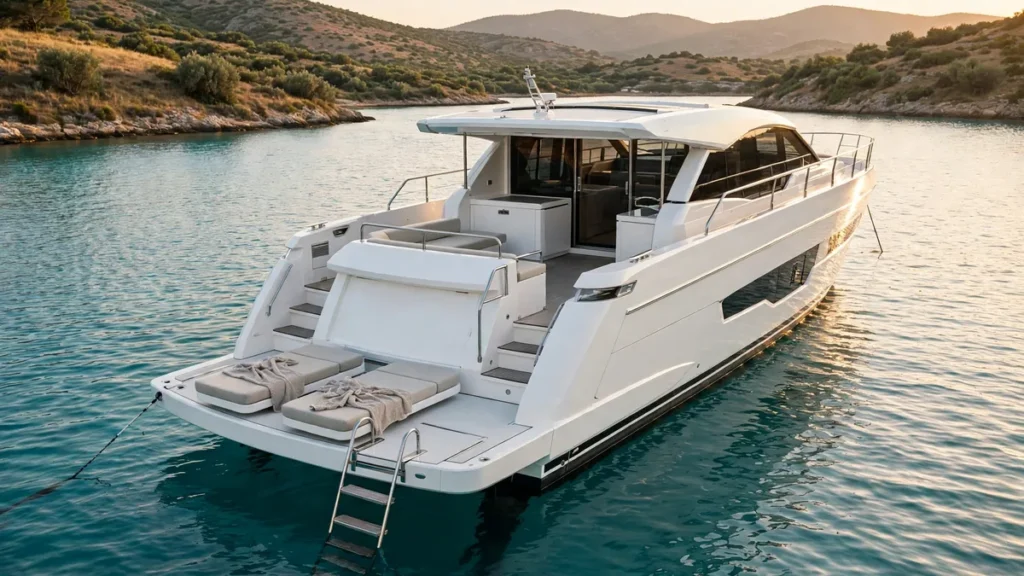
Before dawn, in a harbour still dark enough that the navigation lights look like stars on the water, a small boat slips away from the quay and runs out to meet a ship ten times its size. The ship cannot come in alone, and the boat carries the one person who knows the channel well enough to bring it home.
This is how a luxury pilot boat is made, in seven steps, from the first drawings to the day the boat is handed over to its crew: the hull, the engines, the deck, the wheelhouse, the fenders, the seating and the sea trials that prove it all works.

Step 1: Drawing a hull that can take a beating
Everything starts with the hull shape, and a pilot boat hull is drawn to do two things that fight each other: go fast in a straight line, and survive being slammed against the steel side of a moving ship. The designers use a deep V at the bow to cut through waves, flattening towards the stern so the boat can plane and hold speed, and they run computer models of the hull in rough water before any metal is cut, watching how the bow meets a wave and how the stern settles at full throttle.
Step 2: Fitting engines that answer instantly
A pilot boat cannot wait for its engines to warm up or spool up, so the engine room gets two fast diesel engines, each driving its own propeller or waterjet, with enough power to push the boat past thirty knots and enough reserve to hold position alongside a ship that is still moving. Fuel tanks sit low and central, balanced so the boat trims level whether the tanks are full or nearly empty, and every fuel line has a shut-off valve the crew can reach in seconds. The guide to how a luxury pilot boat works follows these engines from the throttle to the propeller, and the power they deliver is what lets a small boat keep up with a ship that never slows down for it.
Step 3: Building a deck that stays safe underfoot
The deck of a pilot boat is a workplace, not a sunbathing platform, and it is built so a pilot carrying a bag can walk from the wheelhouse to the boarding point without slipping, even when the deck is wet and the boat is rolling. The deck surface is coated with a gritty non-slip finish, and the bulwarks are low at the boarding station, with a gate that opens onto the ship’s ladder, so the pilot steps across a gap of less than a metre rather than climbing over a rail. Handrails are placed exactly where a hand reaches for them, not where they look tidy, and they are wrapped in rubber so cold steel never freezes a bare hand in winter.
Step 4: Raising a wheelhouse with a view in every direction
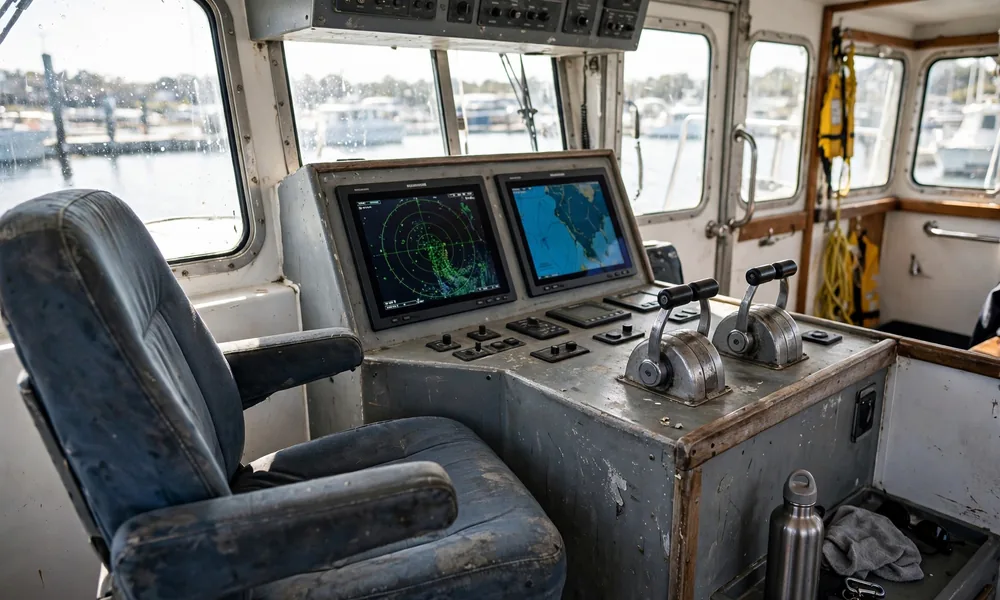
The wheelhouse sits high and forward, with glass on five sides, because the coxswain must see the ship, the ladder, the sea ahead and the crew on deck, all at once, without turning away from the wheel. Inside, the helm is a single chair on a sprung base, with the throttles, the steering and the radio all within reach, and the instruments are kept to a simple row of screens showing speed, depth, engine temperatures and the position of the ship being met. The wheelhouse is insulated and heated, but it is never made too comfortable, because the crew must stay alert, and the guide to how a luxury lifeboat is made shows the same thinking in a different rescue craft, where the cabin protects the crew without putting them to sleep.
Step 5: Fitting fenders that take the hit instead of the hull
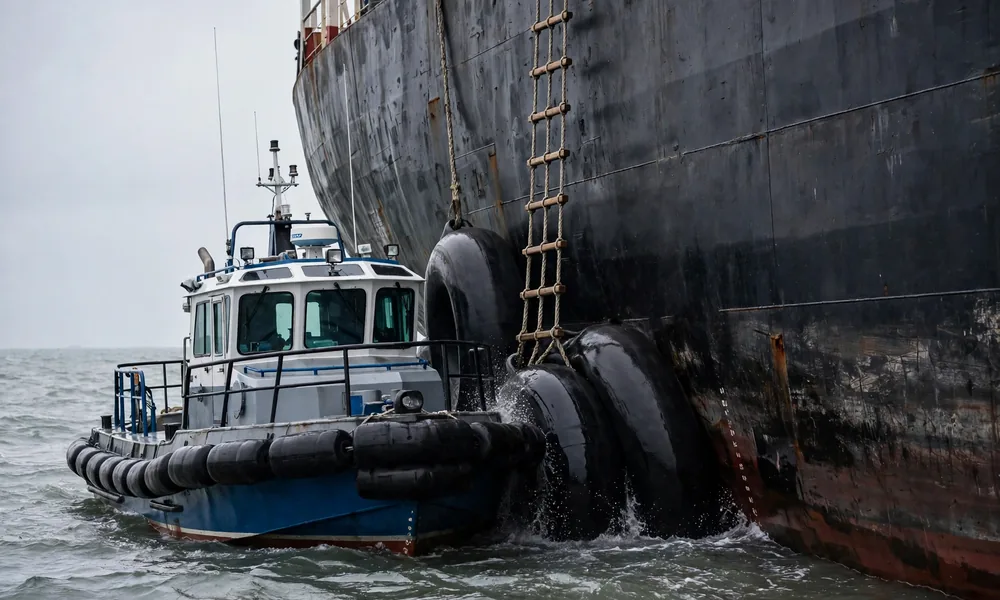
The most distinctive part of a pilot boat is the thick black rubber fendering wrapped around its bow and sides, and it is fitted by hand, bolt by bolt, because it is the part that touches the ship. The fenders are made from dense rubber, shaped to spread the load of a collision across a wide area, and they are backed by steel plates that stop them tearing free when the boat rolls against a hull in a swell. A pilot boat can spend an hour pressed against a moving ship while the pilot climbs aboard, so the fenders are not a decoration, they are the working surface of the boat, and they are replaced long before they wear through, because a worn fender means bare metal against bare steel.
Step 6: Seating the crew for a long, hard day
A pilot boat crew works shifts that run through the night, so the seating and the cabin below are built for people who must stay sharp while being thrown about. The seats are suspension seats, each on its own shock absorber, so a wave that slams the hull does not slam the person sitting on it, and they are shaped to hold the crew in place when the boat heels hard in a turn.
Step 7: Sea trials, and the day the boat proves itself
Before handover, the boat goes to sea for trials that are deliberately harder than the job it will do. The builders run it at full speed into a head sea, measure the speed with the tanks full and empty, test the steering at low speed alongside a larger vessel, and practice the boarding manoeuvre again and again, timing how long the boat can hold station against a moving hull. When the trials are passed, the boat is painted, its name is lettered on the bow, and it goes to work, often the same week, because harbours do not wait, and the guide to how a luxury ferry works follows a larger harbour craft through the same daily routine of meeting ships that never stop coming.
What it costs
A luxury pilot boat typically costs an estimated $1,000,000 to $3,000,000, depending on its length, its engines and the standard of its wheelhouse and safety equipment. The estimate covers the boat alone, not the crew, the fuel or the maintenance, which are a permanent part of running a harbour service that works in all weathers, day and night.
A rare fact
One detail few harbour visitors ever learn is that a pilot boat often has to match the speed of a ship that is still moving at ten knots or more, while holding its bow within a metre of the ship’s steel side, in waves that are pushing both vessels apart. It is the hardest piece of boat handling in the harbour, done by the smallest boat in it.
Follow the seven steps in order, hull first, then engines, deck, wheelhouse, fenders, seating and trials, and a pilot boat stops looking like a small harbour runabout and starts looking like what it is: a machine built to do one dangerous job, in bad weather, with no margin for error, and to do it again the next morning before dawn.