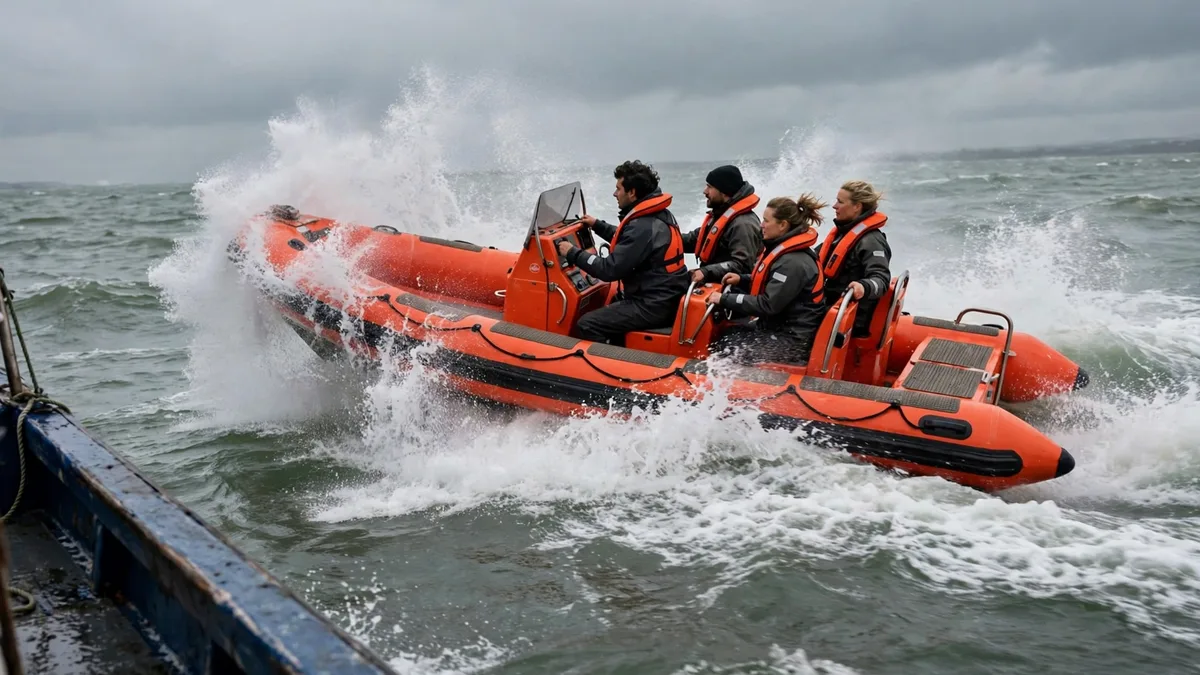
The call comes in the middle of a storm, or on a calm afternoon when a sailor has fallen overboard, or at two in the morning when a fishing boat has lost power on a lee shore. Whatever the hour, the answer is the same: a small orange boat slides down its slipway or swings out on its davit, hits the water running, and heads straight for the worst weather on the chart. Everyone else is coming in. The rescue boat is going out.
A rescue boat works as a first responder, and its whole design is built around minutes. It must launch fast, reach the casualty fast, and bring people back alive through conditions that would keep any other small boat in harbour.
How It Works
Step 1: The alarm turns a crew into a boat in minutes
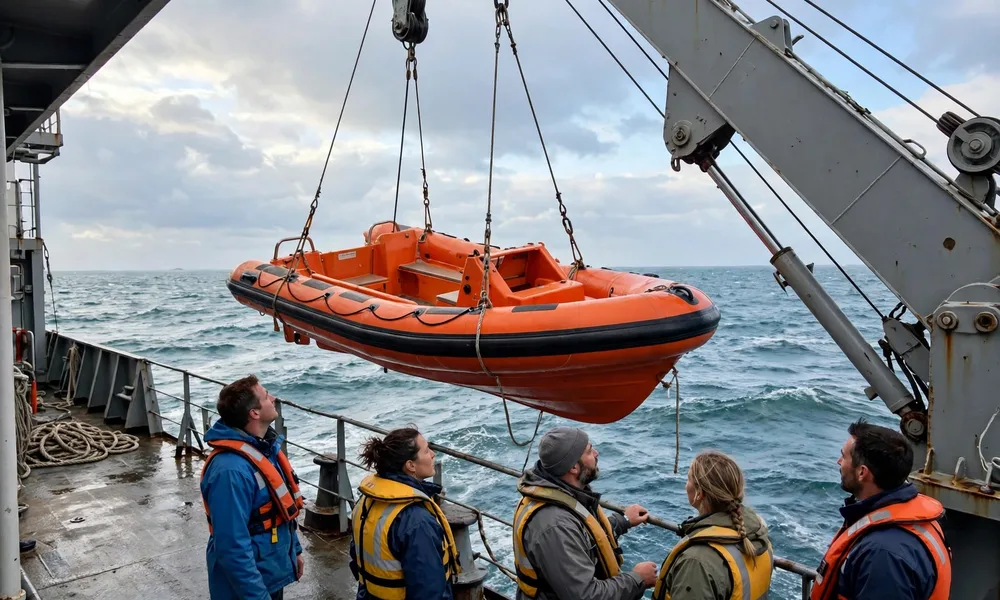
A rescue starts with a pager, a phone call or a radio shout, and the crew’s job is to be moving before the adrenaline has time to turn into doubt. On a volunteer station, crew members drop whatever they are doing and run to the boathouse. On a ship, the rescue boat crew musters at the davit. The boat is kept ready at all times: fuel full, batteries charged, engines run on a schedule, kit checked after every outing. The launch itself takes minutes, whether the boat slides down a slipway on its carriage, swings out on a davit, or is already afloat on a mooring.
Step 2: A self-righting hull refuses to stay upside down
The heart of a rescue boat is a hull that will not stay capsized. A heavy keel, a sealed superstructure and a carefully placed centre of gravity mean that if a breaking wave rolls the boat over, it comes back upright on its own, usually within seconds. The engines are built to survive the roll too, with sealed air intakes and fuel systems that keep working upside down. Crew are strapped into shock-absorbing seats with harnesses, and everything loose is stowed or tied down, because in a capsize the cabin becomes a washing machine. The boat is designed to be knocked down and to keep going, which is a different kind of strength from speed or comfort.
Step 3: Twin engines give power and a backup
Most rescue boats use two powerful outboard engines or waterjets, and the reason is simple: if one fails in a storm, the other must bring the boat home. Together they give the boat a top speed of thirty knots or more, enough to reach a casualty quickly and to tow a disabled vessel back to safety. The craft of building a small working boat to this standard is close to the work in a pilot boat build, where the boat must board moving ships in any weather.
Step 4: The crew searches with eyes, radar and radios
Finding someone at sea is the hardest part of a rescue. The crew searches in a pattern, sweeping a grid while lookouts scan the waves, and the boat’s radar and chart plotter help them cover the ground without missing a strip. Thermal cameras, fitted on better-equipped boats, can pick out a person’s heat against cold water at night. The radio is always live, with the coastguard or the ship’s bridge directing the search and other vessels reporting what they have seen. The helmsman drives to a plan, not to hope, turning at precise intervals and holding speed, because a random search of an empty sea is no search at all.
Step 5: Recovery brings the casualty aboard safely
Coming alongside a person in the water is a delicate piece of boat handling. The helmsman approaches slowly, into the wind and sea, so the boat drifts toward the casualty rather than away, and the crew reaches down with a strop or a recovery net. A conscious casualty can be helped aboard over the low freeboard or up a recovery ramp. An unconscious casualty needs more hands, and a stretcher if they are injured. Hypothermia is the enemy now: the casualty is wrapped, sheltered and kept still, because rough handling can trigger a heart that cold water has already stressed. The boat’s cabin, cramped as it is, becomes a small emergency room on the way home.
Step 6: Medical care starts before the boat reaches shore
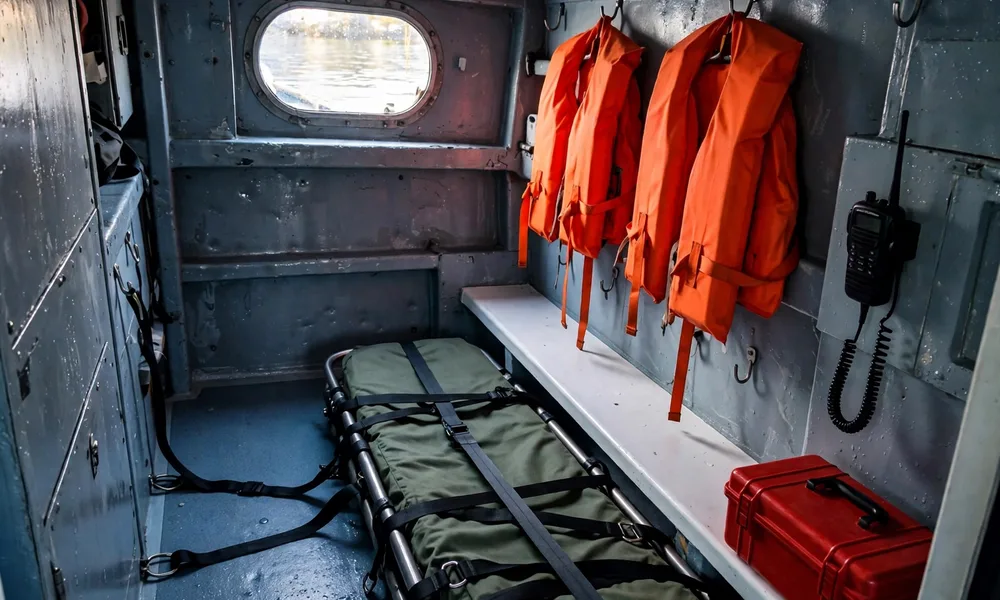
A rescue boat carries a medical kit that would surprise a land ambulance: oxygen, a defibrillator, splints, blankets and drugs for pain and shock, all packed to survive salt water and violent motion. At least one crew member is trained to use them, and the coastguard can patch a doctor through on the radio for advice while the boat is still at sea. The stretcher is strapped to the deck, the casualty is monitored, and the helmsman picks the fastest safe route home, balancing speed against the pounding that could worsen an injury. The long-range cousin of this work is the explorer yacht, and the explorer yacht build shows how a boat is made to stay out at sea for weeks at a time.
Rescue Boat Specifications
The figures below describe a typical rigid inflatable rescue boat in the 8 to 10 metre class, the size used by many coastal stations and carried as a fast rescue craft aboard larger ships.
| Specification | Typical value |
|---|---|
| Length overall | 8 to 10 metres |
| Beam | 3 to 3.5 metres |
| Top speed | 30 to 40 knots |
| Propulsion | Twin outboards or waterjets |
| Crew | 3 to 5 people |
| Self-righting | Yes, within seconds of a capsize |
What It Costs
A fully equipped rescue boat costs an estimated $300,000 to $800,000, depending on size, engines and the electronics and medical kit aboard, and a large all-weather lifeboat can cost several million. Those are estimates, not quotes, and the boat is only part of the bill: the boathouse, the slipway, the training and the maintenance together cost far more over the boat’s life. Most coastal rescue stations are run by charities and volunteers, funded by donations, which makes the arithmetic strange and wonderful. The yacht tender specs show what similar money buys when the purpose is leisure rather than rescue.
A Rare Fact
Here is a detail that stays with everyone who hears it. A rescue boat crew trains to be capsized on purpose, rolling their own boat in a controlled exercise so that every crew member knows what it feels like to be upside down, strapped in, in the dark, with water coming in. The boat comes back up, the crew climbs out, and the drill starts again. It sounds like a dare, but it is the opposite: it is how fear is taken out of the job before the job ever happens. It sounds like a dare, but it is the opposite: it is how fear is taken out of the job before the job ever happens. When a real wave rolls the boat in a real storm, the crew has already been there, and they know the boat will bring them back. That knowledge is the real luxury of a rescue boat. It is not in the paint or the engines. It is in the certainty, earned in training, that the boat will not let them down.