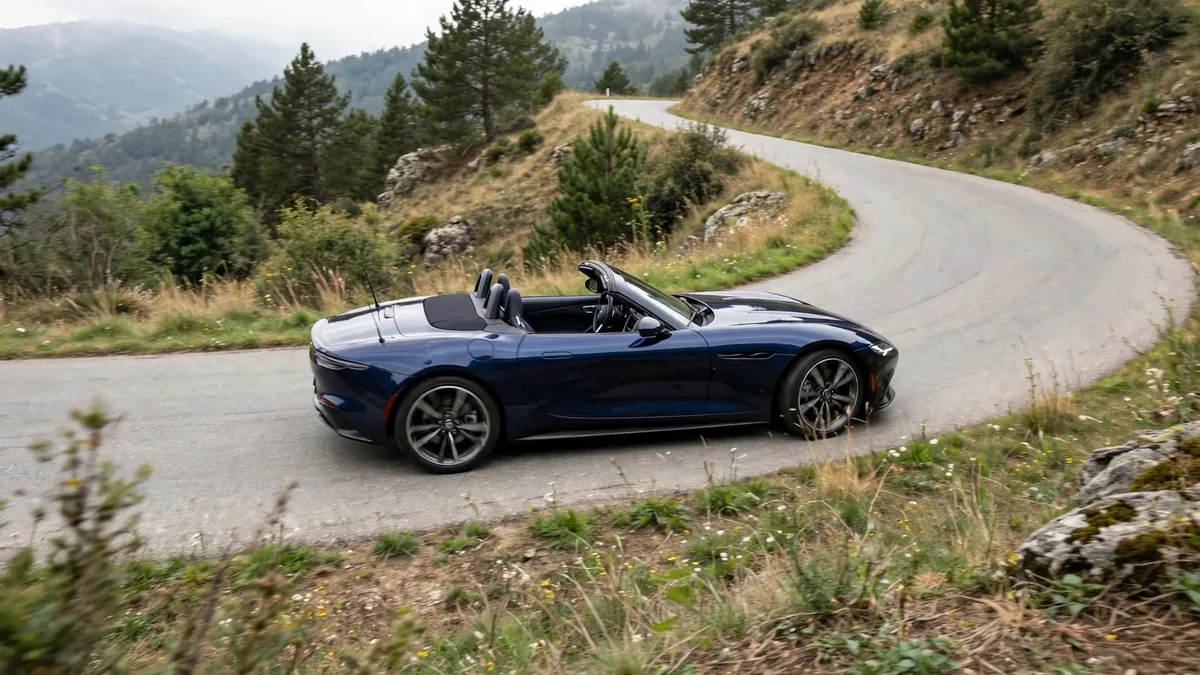
There is a particular kind of road that a luxury roadster seems to have been built for: two lanes, no traffic, a ribbon of tarmac winding through hills with the sun low and the air warm. The car that owns that road is low, light and open to the sky, with an engine that sits close behind the driver and a chassis that talks back through the steering wheel. A luxury roadster is the simplest idea in motoring — two seats, no roof, and nothing in the way of the drive — and yet making that simplicity feel luxurious is one of the hardest jobs in car engineering.
Unlike a convertible, a roadster does not pretend to be a saloon with the roof off. It is open by design, and everything about it, from the seating position to the exhaust note, is tuned for the driver alone. There is no rear seat to package, no folding roof to hide, and no compromise made for passengers who will never exist. What remains is a machine built around balance, feedback and the feeling of speed at speeds that would bore a supercar. Here is how that feeling is engineered, system by system.
How a luxury roadster works
Step 1: A chassis built for balance
Everything in a roadster starts with weight distribution. Engineers place the engine low and as close to the middle of the car as they can, with the gearbox behind it and the driver sitting almost over the rear axle, so the car carries close to half its weight on each axle. The chassis is a stiff aluminium or carbon structure with a reinforced floor, because an open car has no roof to tie the body together. Suspension is tuned for feel rather than softness: double wishbones at each corner, carefully chosen spring rates, and dampers that keep the tyres in contact with the road without shaking the driver. The result is a car that turns in the instant the wheel moves and stays composed when the road turns rough.
Step 2: The engine and the sound of it
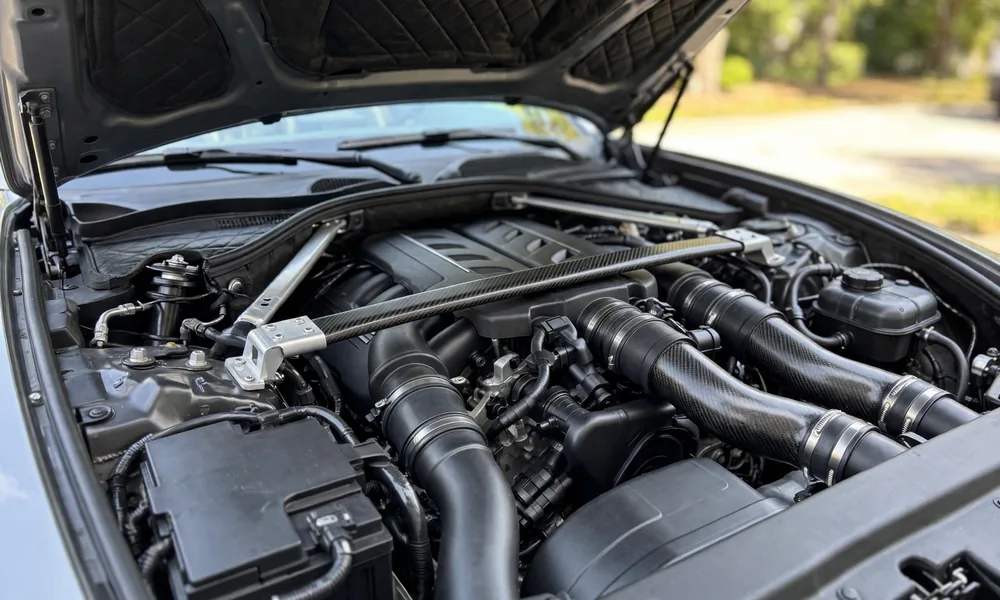
A roadster engine is chosen as much for its voice as its power. Many use naturally aspirated six or eight-cylinder engines that rev freely and sing as they climb, while others use turbocharged units tuned for a deep, deliberate note. The exhaust is routed to give the driver the full sound with the top down, and engineers spend months tuning the intake and exhaust so the note changes character as the revs rise. Power is generous rather than extreme — usually 300 to 500 horsepower — because a roadster is about usable speed on real roads, not headline figures on a test track.
Step 3: Steering that talks back
The steering of a luxury roadster is one of its defining features. The rack is quick, the wheel is small, and the system is tuned to pass information about the road surface up through the column without passing vibration. Electric power assistance is calibrated so the wheel feels weighty at speed and light when parking, and the geometry is set so the car follows the driver’s hands with almost no delay. Test drivers spend hundreds of hours on the same stretch of road, adjusting tiny details of caster and toe until the car feels like an extension of the driver rather than a machine being operated.
Step 4: Brakes and the confidence to use them
A roadster’s brakes have to match its agility. Large ventilated discs, often with multi-piston calipers, sit behind lightweight wheels, and the pedal is tuned for a short, firm travel so the driver can judge braking force precisely. Electronic systems work quietly in the background: anti-lock braking, stability control that can be loosened for track days, and a limited-slip differential that puts power down cleanly out of corners. Because a roadster is light, the brakes have less work to do than in a heavy saloon, so they stay cool and consistent over a long drive through the hills.
Step 5: Living with the open sky
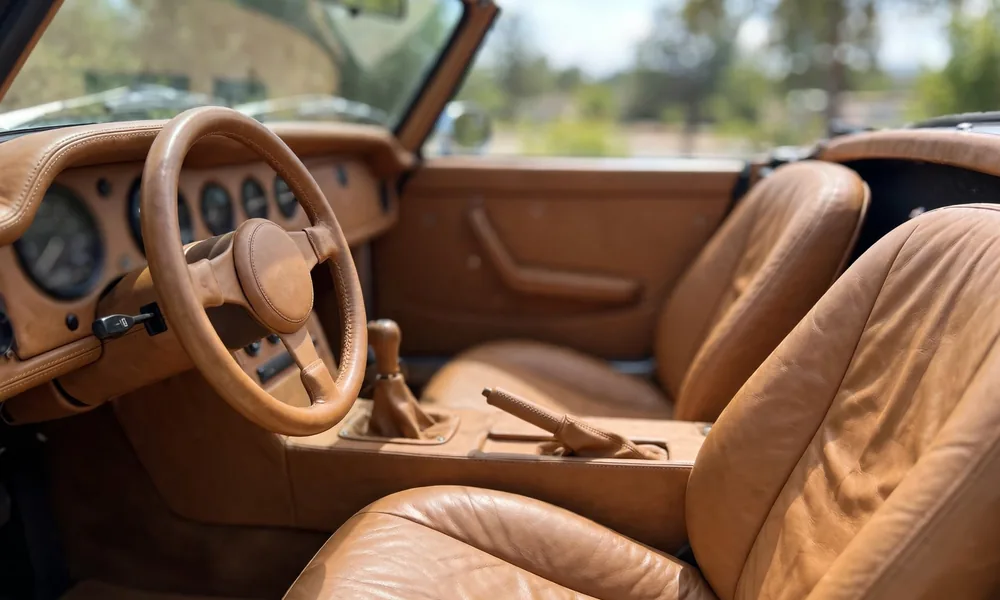
Driving a roadster means living with the weather, so engineers design the cabin to make that a pleasure rather than a punishment. A low windscreen and a small deflector behind the seats calm the airflow, heated seats and a heated steering wheel stretch the season into spring and autumn, and the soft top — usually a simple manual or powered fabric hood — stows in minutes when the rain arrives. The cabin is deliberately simple: two seats, clear instruments, and controls that fall to hand without looking, because the driver’s eyes belong on the road. Storage is modest, and owners learn to pack light.
Step 6: Safety in a car with no roof
An open car needs safety systems designed for the absence of a roof. Steel roll hoops hide behind the seats, ready to protect the occupants’ heads, and the windscreen frame is reinforced to carry the car’s weight in a rollover. Side airbags are shaped to work without a roof rail, the seats are mounted to the reinforced floor, and the fuel tank sits in a protected position ahead of the rear axle. Crash testing is done with the top down as well as up, and the car is engineered so that its lightness — often the very thing that makes it fun — also means there is less mass to manage in a collision.
Luxury roadster specifications
| Specification | Typical figure |
|---|---|
| Engine | 3.0 to 5.0 litre, six or eight cylinder |
| Power | 300 to 500 horsepower |
| Weight | 1,300 to 1,600 kilograms |
| 0 to 100 km/h | 4.0 to 5.5 seconds |
| Layout | Front engine, rear-wheel drive |
| Seats | 2 |
What a luxury roadster costs
A new luxury roadster typically costs an estimated $70,000 to $180,000, with the most exclusive hand-built models passing $250,000. The price reflects low production volumes, expensive materials and the cost of engineering a stiff open body, rather than raw power: many roadsters cost more than faster, heavier coupes from the same maker. Running costs are moderate for a luxury car, since the cars are light and the engines are proven, but soft tops, tyres and brakes all wear faster on a car that invites enthusiastic driving. The build behind the machine is told in how a luxury roadster is made, and the numbers behind the brochure are broken down in the luxury roadster specs explained.
A rare fact about luxury roadsters
One famous roadster maker still tests every new model on the same narrow mountain pass its engineers have used for decades, and the test drivers know every bump and camber by heart — because a roadster that feels right on that one road, they argue, will feel right everywhere.
A luxury roadster works because it refuses to do too much. It carries two people, it answers the steering instantly, and it makes an ordinary road feel like an occasion. There is no rear seat, no folding roof mechanism, and no pretence of practicality — and that honesty is the point. For a longer, grander take on the same idea, how a luxury grand tourer works shows what happens when the roadster’s spirit is stretched across a thousand miles, but the roadster itself will always belong to the winding road home.