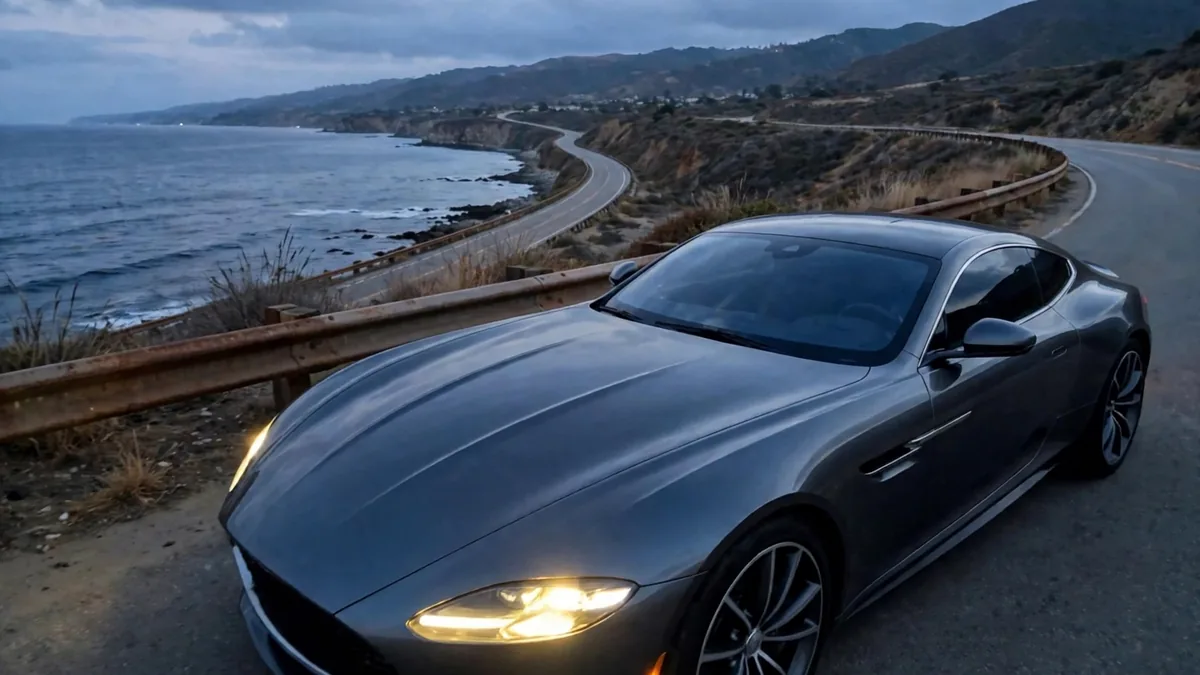
There is a particular kind of road that only exists in the imagination of grand tourer owners: a long, empty highway through mountains or along a coast, with a full tank of fuel, a comfortable seat, and nowhere to be until tomorrow. A grand tourer is built for exactly that road. It is not a track car and it is not a limousine. It is a fast, comfortable, two-door car that can cross a continent in a day and arrive with its driver feeling fresh rather than exhausted.
The trick is balance. A grand tourer must be powerful enough to overtake without thinking, quiet enough to hold a conversation at speed, and comfortable enough that eight hours in the seat feels like a pleasure rather than an endurance test. Every system in the car serves that balance, from the engine note to the way the suspension breathes over a bad road. This is how a luxury grand tourer works, system by system.
How a Luxury Grand Tourer Works
Step 1: The engine and effortless power
At the heart of a grand tourer is a large engine, usually a twin-turbo V8 or a V12, tuned for torque rather than peak horsepower. Torque is what pushes the car forward from low speed without fuss, and a grand tourer is built to have a deep reserve of it at any speed, so the driver never has to work the gearbox hard. The engine sits far back in the chassis, often behind the front axle, which spreads the weight evenly between the front and rear wheels and keeps the car stable at speed.
Step 2: The gearbox and smooth delivery
Power reaches the wheels through an automatic gearbox with eight or more ratios, chosen so the engine is always turning slowly and quietly. Some grand tourers use a dual-clutch gearbox, which prepares the next gear before it is needed and changes ratio in a fraction of a second, with no interruption in power. The result is that the car seems to gather speed without any drama: the rev counter barely moves, the cabin stays calm, and the scenery simply starts passing faster. The way those clutches hand over from one gear to the next is explained in detail in how a dual-clutch gearbox works, and it is one of the quietest pieces of engineering in the car.
Step 3: The chassis and adaptive suspension
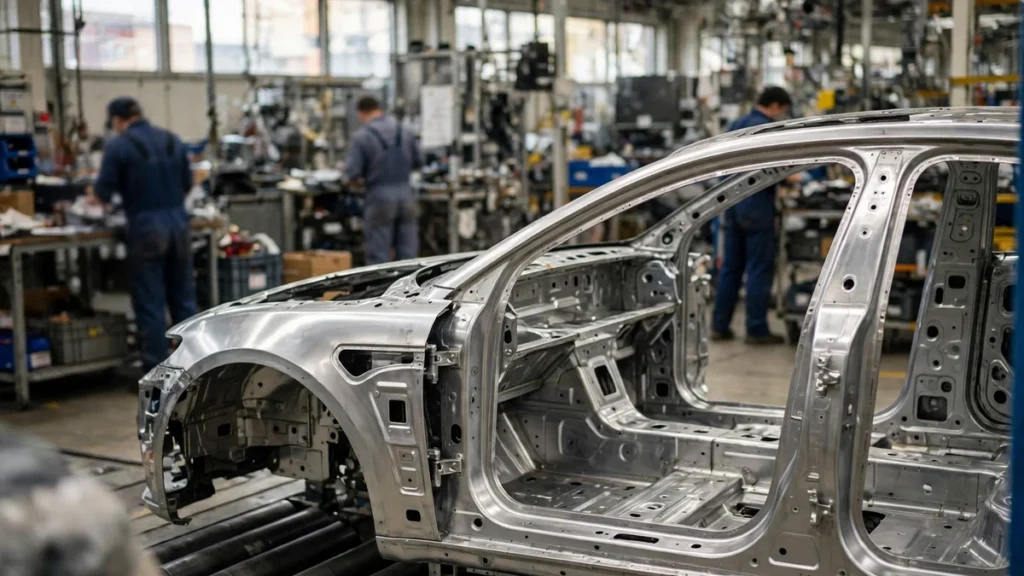
A grand tourer chassis is a stiff aluminium structure that ties the engine, the suspension, and the body together so firmly that the car feels like a single piece. Stiffness matters because it lets the suspension do its work properly: if the body flexes, no damper can control it. The suspension itself is adaptive, reading the road many times a second and adjusting each damper to suit. On a smooth motorway it softens, letting the car float over small imperfections; on a winding road it firms up, holding the body level through corners.
Step 4: The cabin and long-distance comfort
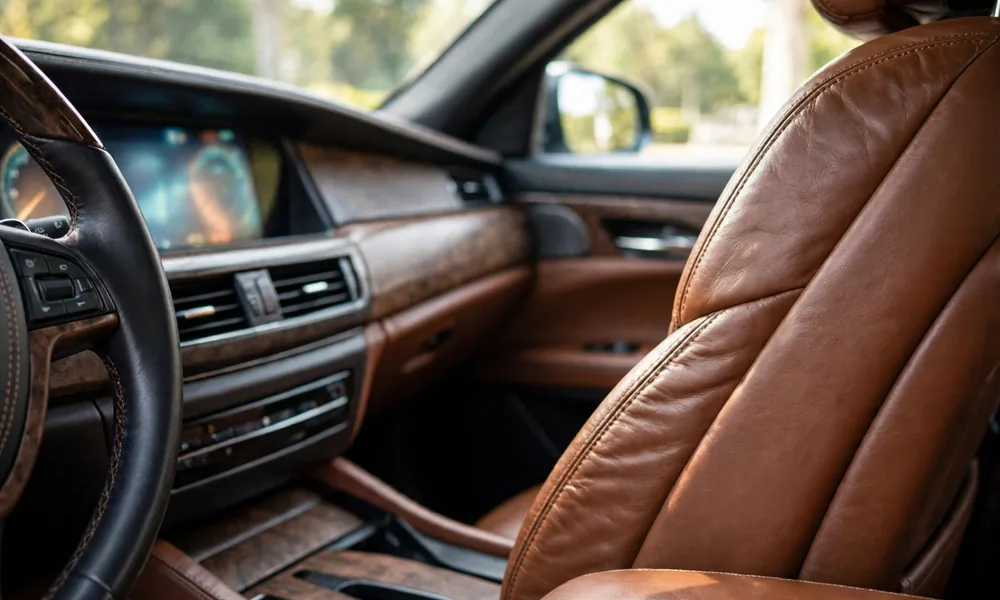
The cabin is designed around a single idea: the driver should be able to sit in it for eight hours. The seats are wide, deeply padded, and adjustable in a dozen directions, with heating, cooling, and massage built in. The driving position is low and the steering wheel is exactly where the hands fall, so the driver never has to reach or stretch. Sound deadening is layered into the floor, the doors, and the roof, and the windows are made of laminated acoustic glass that cuts wind noise to a whisper.
Step 5: Aerodynamics and high-speed stability
A grand tourer spends much of its life at speeds where the air itself becomes a force to manage. The body is shaped so that air flows smoothly over it, and the underside is flat, with panels that guide air out the back rather than letting it tumble underneath. A small spoiler rises from the rear deck at speed, pressing the back of the car down just enough to keep it planted without adding drag at cruising speed. The mirrors, the door handles, and even the shape of the headlights are tuned in a wind tunnel, because every small disturbance adds noise and uses fuel. The result is a car that feels more settled the faster it goes, which is exactly the opposite of what most cars do, and it is why a grand tourer can sit at motorway speed all day without the driver ever feeling hurried.

Step 6: Brakes, steering, and driver assistance
Stopping a heavy, fast car gracefully takes brakes the size of dinner plates, usually carbon ceramic, with calipers that clamp evenly and never fade on a long descent. The steering is weighted to feel calm and precise rather than sharp, so the car tracks straight with a light touch on the wheel. Around those systems sits a layer of assistance: adaptive cruise control that follows the car ahead, lane keeping that nudges the wheel gently, and night vision that shows what the headlights cannot. None of it drives the car for the driver, and that is deliberate. A grand tourer is meant to be driven, and the assistance is there to take away the tiring parts of a long journey, not the enjoyable ones. The coupe body that carries all of this is built in much the same way as the one described in how a luxury coupe is made, and its numbers are laid out in the luxury coupe specifications, which share the same long-distance brief.
Specifications
| Feature | Typical luxury grand tourer |
|---|---|
| Engine | Twin-turbo V8 or V12, 500 to 700 hp |
| 0 to 100 km/h | 3.5 to 4.5 seconds |
| Top speed | 300 to 340 km per hour |
| Weight | 1,800 to 2,100 kg |
| Fuel tank | 80 to 90 litres |
| Range | 700 to 900 km per tank |
| Seats | Two plus two small rear seats |
How Much Does a Luxury Grand Tourer Cost?
A luxury grand tourer typically costs an estimated $200,000 to $400,000, depending on the maker, the engine, and the options. A V8 model from a mainstream luxury maker sits near the lower end, while a V12 flagship with bespoke paint, a handmade interior, and every option can pass the top of the range. The estimate is for the car alone; running costs are part of the bargain too, with servicing, tyres, and insurance adding several thousand dollars a year. It is a great deal of money for a car, and yet the owners who buy them tend to keep them for years and drive them further than almost any other kind of car, which suggests the price is buying something they cannot get anywhere else: distance, taken at speed, in comfort.
A Rare Fact
The term grand tourer comes from the grand tour, the long journey through Europe that wealthy young travellers once took to finish their education. The first cars to carry the name were built to make that journey in a single machine, and the idea has survived a century of change almost untouched. A modern grand tourer still carries the same brief its ancestors did: two people, their luggage, and a thousand miles of road. It is the only class of car defined not by what it looks like or how fast it goes, but by a journey, and that is why no amount of horsepower has ever replaced it.