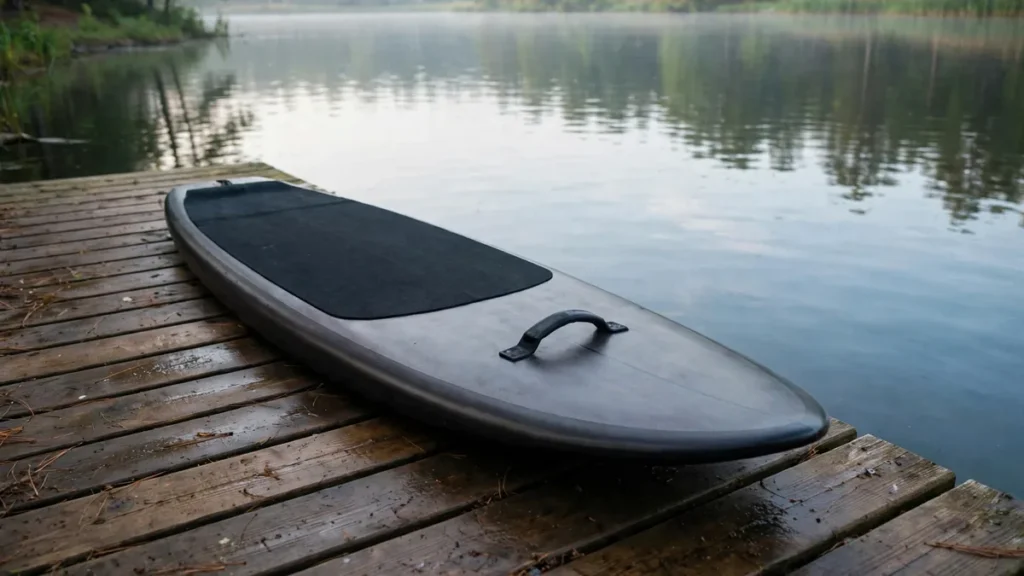
The first thing you notice about a luxury electric jet ski is what you do not hear. There is no two-stroke crackle at the dock, no smell of fuel on the wind, just a quiet whirr as the rider twists the throttle and the little craft lifts onto the plane and skims across the bay. People on the beach turn to look, not because it is loud, but because it is fast and almost silent, a combination that still surprises anyone used to a petrol jet ski.
Under that quiet ride is a very different machine from the petrol jet skis most people know. There is no engine block, no exhaust, no fuel tank and no oil to change. In their place is a battery pack, a motor controller and an electric motor driving a jet pump, all sealed against salt water and managed by software that watches temperature, charge and power constantly.

How a Luxury Electric Jet Ski Works
At its simplest, the system has four parts: the battery stores energy, the controller turns that energy into precisely timed pulses of electricity, the motor turns those pulses into rotation, and the jet pump turns rotation into thrust. The rider’s throttle asks the controller for more or less power, and the controller delivers it in milliseconds. That instant response is why an electric jet ski feels so quick off the mark.
Step 1: The Battery Pack
The battery is the heart of the craft, and also its heaviest part. Luxury electric jet skis use lithium-ion cells, usually the same high-density cells found in electric cars, packed into a sealed, waterproof housing low in the hull. The pack is cooled by a liquid loop or by plates that carry heat away from the cells, because a battery that gets too hot loses power and ages fast. A battery management system watches every group of cells, balancing their charge and reporting the remaining range to the display. Most packs hold roughly 10 to 18 kilowatt-hours, enough for one to two hours of mixed riding.
Step 2: The Motor Controller
The controller is the brain of the drivetrain. It takes direct current from the battery and turns it into three-phase alternating current for the motor, switching the power thousands of times a second. It also decides how much torque to deliver, smoothing the throttle so the craft does not lurch, limiting power when the battery is low or hot, and enabling regenerative braking when the rider backs off. The controller is sealed and cooled, often with its own water loop, because it handles hundreds of amps.
Step 3: The Electric Motor
The motor itself is usually a compact, brushless permanent-magnet unit, mounted low and directly in line with the jet pump. With no gears and no clutch, it delivers full torque from a standstill, which is why the acceleration feels so immediate. The motor spins at high speed, often 10,000 revs per minute or more, and its shaft drives the impeller inside the pump. Because there are so few moving parts, the motor needs almost no maintenance beyond a check of its seals and cooling.
Step 4: The Jet Pump and Thrust
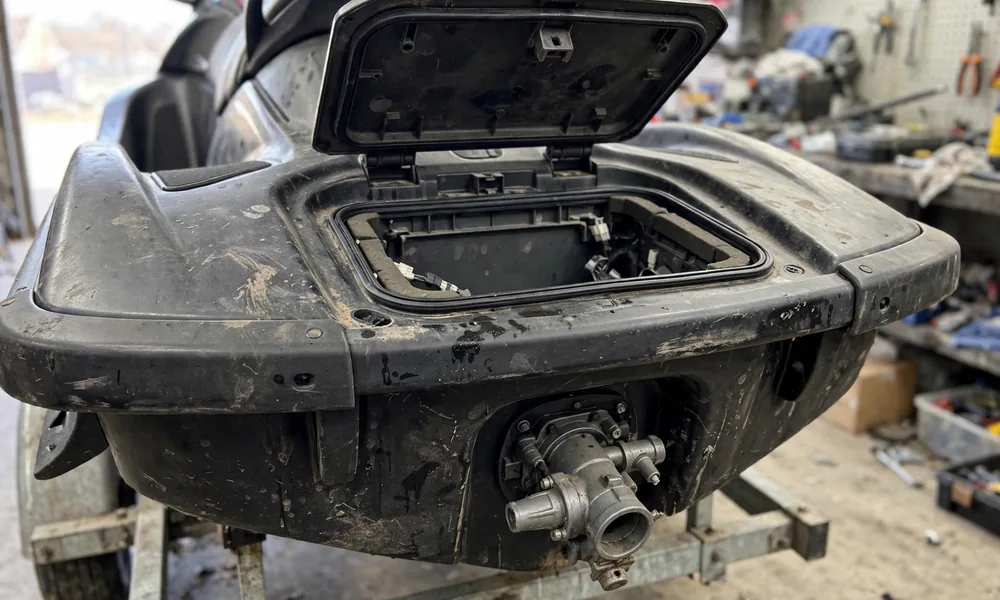
The jet pump is the part the electric system shares with a petrol jet ski. Water is drawn in through a grate in the bottom of the hull, accelerated by the spinning impeller, and forced out through a steerable nozzle at the stern. Turn the handlebars and the nozzle swings, steering the craft; squeeze the throttle and more water is pushed out, pushing the craft forward. There is no propeller in the open water, which makes the craft safer for swimmers and able to run in shallow water, and the pump’s efficiency matters more than ever, because every wasted watt is range lost.
Step 5: Steering, Braking and Rider Aids
Luxury models add rider aids that a basic jet ski does not have. A reverse bucket drops over the nozzle to slow the craft or back it up to a dock, and some systems offer a brake that uses the pump itself to stop the craft in a much shorter distance. Ride modes let the rider choose between a gentle touring mode that stretches the range, a sport mode that gives full power, and sometimes a learner mode that caps the speed. The display shows speed, battery percentage and estimated range. The way a standard jet ski works explains the shared pump and steering principles in more detail.
Step 6: Cooling, Sealing and Safety
Salt water and high-voltage electrics are a dangerous mix, so sealing is taken seriously. The battery, controller and motor are all housed in sealed compartments with gaskets, and the hull has sensors that warn the rider if water gets in. The cooling system uses seawater in a separate loop, so the electrics never touch salt water directly, and a master cut-off lets the rider or a rescuer kill the power instantly. If the rider falls off, a lanyard stops the motor at once, just as on a petrol craft.
Key Specifications
| Feature | Typical Range |
|---|---|
| Battery capacity | 10 to 18 kWh |
| Motor power | 30 to 60 kW (40 to 80 hp equivalent) |
| Top speed | 55 to 85 km/h (34 to 53 mph) |
| Riding time | 1 to 2 hours mixed use |
| Charging time | 1.5 to 3 hours (fast charge) |
| Weight | 250 to 380 kg |
| Length | 2.8 to 3.6 metres |
| Seating | 1 to 3 riders |
These are typical ranges for current luxury models. Range matters most in practice, and it falls sharply at full speed. A rider who cruises gently will get far more time on the water than one who rides flat out. The build of the craft is covered in how a luxury electric jet ski is made.
What a Luxury Electric Jet Ski Costs
Prices are moving as the market grows, so treat these as estimates. A luxury electric jet ski typically costs an estimated $15,000 to $30,000, with top models passing $35,000 once a fast charger, a cover and accessories are added. That is more than a comparable petrol model, and the premium is mostly the battery: large lithium packs are expensive to build, seal and cool. The running costs, though, are lower. Electricity costs a fraction of petrol per hour, there is no oil, no spark plugs and no winterising, and servicing is mostly a check of seals, software and the pump. The reasons a luxury electric jet ski is so expensive set out where the money goes.
Charging is part of the daily routine. Most owners charge at home or at the marina overnight, or use a fast charger to top up in a couple of hours between rides. Some owners carry a portable charger on their yacht, so the jet ski can be topped up from the yacht’s own power.
A Rare Fact
Because an electric jet ski is so quiet, it can get closer to wildlife without startling it, and some marine reserves and quiet lakes that ban petrol craft already allow electric ones. A few luxury resorts have switched their whole rental fleet to electric for exactly that reason. Silence, it turns out, is not just a comfort feature; it opens up water that was previously off limits.
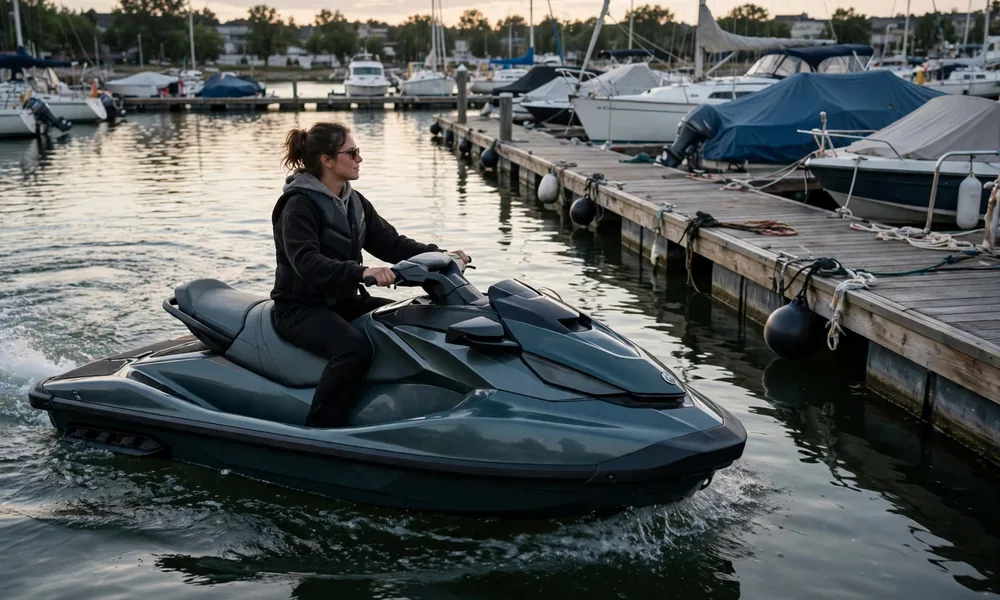
The electric jet ski is still a young machine, and its range and charging will keep improving as batteries get better. For now, it offers instant torque, almost no noise, and far fewer parts to go wrong.