The chassis arrives at dawn on the back of a flatbed truck, a bare ladder of steel rails with an engine, a steering wheel and nothing else. It looks more like the skeleton of a lorry than the start of a home, and in a way it is.
That is the strange magic of a luxury recreational vehicle, a machine that must be a house and a vehicle at the same time. This is how a luxury RV is made, from a bare chassis to the first night on the road.
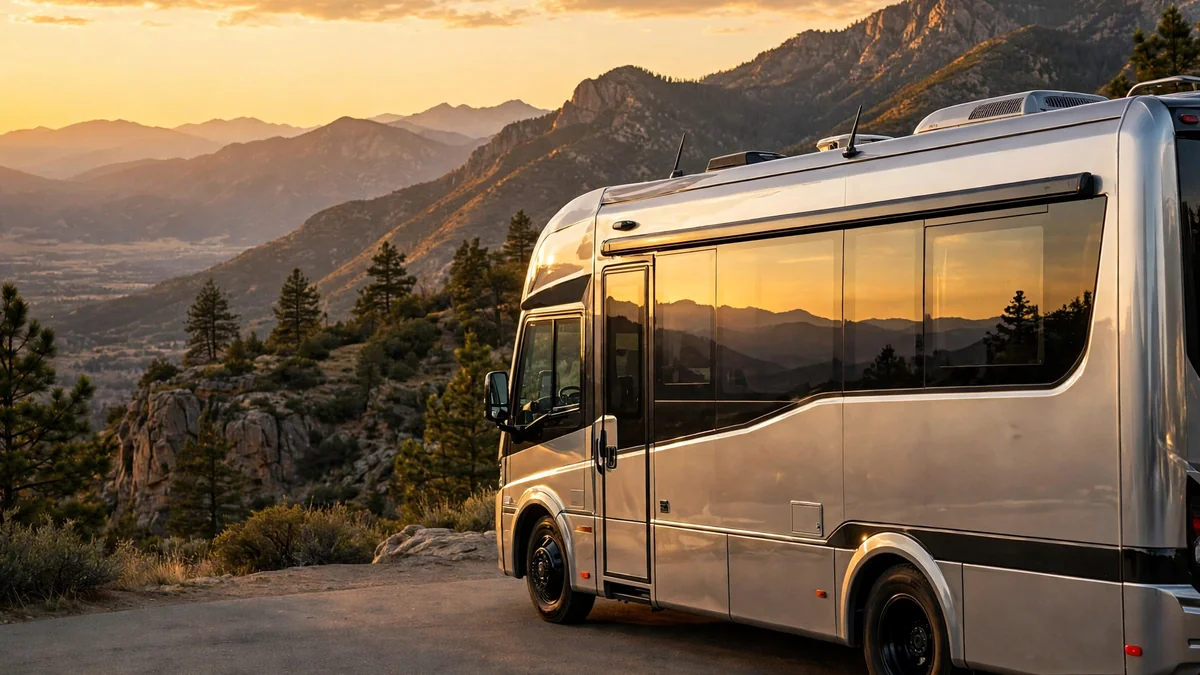
Step 1: The chassis is chosen and strengthened
Everything starts with the chassis, the steel frame that carries the whole weight of the finished home. A luxury RV usually begins life as a heavy-duty truck or bus chassis, chosen for its payload and its long wheelbase, because a home weighs far more than a delivery van. Builders inspect the rails, the axles and the suspension mounts before anything else, since a weakness here would haunt the vehicle for its entire life.
The chassis is often strengthened before the body goes on. Extra cross-members are welded in, the suspension is upgraded with air springs that can level the vehicle on uneven ground, and the fuel tank is enlarged for long journeys between stops.
Step 2: The floor and the walls go up
Once the chassis is ready, the floor is laid. It is usually a sandwich of plywood, aluminium and rigid insulation, bonded together so it stays flat, warm and silent underfoot.
The walls are built in the same sandwich style, with an outer skin of fibreglass or aluminium, a thick layer of insulation and an inner panel of wood or composite. Each wall is made flat on a bench, complete with window openings cut to the millimetre, then lifted into place and bonded to the floor and the roof. When the shell is closed, the builders test it with a fine spray of water, hunting for the smallest leak before a single carpet or curtain goes in.
Step 3: The roof, windows and slide-outs are fitted
The roof is the most demanding part of the shell. It must carry solar panels and air-conditioning units, shrug off rain and snow, and never sag under its own weight. Luxury builders use a single curved roof panel wherever they can, with as few joints as possible, because every joint is a future leak waiting to happen.
Then come the windows, double-glazed and set in rubber seals, and the slide-outs, the sections of wall that glide outward when the vehicle is parked to turn a narrow corridor into a proper living room. A slide-out is a small marvel of engineering: a steel frame, an electric or hydraulic ram, and seals that must stay watertight in every position.
Step 4: Plumbing, power and heating are installed
Behind the walls, the RV becomes a small self-contained town. Fresh water, grey water and waste tanks are slung beneath the floor, with pipes routed so they drain fully and never freeze. The water heater, the shower and the kitchen taps are plumbed and pressure-tested, and the toilet is connected to a sealed waste system that can be emptied at a service point in minutes.
Power is just as involved. A luxury RV carries a bank of lithium batteries, an inverter that turns battery power into household mains, a generator tucked into a soundproofed bay, and solar panels on the roof. The wiring is run in looms and labelled at every junction, because a fault found on a rainy night in a remote car park is no joke.
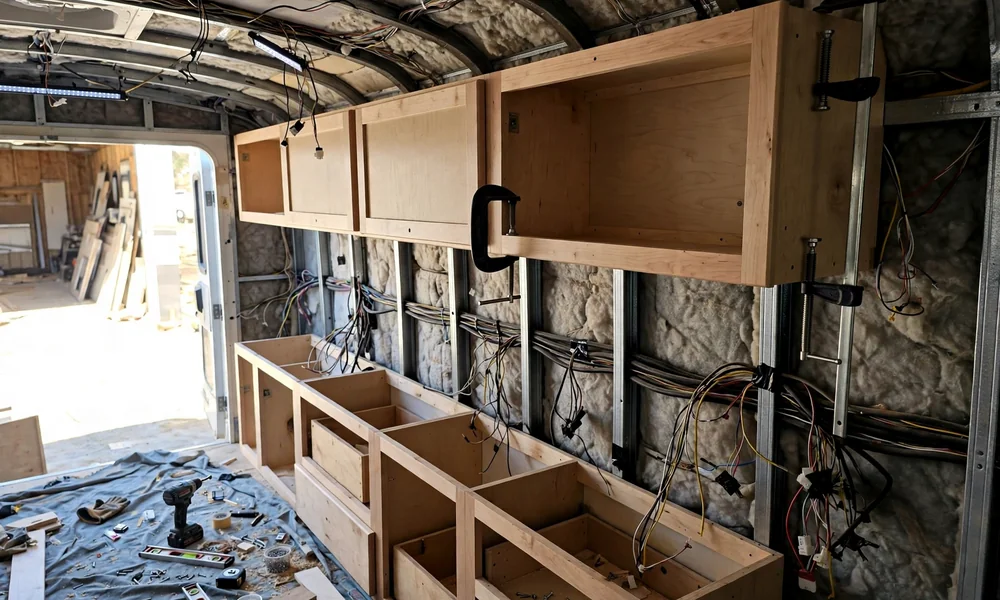
Step 5: The interior is built like a yacht cabin
With the services in place, the cabinetmakers take over. The kitchen, the bathroom and the bedroom are built from lightweight hardwood or composite panels, finished in veneer or lacquer, with soft-close drawers and catches that hold firm over bumps. Every cupboard is measured against the curve of the wall, because the walls of an RV are rarely perfectly straight.
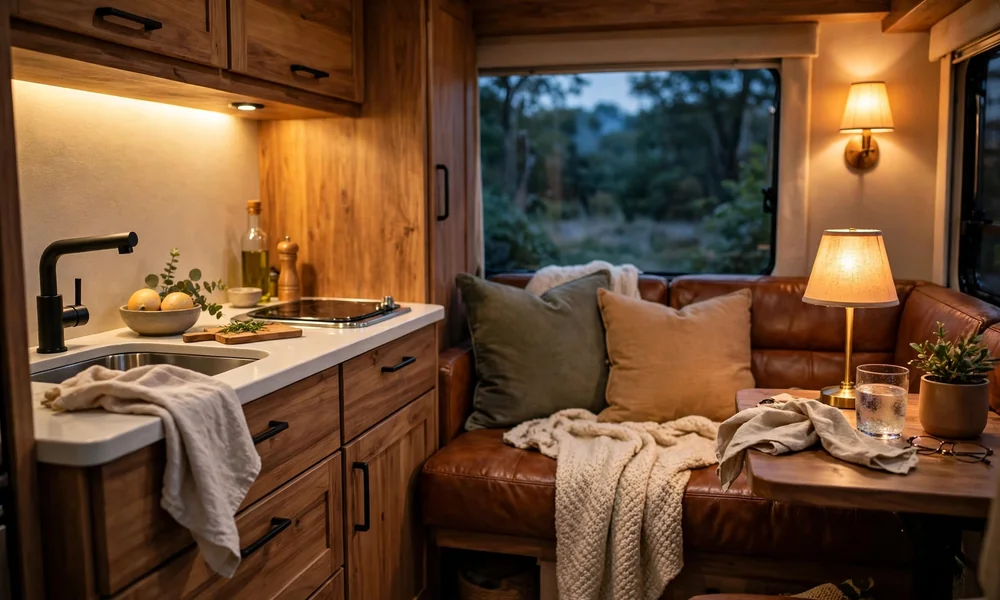
The living area is finished like a small apartment. A leather sofa faces a television that rises from a cabinet at the touch of a button, the dining table folds away when it is not needed, and the bed in the back is a full-size mattress, not a folding bench pretending to be one. The upholstery is stitched in the workshop, the curtains are cut to the windows, and the lighting is layered: bright spots for cooking, soft lamps for the evening. The truck-based platform underneath shares its bones with the heavier working vehicles described in the guide to how a luxury pickup truck works, but everything above the floor is pure home.
Step 6: Testing, tuning and the first night away
Before any customer takes the keys, the finished RV is tested as a home and as a vehicle. The builders fill the tanks, run every tap and appliance, and leave the heating on overnight to check for cold spots and condensation.
The final check is a road test with the water tanks full and the cupboards loaded, because weight changes everything about how a tall vehicle handles. If a drawer opens on a bend or a mirror vibrates loose, the RV goes back to the bench. Only when it is silent, level and watertight does it earn its handover, usually with a full tank of fuel and a first night booked at a quiet campsite nearby.
The spec sheet at a glance
| Specification | Typical luxury figure |
|---|---|
| Length | 9 to 13 metres |
| Weight | 7,500 to 12,000 kilograms fully loaded |
| Engine | 6.7 to 8.9 litre turbo diesel |
| Power | 340 to 450 horsepower |
| Chassis | Heavy-duty truck or bus frame, air suspension |
| Sleeping | Four to six people in fixed beds |
| Fresh water | 300 to 500 litres |
| Batteries | 400 to 800 amp-hours of lithium |
| Solar | 600 to 1,200 watts on the roof |
| Slide-outs | Two to four rooms that extend when parked |
| Heating | Diesel boiler with radiators and underfloor heat |
| Build time | Eight to sixteen weeks per vehicle |
What it costs, and a rare fact
A luxury RV costs an estimated $250,000 to $1,000,000, depending on its length, its chassis and the finish inside, with fully bespoke coach-built examples costing far more. The closest relative on the road is the camper van, and the luxury camper van spec sheet shows how the same idea is squeezed into a much smaller footprint. For a sense of where the money goes, the guide to why a luxury RV is so expensive breaks down the materials and labour behind the price.
Here is the rare fact the brochure never mentions. Some luxury RV builders fill the finished shell with water vapour and walk around it with a thermal camera, hunting for invisible gaps in the insulation, because a single cold bridge in a wall can cause condensation, damp and mould for years. The test takes an afternoon, costs almost nothing, and saves the owner from the one problem no amount of leather and lacquer can hide.


