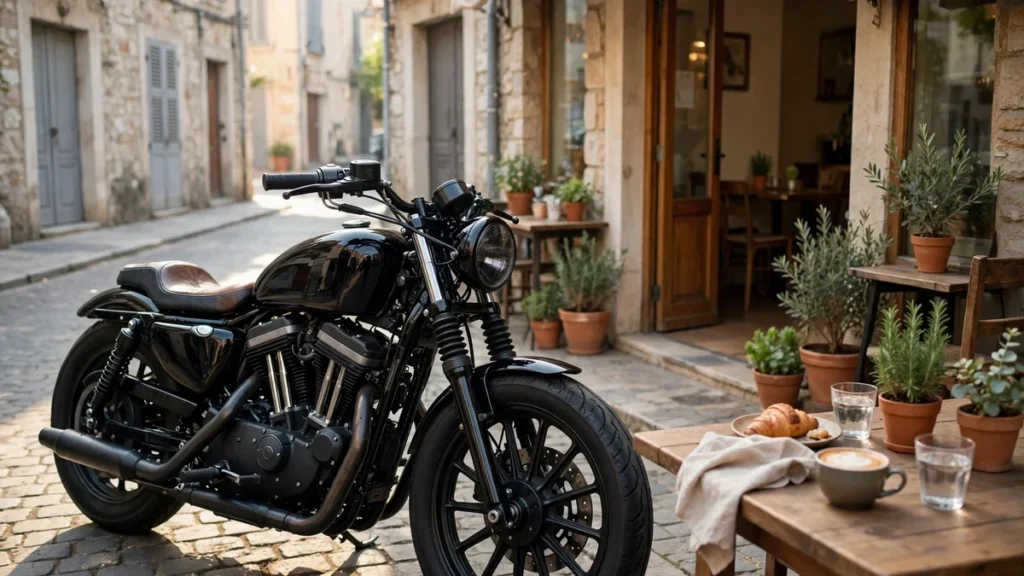
The bike is parked outside a small cafe on a mountain road, and it draws a small crowd without trying. People walk past, slow down, and come back for a second look. It is not the loudest machine in the car park, and it is not the brightest, but everything about it looks considered: the paint is deep and flawless, the chrome is polished to a mirror, and the leather seat looks like it belongs on a piece of furniture rather than a vehicle. The owner, sipping coffee a few tables away, smiles. He knows the questions are coming, and he knows they will all start with the same one: how much power does it have?
Power is the least interesting number on a luxury motorcycle spec sheet, and also the one that tells you least about what the bike is like to ride. A big touring bike or a hand-built cruiser is judged by a different set of figures: how much it weighs, where that weight sits, how much torque the engine makes at low revs, how far it will go on a tank, and how hard it can stop from speed with a passenger and luggage aboard. This guide reads the whole sheet the way an experienced rider does, starting with the numbers that decide how the bike feels and ending with the ones that decide how far it will take you.
The spec sheet at a glance
| Specification | Typical luxury figure |
|---|---|
| Engine | 1,800 to 2,500 cubic centimetres, V-twin or flat-six |
| Power | 90 to 140 horsepower |
| Torque | 150 to 220 newton-metres |
| Weight | 320 to 420 kilograms, ready to ride |
| Seat height | 680 to 750 millimetres |
| Fuel tank | 19 to 26 litres |
| Range | 300 to 450 kilometres per tank |
| 0 to 100 km/h | 3.5 to 5 seconds |
| Top speed | 170 to 200 kilometres per hour |
| Front brakes | Dual discs, 300 to 320 millimetres, ABS |
| Suspension | Adjustable front forks, rear monoshock |
| Gearbox | Six-speed manual, often with reverse gear |
| Drive | Shaft or belt drive |
| Infotainment | Touchscreen, navigation, premium speakers |
| Luggage | 90 to 130 litres of panniers and top box |
Engine and torque: why low-down pull matters more than horsepower
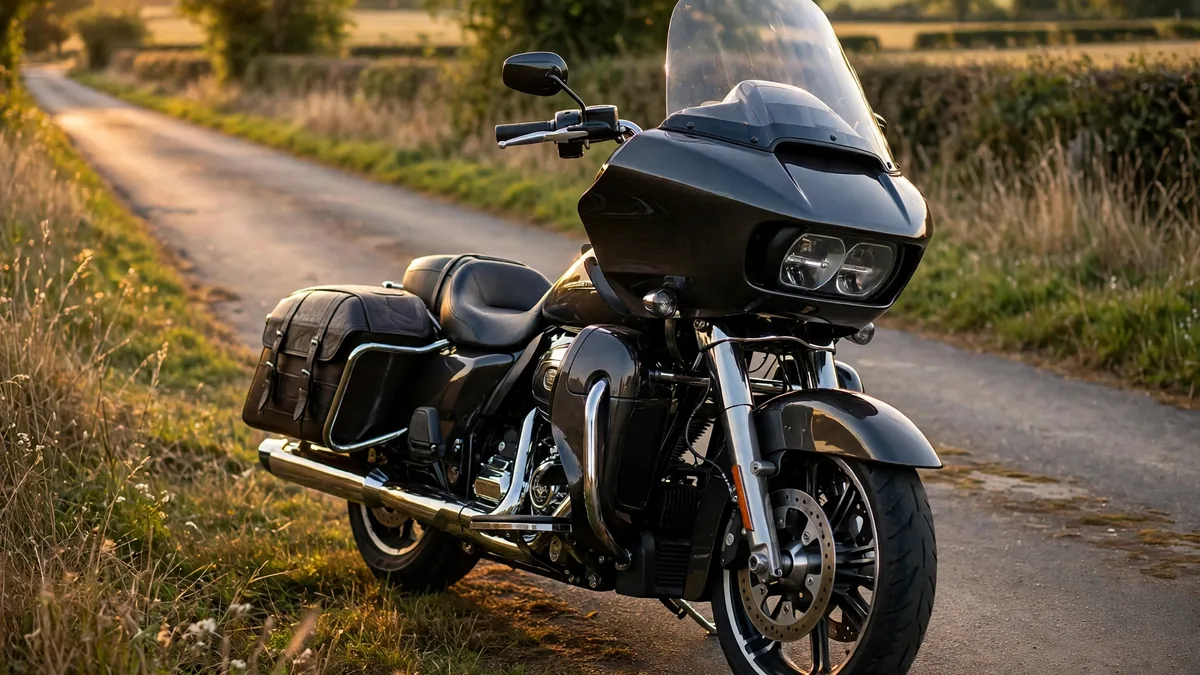
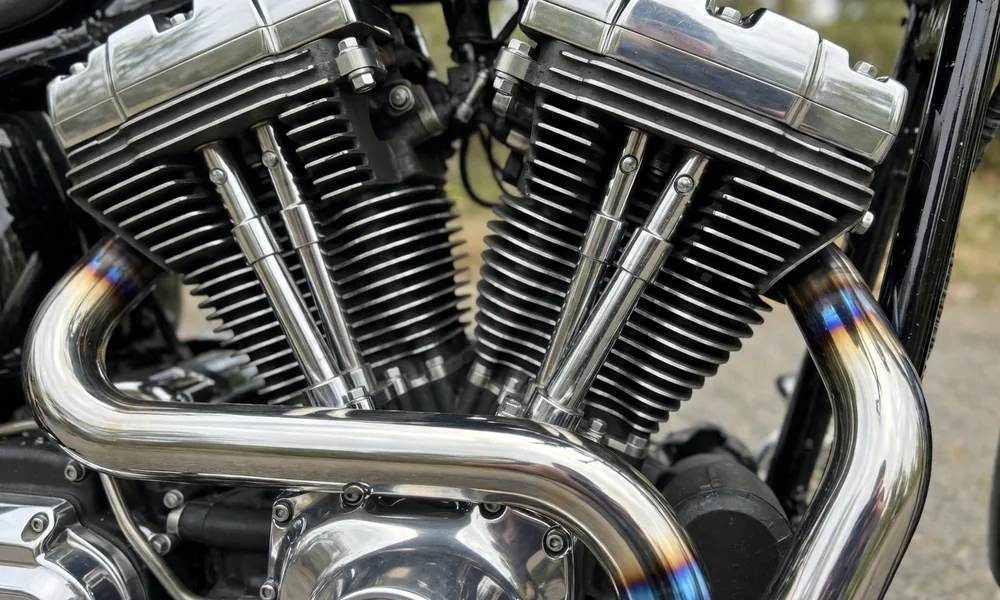
A luxury motorcycle engine is usually a very large V-twin or a flat-six, and its job is not to scream at high revs but to pull hard from barely above idle. Torque of 150 to 220 newton-metres means the bike will accelerate smoothly from low speed in a high gear, overtake without a downshift, and climb a mountain pass two-up with luggage without feeling strained. Horsepower is the number brochures print in large type, but torque is the number a rider feels in the first hundred metres, and on a heavy touring bike it matters far more.
The engine is also where much of the luxury lives. Shaft drive or belt drive replaces the chain, which means no oily mess, no regular adjustment, and a quieter ride. The way the whole machine is put together is covered in how a luxury motorcycle is made, from the frame welding to the hand-finished paint.
Weight and handling: the number that decides everything else
Weight is the most honest figure on the sheet. A luxury touring bike weighs 320 to 420 kilograms ready to ride, and that mass shapes every other number: the brakes must be bigger, the suspension must be stronger, and the engine must make more torque just to move it. What matters is not only the total but where the weight sits. A low centre of gravity, with the fuel carried low and the engine slung beneath the frame, makes a heavy bike feel balanced at walking pace and steady in a crosswind, while a top-heavy machine will feel like a handful every time it stops.
Brakes and suspension: stopping and settling a heavy machine
Dual front discs of 300 to 320 millimetres with ABS are standard at this level, and they need to be. Stopping 400 kilograms of motorcycle plus rider, passenger and luggage from motorway speed takes serious hardware, and the best systems add linked braking, so the rear brake helps the front, and cornering ABS, which keeps the bike stable even if the rider brakes hard while leaning. The suspension matters just as much: adjustable front forks and a rear monoshock let the rider stiffen the bike for a loaded tour or soften it for a solo Sunday ride, and electronic adjustment on the most expensive models does it at the touch of a button.
The dashboard and the electronics
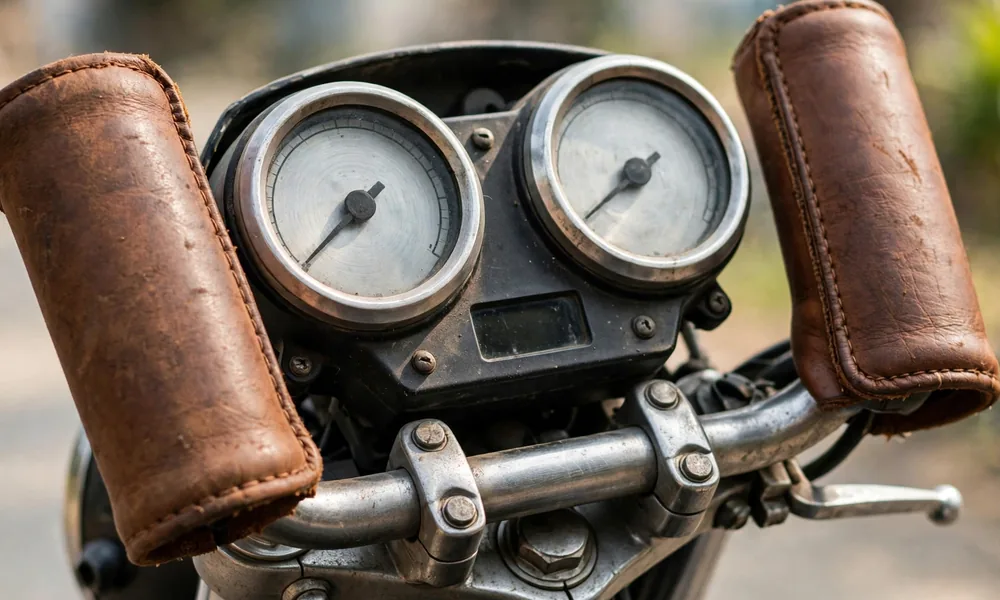
Step into the saddle and the spec sheet turns into screens and switches. A modern luxury motorcycle carries a touchscreen with navigation, music and phone connection, plus speakers built into the fairing, and the best systems are readable in bright sunlight and operable with gloves on. Behind the screens sits a quiet layer of electronics: traction control, riding modes that soften the throttle in the rain, hill-start assist that holds the bike on a slope, and tyre pressure monitoring. The systems that keep the bike upright and the rider informed are explained in how a luxury motorcycle works, from the throttle-by-wire to the braking electronics.
Comfort, range and luggage
Comfort is measured in small numbers that add up over a long day. A seat height of 680 to 750 millimetres lets most riders put both feet flat on the ground, heated grips and a heated seat take the edge off cold mornings, and an adjustable windscreen keeps the wind off the rider’s chest at motorway speed. Range is the practical figure: a 19 to 26 litre tank and 300 to 450 kilometres between fills means the bike can cross a country on three stops, and the luggage capacity of 90 to 130 litres across panniers and a top box decides whether two people can tour for a week without strapping bags to the seat.
Price: what the money buys
A luxury motorcycle typically costs an estimated 30,000 to 60,000 dollars, with hand-built and limited-edition models going well beyond that. The base machine underneath may be a fine bike on its own, and the difference is the finish: the hand-painted bodywork, the stitched leather, the premium audio, the electronic suspension and the chrome that is polished rather than plated. Electric luxury bikes are a growing alternative, and the electric side of the story is covered in how a luxury electric motorcycle is made, where the battery pack and the motor replace the V-twin entirely. Options add up fast: a top box, a taller screen, a better seat and a full luggage set can add thousands more to the price.
A rare fact worth knowing
Some luxury touring motorcycles carry a reverse gear, a feature almost no other motorcycle has. Because the bike is too heavy to push backwards up a slope, a small electric motor drives it gently in reverse at walking pace, controlled from the handlebar. It is a tiny line on the spec sheet, listed as a single word, but for a rider who has ever tried to push 400 kilograms backwards out of a sloping parking space, it is the most useful feature on the whole machine.