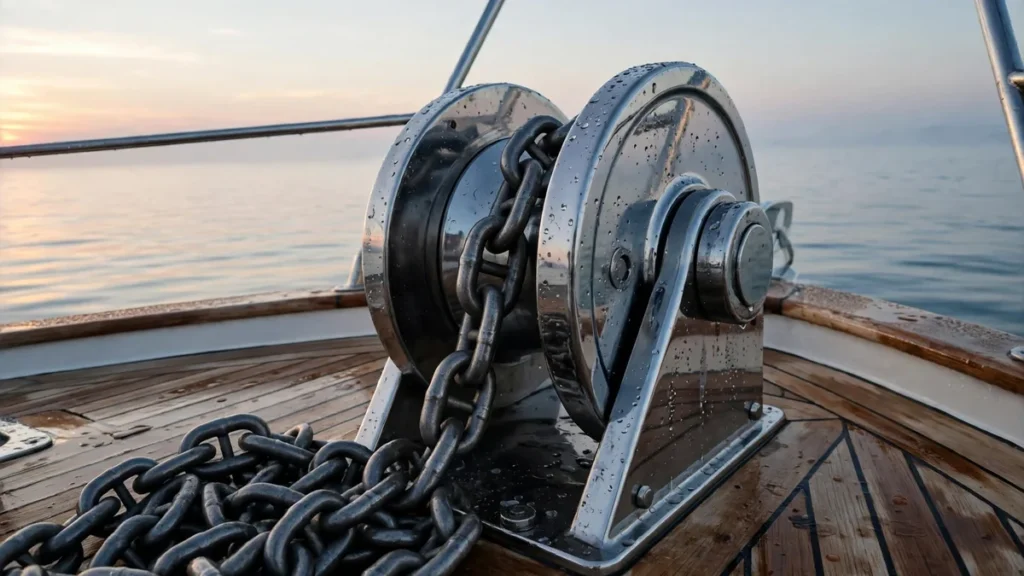
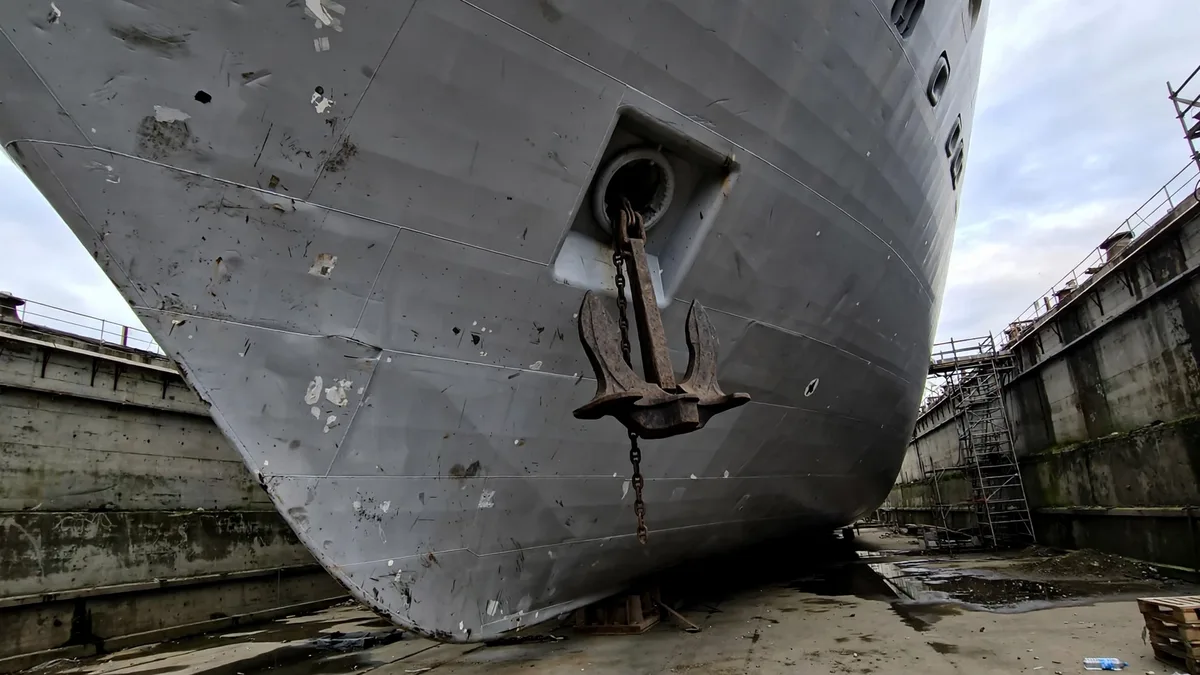
It is a pipe. A short one, at that, running through the bow of a ship from the deck down to the water, just long enough to guide an anchor chain from the windlass to the sea. There is nothing about it that looks expensive. No moving parts, no electronics, no polished wood, no glass. It is a tube of steel, and yet the hawsepipe on a large luxury ship can cost as much as a family car, and on the biggest vessels the bill runs higher still. Visitors to a shipyard see the invoice and ask the same question every owner asks: how can a pipe cost that much?
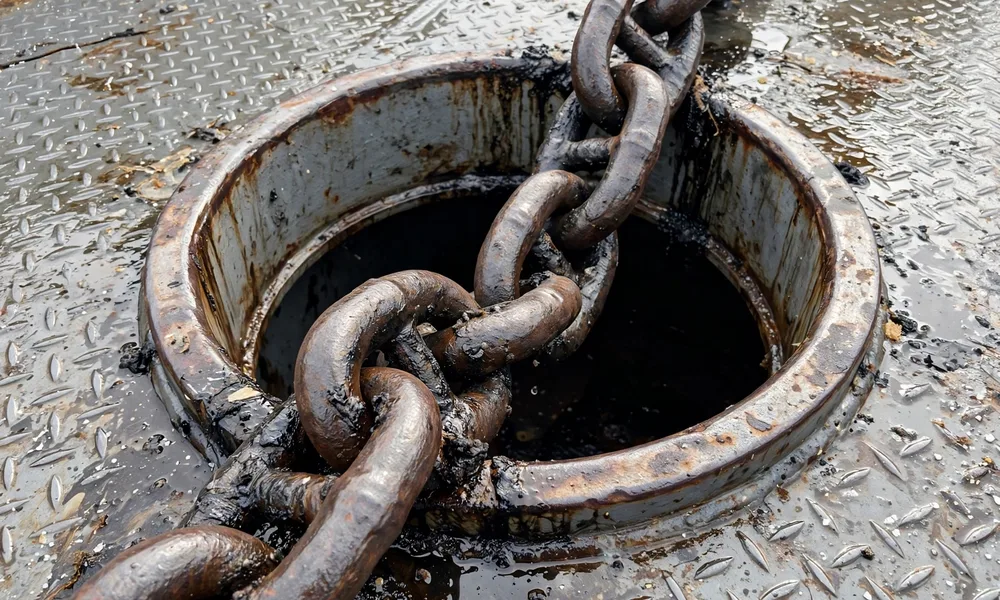
The answer is that the hawsepipe is not a pipe in the way a drainpipe is a pipe. It is a precision-engineered, heavily armoured passage through the most battered part of a ship, and it has one of the hardest jobs aboard. Every time the anchor is dropped or raised, tonnes of steel chain thunder through it, grinding, slamming and twisting as the ship moves. The pipe must guide that chain without damaging it, without being damaged by it, and without letting the sea in. It must do this for decades, in salt water, under loads that would tear an ordinary pipe apart in a single season.
This article follows the money through the bow of a luxury ship. It looks at the cast steel, the precision boring, the wear lining, the welding into the hull, and the classification approval that turn a short tube into a major piece of engineering, and it explains why each step costs what it does. By the end, the hawsepipe will still look like a simple pipe, but its price will make sense. The cheapest part of anchoring a ship is the anchor itself. The expensive part is the hole it passes through.
Where the Money Goes
1. Cast steel, not rolled tube
The first cost is the material, and it is not the steel you would expect. A luxury ship’s hawsepipe is not made from a length of rolled tube. It is cast, often as a single piece or in a few large sections, from heavy steel that can be made thick where the chain bears hardest and shaped to the exact curve the chain needs. Casting a piece this size, with the right metallurgy to resist both impact and corrosion, is specialist foundry work, and every casting must be inspected for flaws that could become cracks under load. A rolled tube would be cheaper and weaker, and it would wear through in years. A casting is expensive because it is made once, for one ship, in a foundry that may only make a handful of such pieces a year. The foundry also stamps the casting with its heat number, so the steel can be traced back to the exact melt it came from if any question ever arises about its quality.
2. Precision boring and the chain’s path
The second cost is the machining. The inside of the hawsepipe is bored and ground to a smooth, precise curve, because the chain that passes through it is unforgiving. A rough or misaligned bore will chew through chain links, and a chain link is far more expensive to replace than a pipe is to bore properly. The bore must match the chain size exactly, with a smooth entry bell at the top and a flared lip at the bottom where the chain leaves the ship, so the links slide rather than slam.
3. Wear lining and replaceable parts
The third cost is the lining. Even the best steel wears when tonnes of chain drag through it, so a luxury hawsepipe is fitted with a wear lining, often of harder steel or a specialist alloy, in the places the chain touches most. The lining is designed to be replaced, because replacing a liner is far cheaper than replacing the whole pipe, but fitting it is fiddly, precise work: it must sit flush, it must not snag the chain, and it must be fixed so firmly that the chain cannot tear it loose.
4. Welding it into the hull
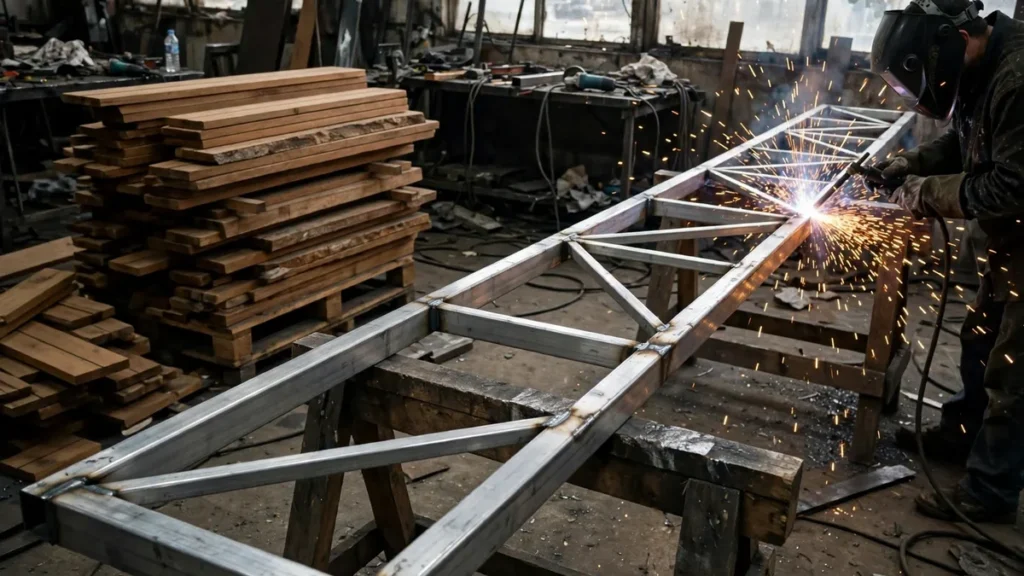
The fourth cost is the installation, and it is the hardest work of all. The hawsepipe is welded into the bow, through decks and bulkheads, in a position that is awkward to reach and impossible to get wrong. The welds must be full-penetration, watertight and strong enough to carry the loads of the anchor chain pulling at an angle in a storm, and every weld is inspected, often by ultrasound or X-ray, because a crack in the hawsepipe is a crack in the hull itself. The work is done by the shipyard’s best welders, in confined spaces, often upside down, and it is checked and rechecked before the ship is allowed to float.
5. Classification approval and testing
The fifth cost is approval. A hawsepipe is a hull penetration, and hull penetrations are among the most closely regulated parts of a ship. The design must be approved by the ship’s classification society, the materials must be certified, the welds must be tested, and the finished assembly must be inspected before the ship is delivered. The anchor is then dropped and raised repeatedly in sea trials, with surveyors watching the chain run through the pipe, listening for grinding, checking for wear and confirming that the chain stows properly. That process costs money in surveyors’ fees, in yard time and in the paperwork that follows the ship for its whole life.
What It Costs
A luxury ship’s hawsepipe is typically an estimate of $50,000 to $200,000 fitted, depending on the size of the ship and the chain it carries, with the largest vessels reaching higher still. The casting and machining account for a large share, the installation and inspection for another, and the lining and fittings for the rest. Running costs are modest: regular inspection of the lining, greasing of the chain stopper, and replacement of the wear liner every few years.
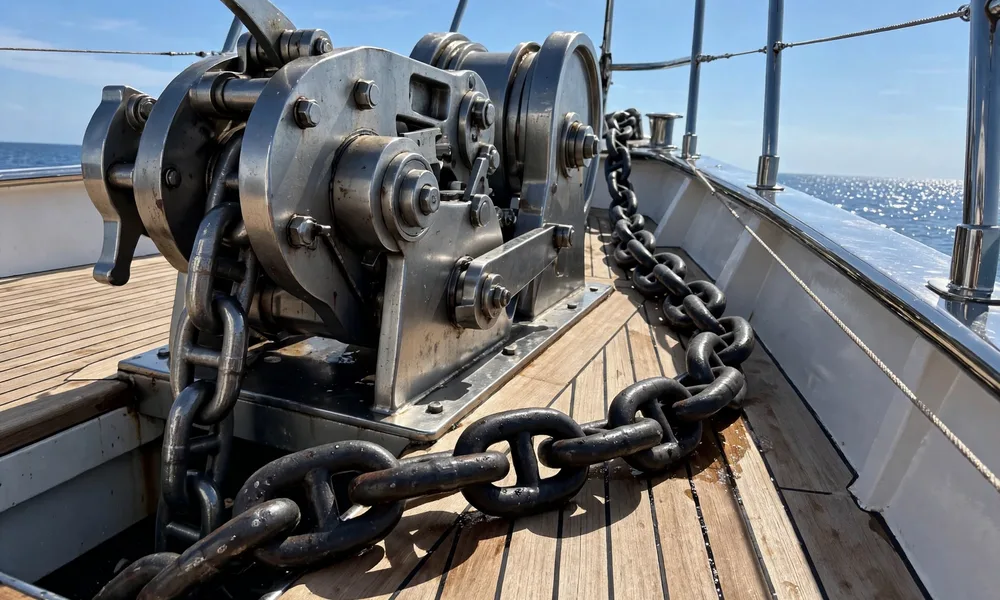
A Rare Fact
Here is something few people outside shipbuilding know: the hawsepipe is deliberately shaped so that the anchor chain, when it is fully raised, pulls the anchor itself snug into a pocket in the bow, a recess called the anchor pocket, with the flukes tucked away and the shank held tight against the hull. The pipe and the pocket are designed together, as one system, so that the anchor disappears into the bow and the ship can move through the water cleanly. Get the angle of the pipe wrong by a few degrees and the anchor will not seat properly, it will bang against the hull in a seaway, and the crew will have to secure it by hand in bad weather. A few degrees of pipe is the difference between an anchor that stows itself and one that fights the ship.
A hawsepipe looks like a hole in the bow because it is a hole in the bow, but it is a hole that has been cast, bored, lined, welded and certified to survive decades of abuse from tonnes of moving steel. The price is the cost of making a hole that strong. Readers who want to see how these pipes are put together can read how a luxury ship hawsepipe is made, while luxury ship hawsepipe specs explained and how a luxury ship anchor chain works show its closest neighbours in the bow.