A great luxury ship approaches her berth, and instead of swinging in a wide arc, she slides sideways, her bow easing gently towards the quay as if pushed by an invisible hand. There is no tug at her bow and no rope pulling her in, yet she moves sideways with perfect control.
The invisible hand is the bow thruster, a propeller set in a tunnel right through the bow of the ship, which can push water to one side or the other and move the bow left or right on command. It is a simple idea with a powerful effect, and this is how a luxury ship bow thruster works.
How It Works
Step 1: The tunnel through the bow
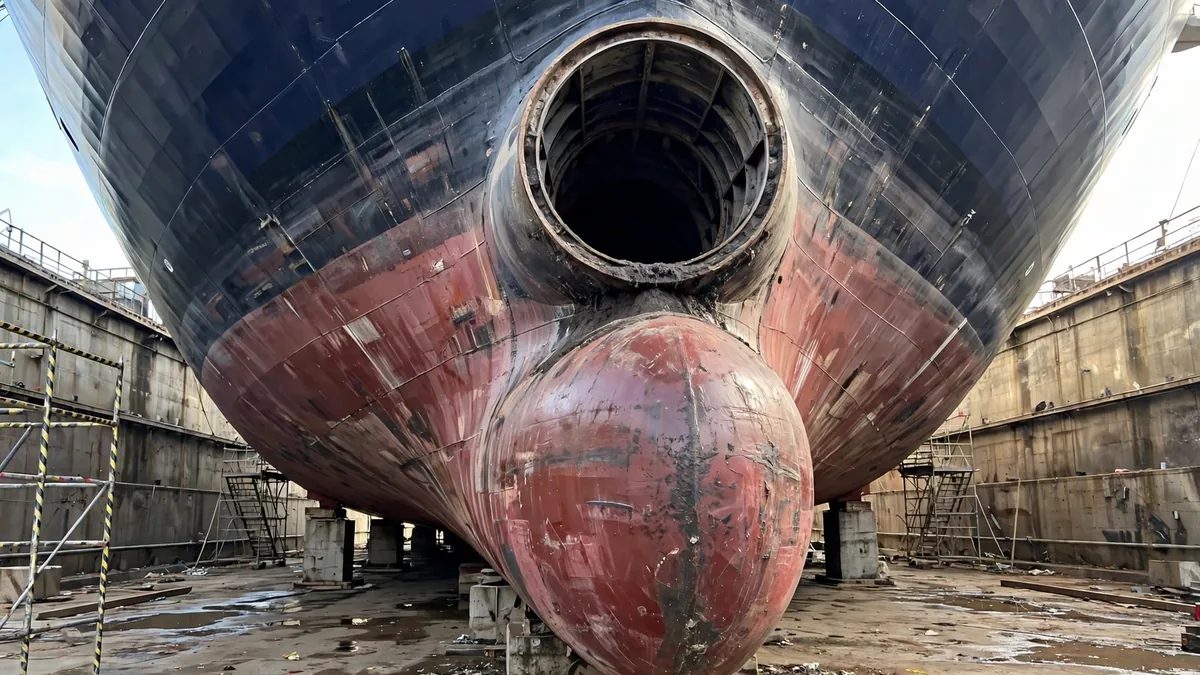
The bow thruster lives in a tunnel, a smooth steel tube that runs from one side of the bow to the other, just below the waterline. The tunnel is built into the hull when the ship is made, its walls faired smooth so water flows through it easily, and its openings are rounded so the flow is not broken at the edges.
The tunnel is placed well forward, where it has the longest lever arm on the ship, so a small push at the bow turns the whole ship. Its size is a compromise: a bigger tunnel gives more push, but it also disturbs the flow of water along the hull and costs the ship a little speed, so designers size it carefully for the ship it serves. The strength of the bow around it matches how a luxury ship bow is made, since the tunnel cuts through the very structure that meets the sea first.
Step 2: The propeller inside the tunnel
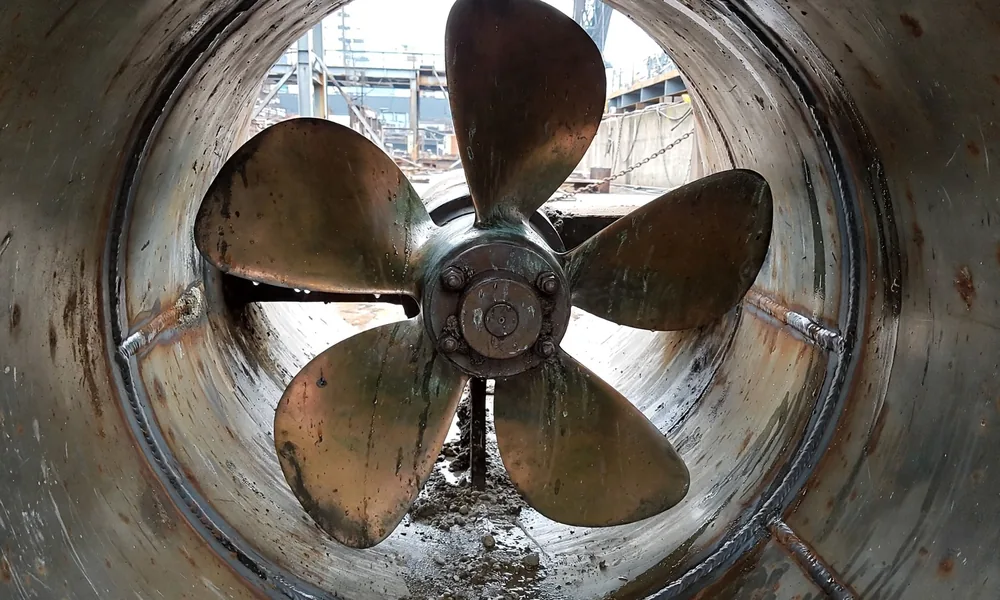
Inside the tunnel sits the propeller, usually a small set of bronze blades on a hub, mounted on a shaft that runs down from a motor above. The blades are shaped to push water equally well in either direction, because the thruster must shove the bow to port just as strongly as it shoves it to starboard.
The propeller is balanced so it spins without shaking the hull, and a grille or guard covers the tunnel mouths to keep ropes, debris and curious fish out. When the thruster is not running, the propeller sits still in its tunnel and the water flows past it, and the ship sails on as if it were not there at all.
Step 3: The motor and the drive
Above the tunnel sits the motor, usually a powerful electric motor, which drives the propeller through a gearbox and a vertical shaft. The motor is sized to give full thrust in seconds, because a thruster is used at the moment when the ship needs it most, and a slow start would be no help at all.
The motor room is ventilated to carry away the heat, and the drive is fitted with a brake that stops the propeller quickly when the bridge orders it. The whole unit is mounted on a frame that can be lifted out for service in dry dock, and its seals keep the sea out of the motor room even when the tunnel is full of water.
Step 4: The controls on the bridge
On the bridge the thruster is controlled by a lever or a small joystick, and the captain pushes it left or right to move the bow the same way. The control is simple and direct, and the thrust follows the lever smoothly, so the captain can give a gentle nudge or a full push with the same hand.
The control panel shows how much thrust is being used and whether the motor is running hot, and a warning sounds if the thruster is used for too long at full power. The captain works the thruster together with the engines and the rudder, and a skilled hand can walk a great ship sideways into a berth with barely a ripple.
Step 5: How the sideways push is made
When the captain pushes the lever, the motor spins the propeller, and the blades throw a jet of water out of one side of the tunnel. The reaction pushes the bow in the opposite direction, and because the tunnel is at the very front of the ship, the bow swings while the stern stays almost still.
Step 6: The limits and the care it needs
A bow thruster is powerful but it has limits, and a good captain knows them. It cannot push against a strong wind or current on its own, and it is meant for short bursts, not for hours of running, because the motor heats up and the tunnel stirs the water into a froth that wastes power.
The thruster needs regular care: divers inspect the tunnel mouths for damage and weed, the propeller is checked for nicks that would make it vibrate, and the motor and gearbox are serviced on a strict schedule. A thruster that is looked after will answer instantly for years, and it is the quiet reason why so many great ships can dock without a tug at the bow.
| Spec | Detail |
|---|---|
| Tunnel | Smooth steel tube through the bow below the waterline, faired so water flows through easily |
| Propeller | Small bronze blades on a hub, shaped to push water equally well to port or to starboard |
| Motor | Powerful electric motor above the tunnel, driving the propeller through a gearbox and shaft |
| Controls | Lever or joystick on the bridge, thrust following the hand smoothly from a nudge to full push |
| Thrust | Strongest at slow speed or at rest, when the ship needs it most for docking and harbour work |
| Use | Short bursts for berthing, limited against strong wind or current, serviced on a strict schedule |
What One Costs
A luxury ship bow thruster is an estimated 200,000 to 1,500,000 dollars, depending on the size of the tunnel, the power of the motor and how much of the system is custom built. A small thruster for a large yacht sits near the bottom, while a great thruster for a cruise ship, with a wide tunnel and a powerful motor, costs far more. The propeller and the motor are only part of the price; cutting the tunnel into the hull, the gearbox and the bridge controls all add up, and the way a luxury ship propeller works shows the same idea at the stern, where a bigger propeller pushes the whole ship forward.
A Rare Fact
Some very large ships carry two bow thrusters side by side, and with one pushing one way and the other pushing the opposite way they can turn the ship on the spot, like a coin spinning on a table. It is a trick that lets a ship hundreds of metres long turn in a harbour basin barely wider than she is.

A luxury ship bow thruster is a quiet piece of engineering: a tunnel through the bow, a small propeller, a strong motor and a simple control, all working together to push a giant ship sideways. It is rarely seen and almost never noticed, yet without it docking would be a far harder and slower business, and the way a luxury ship rudder is made shows the other end of the steering story, where a great blade at the stern guides the ship once she is under way.


