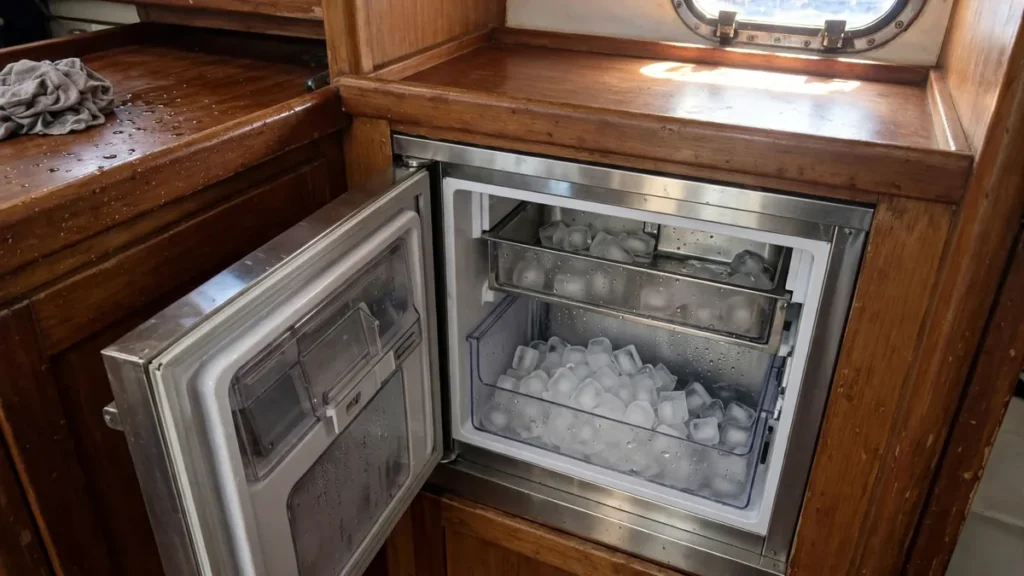
Halfway through a sea day, the coffee bar on a cruise ship is the busiest room on board nobody planned to visit. Guests drift in after breakfast, after the pool, after the show, and a queue forms while two baristas work the machines without stopping. A thousand cups a day pass across that counter, and every one tastes the same, which is the whole trick.
A luxury ship espresso machine works like a fine cafe machine, pushing near-boiling water through finely ground coffee at nine times the pressure of the air around us, but it is built for volume. Several machines stand side by side, the water comes from the ship’s treatment plant, the beans arrive by the sack, and a team of baristas keeps the shots flowing from the first coffee of the morning to the last decaf at night.
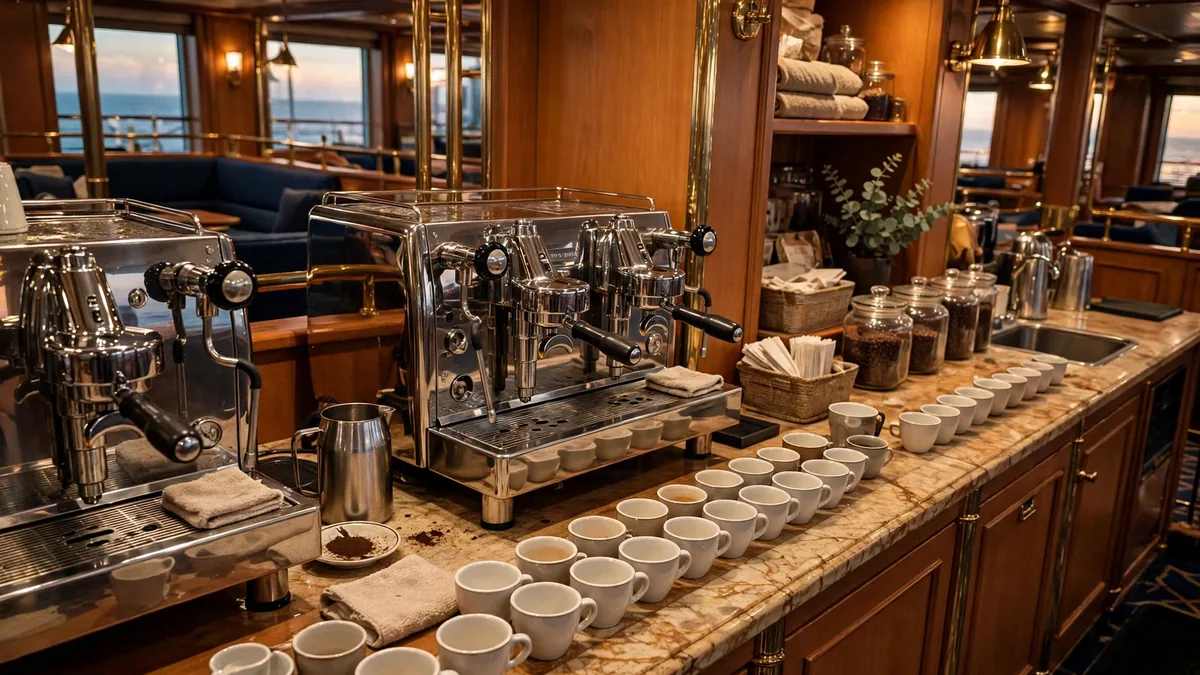
Inside the Machine
The boilers: heat for a thousand cups
The heart of a ship espresso machine is its boiler system, usually two large boilers, one for brewing and one for steam, sized so the machine never waits for heat. At full speed the bar can pull a shot every thirty seconds, and the boilers hold temperature through the rush because they are big, heavily insulated, and fed by treated water. The boilers are pressure-tested like the ship’s own, with safety valves that vent if anything goes wrong, and they are descaled on a strict schedule, because a furred boiler is a slow boiler, and a slow boiler means a queue that stops moving. The crew logs every descale in the bar book, and the chief steward checks the log at the end of every cruise.
The pumps: steady pressure, shot after shot
Each group head on a ship machine has its own pump, so two baristas can pull shots at once without stealing pressure from each other. The pumps are rotary units holding nine bars perfectly steady for twenty-five to thirty seconds, and a gauge on each group lets the barista watch the needle climb and hold. If the pressure wavers, the coffee turns sour or thin, so the pumps are serviced every few weeks and replaced before they fail. The ship cocktail bar across the deck runs its own rush the same way, and the coffee bar keeps pace with it all day.
The grinders: beans by the sack, ground fresh
A ship coffee bar keeps two or three grinders on the counter, one for the house blend, one for decaf, and one for the single origin of the week. Each grinder has steel burrs that crush the beans to a fine, even powder, and each is set to a different fineness, because the house blend and the single origin flow differently. The baristas dose by weight, not by eye, weighing each shot on a small scale, because a gram too much or too little changes the taste, and at a thousand cups a day consistency is everything. A new bean means a new grind setting, and the head barista dials it in with a test shot before the bar opens. The beans arrive by the sack from the ship’s stores, and the hoppers are filled fresh every morning.
The group heads: two shots at once
A ship espresso machine usually has two or three group heads, the metal heads under which the portafilters lock, so the bar can make several drinks at once. Each group is a heavy brass head with a shower screen that spreads hot water evenly over the coffee, and each is flushed with hot water before every shot, warming the metal and clearing the last coffee away. The groups are cleaned at the end of every day with a detergent that strips the coffee oils, and the screens are taken out and scrubbed, because old oil turns bitter and a bitter bar loses its regulars fast. The ship crew mess uses the same machines for the crew, and the baristas there follow the same cleaning routine.
The steam wands: milk for the morning rush
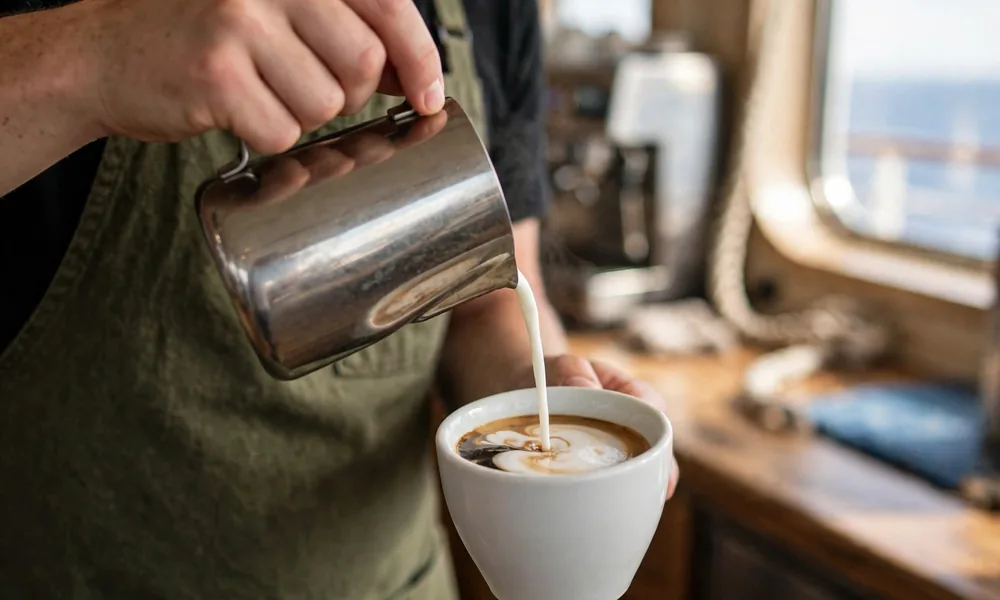
The steam wands on a ship machine are the hardest-working parts of the bar, turning cold milk into silky foam for cappuccinos and lattes all morning. Each wand takes dry steam from the steam boiler, and a good barista can stretch and heat a jug of milk in under half a minute, listening for the soft tearing sound that means foam is forming. The wands are wiped clean after every drink, and purged with a blast of steam before each use, because dried milk in a wand will spoil the next ten cups.
The controls and the water: the quiet backbone
A modern ship espresso machine is run by a small computer that watches boiler temperature, pump pressure, and shot time for every group, keeping them steady through the rush. The water comes from the ship’s treatment plant, filtered and mineral-balanced so the coffee tastes right and the boilers stay clean, and a pressure regulator keeps the flow constant even when the ship’s pumps work hard elsewhere. The controls are sealed against steam and spray, and the machine is bolted to the counter so it cannot move when the ship rolls.
A ship espresso machine earns its place by never stopping. It pours the same shot at six in the morning and at midnight, in calm seas and in a swell, turning a queue of strangers into a room full of people holding warm cups. The ship galley below decks keeps the bar supplied with milk, beans, and cups, and the machine does the rest: pressure, heat, and timing, repeated a thousand times a day without a single complaint.
Ship Espresso Machine Specifications
| Feature | Typical Detail |
|---|---|
| Boilers | Two large boilers, one for brewing and one for steam, insulated |
| Pumps | One rotary pump per group head, holding about nine bars |
| Group heads | Two or three heavy brass heads, flushed before every shot |
| Grinders | Two or three burr grinders, house blend, decaf, single origin |
| Steam wands | One per group, wiped and purged after every drink |
| Water | Filtered and mineral-balanced from the ship’s treatment plant |
| Daily output | Around a thousand cups a day across the bar |
How Much Does a Ship Espresso Machine Cost?
Prices are estimates and vary with brand, size and installation. A luxury ship espresso machine typically costs an estimated $15,000 to $45,000, with three-group machines with multiple grinders at the top and two-group models lower. A full coffee bar fit-out, including machines, grinders, water treatment, and counter, can run an estimated $60,000 to $150,000. It sounds like a lot for a coffee maker, but the bar serves a thousand cups a day, and a cheap machine cannot hold temperature through a morning rush.
A Rare Fact About Ship Espresso Machines
Here is a detail most guests never notice: the ship’s baristas taste the espresso with seawater in mind. The water feeding the machine is made from the sea by the ship’s desalination plant, and it is so pure it must be remineralised before it reaches the coffee, with a precise dose of calcium and magnesium added back in.

The best ship coffee bars are the ones where the queue moves fast and nobody remembers waiting. The cup is hot, the crema is golden, the milk is silky, and the sea is right outside the window. The bar never hurries, the machine never tires, and the coffee never changes.