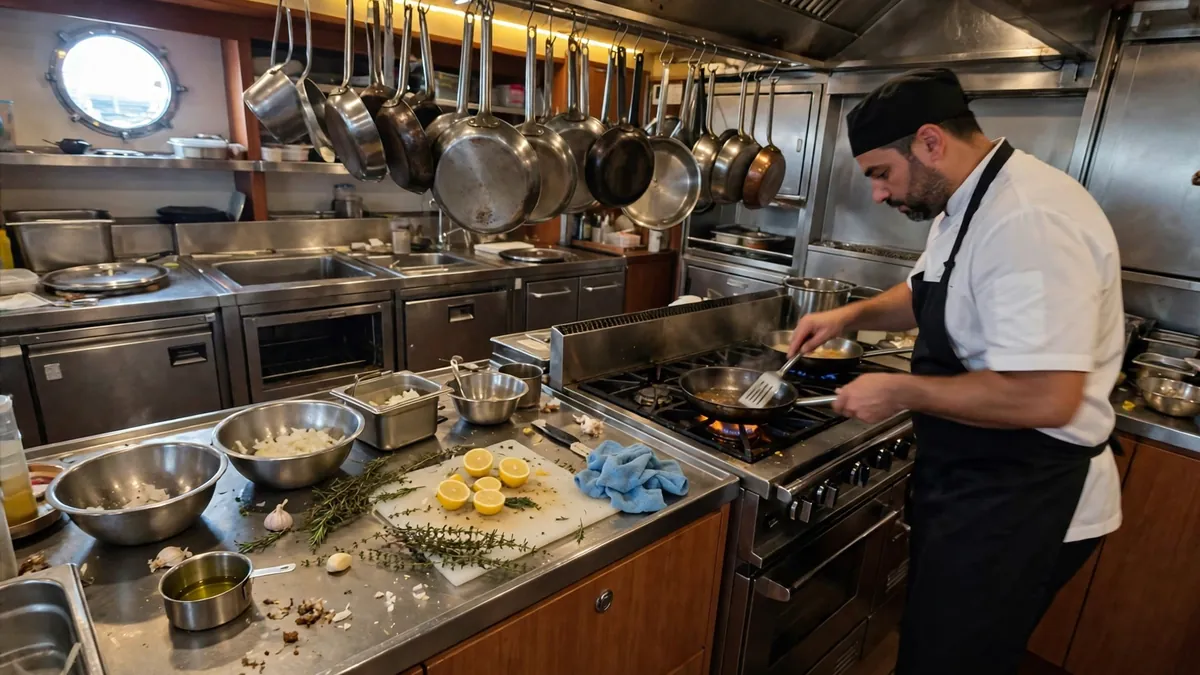
Deep inside a luxury ship, below the polished decks and the dining room with its white tablecloths, there is a room that never sleeps. Stainless steel stretches in every direction, pots clatter, ovens glow, and a team in white moves between stoves and cold stores with the rhythm of a dance rehearsed a thousand times. Dinner for hundreds of guests is cooked here, plated here, and sent up in lifts that arrive still hot.
A luxury ship galley is the professional kitchen of a large ship, built to prepare thousands of meals a day in a space that rolls with the sea. It is made for cruise ships and superyachts whose guests expect restaurant food at every sitting, with no room for a missed service. Building one means planning a layout where nothing is wasted, fitting steel counters and cooking suites that survive heat and salt, adding cold rooms and dishwashers sized for a hotel, and wiring it so the whole room can be cleaned in minutes. This is how it is made, from an empty steel shell to the first dinner service at sea.
How It’s Made
Step 1: Planning the layout and the steel shell
The galley starts on paper, long before any steel is cut. Designers map the journey of a single plate, from cold store to stove to pass, and lay out the room so cooks never cross each other’s path. The shell itself is built from marine steel, insulated and lined with smooth stainless panels that can be hosed down and wiped clean. Floors are laid with non-slip tiles that drain to the centre, and the ceiling is fitted with panels that resist steam and grease. Every corner is rounded, because a sharp corner in a galley collects dirt and trips a cook in a hurry.
Step 2: Fitting the counters and the cooking suites
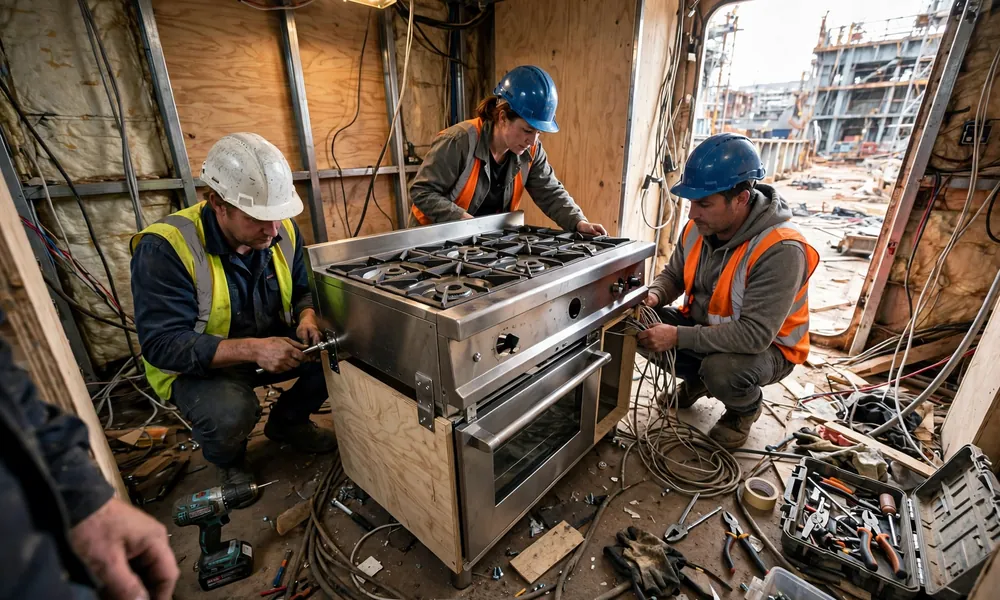
The heart of the room is the cooking suite, a long run of ranges, grills, fryers and ovens built as one continuous block of steel. Workers bolt the suite to the deck on shock mounts, so it stays steady when the ship rolls, and connect it to gas, electricity and steam lines that run in sealed ducts below the floor. Counters are cut from thick stainless steel, welded so there are no seams for food to hide in, and fitted with rails that hold pans and boards in place at sea. Chefs test each burner and oven with a thermometer, checking that the heat is even from one end of the suite to the other.
Step 3: Building the cold rooms and the stores
Behind the cooking line sit the cold rooms, walk-in chambers lined with insulated panels and cooled by powerful compressors. Workers fit heavy doors with rubber seals and heated frames, so frost cannot jam them shut, and shelves of stainless steel that can be pulled out and washed. One room holds fresh food at a few degrees above freezing, another holds frozen stores, and a third is kept cool for dairy and desserts. Temperature sensors are wired to an alarm on the bridge, so a failing compressor is noticed before any food is lost. The way a ship keeps its food cold at sea is close to how a cruise ship galley works day to day, with the same cold chain from store to plate.
Step 4: Adding ventilation, fire safety and extraction
A galley that cooks for hundreds of people makes a great deal of heat and steam, so the room is fitted with a huge extraction hood that runs the length of the cooking suite. Fans pull hot air and grease out through ducts to the funnel, while fresh air is pushed in from vents that keep the room bearable to work in. Workers fit fire shutters that drop automatically if a flame is detected, and a gas suppression system that can flood the cooking area in seconds. Inspectors test the fans, the shutters and the alarms before the room is allowed to cook a single meal, because a fire in a galley at sea is one of the most feared events on a ship.
Step 5: Installing dishwashers, lifts and the pass
Once the cooking is done, the plates must be cleared, washed and sent back, so the galley is fitted with industrial dishwashers that can clean hundreds of plates an hour. Workers install conveyor washers with jets of hot water, drying tunnels and racks that stack the clean plates for the next service. The pass is fitted next, a heated counter with lamps where finished dishes wait for waiters, and beside it the service lifts that carry food up to the dining room. Each lift is a small sealed box on rails, with shelves sized for trays and a lock that holds it steady while the ship moves.
Step 6: Testing the first service and the final check
The last stage is a full trial dinner, cooked for the crew as if they were paying guests. Chefs work through the menu while engineers watch the ovens, the cold rooms and the dishwashers, checking temperatures and timing at every step. The galley must hold its pace through starter, main course and dessert, with no dish late and no cold room warming up under the load. Any fault is fixed on the spot, from a sticky lift door to a burner that runs cool, and the room is then deep cleaned and inspected by the ship’s officers. The finished galley is a machine for feeding a ship, and the way its kitchens are judged is the same standard that the best electric yacht kitchens are ranked by, with space, heat and timing all counting. The final sign-off comes when the first real dinner is served at sea, and the galley keeps its rhythm through the night, which is the same teamwork that how a cruise ship kitchen works shows in daily service.
| Specification | Typical machine |
|---|---|
| Shell | Insulated marine steel shell lined with smooth stainless panels |
| Cooking suite | Continuous steel run of ranges, grills, fryers and ovens on shock mounts |
| Counters | Seamless welded stainless steel with rails for pans and boards |
| Cold rooms | Walk-in chilled and frozen rooms with sealed doors and alarms |
| Ventilation | Full-length extraction hood with fans, fire shutters and gas suppression |
| Dishwashing | Conveyor washers cleaning hundreds of plates an hour |
| Service lifts | Sealed food lifts carrying trays up to the dining room |
| Capacity | Thousands of meals a day across several sittings |

A luxury ship galley costs an estimate of $1,500,000 to $4,000,000 to fit out, depending on the size of the ship, the number of guests it serves and whether it includes separate pastry, bakery and cold-kitchen sections. The price covers the steel shell, cooking suites, cold rooms, ventilation and dishwashers, plus the lifts and the pass.
Here is a rare fact worth knowing. On the largest cruise ships, the galley team can serve more than ten thousand meals in a single day, and the food is planned months ahead, with menus set before the ship even leaves port. Every ingredient is counted, weighed and loaded in a strict order, so the cold rooms empty in the same sequence the menus demand. A single missed delivery in port can change the menu for a whole week at sea, which is why the galley is planned like a military operation, with a storekeeper who knows where every tin and every cut of meat sits.


