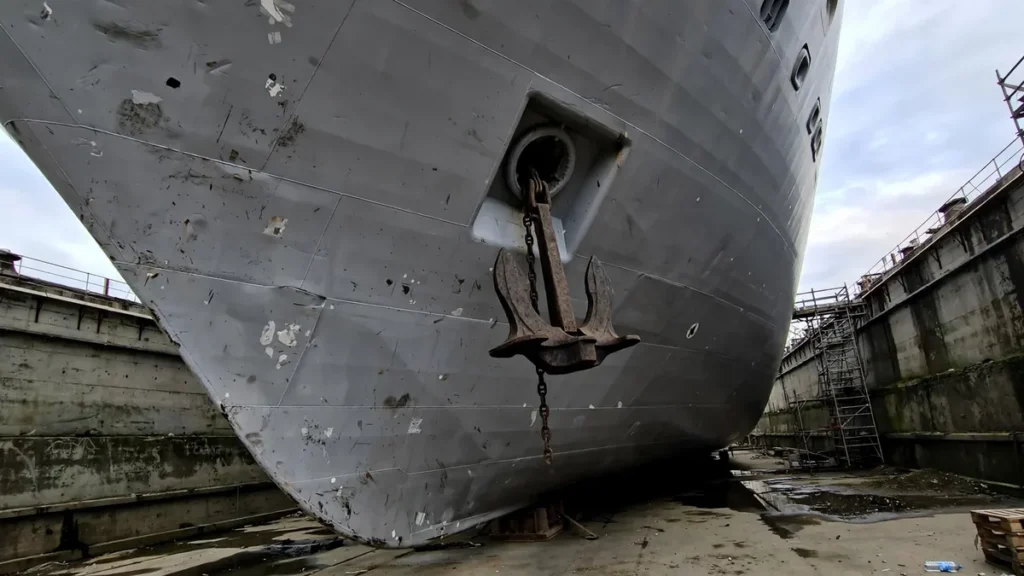
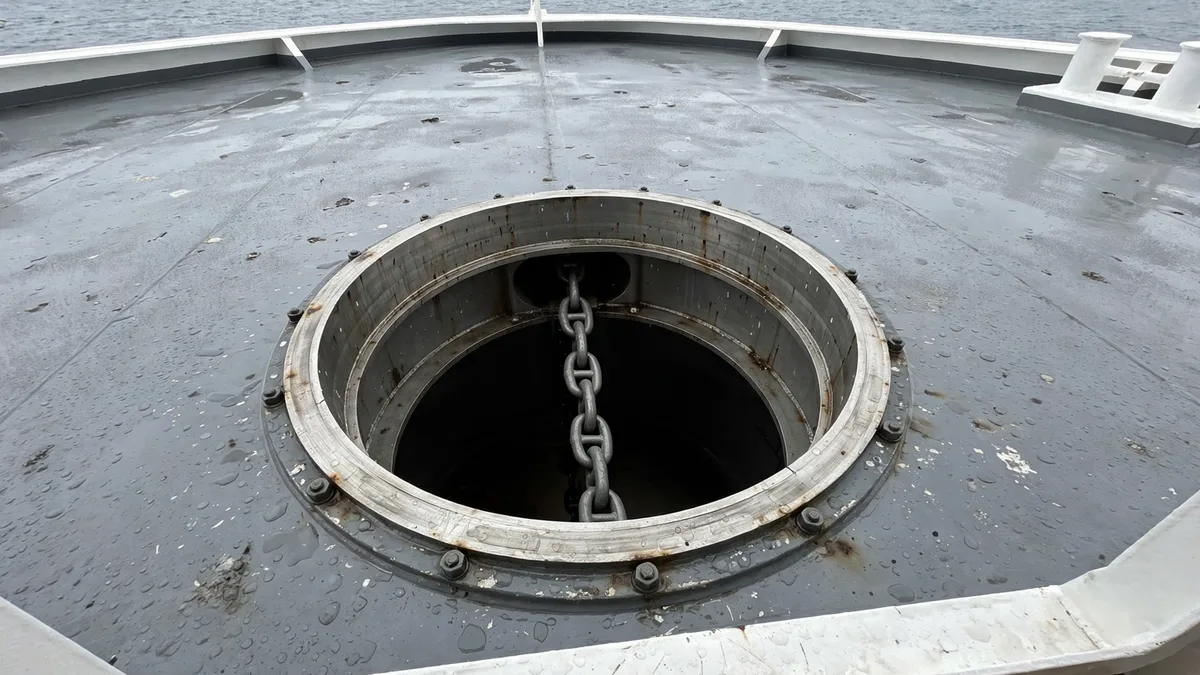
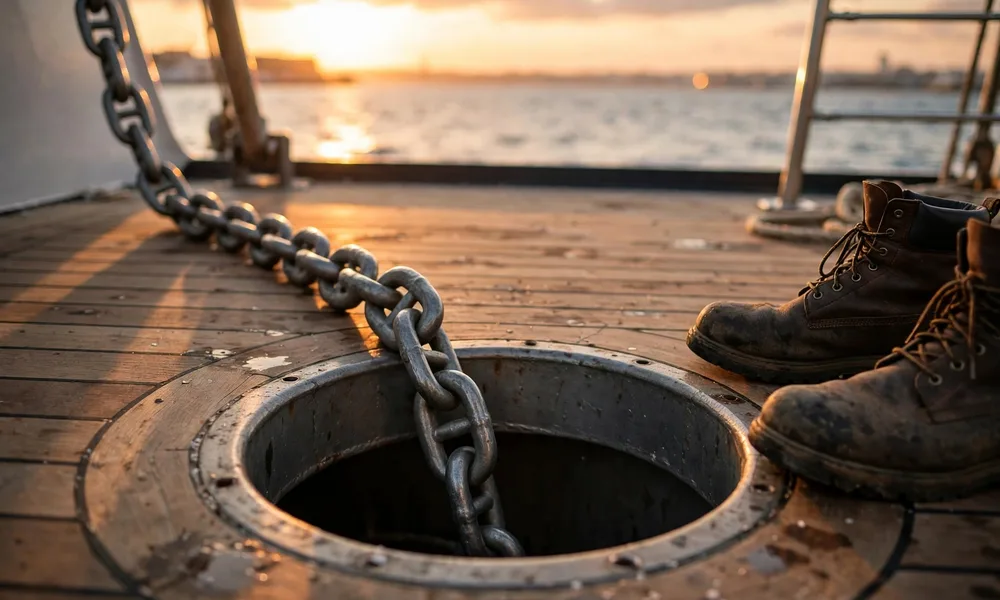
Stand on the foredeck of a luxury ship and look down at the anchor, and you will notice the chain does not simply drape over the side. It rises out of a round opening in the deck, a steel-lined hole that runs through the bow like a chimney. That opening is the hawsepipe, and it is one of the hardest-working holes on the ship.
Every time the anchor is dropped or weighed, tons of steel chain thunder through that pipe, dragging seawater, sand and grit with it. The pipe must guide the chain without letting it jam, protect the hull, and drain the water away before it floods the chain locker below. Making one means shaping heavy steel plate into a smooth, flared tube, then armouring it against a lifetime of scraping.
How It Is Made
Step 1: The pipe is shaped from heavy plate
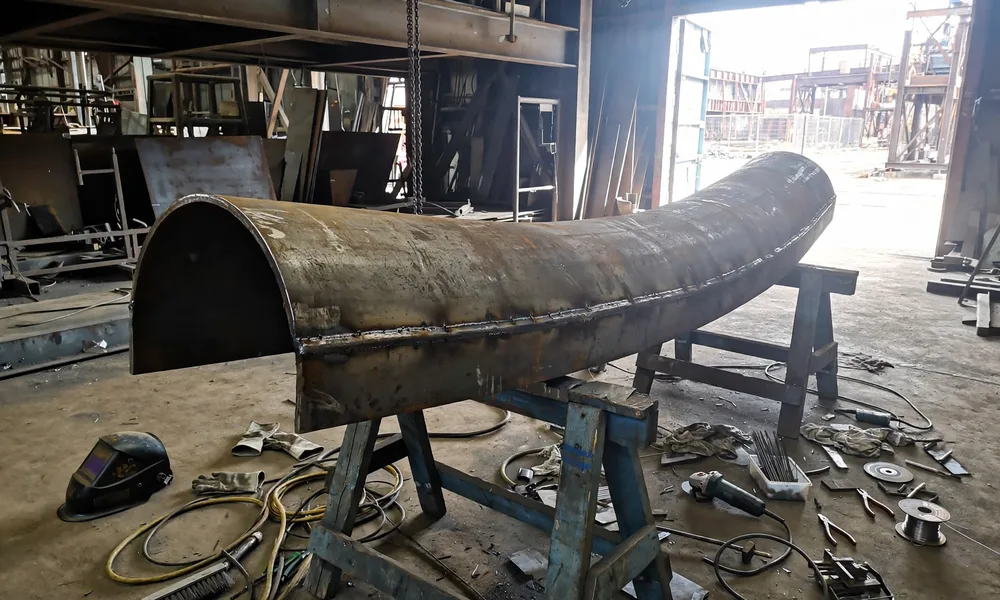
A hawsepipe starts as flat plates of marine steel, usually thicker than the hull plating around it, because the chain will grind against it for decades. The plates are cut to shape with a plasma torch, then rolled in a bending machine until they form a tube. The tube is not straight: it curves gently from the deck opening down to the chain locker, following the line the chain naturally takes, so the chain never makes a sharp turn.
The rolled sections are welded together into one length, and every weld is ground smooth on the inside. A rough weld bead would catch a link and start a jam, so the welders check the bore by hand, running a gloved palm along the inside of the tube. The pipe is then measured against a template of the chain it will carry, because a pipe built for a smaller chain would choke, and one too large would let the chain rattle and slam.
Step 2: The deck opening is flared like a trumpet
The top of the pipe, where it meets the deck, is flared outward into a smooth trumpet shape. This flare is formed by heating the rim and working it outward with rollers, a slow job that takes a skilled metalworker most of a day. The flare matters because the chain arrives from the windlass at an angle, and a sharp edge would cut into the links.
The flared rim is welded into a steel ring set flush with the deck, so there is no lip for a crew member to trip over and no edge for a mooring line to catch on. The ring is bolted as well as welded, because the deck flexes in heavy weather and the joint must survive that movement. The same care for a clean, strong opening shows in the pocket the anchor itself sleeps in, and the way a luxury ship anchor pocket is made follows the same idea of shaping steel around the anchor’s exact outline.
Step 3: The inside is lined against wear
Inside the pipe, the chain does its damage. Each link drags across the steel as it runs out and again as it is hauled back, and over thousands of anchorings that friction would wear a plain pipe thin. So the lower half, where the chain bears hardest, is lined with replaceable wear plates or a sleeve of harder steel.
The lining is fitted in sections, each bolted through the pipe wall so it can be swapped during a refit without cutting the pipe out. The bolts are countersunk so their heads sit flush and cannot snag a link. Before the lining goes in, the inside of the pipe is coated with a thick epoxy, because seawater will find any bare steel, and the coating buys the pipe years before the first rust appears.
Step 4: The pipe is fitted through the bow
Fitting the pipe is one of the most delicate jobs in the yard, because it must pass through two decks and the hull structure without weakening any of them. The shipwrights cut the openings, then lower the pipe into place with a crane, guiding it by hand through the deck hole and down into the chain locker. The pipe is held in position with temporary braces while the fitters check its angle with a plumb line.
Once the angle is right, the pipe is welded to the deck ring above and the locker floor below, and the joints are sealed so seawater cannot leak between decks. The welds are tested with dye and ultrasound, the same as the chain that will run through them, and the standard the chain is built to is explained in how a luxury ship anchor chain is made, where every link is forged, welded and proof tested before it goes aboard.
Step 5: The drain and the wash are built in
A hawsepipe is also a drain. Every anchoring brings seawater and mud aboard, and if that water pooled in the chain locker it would rot the chain and flood the compartment. So the bottom of the pipe opens over a sump, a shallow pit in the locker floor with a drain to the bilge, and the locker itself is fitted with a wash-down hose.
After the anchor is weighed, the crew wash the chain as it comes up, hosing the mud off each link before it enters the pipe. The wash water runs down the pipe and out through the sump, carrying the grit with it. The pipe’s lower end is cut at an angle so the chain slides out of it smoothly and lands in a neat pile, rather than dropping straight down and tangling into a knot.
Step 6: The pipe is painted and proven
The finished pipe gets the same protection as the rest of the ship. The outside is primed and painted, the inside is coated with a hard-wearing epoxy, and the deck ring is polished where it shows. The paint is not decoration: it is the pipe’s first defence against salt water, applied in several coats, each left to cure before the next.
Proving the pipe is simple and dramatic. The crew drop the anchor, let the chain run out through the pipe at full speed, and haul it all back again, while the engineers watch the pipe for vibration and listen for the rattle of a link catching. If the chain runs clean, the pipe is signed off. The numbers that decide whether that pipe is the right size for the chain it carries are laid out in the luxury ship hawsepipe specs explained, where diameter, wall thickness and flare are read like a recipe.
Why the Making Matters
A hawsepipe looks like nothing more than a hole in the deck, but it is a piece of engineering that has to survive the worst the sea can throw at it. It guides tons of moving steel, drains away the ocean that comes with it, and keeps the hull sound around a large opening in the bow’s most stressed part. A badly made pipe would jam the chain, flood the locker, or crack the deck.
That is why the yard spends days rolling plate, flaring rims, lining bores and testing welds for something most passengers never notice. The hawsepipe does its work out of sight, below the polished deck and behind the anchor, and it is expected to do it for the life of the ship. When the anchor drops cleanly and comes home without a snag, that quiet piece of pipe has done its job.