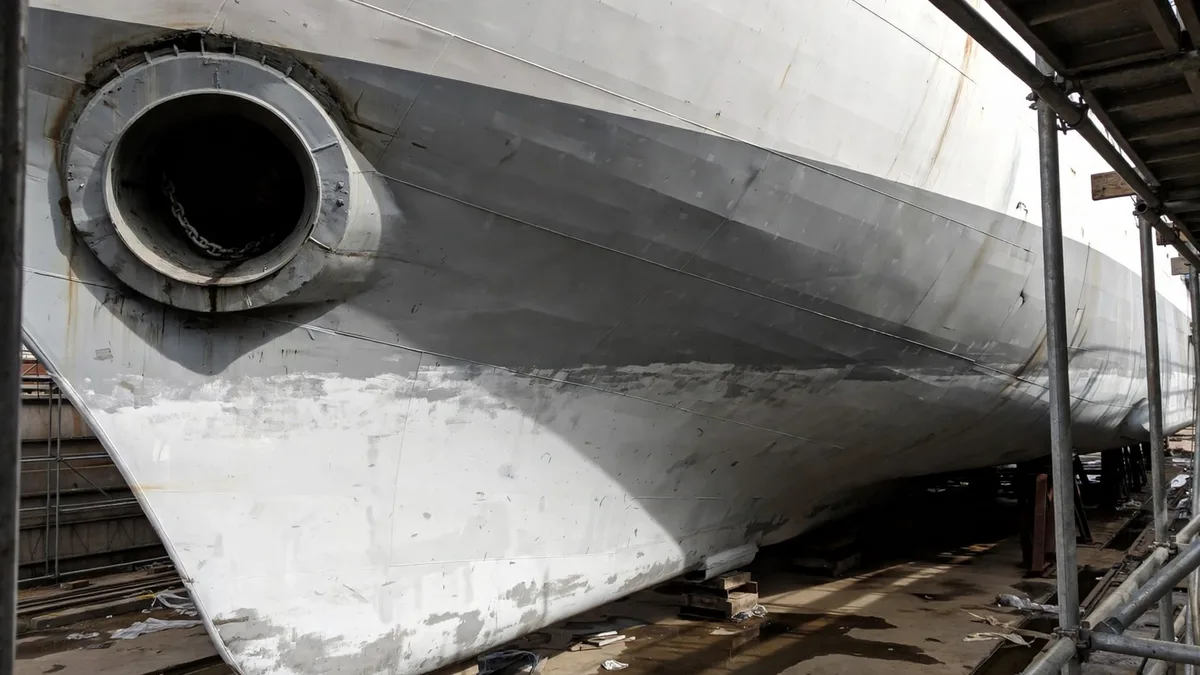
Stand on the foredeck of a luxury ship while the anchor is coming up and you will hear the hawsepipe before you see it. The chain rattles in from the sea, link by link, and vanishes into a round steel hole in the deck as if the ship were swallowing it whole. That hole is the hawsepipe, and it is one of the hardest-working pieces of steel on the whole vessel. It guides tonnes of moving chain, it keeps the sea out of the chain locker, and it takes a beating every single time the ship anchors. This guide walks through the hawsepipe specification figures one by one, in plain words, and explains what each of them decides about how a luxury ship anchors, rides at anchor, and stays dry.
What the Hawsepipe Actually Does
A hawsepipe is a steel tube that runs from an opening in the deck or the bow plating down into the chain locker, the compartment where the anchor chain is stored. On most luxury ships there are two, one for each anchor, set symmetrically on either side of the bow. The chain passes through the pipe on its way in and out, and the pipe keeps it from sawing across the deck, the bulwark, or the hull plating. Without it, a moving chain would gouge through paint, steel, and anything else in its path within a single season. The pipe also shapes the path the chain takes. A chain that enters the locker in a neat, controlled fall stacks itself in a tidy pile that pays out smoothly next time. A chain that drops at the wrong angle tangles, jams, and can stop an anchor from running out when the ship needs it most.
Pipe Diameter: Big Enough to Breathe
The first figure on the sheet is the pipe diameter, and it is always larger than the chain it carries. A typical luxury ship hawsepipe has an internal diameter of 300 to 450 millimetres, while the chain links passing through it are only about 70 to 110 millimetres across. The gap looks generous, and it is deliberate. Chain does not travel in a straight line. It swings, it twists, and mud and marine growth cling to it, so a tight pipe would jam at the worst moment. The extra space also lets seawater drain back out instead of pooling inside the tube and rusting it from within. Shipyards settle the diameter by testing the exact chain size, then adding clearance for fouling and movement. The number on the sheet is the result of that balance, and a diameter at the top of the range usually means a heavier chain or a ship that anchors in muddy, debris-filled water.
The Lining That Takes the Punishment
Inside the pipe sits a replaceable lining, usually a cast steel or hardened steel sleeve, and its thickness is the next figure worth reading. Linings run from about 20 to 40 millimetres thick, and they exist because the chain wears through anything softer. Every link that passes drags steel across steel, and a single anchoring in a deep roadstead can run hundreds of metres of chain through the pipe twice. Without a lining, the pipe itself would wear thin in a few years, and replacing a welded-in pipe means cutting open the bow. A thick lining lasts longer, but it narrows the bore, so the designer has to balance wear life against clearance. When the lining finally wears through, the crew unbolts it and fits a new one, which is exactly why it is designed to be replaceable.

Angle and Drop: Why the Chain Must Fall Straight
The pipe does not run vertically. It leans, usually at an angle of 30 to 45 degrees from vertical, so the chain slides down into the locker instead of dropping straight onto the pile below. That angle decides how the chain stacks. Too shallow and the chain slides along the pipe wall, wearing a groove into the lining and slowing the run-out. The drop height matters too. The pipe ends above the locker floor, and the distance it falls shapes the pile. A well-set pipe drops the chain near the centre of the locker, where it spreads evenly as the pile grows. It is a quiet number, but it is the difference between an anchor that runs out cleanly in an emergency and one that jams halfway.
Sealing the Sea Out
A hawsepipe is also a hole in the ship, and holes let water in. The top of the pipe carries a cover or a sealing arrangement, often a hinged steel lid or a rubber-sealed cap that the crew closes in heavy weather or at speed. Some ships fit a spray shield around the deck opening, a raised ring that keeps green water from pouring straight down the pipe. The seal matters because the chain locker sits low in the bow, and water that gets in there sloshes against the chain, speeds up corrosion, and adds weight exactly where the ship least wants it. The specification sheet often lists the cover type and the pipe’s position relative to the waterline, because a pipe set too low or too far forward takes more spray.
Hawsepipe Specs at a Glance
Read the table as a whole rather than as five separate numbers. None of the figures means much on its own. Together they describe how seriously the ship takes anchoring, and how long the system will last before the yard has to open the bow and renew it.
| Specification | Typical range | What it decides |
|---|---|---|
| Internal diameter | 300 to 450 mm | Clearance for chain, mud and swing |
| Lining thickness | 20 to 40 mm | Wear life before replacement |
| Pipe angle | 30 to 45 degrees | How the chain stacks in the locker |
| Chain size served | 70 to 110 mm links | Anchor weight the ship can carry |
| Cover type | Hinged lid or seal | Keeping seawater out of the locker |
What Goes Wrong When the Numbers Are Off
The failure stories all sound the same. A pipe that is too tight for its chain jams on a fouled link, and the anchor hangs halfway down while the ship drifts. A lining worn paper-thin lets the chain cut into the pipe wall, and the repair becomes a steelwork job in dry dock rather than a simple sleeve swap. A pipe set at the wrong angle builds a chain pile that collapses and tangles, and the crew spends hours with hooks and bars sorting it out by hand. A ship that anchors well starts with a pipe that was specified well, and the numbers on the sheet are the record of that care.

Reading the Sheet Like an Engineer
Start with the chain size, because everything else follows it. Then check the diameter against it and ask whether the clearance looks generous or tight. Look at the lining thickness and the cover type next, since those two decide the maintenance bill. Finally, look at the angle and picture the chain falling into the locker. If the numbers hang together, the ship will anchor smoothly for years. To see how the rest of the anchoring system works, read our guide to luxury yacht anchor specs, our look at how a luxury ship anchor winch works, and the story of how a luxury ship bow is made.