The roast went into the oven at six, and nobody checked on it. Not once. The oven had weighed the joint when it went in, chosen its own temperature, and promised to send a message when the middle reached exactly the right heat. At half past seven the phone buzzed, the oven switched itself to keep warm, and dinner was ready when the family was, not before.
That is the quiet trick of a smart oven: it does not just get hot, it pays attention. This is how a luxury smart oven works, from the heating elements that warm the cavity to the probe that reads the middle of the roast.
How It Works
Step 1: The elements heat the cavity
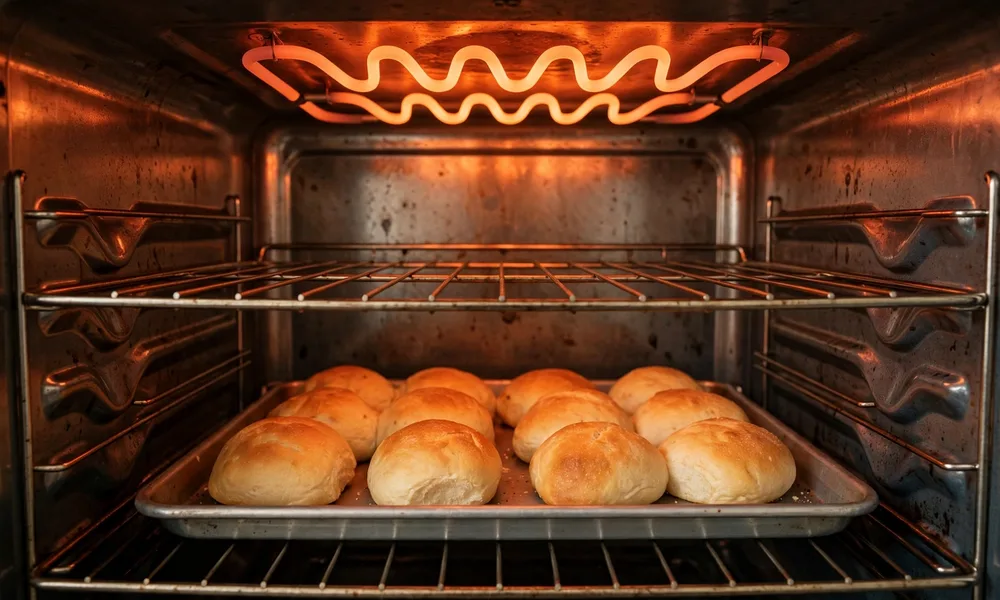
Heat in an oven comes from elements, loops of metal that glow orange when current runs through them. A smart oven has more than one: a top element for grilling, a bottom element for baking, and a ring element around the fan at the back for even cooking. Each element can be switched on its own, so the oven can grill a fish, bake a loaf, or do both in turn.
The elements are set into the walls of a steel cavity, lined with a smooth enamel that wipes clean and reflects the heat back towards the food.
Step 2: The fan spreads the heat evenly
Hot air rises, and in a plain oven the top is always hotter than the bottom, which is why a tray of biscuits browns on one side first. A smart oven fixes this with a fan at the back of the cavity, behind a metal cover, that pulls the hot air in and pushes it out again in a steady stream. The moving air carries the heat to every corner, so the top shelf and the bottom shelf cook at the same speed.
The oven watches the fan too, because a fan that stops means the heat will pool in one place and the food will burn on one side.
Step 3: The sensors read the temperature
An oven cannot cook well if it does not know how hot it is. A sensor in the cavity wall reads the air temperature many times a second and tells the control board when to switch an element on and off, holding the heat within a few degrees of what the recipe asked for.
The cleverer sensor is the probe, a thin steel needle pushed into the middle of the roast or the loaf. It reads the temperature of the food itself, not the air around it, and the oven cooks until the middle is right, however big the joint is.
Step 4: The control board runs the cooking
Behind the touch screen sits the control board, the brain of the oven. It holds the programmes, from a slow bake to a fast grill, and it works out the timing: when to preheat, when to switch from top heat to fan heat, and when to drop to keep warm. It also holds the safety rules, cutting the power if the door is left open too long or the cavity grows hotter than it should.
The board connects to the home network, so the oven can be started from another room and can send a message when the food is ready.
Step 5: The steam and self-cleaning do their work
Many luxury ovens carry a small water tank, and when a programme asks for steam, a little water is dripped onto a hot plate and turns to vapour inside the cavity. The tank is filled by hand and emptied after each use, so it never sits and smells.
When the cooking is done, the same heat that cooked the food cleans the oven. A self-cleaning cycle takes the cavity to a very high temperature and turns spills and splashes to a fine ash that wipes away with a cloth.
Step 6: The door keeps the heat in and the cook safe
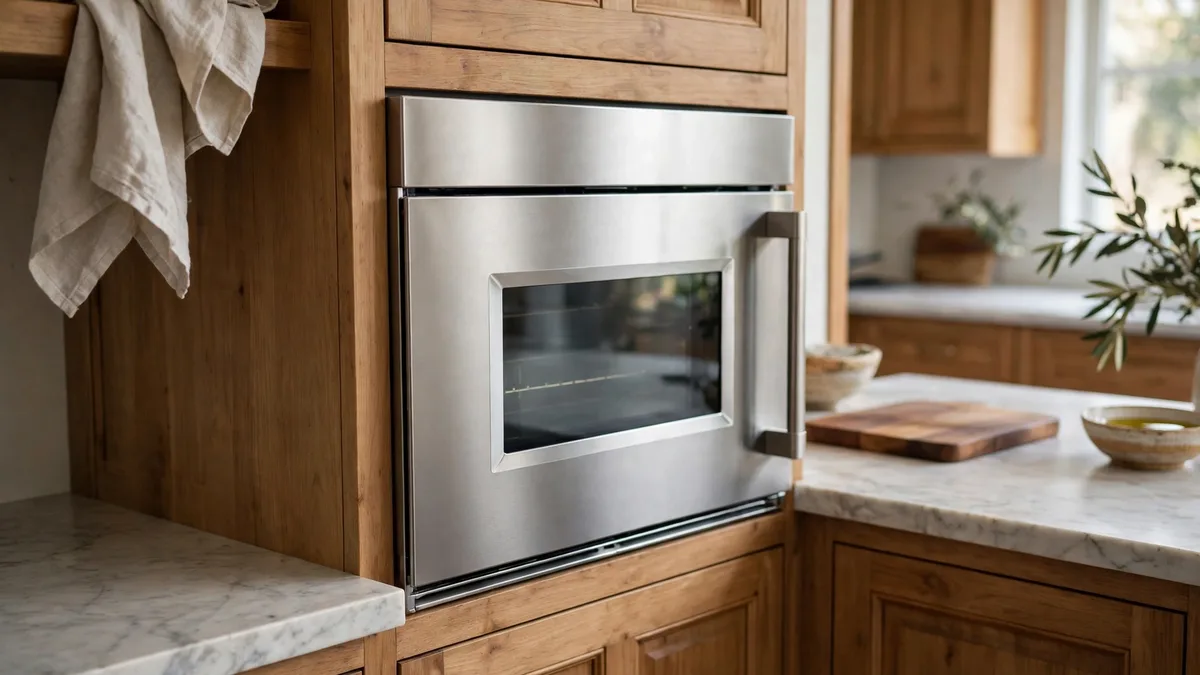
The door is the last line of defence. It is made of several layers of glass with air gaps between them, so the inside can be hotter than a furnace while the outside stays cool enough to touch. The seal around the door is a woven cord that springs back into shape each time the door closes, keeping the warm air inside and the draughts out.
A sensor in the hinge watches the door, and the oven changes what it does when the door opens: the fan stops, the elements ease back, and the light comes on so the cook can see inside. Close the door and the oven carries on where it left off, because a good oven should never punish a cook for checking the roast.
| Spec | Detail |
|---|---|
| Elements | Top, bottom and fan-ring elements switched on their own, set into an enamelled steel cavity lined with mineral wool |
| Fan | Heat-proof fan at the back of the cavity that moves hot air to every corner, changing speed with the programme |
| Sensors | Cavity sensor holding the heat within a few degrees, plus a probe that reads the middle of the food itself |
| Controls | Control board running the programmes and safety rules, connected to the home network and updated over the air |
| Steam | Small water tank dripping onto a hot plate for steam, and a self-cleaning cycle that turns spills to ash |
| Door | Several layers of glass with air gaps, a woven seal, and a hinge sensor that pauses the fan and lights the cavity |
The hardest part of a smart oven is holding the temperature steady. The elements switch on and off all through a bake, and if the timing is wrong the oven swings hot and cold, so the makers test each oven with a tray of rolls and check that every roll browns the same before it is signed off.
What One Costs
A luxury smart oven typically costs an estimated $1,800 to $5,000, set mostly by the size of the cavity, the quality of the sensors and the smart features. A single oven with a probe and an app sits near the bottom, while a double oven with steam, self-cleaning and full app control costs far more. The steel box it is built from has its own story, and how a smart oven is made tells how that box comes together, while how a luxury smart fridge is made covers the cold box beside it.
A Rare Fact
The first ovens were holes in the ground. Bread was baked on hot stones and in clay pots buried in embers, and the baker judged the heat by holding a hand near the opening and counting. The first oven with a door was a wonder, because it let the baker see the bread without letting the heat out, and the same idea still sits at the heart of every oven today.
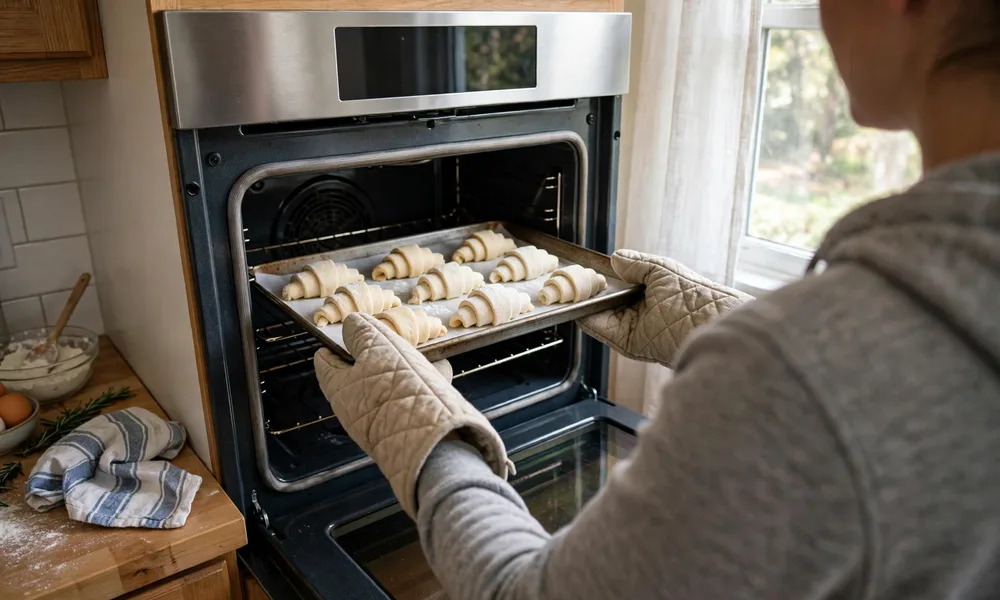
A luxury smart oven is a set of elements, a fan that shares the heat, sensors that read the air and the food, a board that runs the cooking, and a door that keeps the heat in and the cook safe. It is built to watch the roast so the cook does not have to. The living room listens to a smaller smart machine, and how a luxury smart speaker is made shows what sits inside that one.