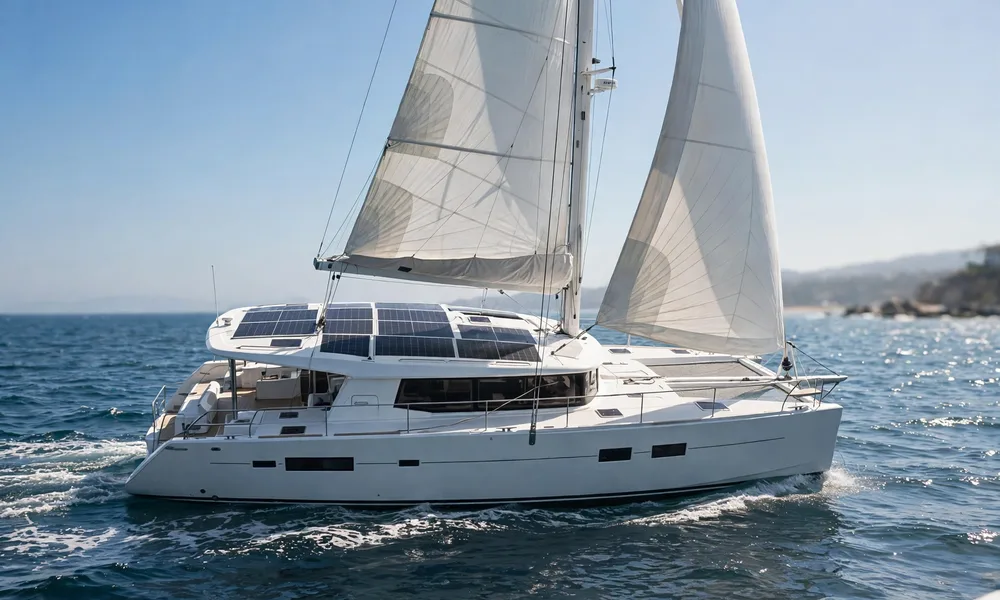
There is no smoke, no roar and no smell of diesel when a solar yacht leaves the harbour. The deck is quiet, the sun is high, and the only sound is water sliding past the hull. Above the cabin, dark glass panels drink in the light, turning it into electricity that spins the propeller and powers everything on board. A luxury solar yacht is a boat that makes its own fuel as it sails, and it works because of a careful balance between sun, batteries and hull.
Step 1: Solar panels turn sunlight into electricity
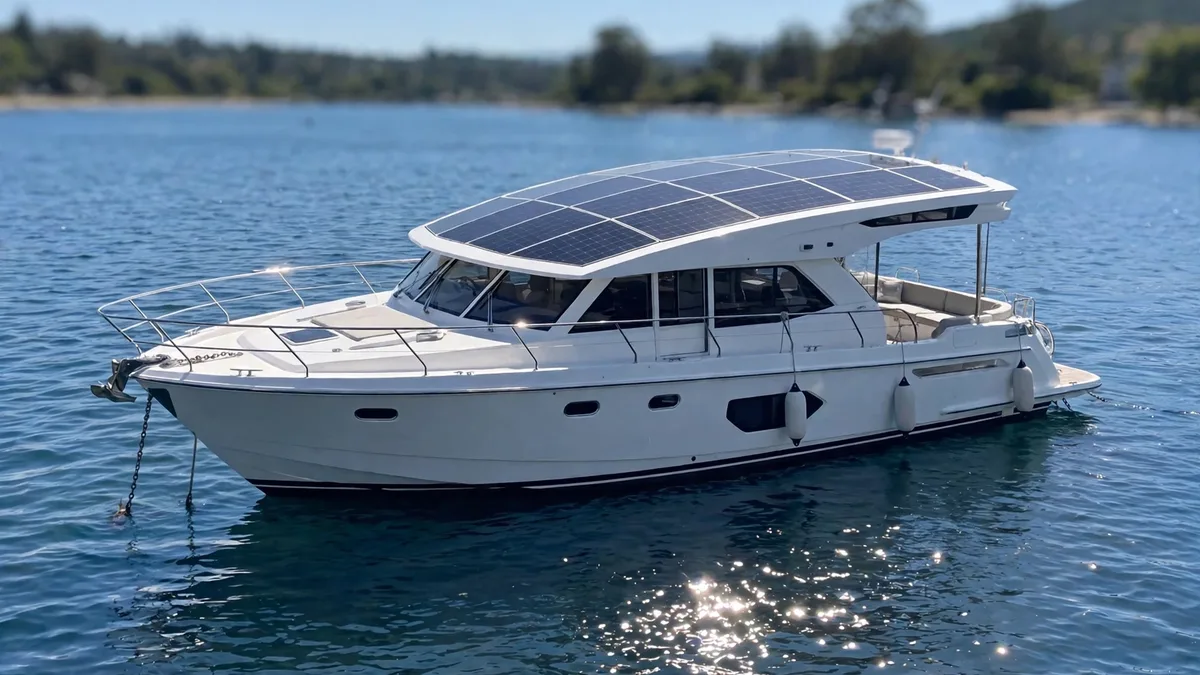
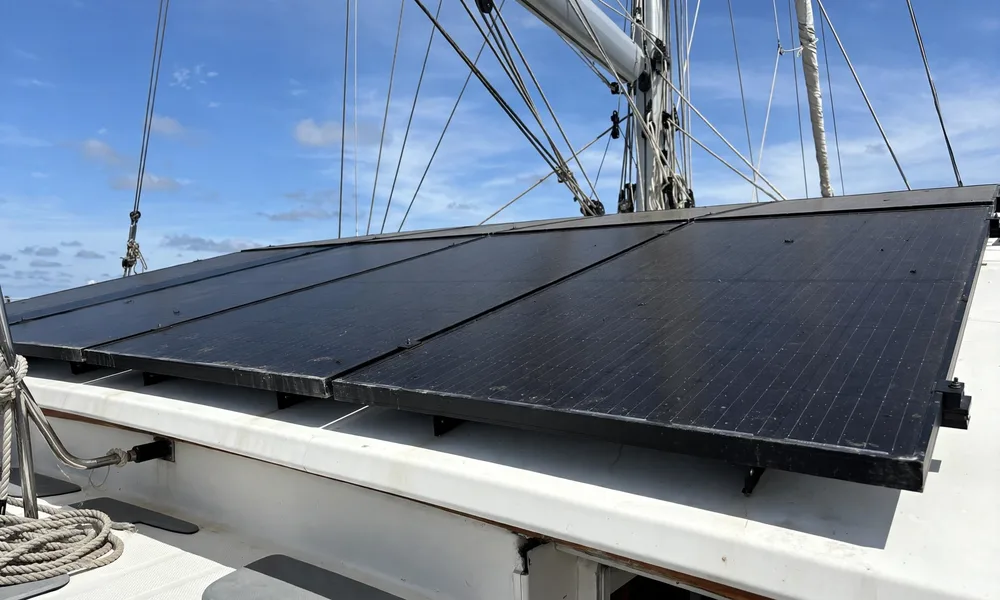
It starts on the roof. Solar panels, made from silicon cells sealed under toughened glass, cover the cabin top, the hardtop and sometimes the deck itself, catching sunlight from dawn to dusk. Each cell produces direct current when light hits it, and the cells are wired together into strings that feed the yacht’s electrical system. A large solar yacht can carry several kilowatts of panels, enough to run the boat’s systems and charge its batteries on a sunny day.
The panels are built to survive at sea: salt spray, footsteps and the occasional dropped winch handle. They are mounted on frames that let air flow underneath, because a hot panel makes less power than a cool one, and they are wired so that shade on one panel does not shut down the whole array. The idea is not new on land, and a solar car uses the same cells in a far smaller space, as the guide to how a luxury solar car is made shows, but on a yacht there is room to do it properly, with space for a serious array.
Step 2: Controllers and inverters manage the power
Raw power from the panels is not yet usable, so it passes through a charge controller, a box of electronics that watches the panels and the batteries and decides how much power goes where. On a bright day it pushes power into the batteries; on a cloudy day it squeezes every watt it can from the light available, tracking the panels’ best operating point hundreds of times a second.
Step 3: Batteries store the sun for the night
The sun sets, but the yacht keeps going, because the power is stored in a bank of lithium batteries below deck. The bank is large, often tens of kilowatt-hours, and it is bolted low in the hull where its weight helps keep the yacht stable. A battery management system watches every cell, balancing the charge, controlling the temperature and shutting the bank down if anything goes wrong.
The batteries are sized so the yacht can run its lights, fridge, navigation and fans through the night, and still have power left to motor in the morning. On a good day, the panels refill the bank by mid-afternoon; on a cloudy week, the yacht can plug into shore power or run a small generator as a backup. Electric boats face the same storage problem in a smaller hull, and the guide to luxury electric boat specs, explained lays out how battery size, weight and range are balanced against each other.
Step 4: Electric motors drive the yacht silently
Under the floor, where a diesel engine would normally sit, is an electric motor, or two of them on a catamaran. The motor is small, quiet and strong, turning the propeller through a shaft or a saildrive leg, and it answers the throttle instantly, with full torque from a standstill. There is no gearbox to shift, no exhaust, no vibration through the hull, and the only sound is the water.
Step 5: The hull and rigging are designed for efficiency
A solar yacht must be efficient, because every watt matters. The hull is long and narrow, with a fine bow that slips through the water instead of pushing it aside, and the weight is kept low and central, with the batteries doing double duty as ballast. On a catamaran, the two hulls give a wide, stable platform with room for panels across the whole roof, and the shallow draft lets the yacht anchor close to shore.
The rigging is kept simple and light, with sails that can be handled by a small crew or a single person, because a solar yacht is meant to be sailed, not motored everywhere. The sails do the long passages; the motor does the harbour work and the calm days. Two hulls and a wide deck make the whole balance work, and the guide to how a luxury catamaran works explains how that platform stays level and fast while carrying a full load.
Step 6: Living aboard on sunlight
Life aboard a solar yacht is quieter than on a diesel boat. The galley runs on induction hobs and a large fridge, both fed from the batteries, and the water is made by a watermaker that runs when the sun is strong, so the tanks are full by evening. Air conditioning is used sparingly, with fans and shade doing most of the work, and the crew learns to run the washing machine and charge the tender’s batteries at midday, when the panels are producing most.
Specifications at a glance
| Feature | Typical luxury figure |
|---|---|
| Length | About 13 to 24 metres |
| Solar array | About 3 to 10 kW of panels |
| Battery bank | About 20 to 60 kWh, lithium |
| Motors | One or two electric, about 10 to 30 kW each |
| Motoring range | About 30 to 100 nautical miles on battery |
| Top speed under power | About 7 to 10 knots |
| Guests | About 4 to 10, plus crew |
What it costs
A luxury solar yacht typically costs between about $1 million and $8 million, and these are estimates, not fixed prices. The price rises with size, the size of the solar array and battery bank, and the finish of the interior, and many buyers add extra panels, a bigger bank and a watermaker that push it higher. Running costs are low compared with a diesel yacht: there is almost no fuel to buy, the motors need little servicing, and the panels last for decades, so the yacht pays back its premium slowly, silently, in sunshine.
A rare fact
A solar yacht can make fresh water from sunlight. The watermaker, a reverse-osmosis unit, pushes seawater through a membrane fine enough to block salt, and it runs on the same solar power as everything else, so a sunny day produces both electricity and drinking water. On a long passage, the crew can stay out for weeks without visiting a marina, living entirely on what the sun provides, which is the closest thing to self-sufficiency a yacht has ever offered.
From panels on the roof to a motor that spins backwards to charge the batteries, a luxury solar yacht works because every part was designed around a single idea: the sun is the fuel, and the yacht is built to catch as much of it as possible. The result is a boat that is silent, clean and independent, and that turns a sunny day into a free passage.