Listen closely to a great streamer and you will hear it before you see it: a voice that sounds warm, close and clear, with no hiss, no hum and no echo from the room. The microphone on the desk is doing most of that work, and in a luxury streaming microphone the difference is in the details you cannot see.
A luxury streaming microphone is built to catch a human voice exactly as it sounds, and to ignore almost everything else. That takes a carefully made capsule, a quiet circuit, a body that does not ring or buzz, and hours of listening tests. It is a small object with a big job, and every part of it is crafted to keep the voice at the centre of the sound.

How It’s Made
Step 1: Designing the sound first
Before any metal is cut, the engineers decide what the microphone should sound like. A streaming microphone needs a voice to feel present and friendly, with the low notes warm and the high notes clear but never harsh. The team listens to test voices through early prototypes, adjusts the shape of the capsule and the tuning of the circuit, and keeps going until a normal speaking voice sounds natural without any processing.
The pattern of what the microphone hears is decided at the same time. Most streaming microphones listen mainly from the front, so they pick up the speaker and reject the keyboard, the fan and the room behind.
Step 2: Making the capsule
The capsule is the heart of the microphone, the part that turns sound into an electrical signal. In a luxury condenser microphone it is a thin diaphragm, often gold-coated, stretched tightly over a backplate with tiny holes. The diaphragm moves with the air as a voice pushes against it, and that movement becomes the signal. Making one takes a clean room, steady hands and a lot of patience, because the diaphragm is thinner than a sheet of paper and tears easily.
Each capsule is tested before it goes any further. A test tone is played at it and the output is measured, so any capsule that sounds dull, noisy or uneven is rejected. The same respect for a small, precise part appears in other luxury devices, and the way a luxury mesh router is made shows how tiny components are built and checked before they are trusted.
Step 3: Building the quiet circuit
Behind the capsule sits a circuit that lifts the tiny signal up to a usable level without adding hiss. The parts are chosen for low noise, and the board is laid out so the sensitive audio path stays away from the power supply and the digital controls. Good soldering matters here, because a rough joint can crackle, and every board is inspected under a magnifier before it is fitted.
The circuit also carries the controls the streamer uses: a gain knob, a mute button and sometimes a headphone volume control. Each one is tested for a smooth feel and a silent action, because a click or a scratch in the middle of a live stream is exactly what the microphone is supposed to prevent.
Step 4: Machining the body and grille
The body of a luxury streaming microphone is usually machined from a solid piece of metal, then finished by hand. The metal gives the microphone its weight, which helps it sit still on a desk, and it shields the capsule from electrical interference.
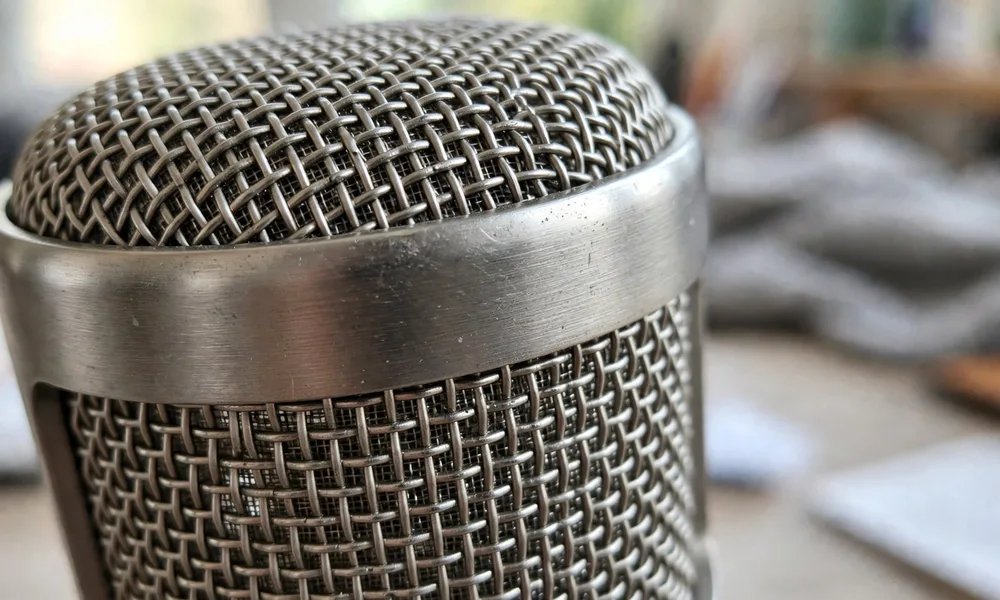
The grille is a fine mesh, woven or stamped, that protects the capsule while letting sound through. It is shaped to break up the rush of air from hard consonants, so words starting with p and b do not pop, and it is coated so it does not rust from breath over years of use. The finish is applied in thin layers, polished between coats, until the microphone looks as good as it sounds.
Step 5: Assembling and tuning by ear
Assembly brings the capsule, the circuit, the body and the grille together, and it is done slowly, by hand, in a quiet room. The capsule is mounted in its shock mount, the wires are dressed so they cannot vibrate, and the grille is fitted without touching the diaphragm. A single fingerprint inside the grille can change the sound, so workers handle the parts with gloves and keep the bench spotless.
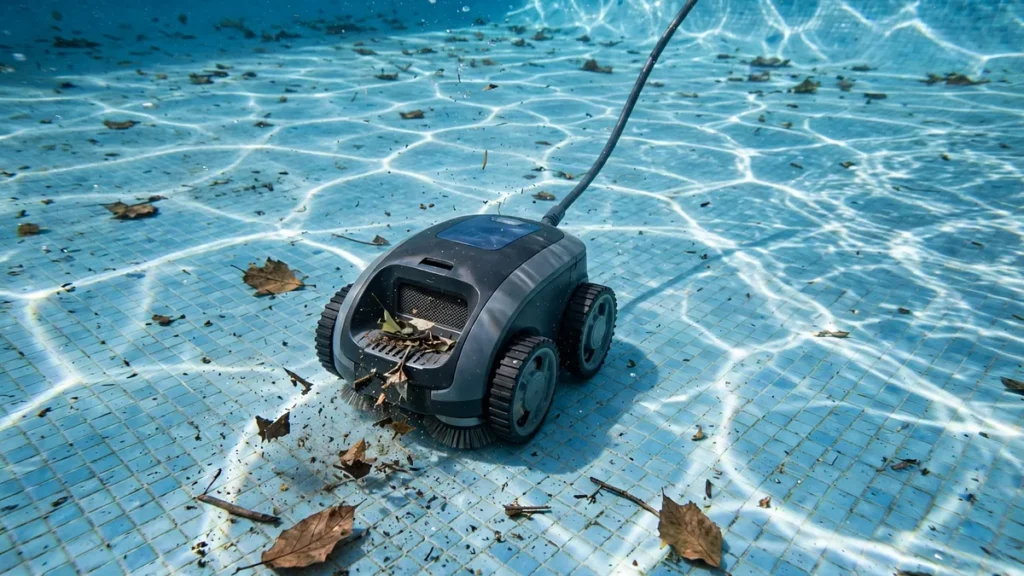
Once assembled, every microphone is listened to. A technician speaks into it, records a passage and compares it with a reference microphone, checking for warmth, clarity and noise. If a microphone sounds slightly bright or slightly dull, it is opened up and adjusted, not shipped and hoped for. The same habit of testing a clever device until it is boringly reliable appears in other luxury machines, and the way a luxury robot pool cleaner is made shows how a small machine is proved before it is trusted to work alone.
Step 6: Testing, packaging and the final listen
The finished microphone goes through a last round of tests: a frequency sweep to check the tone, a noise test in a silent room, a drop test of its mount, and a long soak test where it is left running for hours to make sure nothing drifts as it warms up.
Only then is the microphone packed, with its shock mount, its cable and its stand, in a box that protects the grille from dents. A final listening note is kept with each batch, so if a streamer ever asks why their microphone sounds the way it does, the makers can point to the exact test it passed. The link between a well-built device and the room it lives in matters too, and the way a luxury car heads-up display works shows how a display is tuned to be read clearly in its own setting, just as a microphone is tuned for its own room.
| Specification | Typical luxury streaming microphone |
|---|---|
| Capsule type | Large condenser capsule with a gold-coated diaphragm |
| Pickup pattern | Cardioid, listening mainly from the front |
| Frequency response | About 20 Hz to 20 kHz, tuned for a natural voice |
| Connection | USB or XLR, with a headphone output for monitoring |
| Body material | Machined metal with a fine mesh grille |
| Shock mount | Elastic suspension that isolates the capsule from desk bumps |
| Controls | Gain, mute and headphone volume, all silent in use |
| Noise level | Very low self-noise, so quiet rooms stay quiet |

A luxury streaming microphone is an estimate of $300 to $1,200, depending on the capsule, the connection and the mount included in the box. The price covers the hand-made capsule, the low-noise circuit, the machined metal body and the hours of listening tests, and it is a small part of the cost of a full streaming setup with a camera, lights and a fast computer.
Here is a rare fact worth knowing. Some of the best streaming microphones are tested in a room so quiet that people can hear their own heartbeat, and the engineers still worry about the sound of the room itself. In those chambers, the walls are covered in deep foam wedges that swallow every echo, and a microphone that passes there is then tested again in an ordinary bedroom, because a microphone that only sounds good in silence is no use to a streamer with a keyboard, a fan and a neighbour’s dog.