A submarine spends its life hiding, and an anchor is the least secretive thing a boat can carry. It is a lump of steel that rattles, a chain that clanks, and a job done on the surface, where anyone can watch. So a luxury submarine treats its anchor differently: small, hidden inside the hull, and used as rarely as possible.
A luxury submarine anchor is a compact anchor stowed in a pocket in the hull, used only when the boat is on the surface and must hold still. It works like any anchor, biting into the seabed and holding the boat by its chain, but every part of it is shaped by silence: how it is stowed, dropped and brought home. This is how that anchor works, from its hiding place in the hull to the seabed and back.
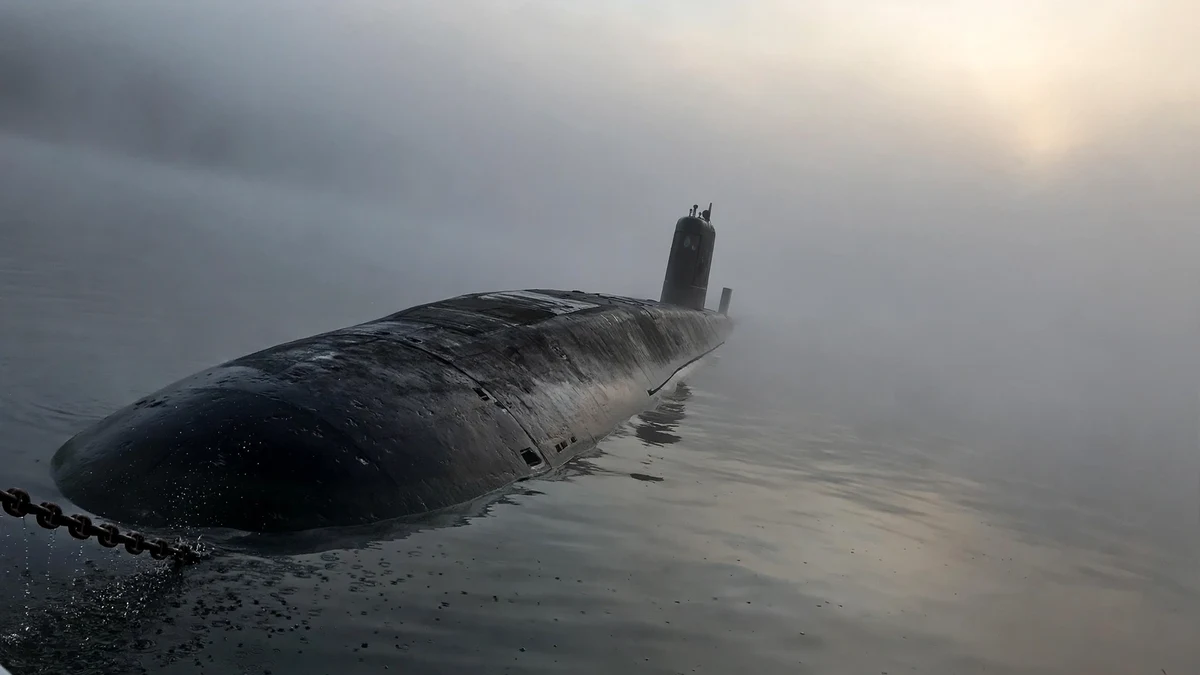
How It Works
Step 1: The anchor sleeps in its pocket
Most of the time you would never know a submarine has an anchor at all. It sits in a pocket in the bow, flush with the hull, so the boat’s smooth lines are not spoiled. The pocket is shaped to the anchor’s exact outline, and the anchor is held tight by a locking pin so it cannot rattle or shift while the boat dives, turns or runs at speed. The chain runs from the anchor into a small locker inside the hull, through a sealed pipe called a hawsepipe. A loose anchor is a noisy anchor, and on a submarine, noise is the one thing the crew fear most.
Step 2: Surfacing before the anchor can work
An anchor is useless underwater, so the boat must surface first. The officer of the watch brings the boat up in slow stages, checks the sea above with the periscope, then orders the tanks blown. Once the boat is on the surface, the crew open the hatch and climb out onto the casing, the narrow deck on top of the hull. The anchor can only be handled from here, which is why submarines anchor so rarely: every minute on the surface is a minute the boat can be seen. The submarine hull around them is built to keep the sea out at depth, but on the surface it is simply a very low, very wet platform.

Step 3: Dropping the anchor quietly
Dropping a submarine anchor is a slow, deliberate job. The crew release the locking pin and ease the anchor out of its pocket by hand and with a small winch, lowering it gently into the water. The chain follows, paid out slowly from the locker, and the boat drifts back until the chain pulls tight. The anchor tips, its flukes bite into the bottom, and the crew feel the boat stop. They test the set with a short, gentle pull from the boat’s own motors, never a hard jerk, because a jerk is noise, and noise is what the whole boat is built to avoid. A ship anchor is dropped the same way in principle, but a ship has a crew of dozens on a wide deck, while a submarine has a handful of people on a narrow, rolling casing.
Step 4: Holding still on the surface
Once set, the anchor holds the submarine the way it holds any boat: the chain hangs in a curve, its weight keeps the pull low and level, and the flukes grip the seabed. The difference is the boat itself. A submarine on the surface sits low in the water, so even a small wave washes over the casing and tugs at the chain. The crew keep the scope generous, paying out plenty of chain so the pull stays flat, and they watch the boat’s position against fixed marks on the shore. The anchor watch is kept from the bridge above, and the crew below keep the boat quiet: engines shut down, pumps kept to a minimum, the boat riding in silence while the crew rest.
Step 5: The chain and the silent locker
The chain is where silence is hardest to keep. Every link that moves can clank, so the chain locker is lined and the chain is handled slowly, link by link, with the crew guiding it by hand. The chain is shorter and lighter than a ship’s, because a submarine anchor is small and the boat rarely anchors in deep water, but it is still heavy steel, and it still needs a windlass to haul it home. The windlass is compact, built to run quietly and to hold the chain without slipping. The yacht anchor system is a close cousin, but a yacht’s windlass can be loud and nobody minds, while a submarine’s is built to a standard of quiet a yacht would never need.
Step 6: Weighing anchor and disappearing again
Leaving is the moment the submarine becomes itself again. The crew motor slowly forward over the anchor, the windlass hauls the chain in, and the anchor breaks free. It is guided back into its pocket by hand, the locking pin goes in, and the crew check it sits flush and silent. Then the hatch closes, the boat dives, and within minutes there is nothing on the surface. The anchor is back in its hiding place, the chain is back in its locker, and the boat is gone. That is the whole point of a submarine anchor: it works when it must, it is silent when it works, and the moment it is done, it disappears with the boat.
A submarine anchor is the smallest, quietest and least used anchor of any vessel its size, and that is exactly how the crew want it. It exists for the rare hours when the boat must hold still on the surface, and every part of it, from the pocket in the hull to the lined locker, is built to keep the boat’s secret.
Submarine Anchor Specifications
| Feature | Typical Detail |
|---|---|
| Anchor type | Compact stockless anchor, hull pocket |
| Anchor weight | About 150 to 500 kg, by boat size |
| Chain length | About 50 to 100 m aboard |
| Stowage | Flush pocket in the bow, locking pin |
| Windlass | Compact, quiet-running, electric |
| Use | Surface anchoring only, rarely used |
| Chain locker | Sound-lined, inside the pressure hull |
How Much Does a Submarine Anchor Cost?
Prices are estimates and vary with the size of the boat and the anchor. A submarine anchor system, anchor, chain and windlass together, typically costs an estimated $80,000 to $300,000. The anchor itself is only part of the bill: the pocket in the hull, the sealed hawsepipe, the sound-lined locker and the quiet-running windlass are where most of the cost sits. Fitting the pocket into a pressure hull is specialist work, because every opening must be sealed to survive at depth. It is a lot of money for an anchor the boat barely uses, but a submarine that cannot hold still on the surface cannot wait, and waiting is sometimes the whole mission.
A Rare Fact About Submarine Anchors

Here is a detail most people never hear: some submarines carry an anchor they hope never to use, because dropping it can give the boat away. The splash of the anchor, the rumble of the chain and the boat sitting still on the surface are all signals another vessel can pick up. So submarine crews practise anchoring as a silent drill, lowering the anchor by hand, paying the chain out slowly and keeping the boat’s machinery off while they work. In training, the crew are timed not on speed but on silence, and the quietest anchoring wins.


