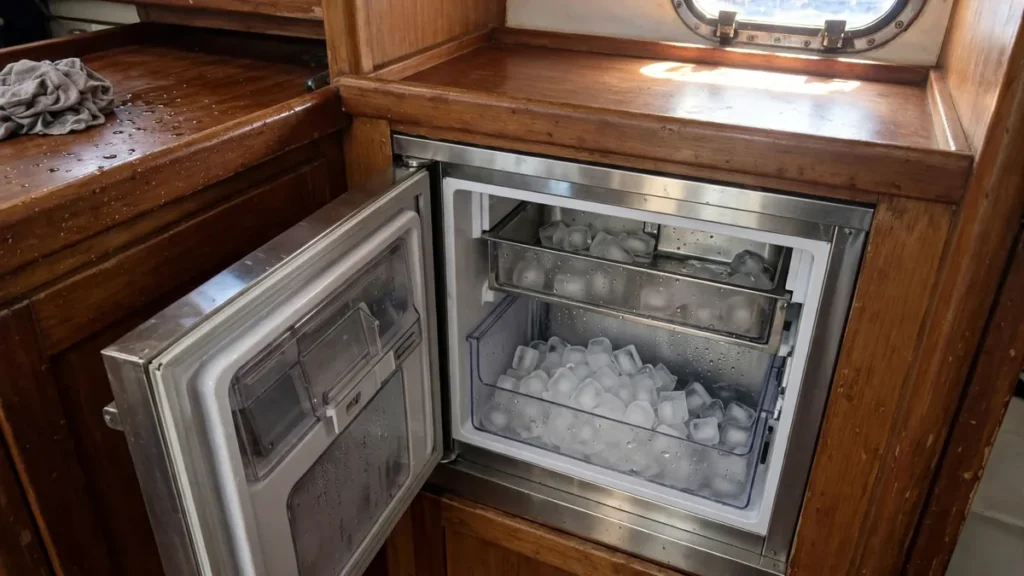
A luxury yacht approaches a marina berth stern first, the way yachts usually dock, and the captain needs the back of the boat to go exactly where he wants it. The bow is already where it should be, held by the bow thruster, but the stern is drifting in a crosswind, and the rudder is useless at this speed. The invisible hand is the stern thruster, the bow thruster’s quieter partner at the back of the boat.
A yacht stern thruster is a small propeller set in a tunnel or a retractable unit at the stern of a luxury yacht, used to push the stern sideways during slow-speed manoeuvring and docking. It works the same way as a bow thruster, spinning a propeller to throw a jet of water to one side, so the reaction pushes the stern the other way
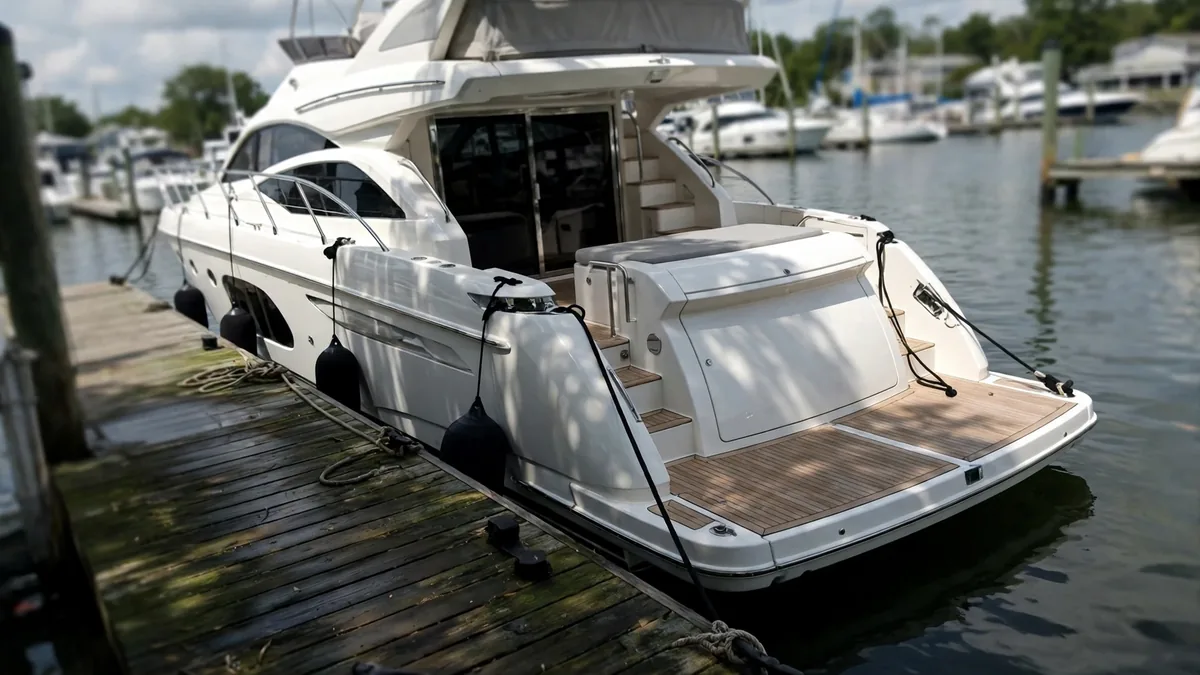
How It Works
Step 1: The tunnel or unit at the stern
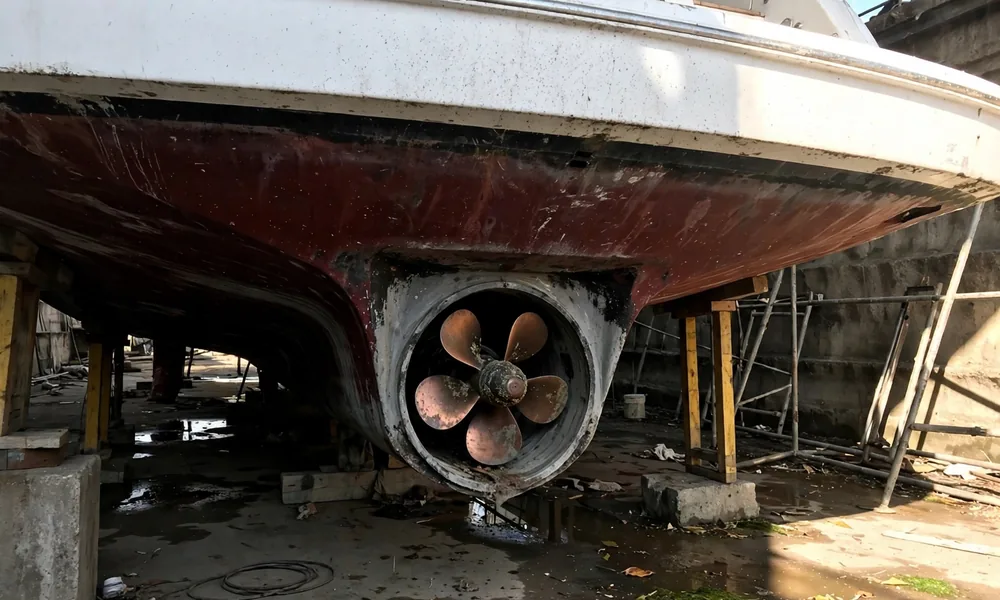
The stern thruster lives at the back of the yacht, either in a tunnel through the stern, like its bow cousin, or in a retractable unit that lowers through the hull only when needed. The tunnel version is a smooth tube running from one side of the stern to the other, just below the waterline, with its openings rounded so water flows through easily. The tunnel is painted inside with antifouling paint, so weed and barnacles cannot grip it and slow the water down. The retractable version is a pod on a leg that drops down below the hull, spins its propeller, and folds away for sailing, so there is no hole in the stern at all.
Step 2: The propeller inside
Inside the tunnel or on the retractable pod sits the propeller, usually a small set of bronze blades on a hub, shaped to push water equally well in either direction, because the thruster must shove the stern to port just as strongly as it shoves it to starboard. The propeller is balanced so it spins without shaking the hull, and a grille covers the tunnel mouths to keep ropes, debris and curious fish out. When the thruster is not running, the propeller sits still and the water flows past it, and the yacht sails on as if it were not there at all.
Step 3: The motor and the drive
Above the tunnel or inside the pod sits the motor, usually a sealed electric motor in a waterproof housing, which drives the propeller through a gearbox and a short shaft. The gearbox trades speed for torque, because a thruster propeller must turn slowly and push hard rather than spin fast. Electric motors are popular on yachts because they start instantly, run quietly, and need no exhaust, and the motor is sized to give full thrust in seconds, because a thruster is used at the moment when the yacht needs it most. The motor draws heavily on the yacht’s batteries, so the system watches voltage closely, and a thruster that is run too long can leave the house batteries low, which is one reason the captain uses it in short bursts.
Step 4: The controls at the helm
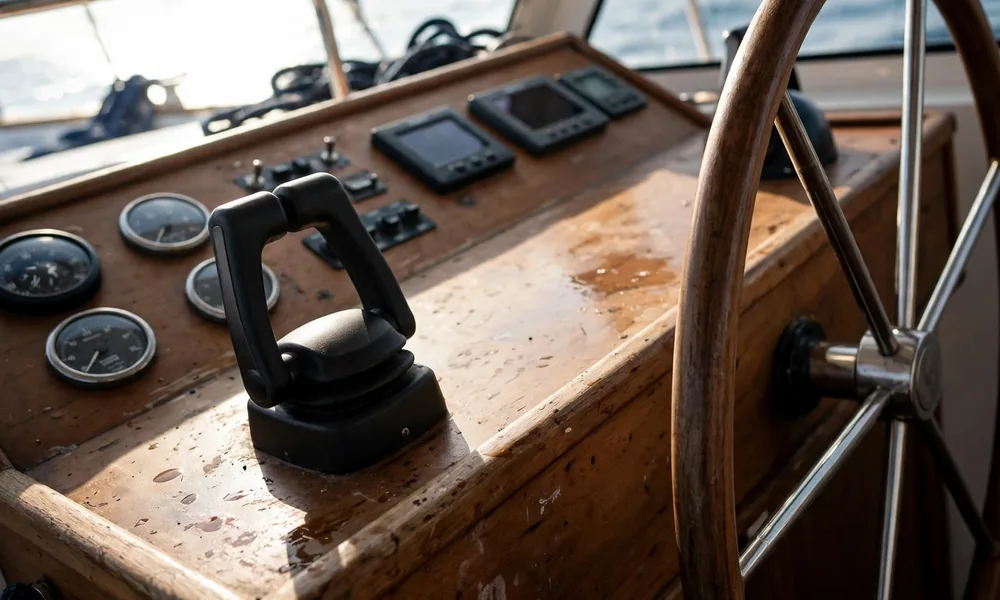
At the helm the stern thruster is controlled by the same joystick as the bow thruster, or by a second joystick beside it, and the captain pushes it left or right to move the stern the same way. The joystick talks to a control box near the thruster, which feeds power to the motor in smooth steps instead of one sudden surge, because sudden full power would jolt the yacht and strain the propeller shaft. The control panel shows how much thrust is being used and whether the motor is running hot, and a warning sounds if the thruster is used for too long at full power. The yacht garage sits just above the stern thruster on many yachts, and the crew keep its door clear whenever the thruster is in use.
Step 5: How the sideways push is made
When the captain pushes the joystick, the motor spins the propeller, and the blades throw a jet of water out of one side of the tunnel. The reaction pushes the stern in the opposite direction, and because the thruster is at the very back of the yacht, the stern swings while the bow stays almost still. Used together with the bow thruster, the two can walk the whole yacht sideways, sliding it into a berth that would be impossible with rudder and engines alone. The ship propeller at the stern works on the same reaction, but it pushes the whole vessel forward rather than sideways.
Step 6: The limits and the care it needs
A yacht stern thruster is powerful but it has limits, and a good captain knows them. It cannot push against a strong wind or current on its own, and it is meant for short bursts, not for hours of running, because the motor heats up and the tunnel stirs the water into a froth that wastes power. A thruster that is looked after will answer instantly for years, and it is the quiet reason why so many yachts can dock stern first without a tug. The bow thruster at the front of the yacht is its partner in this work, and a yacht with both is a yacht that can be parked like a car.
The hardest part of making a yacht stern thruster work well is where it lives. The stern is already crowded with main propellers, rudders, shafts and the wash of the engines, so the thruster has to push cleanly through water that is already moving, and it has to do it without shaking the cabins above it. That is why its mountings are cushioned, its tunnel is faired smooth, and its propeller is balanced to a hair. A stern thruster that pushes hard and says nothing is the mark of a good installation, and a captain who can slide a yacht sideways into a tight berth, stern first, with a flick of the joystick, is using one of the cleverest small machines on the boat.
| Specification | Typical figure |
| Type | Tunnel through the stern, or retractable pod below the hull |
| Tunnel diameter | Around 185 to 400 millimetres on a luxury yacht |
| Propeller | Cast bronze, four or five blades, balanced and polished |
| Motor | Sealed electric motor, instant start and quiet running |
| Thrust | Around 40 to 300 kilograms, set by yacht size |
| Controls | Helm joystick, often linked with the bow thruster |
How Much Does a Yacht Stern Thruster Cost?
Prices are estimates and vary with yacht size and thrust needed. A yacht stern thruster typically costs an estimated $15,000 to $90,000 installed, set mostly by yacht size, the power of the motor and whether it is a tunnel or a retractable unit. A small electric tunnel unit for a modest yacht sits near the bottom of the range, while a large retractable thruster for a superyacht costs far more.
A Rare Fact About Yacht Stern Thrusters
Here is a detail most owners never guess: a yacht with a bow thruster and a stern thruster can turn on the spot, like a coin spinning on a table, with one pushing one way and the other pushing the opposite way. A yacht stern thruster is a small propeller at the back of the boat that lets a giant yacht behave like a small boat in a tight spot. The thruster is also used to hold the yacht against a quay while lines are passed ashore, saving the crew a scramble in a crosswind.