Pick up a laptop, a camera body, or a racing wheel, and you are probably holding magnesium alloy without knowing it. It is the lightest structural metal in common use, a third lighter than aluminium and three quarters lighter than steel, yet strong enough to carry the load of a car or the frame of an aircraft seat. It feels warm to the touch, damps vibration better than any other metal, and can be cast into shapes so thin and intricate that aluminium would crack trying.
For all its virtues, magnesium alloy is a difficult metal to make. Pure magnesium burns with a blinding white flame, it corrodes if it is left unprotected, and it must be melted under a blanket of protective gas so it does not catch fire in the furnace. The factories that make it are part foundry, part chemistry lab, and part fire station, and every step is designed around one fact: this is a metal that would rather burn than sit still. This is how it is made.

How It’s Made
Step 1: Winning the metal from its ore
Magnesium is the eighth most abundant element in the Earth’s crust, but it never appears as a free metal. It is won from magnesite ore, dolomite, or from seawater and brines, where it sits dissolved as magnesium chloride. The two main routes are electrolysis, in which magnesium chloride is melted and split with an electric current, and the Pidgeon process, in which calcined dolomite is heated with ferrosilicon in a vacuum retort until magnesium vapour condenses into crystals. Both routes are energy-hungry, and both produce a raw metal that is about 99.8 percent pure, which is only the beginning. Turning raw metal into a useful engineering material is the same challenge faced with its lighter cousin, as our guide to aluminium forging materials shows.
Step 2: Alloying for strength
Pure magnesium is too soft and too quick to corrode for structural use, so it is alloyed. The most common family, AZ91D, adds about nine percent aluminium and one percent zinc, which makes the metal far stronger and easier to cast. Other alloys add rare earths for high-temperature strength, or manganese to improve corrosion resistance. The alloying elements are melted into the magnesium in a crucible under a protective atmosphere of sulphur hexafluoride or a modern fluorine-free cover gas, because the molten metal would otherwise oxidise and burn. The melt is stirred, sampled, and analysed before it is allowed anywhere near a mould.
Step 3: Casting the ingots
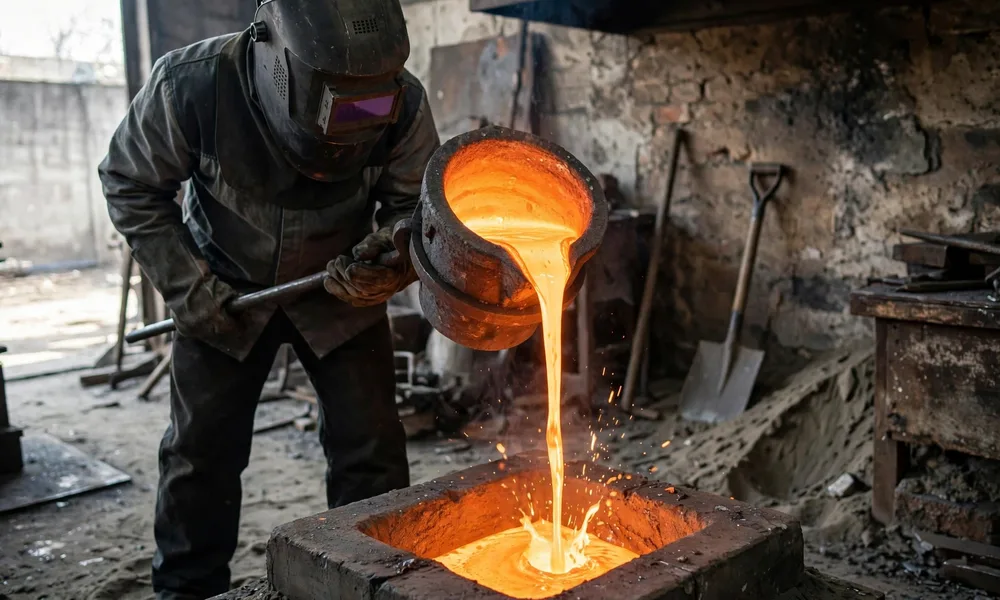
The molten alloy is poured into moulds to form ingots, or, in many modern plants, cast directly into the shapes that will be used next. The metal freezes quickly, and the casting is inspected for porosity, the tiny bubbles that weaken a part. Because magnesium shrinks as it solidifies, the moulds are designed with risers that feed extra metal into the casting as it cools. The ingots are then marked with their alloy grade and batch number, so that every part made from them can be traced back to a single melt.
Step 4: Hot-chamber die casting
Most magnesium parts are made by hot-chamber die casting, a process that suits magnesium better than almost any other metal. The molten alloy is held in a heated pot, a piston draws a shot of metal into a steel die, and the die is clamped shut under enormous pressure. The metal fills every corner of the die in a fraction of a second and freezes almost instantly, producing thin-walled parts with fine detail: laptop shells, camera bodies, steering wheel frames, and gearbox housings. The cycle takes seconds, and a single die can produce hundreds of thousands of identical parts. The speed of the process is its own quality control, because a cold die or a slow shot shows up immediately as a defective casting.
Step 5: Trimming, machining, and heat treatment
Fresh from the die, each part carries flash, the thin fins of metal that squeezed between the die halves. The flash is trimmed off, the part is machined where tight tolerances matter, such as bearing seats and threaded holes, and then it may be heat-treated. A solution treatment followed by artificial ageing, known as T6, raises the strength of the alloy further. Magnesium machines easily and quickly, which is one reason it is so popular, but the fine chips it produces are flammable, so the machining area is kept clean and the chips are collected in sealed containers.
Step 6: Protecting the surface
The last step is protection. Bare magnesium corrodes quickly in damp air, so every part is given a conversion coating, usually a chromate-free chemical treatment, followed by anodising or a powder-coated paint finish. The coating is thin, often only a few microns, but it is what lets a magnesium laptop survive years of sweaty hands and spilled coffee. Each finished part is weighed, measured, and checked for surface defects before it is packed and shipped. The care taken here is the same discipline that goes into the lightweight structures described in our guide to carbon fibre weave materials, and the protective finishes have much in common with those in our look at anodised aluminium materials.
Specs
| Specification | Detail |
|---|---|
| Main alloy | AZ91D: magnesium with about 9% aluminium, 1% zinc |
| Density | 1.81 g/cm³, about a third lighter than aluminium |
| Tensile strength | Approximately 230 MPa for AZ91D |
| Melting point | 650°C for pure magnesium |
| Main process | Hot-chamber die casting |
| Wall thickness | As thin as 0.6 mm in die-cast parts |
| Vibration damping | Among the best of any structural metal |
| Surface protection | Conversion coating plus anodising or powder coating |

Price
Magnesium alloy is priced by the kilogram of metal and the complexity of the casting. Raw magnesium alloy ingot typically trades at around $3 to $5 per kilogram (estimate, based on typical metal market pricing), compared with roughly $2 to $3 per kilogram for aluminium ingot (estimate). A finished die-cast magnesium part, such as a laptop shell, typically costs the manufacturer $5 to $20 (estimate) depending on size and finish, while a large automotive casting such as a steering wheel frame can cost $30 to $80 (estimate). The metal itself is only part of the price; the protective atmosphere, the specialist handling, and the surface coatings all add to the cost of every part.
Rare Fact
Magnesium burns so fiercely that it was once used in camera flash powder and in flares, and a magnesium fire cannot be put out with water, because the burning metal splits water into hydrogen and oxygen and burns hotter still. Foundries fight this with sand, dry powder, and strict housekeeping: a single pile of fine magnesium chips left in a corner is a fire waiting for a spark. The irony is that the same reactivity makes magnesium one of the most recyclable metals in the world. A die-cast magnesium part can be melted down and cast again with almost no loss of quality, and recycling it uses only a fraction of the energy needed to win new metal from ore or seawater.


