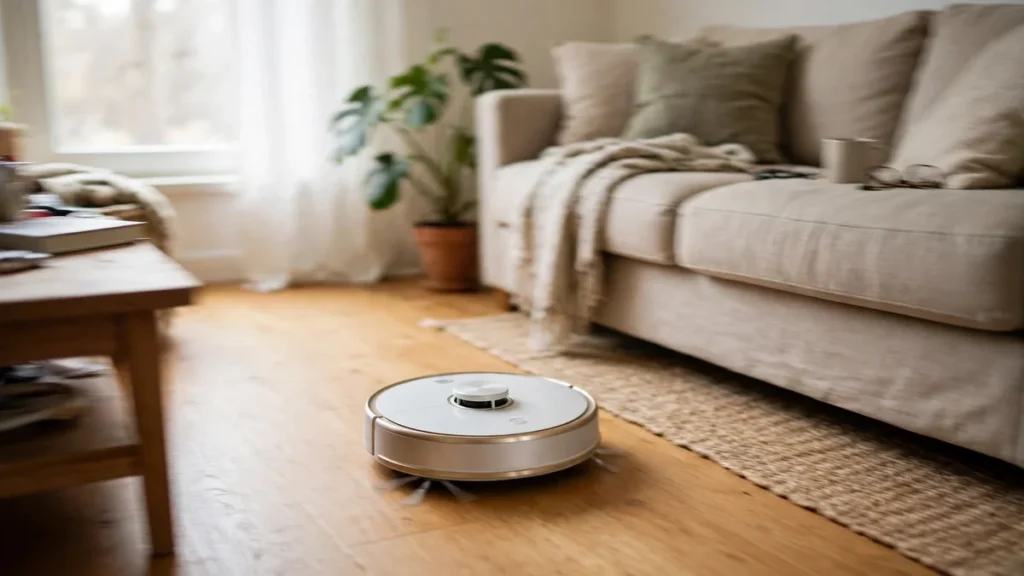
It is three in the morning and the house is dark, but the little disc on the floor is awake. It glides out from under the sofa, pauses, and turns its head. A beam of invisible light sweeps across the room, bouncing off the chair legs and the skirting board, and in a fraction of a second the vacuum knows exactly where everything is. It has never seen this room with eyes, and yet it carries a map of it in its head, down to the centimetre. The thing doing the seeing is a spinning laser turret no bigger than a bottle cap.
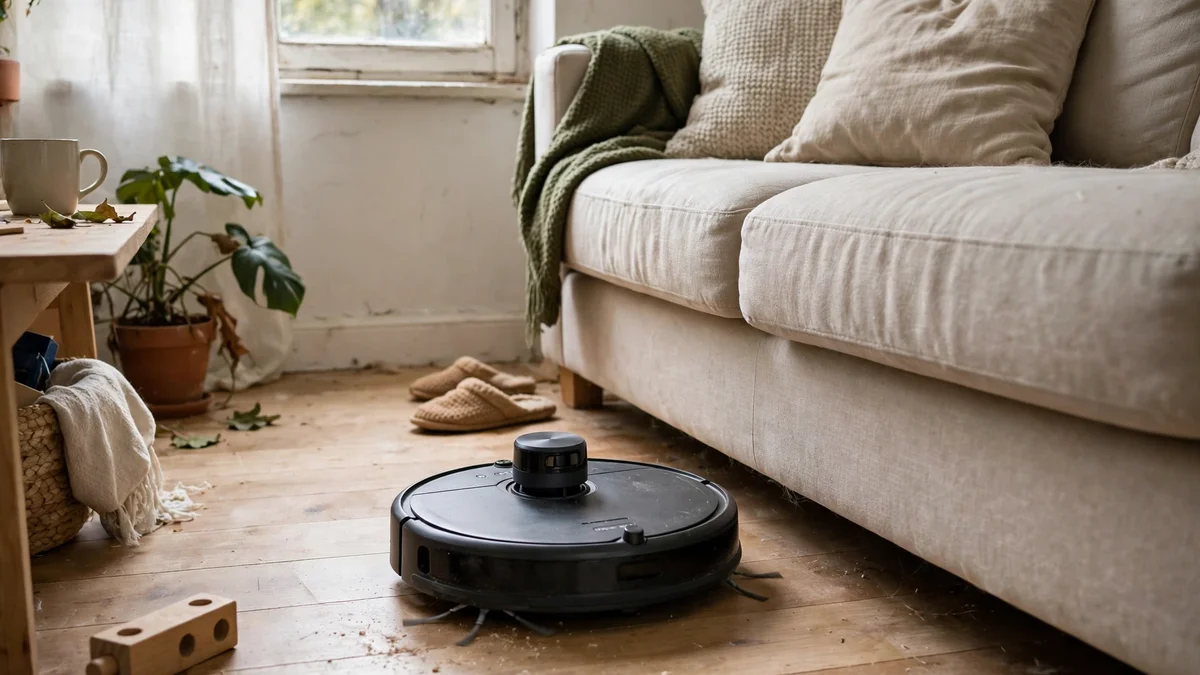
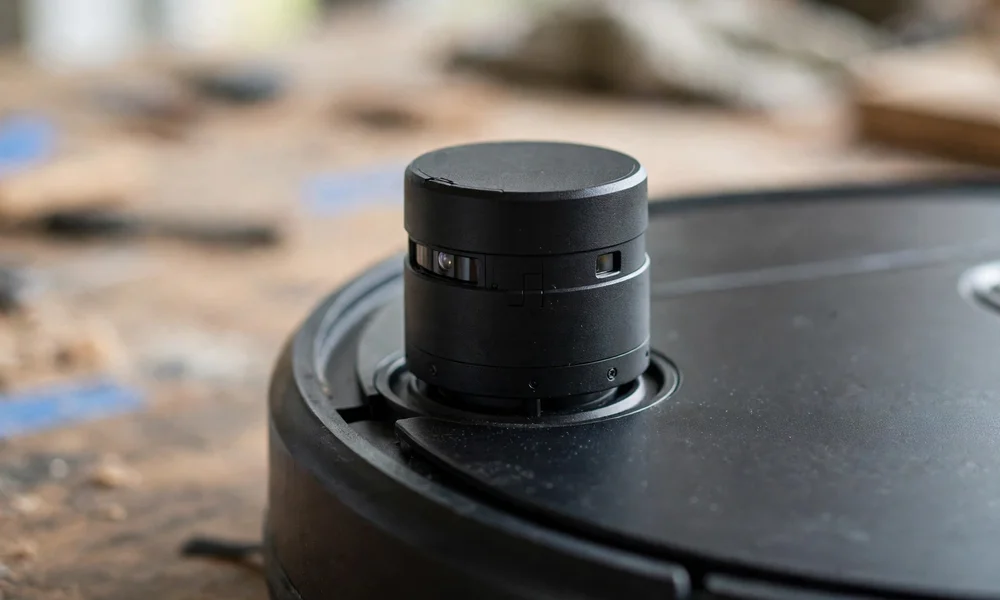
That turret is the LiDAR unit, short for light detection and ranging, and it is the reason a modern robot vacuum can clean in neat rows instead of bumping around like a toy. Inside it sits a laser, a spinning mirror, a light sensor, and a tiny motor, all working together ten times a second. Building one means machining parts to a fraction of a hair’s width and testing it in rooms full of mirrors and black furniture, all of which try to fool it. Here is how robot vacuum LiDAR is made, step by step.
How Robot Vacuum LiDAR Is Made
Step 1: Designing the turret around one spinning mirror
Everything starts with the geometry. Engineers decide how tall the turret can be, because every millimetre of height is a millimetre the vacuum cannot slide under a low sofa, and how fast it must spin, usually around ten revolutions a second. The design centres on a small angled mirror, which throws the laser beam sideways so it sweeps a full circle as the turret turns. The whole assembly is planned to sit on a single circuit board so the vacuum maker can drop it in as one finished module. Getting the optics right is a close cousin of the precision work in a camera, as explained in how a camera autofocus motor is made, where a tiny motor must also move with almost no error.
Step 2: Making the laser and the sensor
The laser is a small semiconductor diode, usually firing infrared light the human eye cannot see. It is made on a wafer like a computer chip, cut into thousands of tiny pieces, and each one is tested for brightness and wavelength before it is allowed near a turret. The beam is shaped by a tiny moulded lens, which focuses it into a thin line so the returning light gives a sharp distance reading. On the receiving side sits a photodetector, a chip that turns a faint flash of returning light into an electrical pulse. The time between firing and receiving is measured in billionths of a second, and from that time the turret works out the distance to the wall.
Step 3: Machining the housing and the spinning parts
The turret housing is injection-moulded from tough plastic, but the spinning parts inside need far tighter tolerances. The mirror is cut from glass or polished metal and glued to a small rotor on a shaft that runs in a miniature bearing. If the mirror tilts by even a fraction of a degree, the beam points at the floor instead of the wall and the map falls apart, so the parts are checked on measuring rigs that read to a few microns. The motor that spins the assembly is a small brushless unit, chosen because it can run quietly for years without wearing out. It is the same family of motor that steadies a flying camera, and the balancing work is much like the precision described in how a drone gimbal is made.
Step 4: Assembling the turret on the line
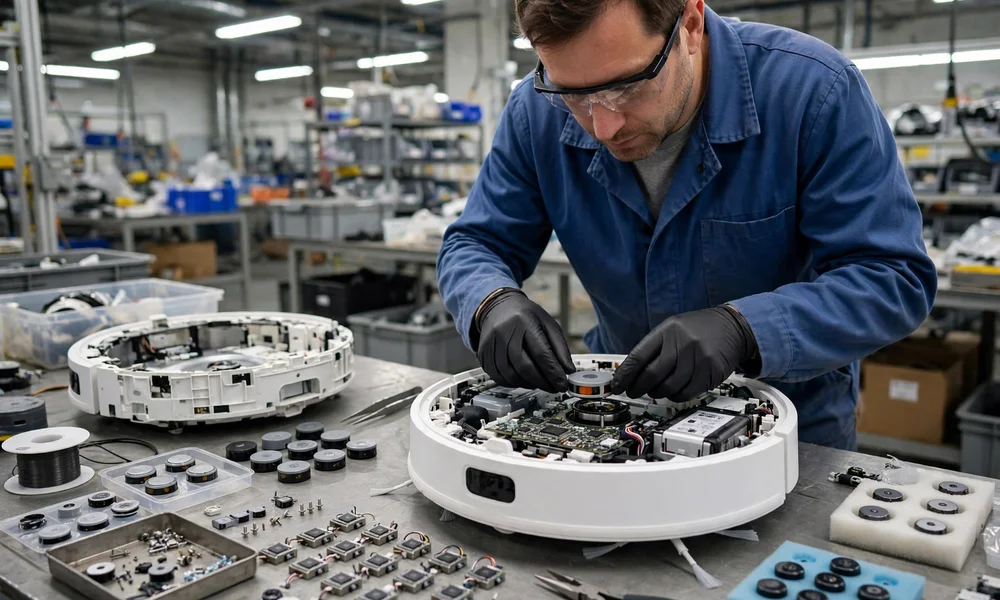
Assembly happens on a bench where each worker or robot arm does one job. The laser and sensor board goes in first, then the mirror and rotor, then the motor, and the stack is closed inside the housing with a clear window for the beam. A slip ring or a wireless link carries power and data across the spinning joint, because wires would twist and snap within minutes. The turret is sealed against dust with a thin gasket, since a single hair across the window can scatter the beam. Each finished turret is spun up and checked for wobble with a vibration sensor, and any unit that shakes more than the limit is pulled off the line and rebuilt. The motor at the heart of the spin is a close relative of the compact motors covered in how a drone motor is made.
Step 5: Calibrating the laser against known distances
A freshly built turret cannot be trusted until it is calibrated. It is placed on a rig facing a wall at a precisely known distance, and the engineers compare what the sensor reports with what the tape measure says. The test repeats at many distances, and the differences are written into the turret’s memory as correction values. The turret is also tested against dark walls that swallow light, mirrors that throw it back too strongly, and glass doors that barely return any light at all.
Step 6: Testing the turret inside a real vacuum
The final test puts the turret into a complete robot vacuum and lets it loose in a test home. Engineers watch the map it builds on a screen, checking that the walls are straight, the doorways are in the right place, and the map does not drift as the vacuum moves. The robot is sent under low furniture, around chair legs, and into dark corners, and the turret must keep spinning and mapping through dust and pet hair. Turrets that fail are sent back for recalibration.
Robot Vacuum LiDAR Specs
| Specification | Typical figure |
|---|---|
| Laser type | Infrared semiconductor diode |
| Scan rate | Around 10 revolutions per second |
| Range | Up to around 8 to 10 metres indoors |
| Distance accuracy | Within a few centimetres |
| Turret height | Roughly 25 to 35 millimetres |
| Motor type | Small brushless DC motor |
What Robot Vacuum LiDAR Costs
A complete LiDAR turret module is estimated to cost a vacuum maker roughly 15 to 30 dollars in volume, though the exact figure is an estimate and varies with the scan rate, the sensor quality, and the order size. That is a large share of the cost of a budget robot vacuum, which is why cheaper models often skip LiDAR entirely and navigate by bumping into things instead. In a mid-range or premium vacuum, the turret is one of the most expensive single parts, and makers guard their calibration methods closely.
A Rare Fact About Robot Vacuum LiDAR
Here is a detail most owners never realise: the laser in a robot vacuum is not really looking at your furniture at all. It is measuring time. The beam travels to the wall and back at the speed of light, and the turret times that round trip in billionths of a second, turning each tiny delay into a distance. A wall three metres away returns its light in about twenty billionths of a second, a delay so short that the electronics must count it with a clock ticking billions of times a second.