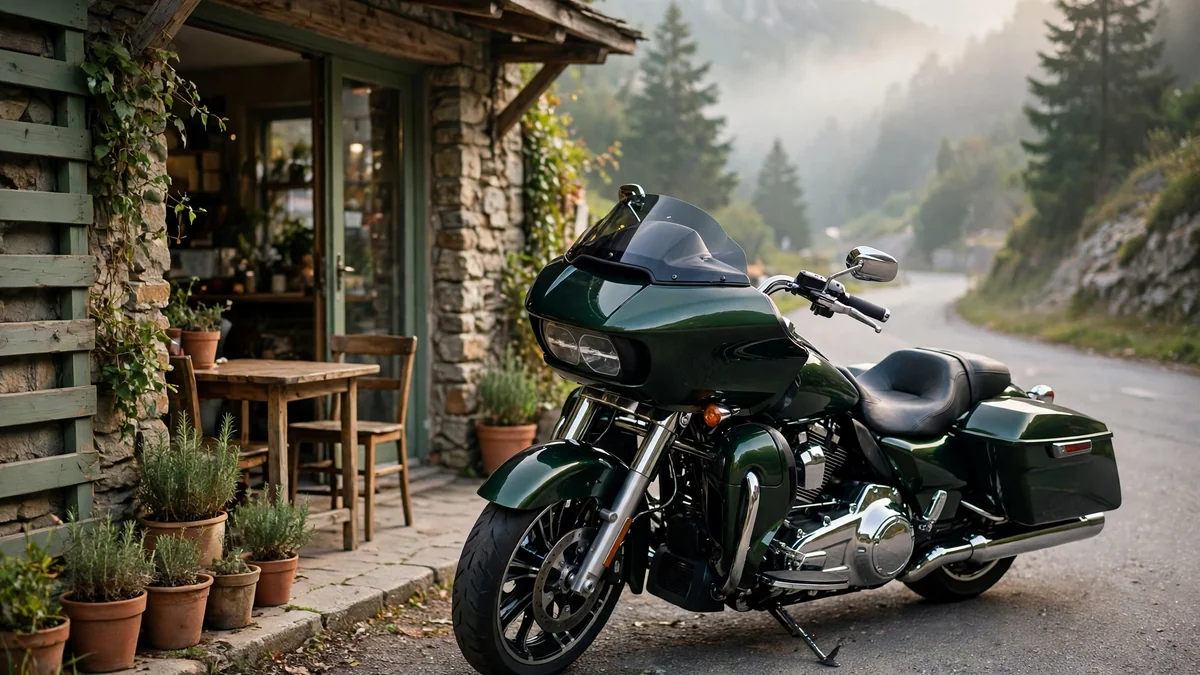
The bike is parked outside a small cafe on a mountain road, and it draws a small crowd without trying. People walk past, slow down, and come back for a second look. The owner, sipping coffee a few tables away, smiles. He knows the question is coming, and he knows it will start with the same word: why does it cost so much?
A luxury motorcycle can cost as much as a family car, and the answer is not one thing but many small expensive things, layered on top of each other. The engine is hand assembled, the paint is sprayed by a person rather than a robot, the leather is stitched by hand, and the electronics are closer to a small aircraft than to a commuter bike. This article takes the price apart, reason by reason, so you can see exactly where the money goes.
1. A hand-built engine, assembled by one person
The heart of a luxury motorcycle is an engine that is often assembled by a single technician from start to finish, rather than moving down a production line. That person torques every bolt, checks every clearance and signs the engine when it is done, and the process takes hours rather than minutes. The parts themselves are made to tighter tolerances than a mass-market engine, with forged pistons, polished crankshafts and balanced internals that cost far more to machine. The result is an engine that runs smoother, lasts longer and sounds better, and the labour alone adds thousands to the price before the bike has a frame.
The engine is also tuned for torque rather than peak power, which is a more expensive way to build. Big pistons, long strokes and heavy flywheels cost more in materials and machining than a small high-revving unit, but they give the effortless pull that defines a luxury ride. The full picture of the machine is covered in how a luxury motorcycle is made, from the frame welding to the hand-finished paint.
2. Paint and chrome that take days, not minutes
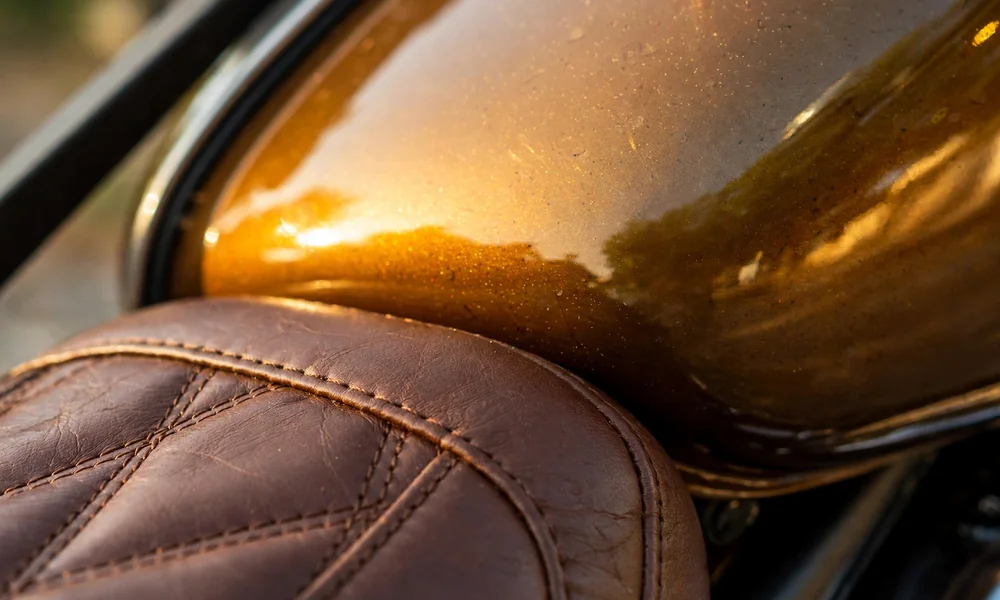
The paint on a luxury motorcycle is one of the most expensive parts of the whole machine. A premium finish is sprayed in many thin coats, flatted by hand between coats, and polished until the reflection is flawless, a process that can take days for a single bike. The chrome is polished rather than plated, the metal is prepared by hand, and any flaw means starting again. Mass-market bikes are painted by robots in minutes; a luxury bike is painted by a person who can see the finish, and that person is paid for their eye as much as their hands.
3. Leather, stitching and metalwork done by hand
The saddle, the grips and the small leather details on a luxury motorcycle are cut and stitched by hand, and the leather is a far higher grade than the vinyl on a commuter bike. A single saddle can take hours: the hide is selected, the panels are cut to follow the shape of the seat, the stitching is done with waxed thread, and the finished piece is fitted and checked by the person who made it. The metalwork follows the same logic: billet aluminium parts are machined from a solid block rather than cast, which wastes most of the material but leaves a part with no pores, no weakness and a perfect finish.
4. Electronics closer to an aircraft than a commuter bike
The dashboard alone is a major cost. A sunlight-readable touchscreen, speakers built into the fairing and a system that works with gloves on are all harder to build than they look, and the best ones are developed with audio and display specialists rather than bought off the shelf. The numbers behind the machine are decoded in the luxury motorcycle spec sheet explained, where weight, torque and braking figures tell the real story.
5. Tiny production runs and a long development bill
A luxury motorcycle is built in small numbers, and small numbers are expensive. The tooling for a frame, a fuel tank or a fairing costs the same whether the factory makes a thousand bikes or a hundred thousand, so the cost per bike is far higher when the run is short. The same applies to testing: crash testing, emissions certification and road testing cost the same for a limited model as for a mass-market one, and the bill is divided among far fewer buyers.
6. Suspension, brakes and tyres at the top of the range
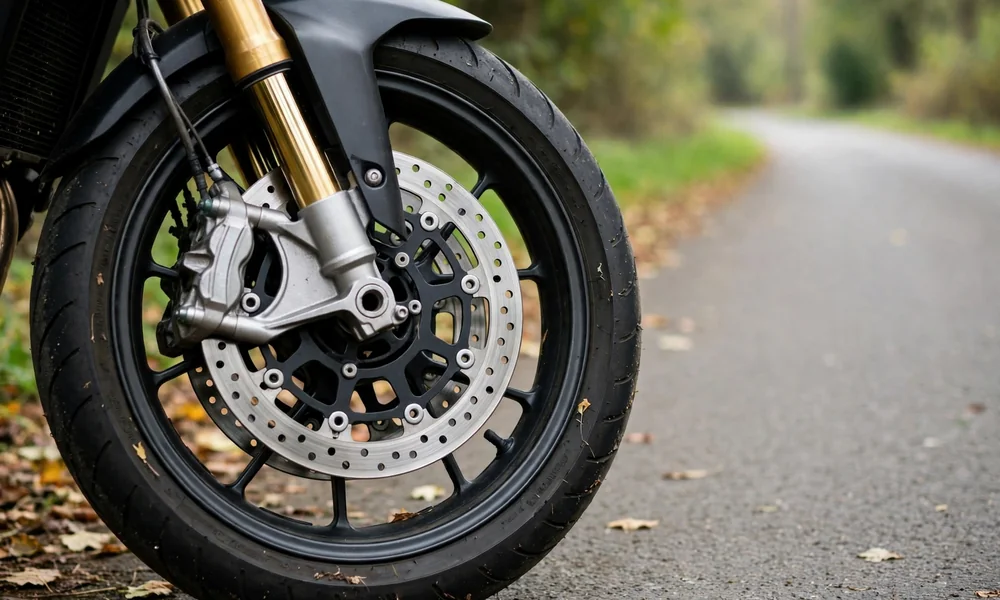
The components that keep a heavy luxury motorcycle safe are bought from the most expensive suppliers in the business, and they are sized for a machine that weighs twice as much as a commuter bike. The brakes are large dual discs with cornering ABS, the suspension is electronically adjustable, and the tyres are a premium compound developed specifically for heavy touring bikes. Each of these parts costs several times what a standard equivalent costs, and together they add thousands to the price.
The difference is felt most when the bike is loaded. Two people, a full tank and a hundred litres of luggage turn a motorcycle into a heavy vehicle, and only top-range suspension and brakes keep it stable, comfortable and safe. The systems that do that work are explained in how a luxury motorcycle works, from the throttle-by-wire to the braking electronics.
7. The badge, the dealer and the ownership experience
Part of the price is the name on the tank, and part of it is what comes with that name. A luxury motorcycle is sold through a dealer who offers a proper handover, a first service, a warranty that covers the whole machine and a parts supply that lasts for decades. The owner can order a single bolt for a twenty-year-old bike and have it delivered, and that parts stock is maintained at the factory’s expense.
Price: what the money buys in context
A luxury motorcycle typically costs an estimated 30,000 to 60,000 dollars, with hand-built and limited-edition models going well beyond that. Against that figure, a good commuter motorcycle costs a tenth as much and does the same basic job of moving one person down the road. The difference is not the job but the way it is done: the hand-built engine, the days of paint, the stitched leather, the aircraft-grade electronics, the tiny production run, the top-range brakes and the ownership experience together explain the gap, and none of them is cheap to fake.
A rare fact worth knowing
Some luxury touring motorcycles carry a reverse gear, a feature almost no other motorcycle has. Because the bike is too heavy to push backwards up a slope, a small electric motor drives it gently in reverse at walking pace, controlled from the handlebar. It is a tiny line on the spec sheet, listed as a single word, but for a rider who has ever tried to push 400 kilograms backwards out of a sloping parking space, it is the most useful feature on the whole machine, and one of the clearest signs that the price bought real thought.