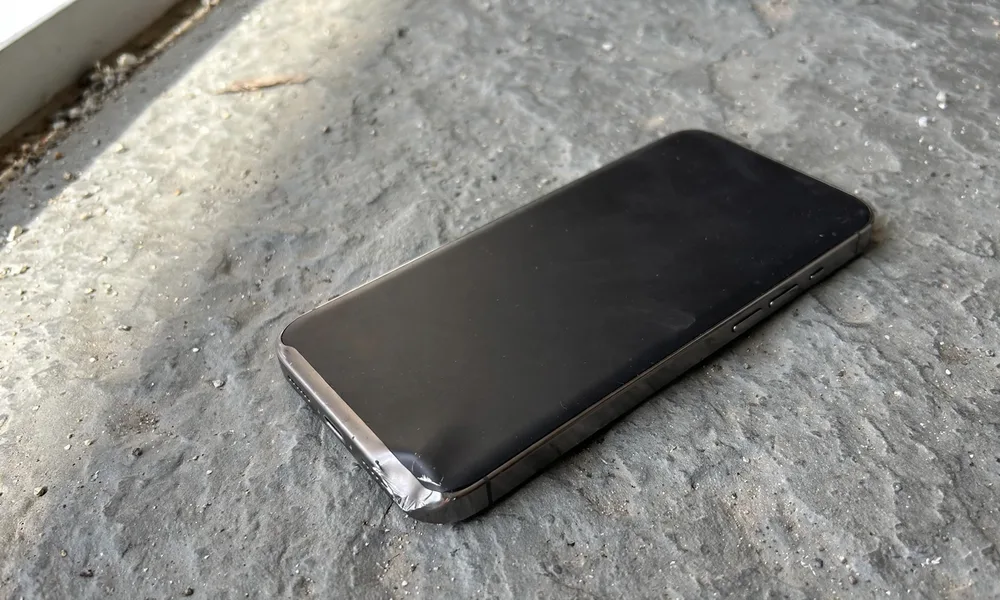
Drop a modern flagship phone on a stone floor and the sound is a small, expensive crack of fear. Pick it up, and if you are lucky the glass is intact — and the reason is often the thin band of metal running around the edge. That band is not decoration. It is the phone’s skeleton, its bumper, its heat sink and its antenna system, all squeezed into a strip of metal barely a few millimetres wide.
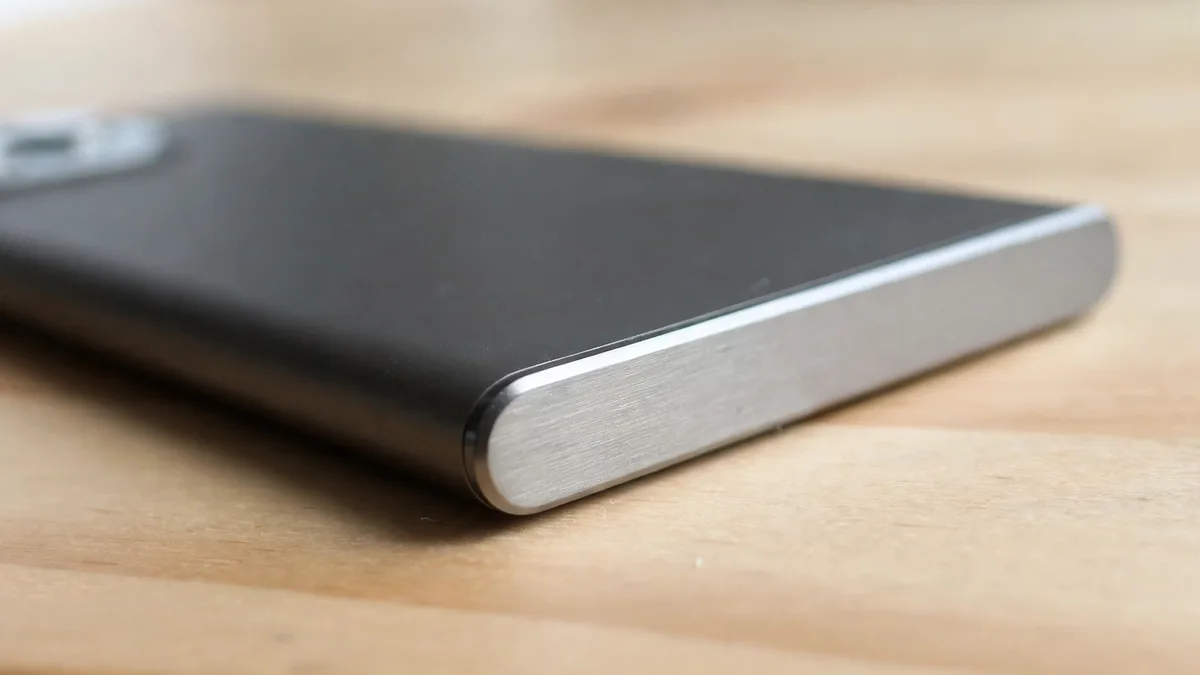
A smartphone titanium frame works by doing several jobs at once, and doing them in a space where every tenth of a millimetre matters. It holds the screen and the back glass in place, protects the delicate electronics inside from drops and twists, carries heat away from the processor, and even forms part of the radio antenna. The engineering trick is that titanium is enormously strong for its weight, so the frame can be thinner and lighter than an aluminium one while surviving harder knocks. This is how that slim metal band does its work.
How a Smartphone Titanium Frame Works
Step 1: Acting as the skeleton
Everything inside a phone hangs off the frame. The display assembly is bonded to its front edge, the back glass to its rear edge, and the battery, circuit boards and cameras are screwed or glued to mounting points machined into the metal itself. When the phone twists in a tight pocket or bends slightly under pressure, the frame is what resists that flex, spreading the load across the whole body instead of letting it concentrate on the glass. The same skeleton logic shapes other precision hardware, and the way a phone frame is built shares DNA with how a smartphone titanium frame is made, where the metal is forged and machined before it ever meets glass.
Step 2: Using Grade 5 titanium alloy
The metal itself is almost never pure titanium. Phone frames use Grade 5 titanium, an alloy of titanium with about 6 percent aluminium and 4 percent vanadium, known to engineers as Ti-6Al-4V. The aluminium lightens it and the vanadium strengthens it, producing a metal roughly as strong as steel at little more than half the weight. That balance of strength and lightness is the reason titanium moved from aircraft parts into pockets.

Step 3: Carrying the antennas
Look closely at a titanium frame and you will see thin lines cutting across the metal, usually filled with a plastic-like material. Those are antenna breaks, and they are essential. Titanium blocks radio signals, so the frame cannot be one continuous ring of metal or the phone would struggle to make calls or find a signal. Instead, the frame is divided into separate segments by those insulating breaks, and each segment becomes an antenna tuned for a different band — one for mobile data, one for Wi-Fi, one for Bluetooth.
Step 4: Holding everything in place
Inside the band, the frame is anything but smooth. It is machined with small bosses, ribs and threaded inserts that give every component something solid to bolt to. Cameras sit in precisely milled pockets so their lenses line up with the holes in the back glass to a fraction of a millimetre. The battery is held by adhesive strips bonded to a flat machined shelf. The circuit board is screwed down at multiple points so it cannot vibrate or flex when the phone is dropped. The same obsession with mounting accuracy shows up in other tiny mechanisms, from how a foldable phone hinge is made to the camera modules that sit beside the frame.
Step 5: Spreading the heat
A phone processor under load can get hot enough to be uncomfortable to hold, and the frame is part of the cooling system. Titanium is not as good a heat conductor as aluminium or copper, so engineers bond a thin internal structure — often a vapour chamber or a graphite sheet — to the frame, and the frame then spreads that heat across its whole surface so it can escape into the air.
Step 6: Absorbing a drop
When a phone hits the ground, the frame is the first thing to meet it, and its job is to turn a sharp shock into a survivable one. The corners are the critical zones, so they are often made slightly thicker or given a gentle radius that spreads the impact over a larger area. Titanium sits in the sweet spot, stiff enough to protect the glass and springy enough to soak up the blow, which is why drop tests so often show the frame scuffed but the screen alive.
Step 7: Sealing out dust and water
The last job is keeping the outside out. The frame’s edges are machined to precise tolerances so that rubber gaskets can seal the gaps between the frame, the screen and the back glass. Those seals are what give modern phones their water and dust resistance ratings: a frame that is even slightly warped would leave a gap, and a gap is all water needs. The same sealing discipline matters in every precision device, and the materials thinking behind it is laid out in the materials behind the smartphone titanium frame, where the alloy, the finish and the gaskets all have to work as one system.
Smartphone Titanium Frame at a Glance
| Specification | Detail |
|---|---|
| Alloy | Grade 5 titanium, Ti-6Al-4V (titanium, 6% aluminium, 4% vanadium) |
| Density | About 4.43 grams per cubic centimetre |
| Tensile strength | Around 900 megapascals, roughly double that of common aluminium alloys |
| Typical frame weight | Roughly 30 to 40 grams for a full-size flagship phone frame |
| Frame thickness | Usually 2 to 3 millimetres at the edge band |
| Finish | Brushed, blasted or coated; natural titanium grey or coloured coating |
| Antenna segments | Four to six segments separated by insulating breaks |
| Water resistance role | Machined sealing surfaces for gaskets, typically IP68 rated phones |
What Does It Cost?
Titanium frames appear almost entirely on flagship phones, and the frame is a meaningful part of why those phones cost what they do. As rough estimates, flagship phones with titanium frames typically sell for around $999 to $1,599, and the titanium frame itself costs several times more to produce than an equivalent aluminium frame, because the raw alloy is pricier and far harder to machine. Those figures are estimates, not quotes — the real number depends on the phone, the repairer and whether the screen and back glass come with it.
A Rare Fact
The titanium alloy in a phone frame is the same family of alloy used in jet engine fan blades and in the airframe of the SR-71 Blackbird, the fastest crewed aircraft ever built. The metal in your pocket and the metal that flew at three times the speed of sound are, chemically speaking, close cousins.
A titanium frame is easy to overlook because it looks like a simple metal band. In reality it is a skeleton, a bumper, a radiator and a radio aerial folded into one part, and it does all four jobs in a strip of metal thinner than a pencil.


