There is a metal that laughs at heat. Put most metals in a furnace and they soften, sag and melt long before the fire reaches its peak. Tungsten does not. It stays solid at temperatures that would turn steel into a puddle, and it keeps its strength when every other metal has given up. But pure tungsten is brittle and hard to shape, so engineers rarely use it alone. They use tungsten alloy — tungsten mixed with small amounts of other metals — and the alloy is what turns a laboratory curiosity into a working material.
Tungsten alloy is not one material but a family. The best known are the heavy alloys, tungsten mixed with nickel and iron or nickel and copper, which are nearly as dense as gold and used wherever a small, heavy part is needed. There are also tungsten carbide, a compound so hard it cuts steel, and tungsten alloys built for high-temperature furnaces and rocket nozzles. Making it work is a problem of extremes. You cannot simply melt tungsten in an ordinary furnace, because the furnace itself would melt first. So the metal is made by powder metallurgy: fine tungsten powder is pressed into shape and heated until the particles bond, a process called sintering.
How Tungsten Alloy Works
Step 1: Tungsten powder is mixed with binder metals
It starts as powder. Tungsten oxide ore is refined into pure tungsten powder, grains so fine they feel like flour, and the powder is blended with small amounts of nickel and iron, or nickel and copper, which will act as a binder. The binder metals typically make up only three to ten percent of the mix, but they change everything: they melt at far lower temperatures than tungsten, and when they melt they flow between the tungsten grains and glue them together.
Step 2: The powder is pressed into shape
The mixed powder is poured into a mould and pressed under enormous force, sometimes tens of thousands of tonnes, into a shape close to the finished part. This pressed shape, called a green compact, is fragile — it holds together only by the friction between powder grains — but it already has the right outline. The goal at this stage is density: the more tightly the powder is packed, the stronger the finished part will be.
Step 3: Sintering fuses the grains together
The green compact is heated in a furnace under a protective atmosphere of hydrogen, at temperatures around 1,400 to 1,500 degrees Celsius. At that heat the nickel-iron binder melts and flows between the tungsten grains, while the tungsten grains themselves soften just enough at their surfaces to bond to each other. This is the key step: the sintering temperature is far below tungsten’s melting point of 3,422 degrees, so the furnace survives, yet it is hot enough for the binder to do its work. The shaping of metals by heat and pressure is a wider story, and the forging of lighter metals is covered in the materials behind aluminium forging, where a very different metal is shaped by very different means.
Step 4: The alloy’s density does the heavy work
A finished tungsten heavy alloy is about eighteen grams per cubic centimetre, nearly twice as dense as steel and close to gold. That density is the point. In a small volume it packs a large mass, which makes it ideal for counterweights, vibration dampers, radiation shielding and the weights in aircraft and racing cars, where space is tight and mass must be concentrated.
Step 5: Hardness and heat resistance are tuned by composition
Not every tungsten alloy is made for weight. Tungsten carbide, made by combining tungsten with carbon, is one of the hardest materials used in industry, and it is the cutting edge of drills, milling tools and mining equipment. The engineer chooses the recipe for the job, trading a little density for toughness, or a little toughness for heat resistance. The same trade-offs appear in the hardest materials used in brakes, described in the materials behind carbon ceramic brakes, where heat, hardness and weight are balanced in a very different way.
Step 6: Machining needs diamond and patience
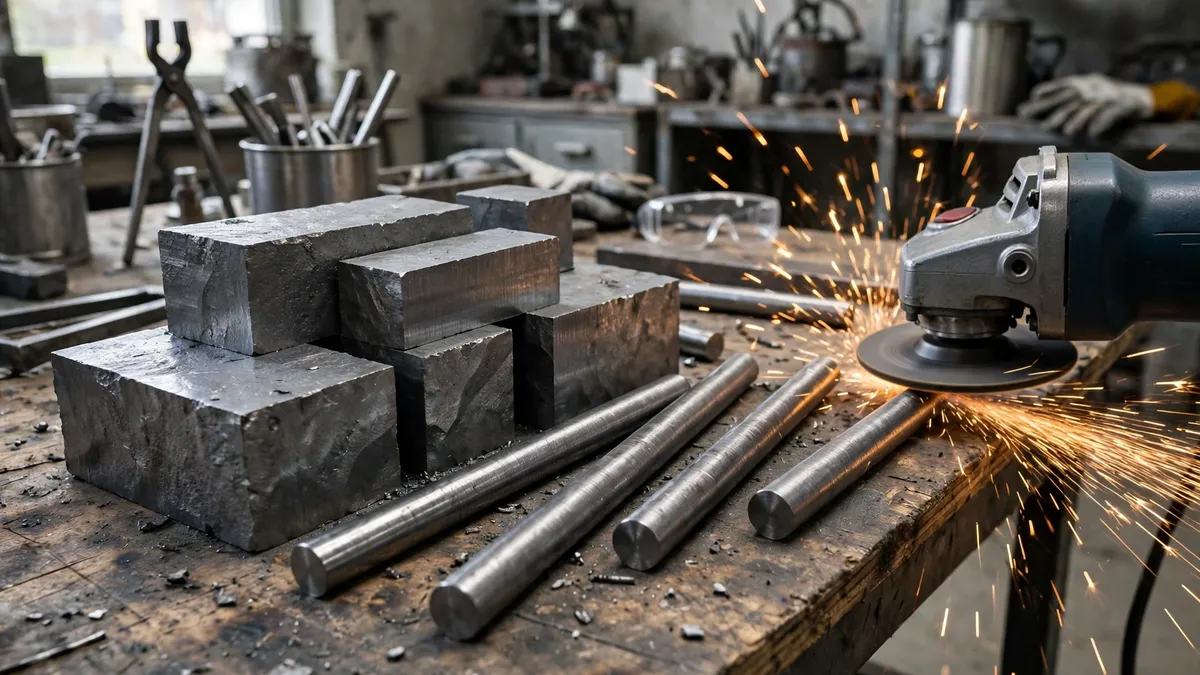
Tungsten alloy is famously difficult to machine. It is hard, dense and abrasive, and it wears out ordinary cutting tools in minutes. Workshops use diamond grinding wheels, carbide tools and slow, careful passes, often with flood coolant to carry the heat away. Electrical discharge machining, which erodes the metal with sparks instead of cutting it, is used for the most complex shapes. This is why tungsten parts are pressed close to their final shape during sintering: every millimetre that must be machined away costs time and tooling, and a part designed to need little machining is a part that costs far less to make.
Step 7: The finished part is tested and put to work
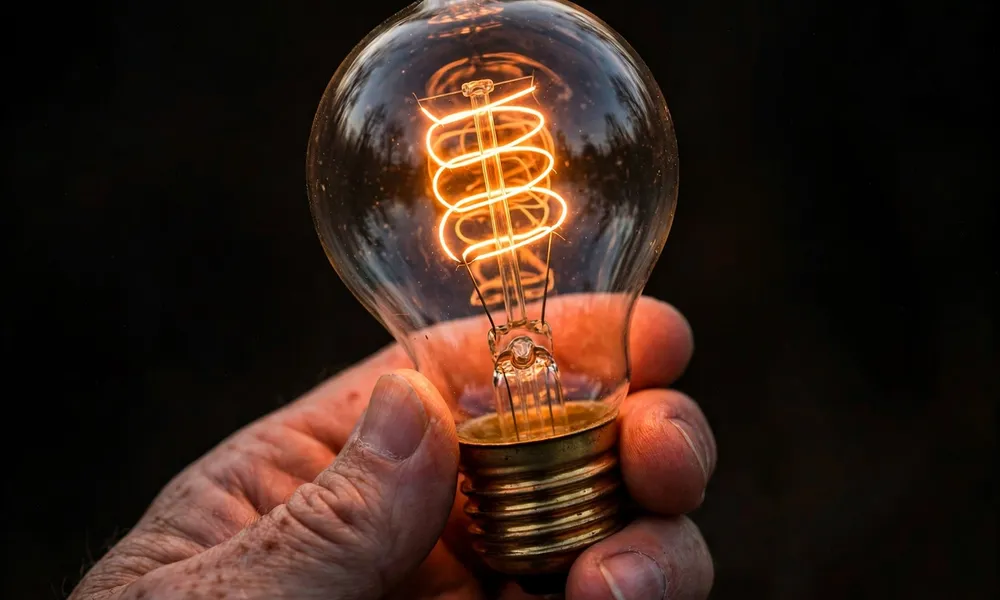
Before use, a tungsten alloy part is checked for density, hardness and internal flaws, often with ultrasonic testing. A part that is less dense than it should be contains pores, and pores are weak points. Once it passes, the part goes to work in places other materials cannot survive: the throat of a rocket nozzle, the counterweight of a crankshaft, the shielding around a radiation source, or the filament of a lamp that must glow white-hot for thousands of hours.
Tungsten Alloy Specifications
| Specification | Typical value |
|---|---|
| Melting point of pure tungsten | 3,422 degrees Celsius, the highest of any metal |
| Density of tungsten heavy alloy | 17 to 18.5 grams per cubic centimetre |
| Tungsten content in heavy alloys | 90 to 97 percent by weight |
| Sintering temperature | 1,400 to 1,500 degrees Celsius in hydrogen |
| Tensile strength | 700 to 1,000 megapascals for heavy alloys |

How Much Does Tungsten Alloy Cost?
Tungsten alloy is expensive, and the price is an estimate because it moves with the price of tungsten ore. Raw tungsten heavy alloy typically costs in the region of fifty to one hundred and fifty dollars per kilogram, depending on the grade and the size of the order, and a finished machined part costs far more once the pressing, sintering and diamond grinding are added in. A small counterweight might cost a few hundred dollars; a large shielding block or a set of precision-machined parts can run into thousands. The ceramics that share tungsten’s high-temperature world are covered in the materials behind a ceramic matrix composite, where heat resistance is achieved by a completely different chemistry.
A Rare Fact About Tungsten Alloy
Tungsten was once so hard to work with that it was used mainly as a curiosity, and its name tells the story: tungsten is Swedish for heavy stone, because the ore was so dense that miners thought it was a useless rock that ruined their tin. It took until the early twentieth century for anyone to make it into a useful wire, and the breakthrough came from the light bulb industry, which needed a filament that could glow white-hot without melting or evaporating.


