The invoice arrives, and the buyer reads it twice. A turbine blade the size of a hand, one of dozens inside a single jet engine, costs more than a family car. The airline asks the question every superalloy foundry hears: why does casting one small piece of metal cost so much?
It looks like ordinary casting from the outside: metal is melted, poured into a mould, and left to cool. Yet this blade will spend its life spinning at thousands of revolutions per minute inside gas hotter than the metal’s own melting point — and it must survive that for thousands of hours without stretching, cracking, or melting. Making a part that can do that means working with some of the rarest metals on Earth, in furnaces that hold a vacuum, with a mould that is destroyed to free every blade.
This guide looks at why superalloy casting costs so much: the rare materials in the alloy, the handwork in every mould, and the economics that keep the price high.
How Superalloy Casting Works
Step 1: Mixing an alloy of rare metals
The cost starts with the recipe. A nickel superalloy is mostly nickel, but its strength comes from small additions of rare and expensive metals: rhenium, tantalum, tungsten, and cobalt. Rhenium is one of the rarest elements in the Earth’s crust, mined in tiny quantities as a by-product, and its price swings wildly with supply. Every batch is weighed, melted, and analysed to a tight specification, because a fraction of a percent too much or too little of one element changes how the blade behaves at temperature. The alloy is described in our guide to how superalloy casting is made, where the recipe decides how hot the blade can run.
Step 2: Building a mould that is used once
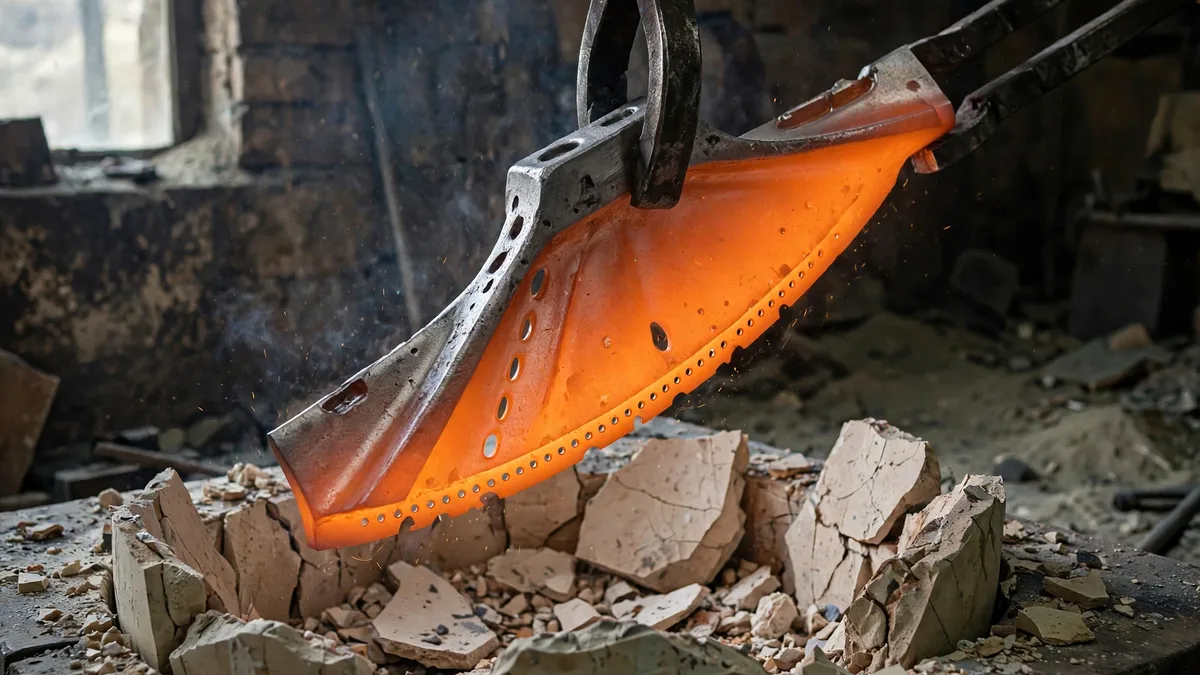
Next comes the mould, and it is made to be destroyed. A wax model of the blade is dipped again and again in ceramic slurry, building up a hard shell layer by layer over days, then the wax is melted out and the shell is fired like pottery. Inside the shell sit delicate ceramic cores that will form the hollow cooling passages of the finished blade. Each mould takes days of skilled handwork, and each one makes a single blade — after the metal cools, the shell is smashed away and the cores are dissolved out.
Step 3: Melting in a vacuum
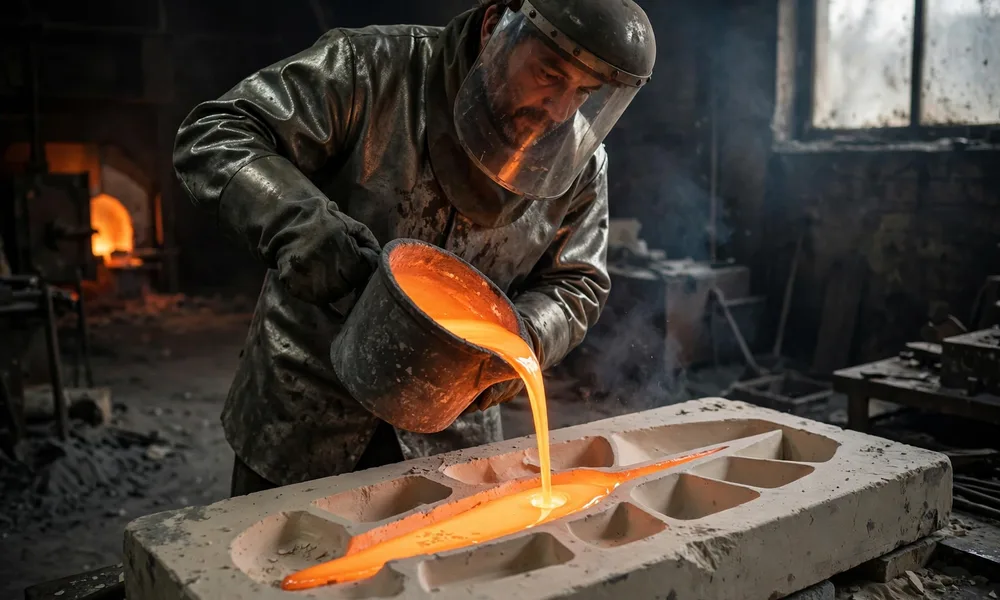
Superalloys cannot be melted in open air: oxygen and nitrogen would contaminate the metal and weaken the blade. So the alloy is melted in a vacuum induction furnace, a sealed chamber pumped down to near-empty, where an electric coil heats the metal without ever touching it. The furnace is expensive to build and run, and the chamber is cleaned and inspected between heats. The molten metal is then poured into the preheated ceramic mould while the whole assembly stays under vacuum, so no air can reach the stream.
Step 4: Growing a single crystal
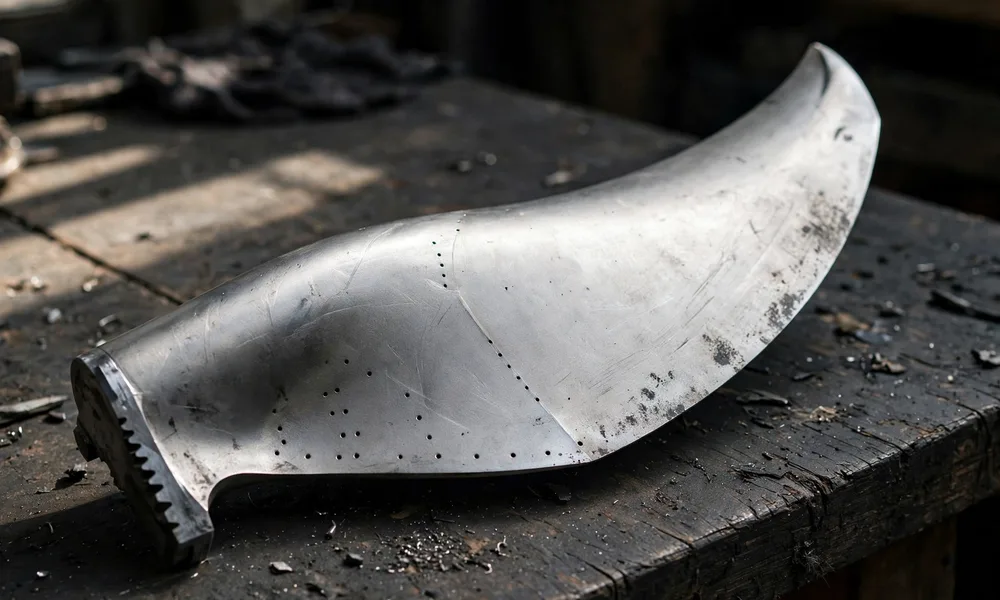
The most expensive blades are cast as a single crystal — one continuous grain of metal with no boundaries at all. To achieve this, the mould is withdrawn slowly from the hot zone of the furnace, so the metal solidifies from the bottom upwards, one crystal growing through the whole blade while the rest are blocked off by a spiral selector. A wobble or a temperature drift creates stray grains, and the blade is scrapped. The process is set out in our guide to superalloy casting specs, where the crystal structure decides the blade’s life.
Step 5: Drilling cooling holes and machining
The cast blade is still far from finished. Its cooling holes — dozens of tiny passages through which air will flow to keep the metal alive — are drilled by electrical discharge machining, a slow process in which a spark erodes the hole a fraction of a millimetre at a time. The blade’s root, the fir-tree shape that locks it into the engine disc, is ground to tolerances measured in microns, and the aerofoil surface is polished by hand. Each step is slow and skilled, and a slip can destroy a part carrying days of work.
Step 6: Coating, inspection, and the scrap bill
Finally, the blade is coated with a ceramic thermal barrier, a thin layer that insulates the metal from the gas stream, and then inspected more thoroughly than almost any other manufactured part. X-rays check for hidden voids, ultrasound checks the wall thickness, and fluorescent dye reveals cracks too small to see. Many blades fail at this stage — a single stray grain, a blocked cooling hole, or a pore the size of a pinhead is enough to reject one — and the cost of every rejected blade is folded into the price of the good ones. The full process is explained in our guide to how superalloy casting works.
Superalloy Casting at a Glance
| Specification | Detail |
|---|---|
| Base metal | Nickel, with rhenium, tantalum, tungsten, and cobalt |
| Melting point | About 1,300 to 1,400 degrees Celsius |
| Service temperature | Gas above 1,500 degrees Celsius, metal kept near 1,000 |
| Crystal structure | Single crystal in the most demanding blades |
| Blade length | Roughly 5 to 15 centimetres for a jet engine blade |
| Cooling holes | Dozens of tiny passages per blade |
| Coating | Ceramic thermal barrier coating, a fraction of a millimetre thick |
What Does It Cost?
The alloy and the scrap rate dominate everything. A vacuum induction furnace is estimated at roughly $1 million or more, and a directional solidification furnace with its vacuum and control systems is estimated at several million, before the building and clean rooms are counted. The raw alloy is estimated at roughly $100 to $300 per kilogram, and a single finished blade is estimated at roughly $5,000 to $15,000, depending on size and crystal structure. A full set of blades for one engine is estimated at hundreds of thousands of dollars. Prices are high because the metals are rare, the mould is single-use, the process is slow, and a large share of the blades made never fly. All prices are estimates only.
A Rare Fact
A single-crystal turbine blade has no grain boundaries at all — the entire blade is one crystal, grown slowly from a seed like a crystal in a cave, only made of metal. Grain boundaries are where hot metal creeps and cracks, so removing them lets the blade run hundreds of degrees hotter than an ordinary casting. Yet the gas around it is hotter still: the blade survives only because cooling air bleeds through its hollow core and out of its tiny holes, while its ceramic coating insulates it further. The blade spins at over 10,000 revolutions per minute in gas hotter than its own melting point, and it does so for thousands of hours.
Superalloy casting is expensive because almost nothing in the process is ordinary: metals rarer than gold, a mould built by hand over days and then smashed to free one blade, a vacuum furnace, a crystal grown one grain at a time, and inspection that rejects a blade for a pinhead-sized flaw. Each piece is costly on its own, and together they explain the invoice. The blade looks small — everything that makes it survive is not.


