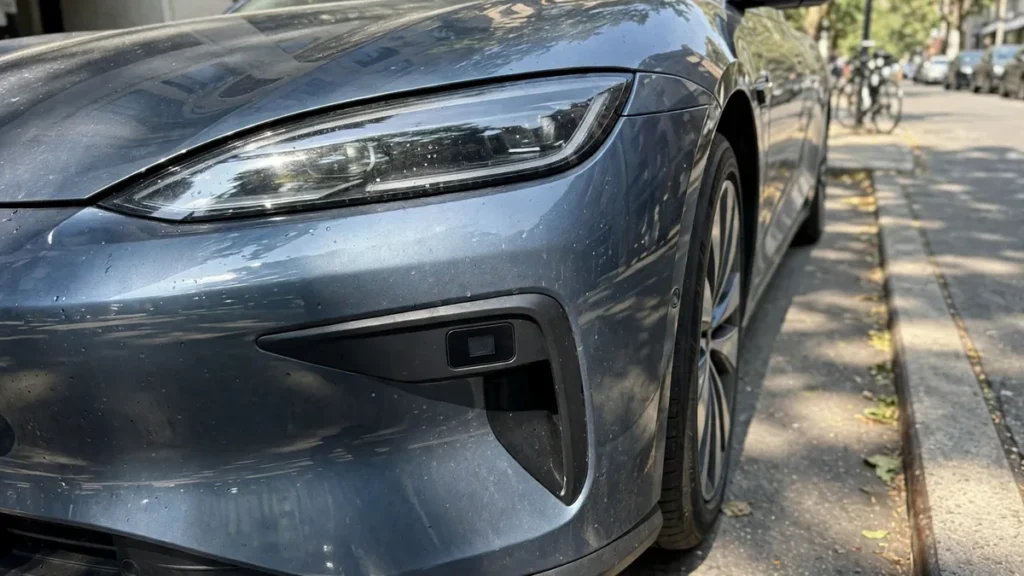
It is two in the morning on a wet motorway, and the car ahead has no driver. Rain is falling, the road markings are half washed out, and the headlights of oncoming traffic are throwing glare across the windscreen. Yet the car holds its lane perfectly, slows for a lorry it cannot see with its cameras alone, and spots a deer at the edge of the trees long before any human eye could. It is not guessing. It is measuring the world, millions of times a second, with light.
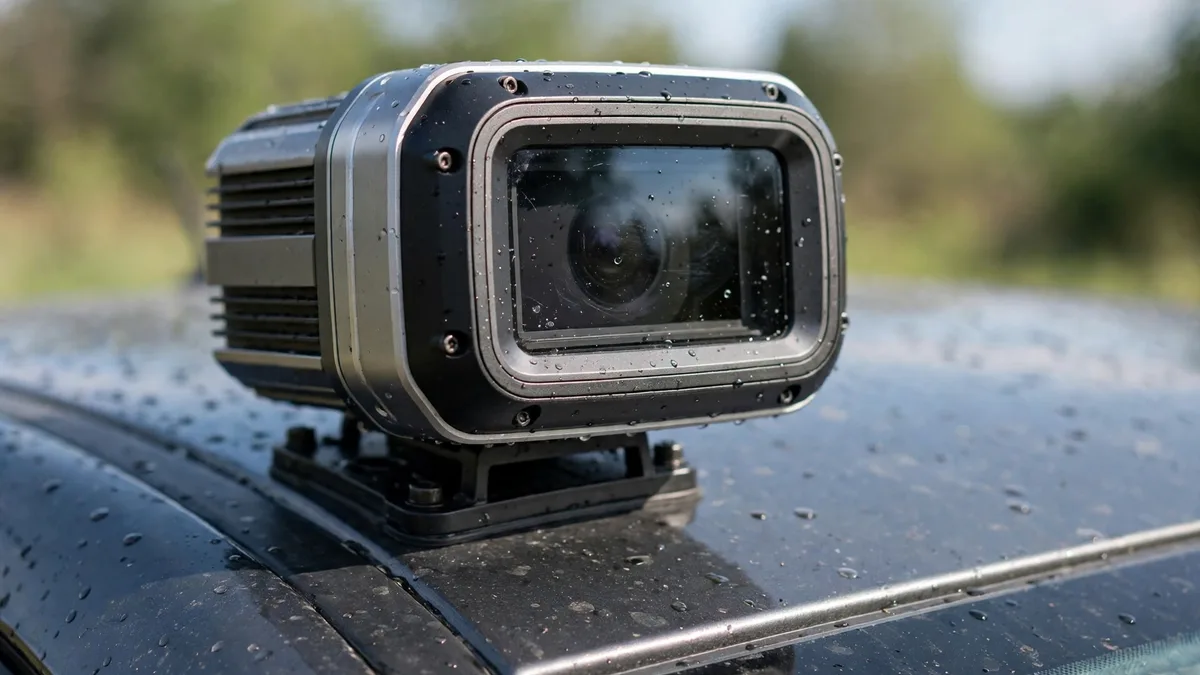
The instrument doing that work is a LiDAR sensor, a device that fires pulses of invisible laser light and times their return to build a three-dimensional map of everything around it. The name stands for Light Detection and Ranging, and it is the same idea as radar, except that it uses light instead of radio waves. The result is a point cloud so detailed that a car can tell a traffic cone from a child, a kerb from a shadow, at two hundred metres in the dark.
LiDAR began in the 1960s, when scientists bounced lasers off the Moon to measure its distance. It later mapped forests, coastlines and ancient cities from the air. Today it is one of the most argued-over components in the self-driving car, praised as the only sensor that truly measures distance and criticised as expensive and fragile. The specification sheet is where that argument gets settled, number by number.
Range: How Far It Can See
Range is the first number on any LiDAR datasheet, and it is usually quoted for a target that reflects ten percent of the light that hits it, which is roughly what a dark tyre or a black car returns. A typical modern automotive unit sees 200 to 250 metres at that reflectivity, and 300 metres or more for a bright, reflective target such as a road sign. That distance matters because at motorway speed a car covers 30 metres every second, so a sensor that only sees 100 metres ahead leaves barely three seconds to react.
Range is not a fixed property of the sensor alone. Rain, fog and snow scatter the beam and shorten it, sometimes dramatically, and a dirty window in front of the laser has the same effect.
Wavelength: 905 or 1,550 Nanometres
Almost every automotive LiDAR works at one of two wavelengths, and the choice shapes everything else. The older and cheaper standard is 905 nanometres, in the near-infrared, where the laser diodes are mature and inexpensive. The newer option is 1,550 nanometres, a wavelength the human eye absorbs before it reaches the retina, which means far more power can legally be fired without endangering eyesight.
That extra power budget is the whole point. A 1,550-nanometre unit can push more energy into each pulse and therefore see further, and it is less disturbed by sunlight, which is weaker at that wavelength. For a buyer, the wavelength tells you whether a sensor was designed for cost or for maximum reach.
Field of View and Resolution
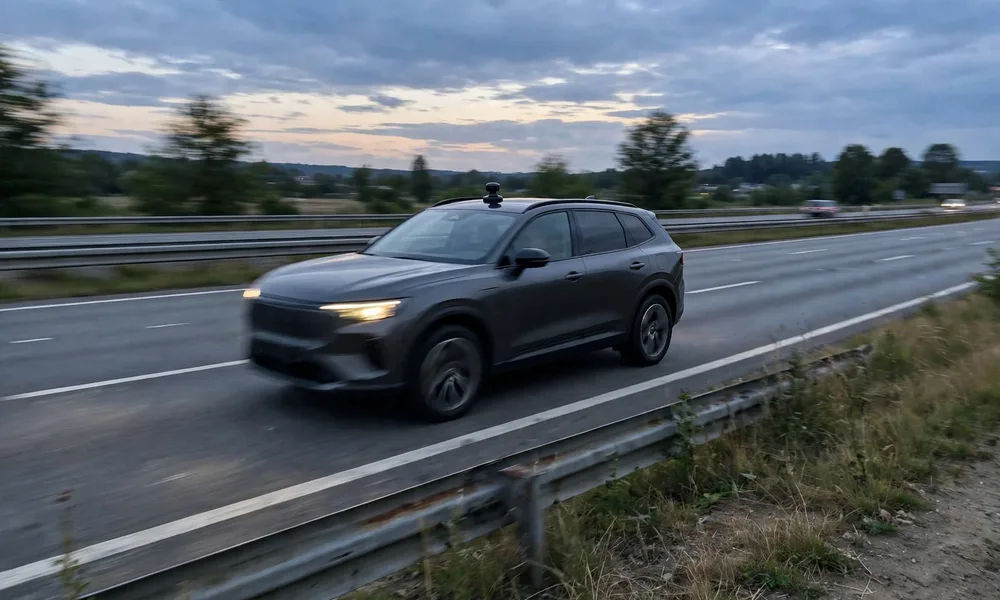
Field of view is the size of the window the sensor looks through. A typical spinning unit sees 360 degrees around the car, while a solid-state unit mounted in the grille might cover 120 degrees horizontally and 25 degrees vertically, aimed forward. Neither is better in the abstract: a 360-degree view is ideal on a robot taxi, while a forward-facing unit is cheaper and suits a car that already has cameras watching its flanks.
Resolution is how finely that window is divided. Angular resolution of around 0.1 degrees is common in good units, which means at 200 metres two points roughly 35 centimetres apart can still be told apart. Channels are the other half of the story: a 128-channel sensor fires 128 separate laser beams stacked vertically, so it paints a dense curtain of points, while a 16-channel unit gives a much sparser picture.
Points Per Second and Frame Rate
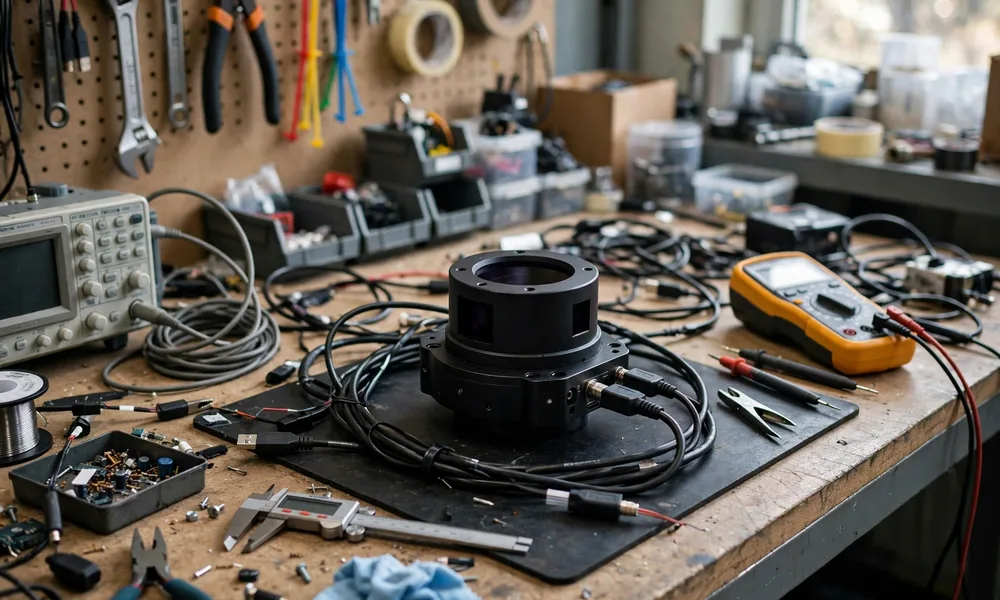
Points per second is the raw output of the sensor, and modern automotive units generate anywhere from 500,000 to more than 2 million points every second. Each point carries a distance and an intensity, and together they form the point cloud the car’s computer reads.
Frame rate is how often the whole scene is refreshed, typically 10 to 20 times a second. A 10-hertz frame rate means the map is a tenth of a second old before the computer even starts thinking about it, and at motorway speed the car has moved three metres in that time.
Accuracy, Power and Toughness
Accuracy is the number most often confused with resolution. A sensor can have fine resolution and still be inaccurate, but good automotive units measure distance to within two or three centimetres, which is precise enough to judge whether a gap in traffic is genuinely wide enough.
Power consumption runs from around 10 watts for a small solid-state unit to 30 watts or more for a spinning mechanical one, which is a real consideration in an electric car where every watt comes from the battery.
What It Costs
Price is the number that has moved fastest. Early automotive LiDAR units cost tens of thousands of dollars, which is why they appeared only on research vehicles. By the mid-2020s, mass-produced units for production cars were estimated at roughly 500 to 1,000 dollars each, with high-end long-range units still several thousand. Estimates vary widely by volume and specification, but the direction is clear: as production scales, LiDAR is moving from a research luxury towards a standard driver-assistance component, much as radar did a decade earlier.
A Rare Fact
Long before it steered cars, LiDAR rewrote archaeology. In 2018, airborne laser scanning stripped away the jungle canopy of northern Guatemala in data, revealing a vast Maya civilisation of more than 60,000 previously unknown structures, including houses, roads and fortifications, hidden under the forest for a thousand years. The same trick of firing light and timing its return that now keeps a car in its lane once uncovered an entire lost city without a single spade touching the ground.
That is the measure of the technology. It does not see the world the way we do. It measures it, point by point, in the dark, in the rain, and through the trees, and then hands the machine a map precise enough to drive by. Read the specification sheet with that in mind, and the numbers stop being abstract: range is reaction time, resolution is the difference between a cone and a child, and wavelength is how far into the dark the car can see.
For the companion piece on how these sensors are built and what they actually perceive, see how a LiDAR sensor works. For a sensor that maps the world with sound instead of light, read submarine sonar array specs explained, and for another spinning sensor that lives or dies by its specification sheet, see drone motor specs explained.